Extreme heat is putting workers with few protections in danger

Add Axios as your preferred source to
see more of our stories on Google.
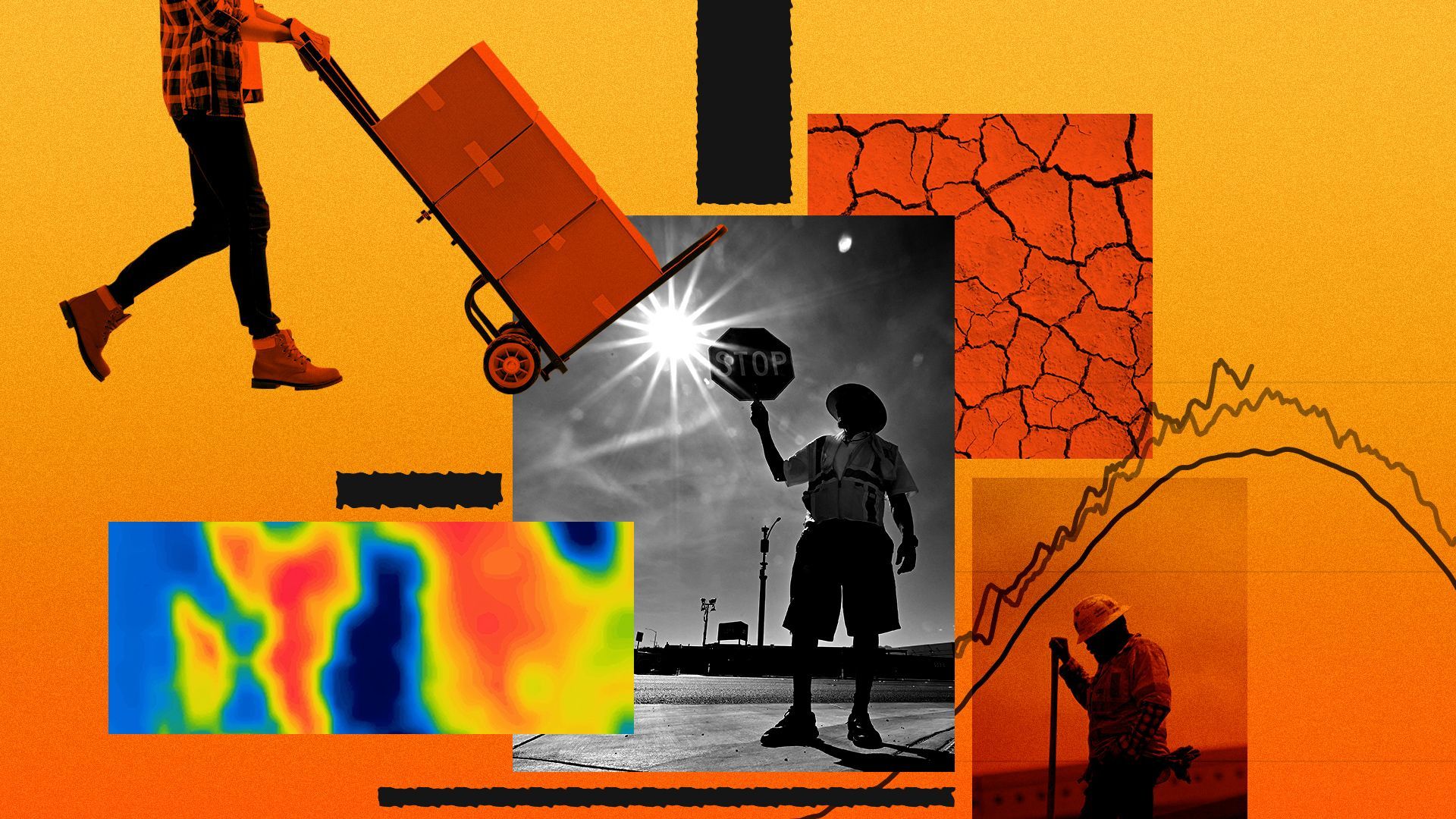
Photo illustration: Aïda Amer/Axios. Photos: Mark Felix/AFP, Frederic J. Brown/AFP via Getty Images.
Outdoor and even indoor workers in the states being hardest hit by a dangerous heat wave have few if any protections to keep them safe.
Why it matters: About 64.3 million people in the U.S. — including millions of Latino laborers — are under heat alerts, with a brutal wave hitting large swaths of the country.
- There were 33,890 work-related heat injuries and illnesses from 2011 to 2020, according to the latest data available from the Bureau of Labor Statistics,
Zoom in: Republican governors in Florida and Texas have recently signed laws banning local governments from mandating heat protections such as breaks for outdoor workers. They say federal laws already ban unsafe work conditions and that "burdensome regulations are an obstacle" to small businesses' success.
- Only about six states, most of which are in the West, have state-level protections in place, per an analysis by Bloomberg Law.
Where it stands: The federal Occupational Safety and Health Administration currently has regulations and guidelines that "don't really have any teeth," says Thomas Kennedy, a spokesperson for the Florida Immigrant Coalition, an advocacy group.
- OSHA's new proposed rules for employers to protect workers in heat situations — which have not been made public — are being reviewed by the White House's Office of Management and Budget.
- "Heat is a serious workplace hazard that threatens the health, safety, and lives of workers every year," OSHA spokesperson Paloma Renteria tells Axios via email, adding that it's "a priority for the U.S. Department of Labor that the Occupational Safety and Health Administration works swiftly and responsibly towards enacting a federal standard."
By the numbers: Latinos make up 75% of farmworkers in the U.S. and also work in other outdoor jobs, putting them especially at risk of heat injuries and illness, says Antonieta Cádiz Vargas, deputy executive director for Climate Power En Acción.
- Agricultural workers are 35 times more likely to die from a heat-related illness than other workers, according to a peer-reviewed study by Frontiers in Public Health from 2022.
- "Unfortunately what is happening is that workers are having to choose between their health and earning their salary or the money they need for their families. Most of them choose to go to work and they put their life at risk," Cádiz Vargas says.
What they're saying: Even workers who stay inside risk heat-related illnesses when they can't access air conditioning or water, says Shae Parker, a union leader with the Union of Southern Service Workers who is based in Columbia, South Carolina.
- Parker is working as a cashier at a gas station where the A/C doesn't work consistently, she says. She spent 23 years working at a restaurant that also didn't have consistent A/C, prompting her to get involved in organizing.
- Whether it's "a warehouse, restaurant, gas station — these corporations need to be accountable for treating their workers better," Parker says.
The big picture: Human-caused climate change is making heat waves more likely, more intense and longer lasting—in some cases quintupling the odds of extreme temperatures, writes Axios' Andrew Freedman.
Subscribe to Axios Latino to get vital news about Latinos and Latin America, delivered to your inbox on Tuesdays and Thursdays.
