Johnson faces Democratic pressure to pull House Intel picks

Add Axios as your preferred source to
see more of our stories on Google.
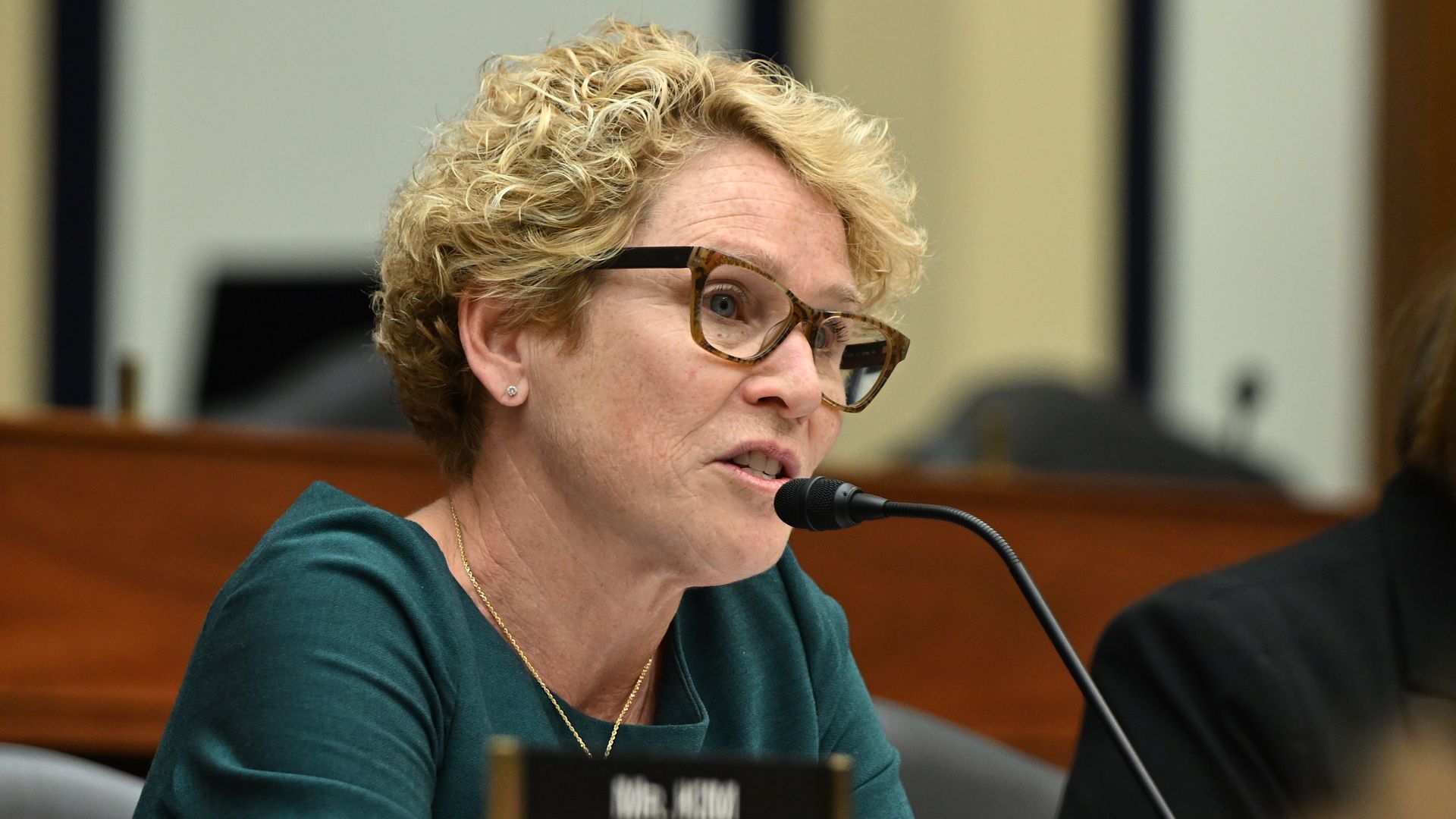
Rep. Chrissy Houlahan. Photo: Celal Gunes/Anadolu via Getty Images.
House Speaker Mike Johnson (R-La.) is facing new pressure from a Democratic member of the House Intelligence Committee to walk back his appointments of two controversial right-wing lawmakers to the panel.
Why it matters: The appointees – Reps. Scott Perry (R-Pa.) and Ronny Jackson (R-Texas) – both have major blemishes on their records that have led lawmakers in both parties to question their fitness for the committee.
- Jackson, the former personal physician to the president, was accused by an internal watchdog of drinking and taking sleeping pills while on the job.
- Perry had his phone seized by the FBI in 2022 as part of a federal probe into former President Trump's efforts to overturn the 2020 election.
Driving the news: Rep. Chrissy Houlahan (D-Pa.), in a letter to Johnson on Tuesday, urged him to "reconsider and reverse" his decision to appoint Jackson and Perry to the panel.
- "With the committee's critical charge and unique jurisdiction in mind, the appointment of any member unfit for such sacred duty creates untenable risk to national security and our democratic norms," she wrote.
- Houlahan, an Air force veteran, argued that there are "hundreds of duly elected and upstanding members of Congress on both sides of the aisle" who are qualified to serve on the committee.
The other side: "Rep. Perry is a combat veteran who served our Nation faithfully over 40 years - with Top Secret clearances and missions," a Perry spokesperson told Axios.
- "Questioning his viability to serve on the very Committee whose mission it is to protect American Citizens on the basis of falsehoods and an empty investigation is not only boring but reprehensible."
- Spokespeople for Johnson and Jackson did not immediately respond to requests for comment.
Between the lines: Johnson's picks come as Reps. Mike Turner (R-Ohio) and Jim Himes (D-Conn.), the top Republican and Democrat on the Intelligence Committee, have worked to re-establish its longstanding bipartisan reputation.
- The panel, once seen as an oasis from Congress' nearly ubiquitous partisan sniping, became increasingly politicized during the Trump administration.
