Aging America faces a senior care crisis


Add Axios as your preferred source to
see more of our stories on Google.
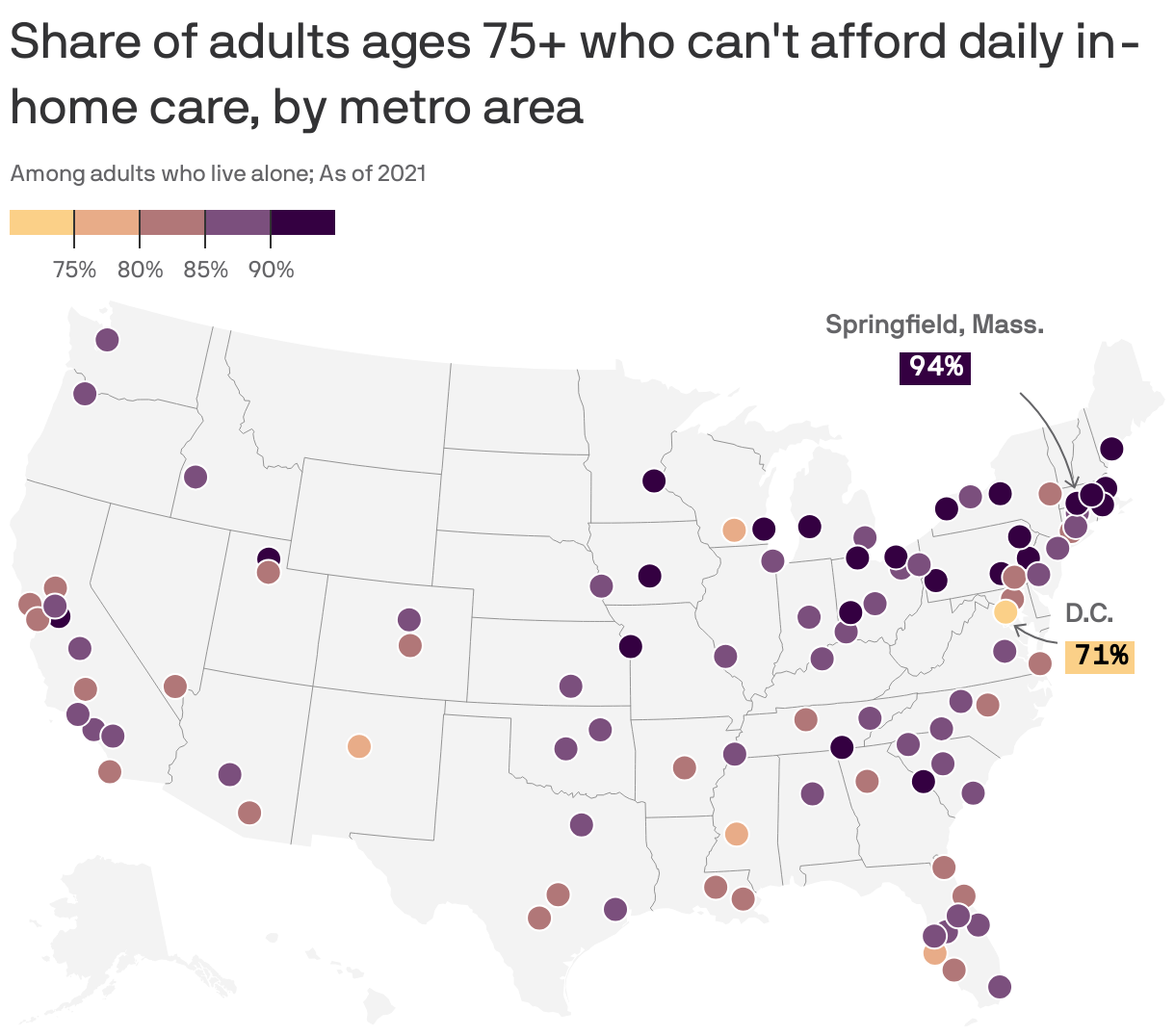
As America's population of seniors grows, affordable long-term care is increasingly hard to find.
Why it matters: Nearly 70% of older adults will need long-term care services, according to Harvard's Joint Center for Housing Studies.
- Medicare doesn't cover these services, and Medicaid often has long wait lists for at-home support, said Samara Scheckler, a research associate.
- "The cost of daily assistance at home is out of reach for most," Scheckler said, "and so is assisted living, which bundles housing and care together."
By the numbers: 13% of adults 75+ in U.S. metro areas living alone can afford assisted living without diving into assets, per the Center.
- 14% can afford a daily visit from a home health aide along with their housing costs.
For context, more than 40% of Americans 65 and older live alone. When considering seniors over 80, that share jumps to nearly 60%.
Zoom out: There's also a growing shortage of care providers. While most people prefer in-home care — and it's cheaper for states to fund — not everyone can receive care at home, said Priya Chidambaram of KFF.
- Many seniors require the resources and medical equipment at larger facilities.
This year, every U.S. state reported a shortage of care workers — and 43 of them saw permanent closures of care facilities, such as group homes and assisted living centers, according to a KFF survey.
- The U.S. has at least 600 fewer nursing homes than It did six years ago, according to a recent Wall Street Journal analysis.
The big picture: Nursing homes bore the brunt of the pandemic, leading many mentally and physically burned-out staffers to quit.
- The pandemic added fuel to that as more families pulled their loved ones out of nursing homes to limit exposure to COVID-19, the Journal reports.
Many facilities are struggling to stay afloat. 81% of them would need to hire additional workers to meet nursing staff requirements from the Centers for Medicare and Medicaid Services proposed in September, KFF noted.
- "Staffing shortages in nursing homes are hugely affecting those who need institutional care," Chidambaram said.
Between the lines: U.S. life expectancy is on the rise. With that, care needs to last longer.
- A vast majority of older adults live in homes that they rent or own. The need for services and support — like housework, bathing, or medicating — is expected to increase, according to the report.
- Baby boomers had fewer children than older generations, making family help increasingly limited for aging adults, Scheckler said.
The bottom line: The combined costs of housing and daily care are beyond most people's means, said Jennifer Molinsky, project director for Harvard's Housing an Aging Society program.
- "It's a wonderful thing that the older population is growing overall and people are living longer than a generation ago," she said. "But the supports that people need to stay in the community, stay in their home are really expensive and hard to secure."
Go deeper: Seniors' health care use is up, UnitedHealth says
