Latinas behind RSV, COVID vaccines aim to boost Hispanic rates

Add Axios as your preferred source to
see more of our stories on Google.
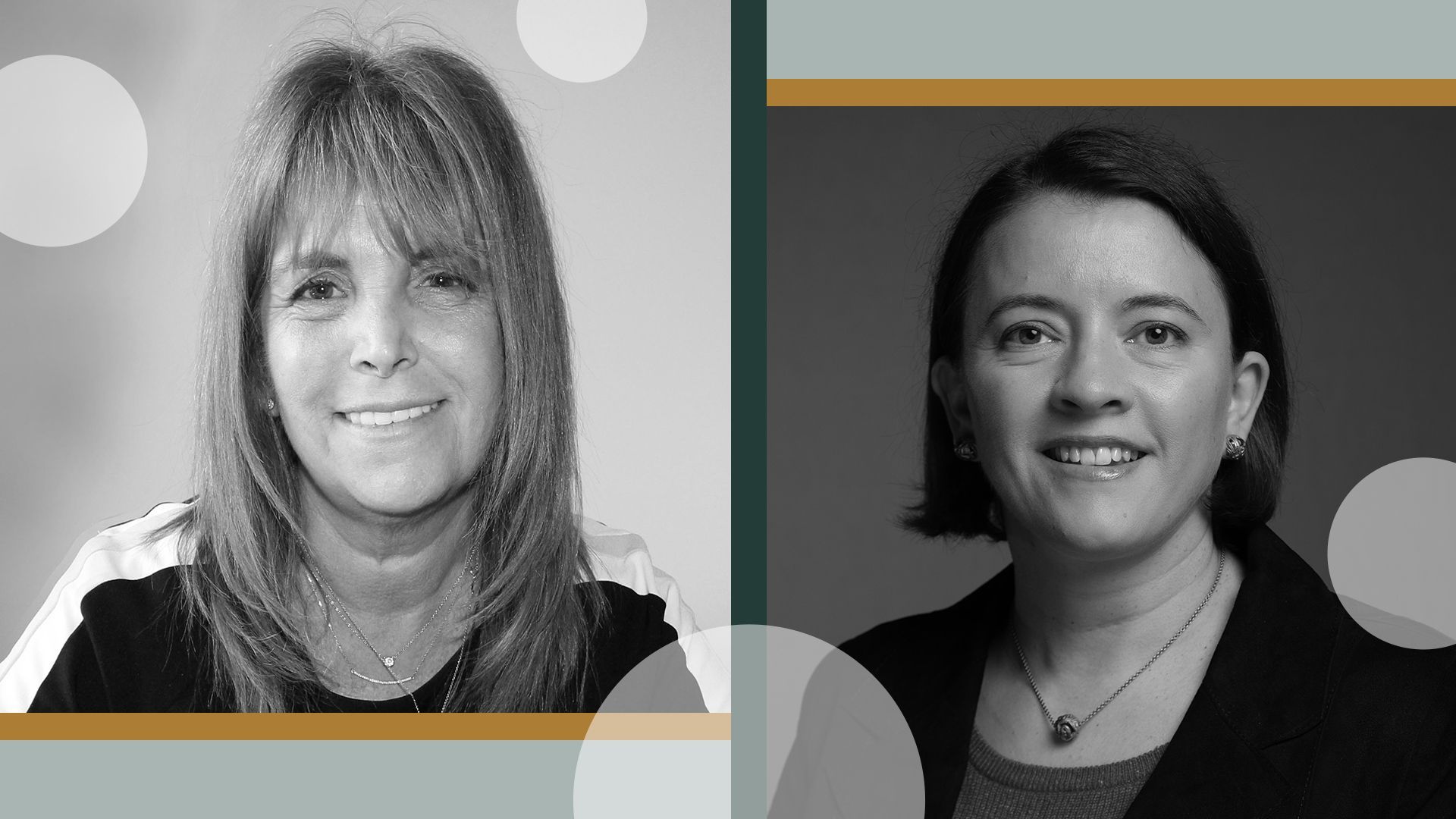
From left: Alejandra Gurtman, Barbara Pastrana Pahud. Photo illustration: Aïda Amer/Axios. Photos: Courtesy of Pfizer
Latinas who had key roles in the development of the respiratory syncytial virus (RSV) and COVID-19 vaccines are hopeful their work can contribute to improving vaccination rates among Hispanics.
The big picture: Latinos in the U.S. have consistently low inoculation rates against the flu, polio, HPV or hepatitis, and are less likely than other racial or ethnic groups to be vaccinated against COVID-19, research shows.
- Despite a desire to get vaccinated, Latinos often face obstacles such as a lack of health insurance coverage, living far away from clinics or not being able to take time off work for an appointment.
- Misinformation also plays a role.
- Past studies have found inaccurate information on vaccine safety and related issues that target U.S. Hispanics, especially Spanish speakers, usually go unchecked by Facebook or YouTube monitoring systems.
What they're saying: "Vaccines only work insofar as we can get them out and people get them, and uptake has become harder as this has become politicized," says Alejandra Gurtman, an Argentine-born infectious disease specialist who is senior vice president of vaccine clinical research and development at Pfizer.
- Continuing health education, such as emphasizing that vaccination not only protects people but their community and having clear messaging from government officials, is important to combat this, she says.
- "Maybe it's too optimistic, and it'll be hard, but I do think going forward we can get there," Gurtman adds.
Having a growing number of Latino researchers who can explain the science, and do so in Spanish if needed, is also important to temper the effect of politicization, Gurtman tells Axios Latino.
- She says that at the beginning of her career, she was among few Latino or Spanish-speaking doctors at the hospital where she worked.
- "But we see that less and less now… and I hope paths like mine can show other Latinos that they can get here, too," says Gurtman, who helped oversee Pfizer's COVID vaccine.
- Gurtman was also involved in supervising the development of an RSV vaccine for people over 60 that got FDA approval this summer and a maternal RSV vaccine that protects infants. The CDC last month recommended the maternal vaccine for pregnant women.
Between the lines: Barbara Pastrana Pahud, a pediatric and infectious disease specialist, says she has been focused on increasing vaccine access since she was a medical student in Mexico volunteering in rural areas.
- One of the ways she's worked toward that is by pushing to diversify clinical trials, which have long been criticized for including largely white people.
- Pastrana Pahud, Pfizer's director of clinical vaccines, led a project to recruit diverse clinical trial participants while working at Children's Mercy Kansas City hospital and again when leading the maternal RSV trial for Pfizer.
- Diverse clinical trials could help temper hesitancy by showing early on that a vaccine tested on other Latinos and people of color is safe for them, she says.
- Plus, diverse trials can help Hispanics who are worried about vaccine safety "look at things outside of an emotionally or politically charged place… to get the information for our benefit and our health and not just buy what the neighbor or our aunt might think," Pastrana Pahud says.
Clinical trials for some COVID-19 treatments and the maternal RSV vaccine that Pastrana Pahud oversaw were more representative of the population. Some of these trials had 23% Latino representation (higher than the U.S. Hispanic population weight).
- "We've recruited more diversely, and shown companies in general that it can be done with gumption and resources, so now it's important to not let go and keep that momentum," Pastrana Pahud says.
What to watch: Pastrana Pahud says that she's now looking at how that preventive treatment can be made accessible to vulnerable populations in other countries.
- "People had been working for decades to get these vaccines rolling, and it had been hard. Being part of the team that made it happen, leading the trial, it kind of blows my mind still," Pastrana Pahud tells Axios Latino.
- "We're launching a new protocol, starting March, to put out a multi-dose vial version of it for places with fewer resources," she says.
- Multi-dose vials, with which several patients can be inoculated, are also usually easier to store.
Subscribe to Axios Latino to get vital news about Latinos and Latin America, delivered to your inbox on Tuesdays and Thursdays.
