Friday's world stories

GOP operative claiming Flynn connection sought Clinton emails
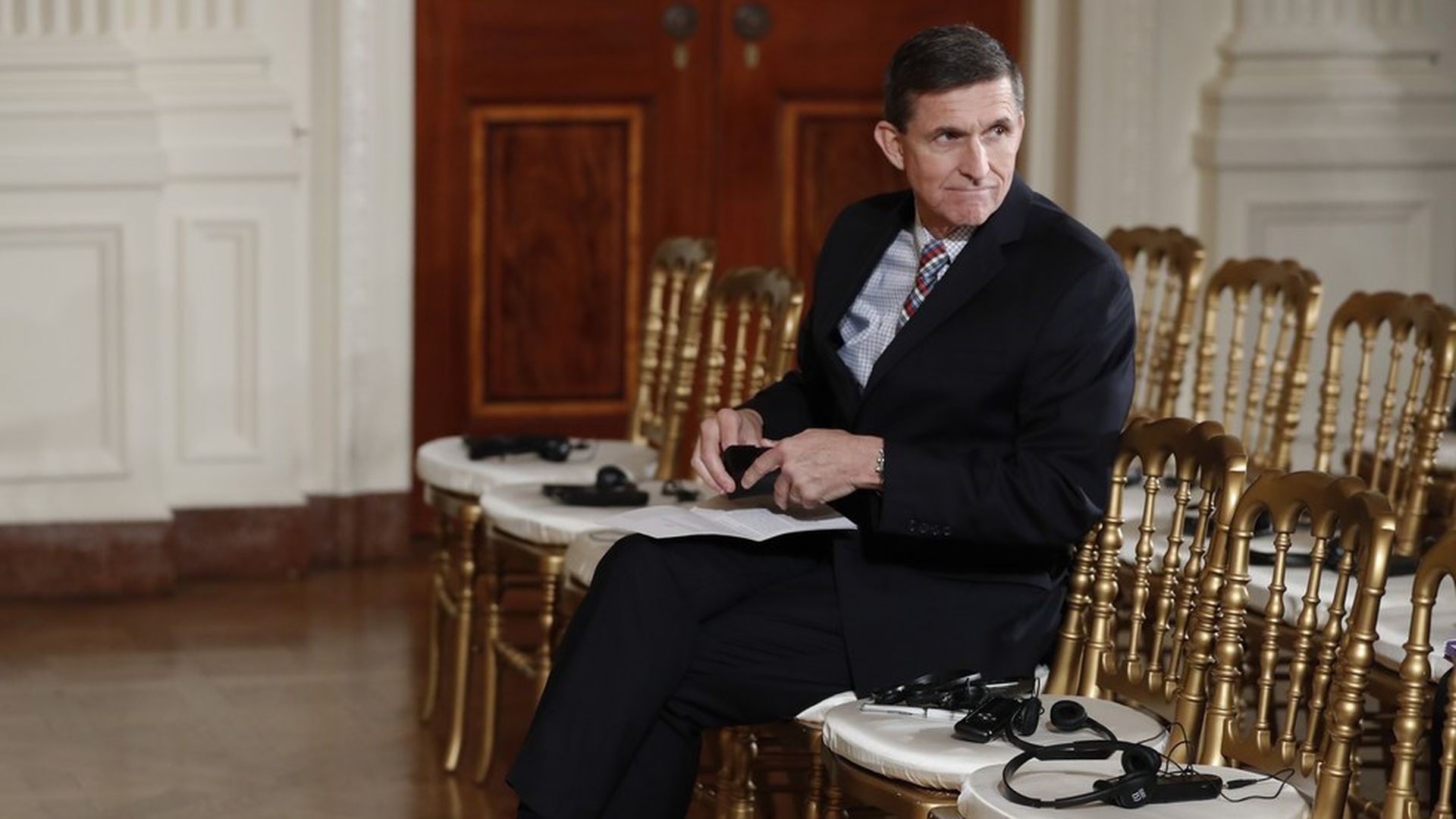
A Republican operative named Peter W. Smith sought out Clinton campaign emails from hackers before the 2016 presidential election, and said he was discussing the matter with Michael Flynn, the Wall St Journal reports. Flynn at the time was serving as an advisor to then-candidate Trump
The WSJ reports Smith and his colleagues considered Flynn and his consulting company "allies in their quest." Eric York, a computer security expert who searched on behalf of Smith for people who had access to the hacked emails told the Journal Smith said, "'I'm talking to Michael Flynn about this — if you find anything, can you let me know?'"
The Russia connection: Smith said he and his colleagues found two of the five hackers claiming to have Clinton's emails were Russians.
Flynn did not respond to requests for comment. A Trump campaign official said Smith didn't work for the campaign and that if Flynn coordinated with Smith on the matter, it would have been as a private citizen. Smith died May 14, ten days after the WSJ interviewed him.

The global malware escalation exposes entire governments
The latest global malware attack reflects an evolution of cyber warfare in which the communications of entire governments and countries can be crippled without recourse, says a leading computer security expert. While security firms and intelligence agencies continue to scramble to address Tuesday's attack, they have concluded that there is little or nothing to do about the data encrypted by the attackers.
Simon Crosby, chief technology officer at Bromium, a software security firm that works with companies including Microsoft and HP, says no virus protection program requiring human action will work against the malware. "It's now possible to cripple the response of a nation-state," he said.
The good news: New versions of Microsoft Windows 10 coming out later this year contain technology that protects against such encryption attacks by isolating the work someone is doing on a computer, says Crosby.
The bad news: Older versions of Windows are vulnerable and data encrypted by the attack is not recoverable — unless the attackers themselves free it up.