Starting today, Californians can find out what data certain companies have collected about them, and even ask for it to be deleted, under the new California Consumer Privacy Act.
Why it matters: The law covers residents of the most populous state, but it also has national repercussions. Some companies like Microsoft have already said they'll be extending the practices required under the law to all their customers and users. And other states tend to follow California when it introduces firm rules that don't exist on the federal level.
Chinese telecom giant Huawei said Tuesday that its revenue reached $122 billion in 2019, setting a new record for the company even as it weathers a campaign by the Trump administration to block its global expansion, the Wall Street Journal reports.
Why it matters: Many U.S. officials fear that Huawei's telecom equipment could be used by China for surveillance, and that a 5G equipment market dominated by Huawei would give the authoritarian government in Beijing access to massive amounts of data. The company is just one flashpoint in the escalating U.S. confrontation with China.
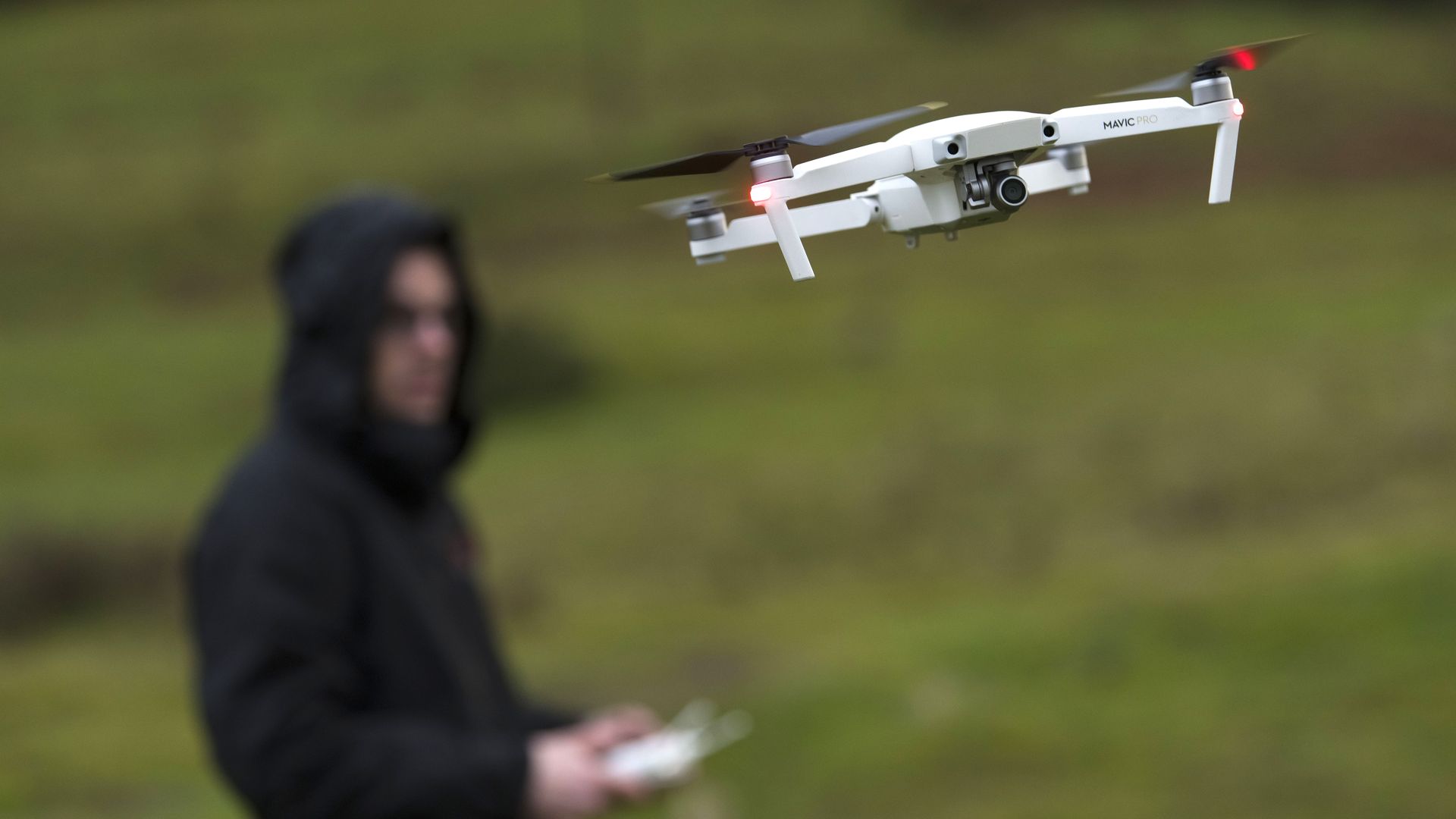
The Federal Aviation Administration wants to require the vast majority of drones to broadcast identifying and location information so authorities can spot rogue drones and generally keep tabs on the rest.
Why it matters: Drone makers have been waiting on the FAA to propose the Remote ID regulation to ease security concerns about potentially hostile drone operators that could, for example, wreak havoc at an airport — similar to the incident that shut down the U.K.'s Gatwick Airport last year.