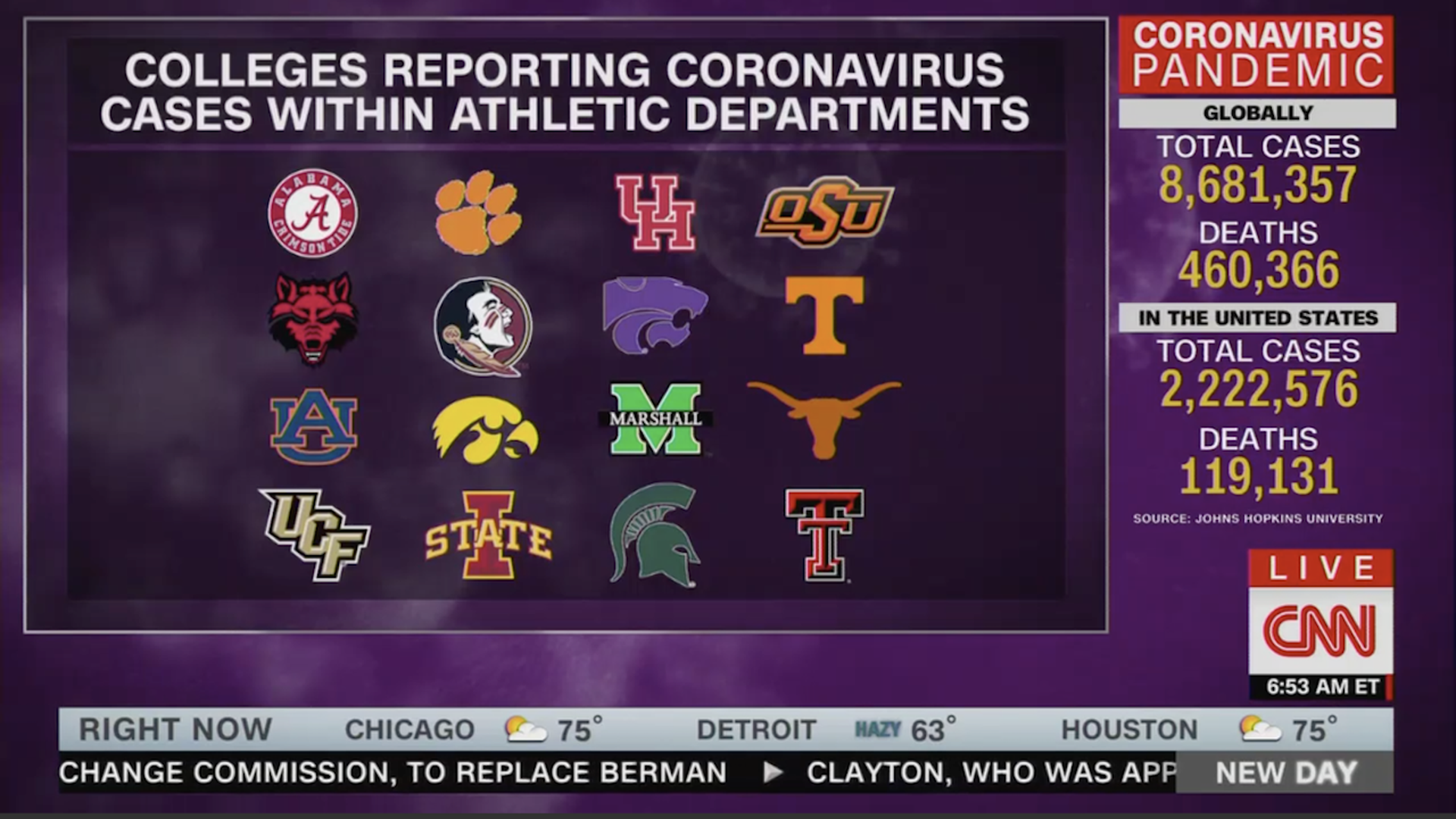
Friday was not a good day for sports as teams report an increase in positive coronavirus tests among their players.
Why it matters: Considering the NBA shut down in March over one positive test, and leagues and schools are now starting up again with hundreds of cases, there’s reason to be concerned about the viability of sports this summer and into the fall.
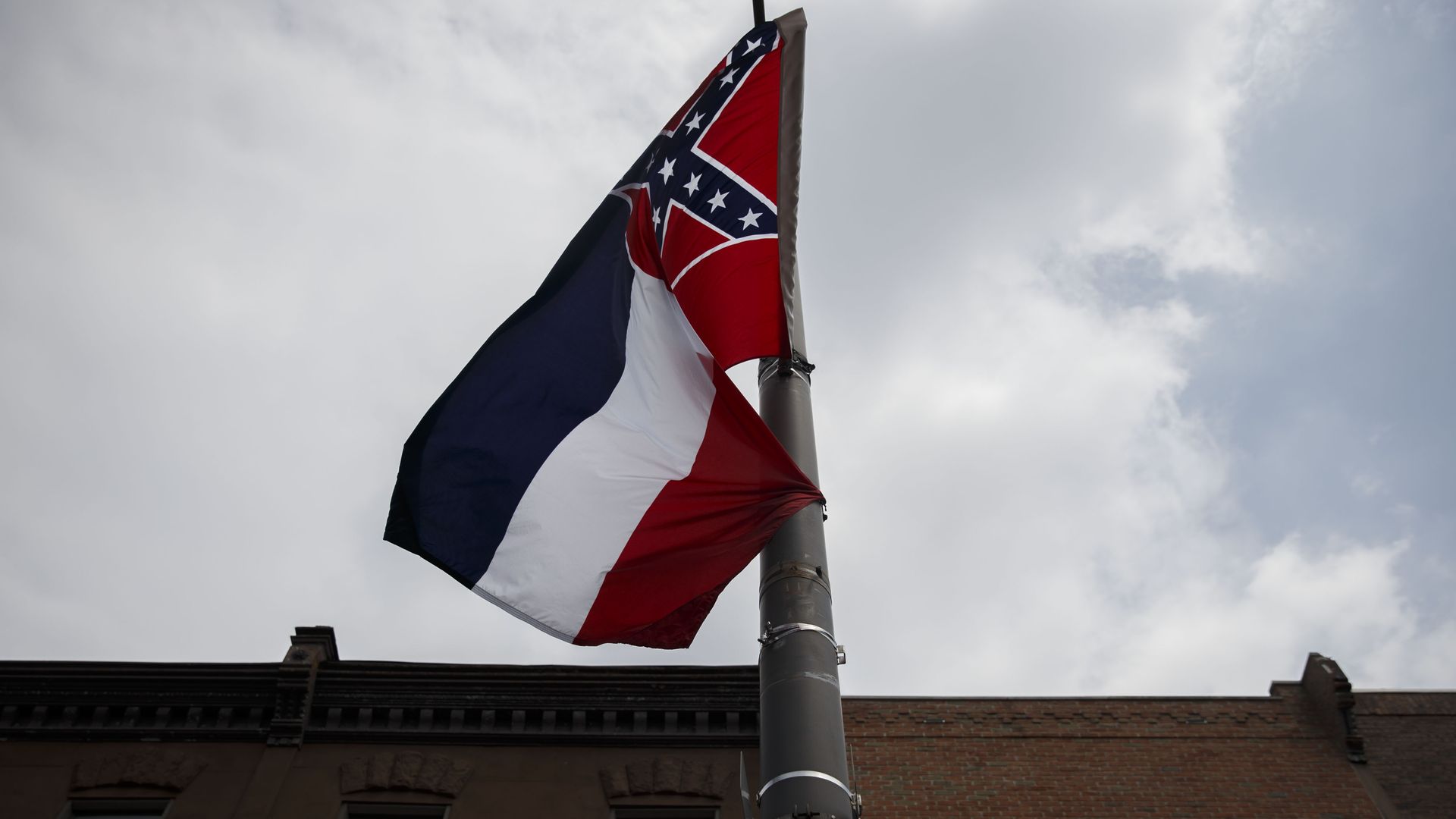
The NCAA will no longer hold championship events in Mississippi, due to the Confederate symbol's "prominent presence" in the state flag, the association announced Friday.
The big picture: The NCAA's decision expands its 2001 rule on the Confederate flag, which banned states from hosting events like the the NCAA Division I men’s basketball tournament, but granted exceptions to teams based on tournament seeding or ranking, the Washington Post reports.
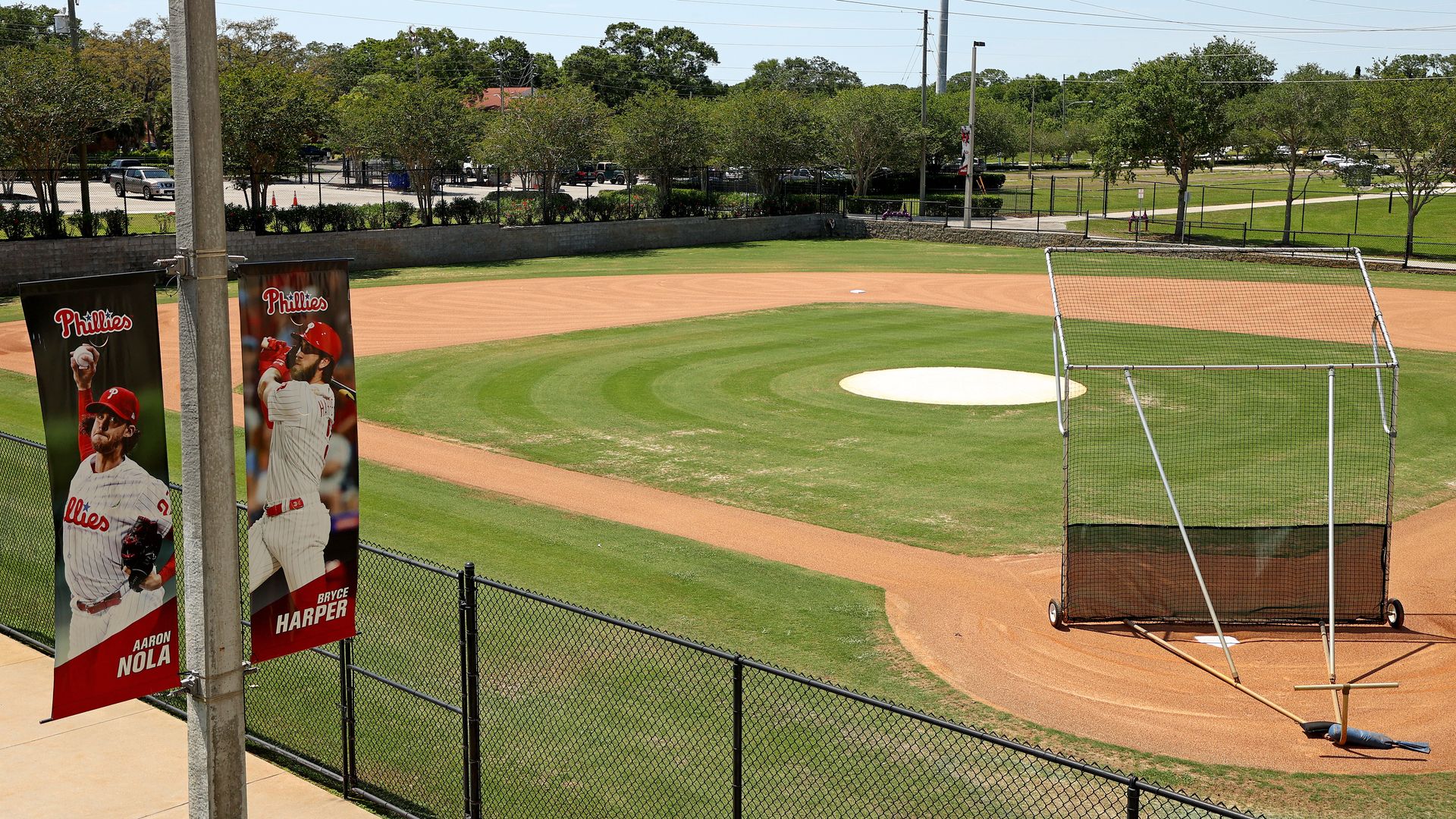
The Philadelphia Phillies announced Friday that the team would indefinitely close its Clearwater, Florida, spring training facility after five players and three staff members tested positive for the coronavirus.
Why it matters: The news, first reported by NBC Sports Philadelphia, illustrates just how challenging it will be to bring sports leagues back as some states — including Florida, the planned home for the NBA, MLS and WNBA — have seen a surge in new cases.
Sen. Marco Rubio (R-Fla.) introduced a bill on Thursday that would require the NCAA to change its rules by June 2021 regarding athletes' ability to profit off their name, image and likeness (NIL), while also protecting the NCAA from legal challenges to the new regulations.
The big picture: The NCAA is fearful that state-by-state action will lead to competitive unbalance and chaos and is hoping to work with Congress on passing national legislation, so they predictably endorsed Rubio's bill.
Dr. Allen Sills, the NFL's chief medical officer, told Axios that he's "very optimistic" about the league's season moving forward this fall — but cautioned that it won't be "football as usual."
Why it matters: "There are going to be a lot of changes in the way that we do things, from how we practice, to how we lay out our facilities, to how we travel, to how we organize sidelines and the on-field experience," he said.
The postponement of the Tokyo 2020 Summer Olympics was a serious economic blow for U.S. Olympic and Paralympic athletes and hopefuls.
The state of play: With seasons and events canceled, athletes are unable to earn appearance fees, prize money and performance bonuses from sponsors, all while continuing to train for Tokyo 2021.