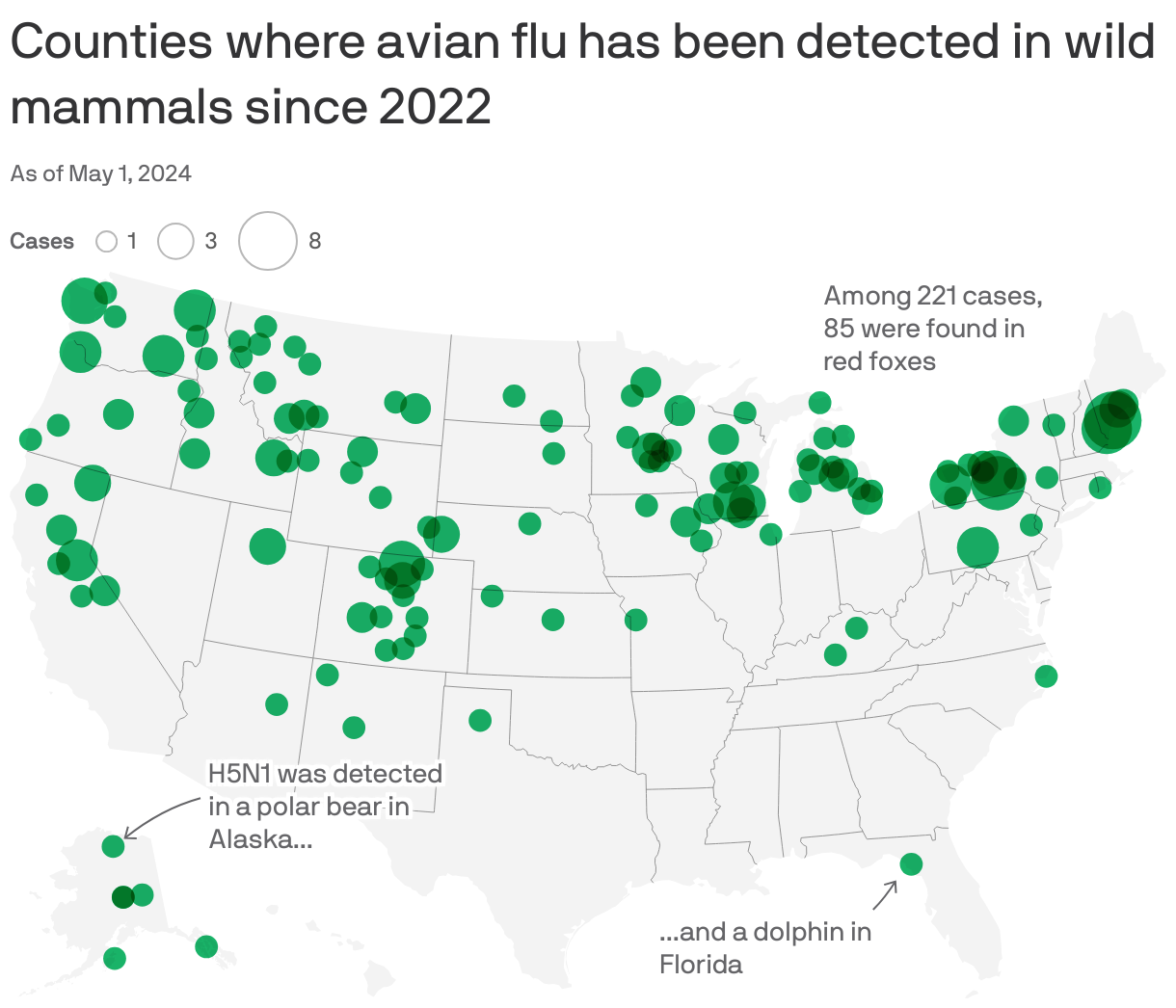
A polar bear in the Arctic, red foxes in Europe, penguins in Antarctica and a wide range of other wild animals have been infected with the flu virus strain currently spreading in dairy cattle in the U.S.
Why it matters: Up to 75% of new and emerging infectious diseases in people come from animals, and most of those can be traced back to wildlife. Monitoring wild animals for diseases can help scientists identify emerging health threats.
The bird flu outbreak in dairy cattle that's swept across nine U.S. states is posing perplexing questions about how the virus is spreading between animals and the risk posed to humans.
Why it matters: Detecting viral spread early and limiting how long the flu circulates in a population of animals cuts the odds it will mutate and adapt to other species.
China leads the U.S. as a top producer of research in more than half of AI's hottest fields, according to new data from Georgetown University's Center for Security and Emerging Technology (CSET) shared first with Axios.
Why it matters: The findings reveal important nuances about the global race between the U.S. and China to lead AI advances and set crucial standards for the technology and how it is used around the world.
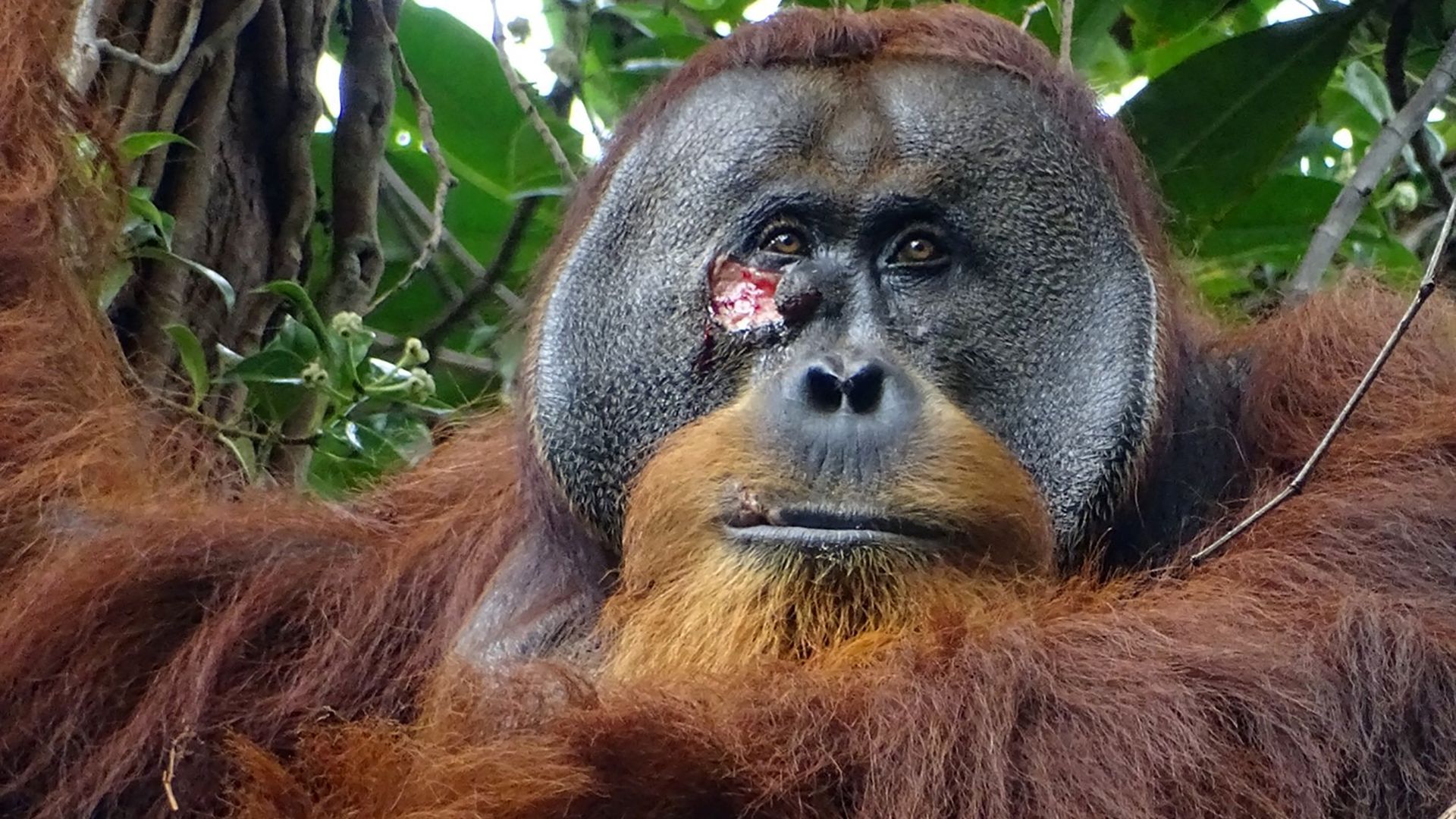
A wild orangutan was seen rubbing the mash of a medicinal plant in his wound, scientists reported Thursday.
Why it matters: It's believed to be the first documented case of the behavior in a wild animal and could point to the origins of wound care in humans, the researchers wrote.