A new algorithmcan produce realistic images from a text prompt, OpenAI announced this week.
The big picture: As advancements in artificial intelligence surge forward, projects like DALL-E 2 could help researchers to create systems that visualize the world around them.
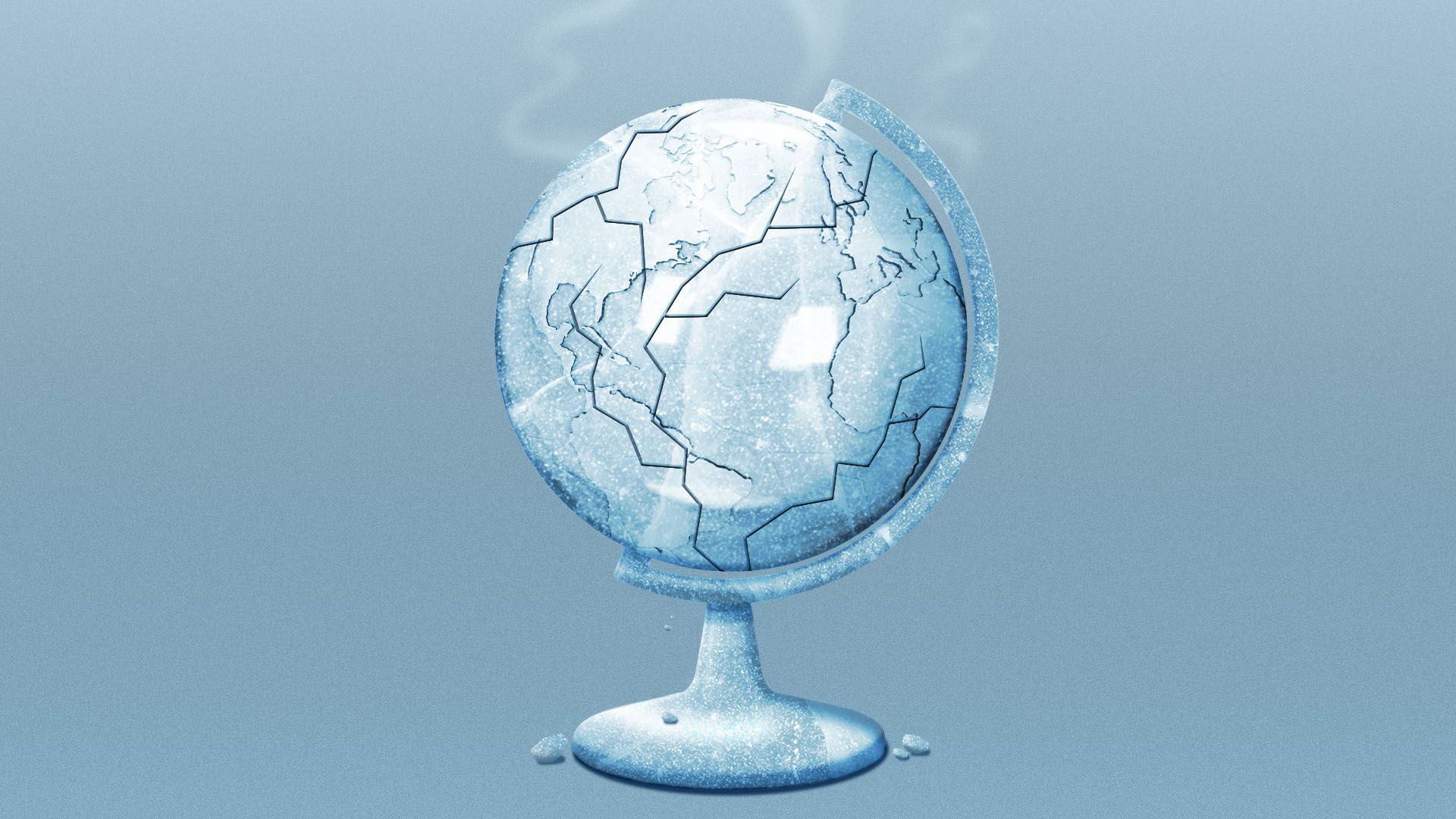
Crucial scientific projects in the Arctic are in limbo — and their progress is under threat — as Russia becomes more isolated from the world for its invasion of Ukraine.
Why it matters: These research collaborations provide key insights about the effects of climate change, the health of the oceans and geology — and they underpin cooperation among the U.S., Russia and others in the geopolitical hotspots of the Arctic and Antarctica.
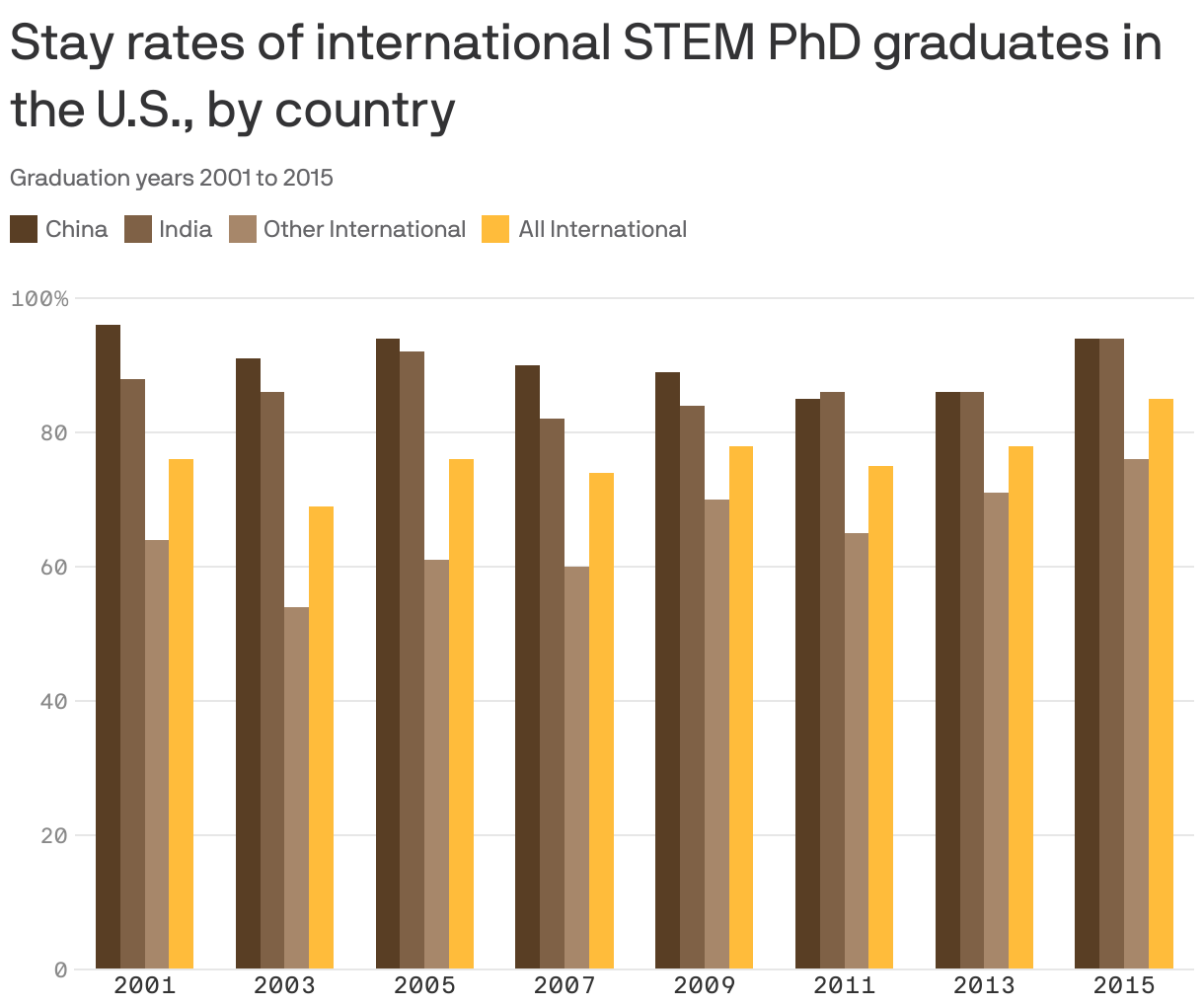
Data: National Science Foundation; Analysis: Center for Security and Emerging Technology; Chart: Baidi Wang/Axios
Most international students who received doctoral degrees in science, technology, engineering and math from U.S. universities between 2000 and 2015 remain in the country long after graduating, according to a new analysis.
Why it matters: The data suggests concerns about many U.S.-trained researchers returning to their home countries with skills and knowledge that could pose national security risks to the U.S. are "largely unfounded," researchers at Georgetown University's Center for Security and Emerging Technology write.
Teams of Hubble Space Telescope astronomers studying massive, extremely hot Jupiter-like exoplanets have found evidence of extreme weather conditions — like raining vaporized rock — and atmospheric chemistry occurring on the worlds, NASA announced Wednesday.
Why it matters: Studying the exotic weather on these uninhabitable gas giants can help researchers better understand Earth's atmosphere and the atmospheres of other potentially inhabitable terrestrial planets.
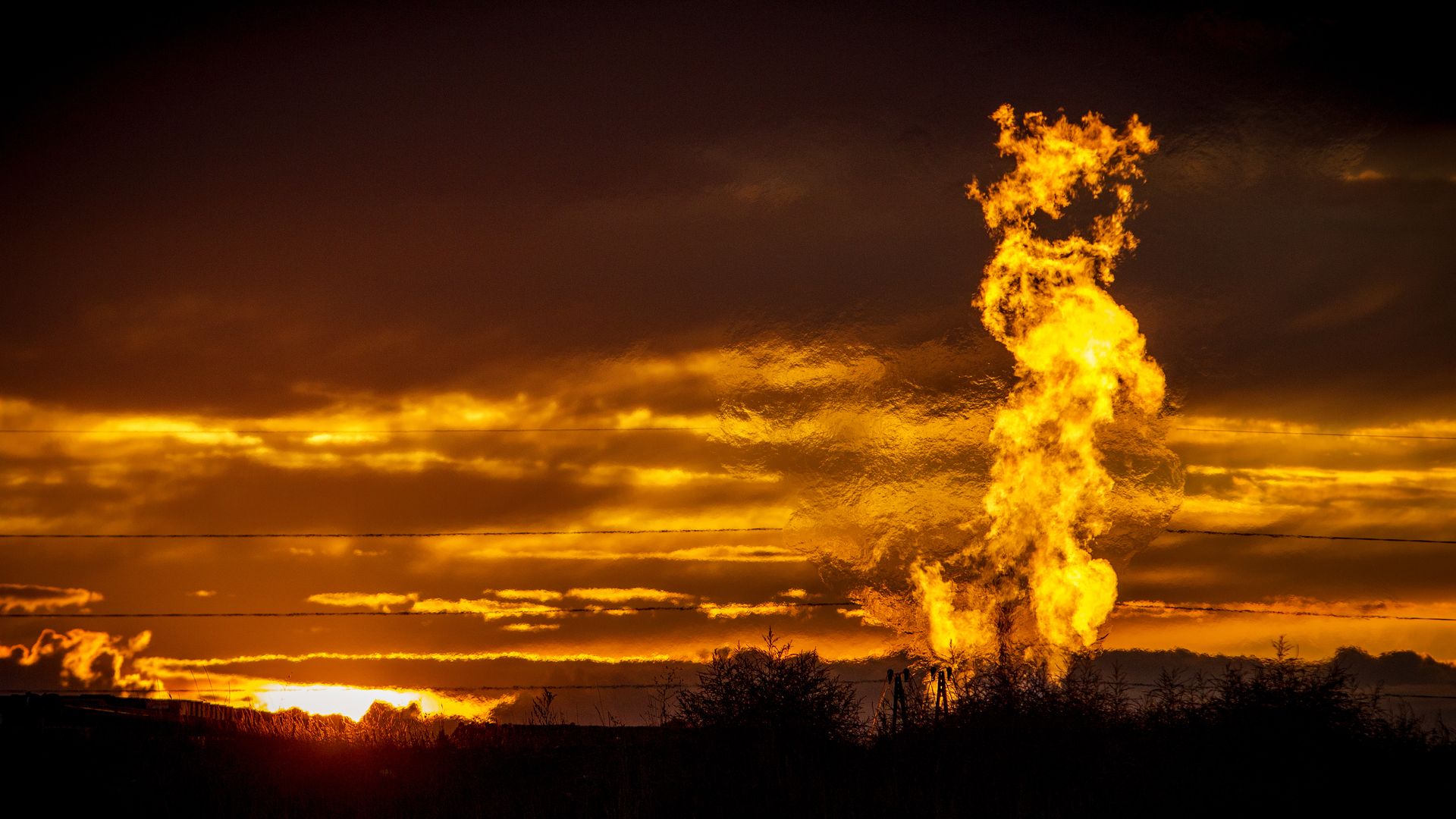
For the second straight year, scientists at the National Oceanic and Atmospheric Administration (NOAA) are reporting a record increase in the level of methane in the atmosphere, along with a significant jump in carbon dioxide (CO2) levels.
Why it matters: These are the two most important greenhouse gases, with CO2 lasting in the air for centuries to millennia, and methane, which is a stronger warming agent, exerting its warming influence on the timescale of about a decade.
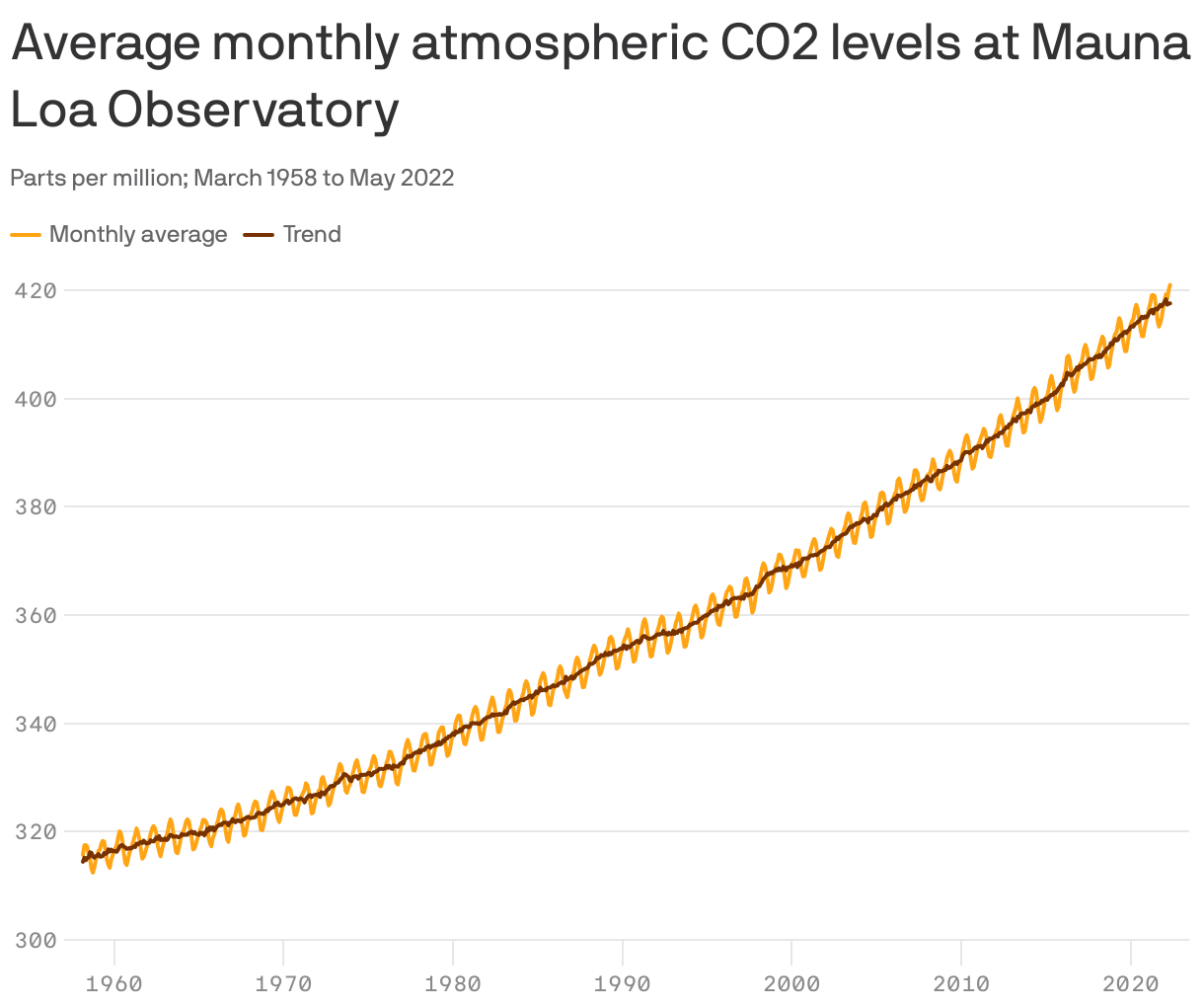
Data: NOAA and the Scripps Institution of Oceanography; Chart: Thomas Oide/Axios
Monthly average carbon dioxide (CO2) levels are very likely to hit or even exceed 420 parts per million during the month of April, according to readings at the Mauna Loa Observatory in Hawaii.
Just as the spring tornado season kicks into high gear, the National Weather Service is facing shortages in key gases it uses to fill weather balloons.
Why it matters: Weather balloons are usually launched twice daily at about 100 locations nationwide and provide vital information for weather forecasting, from the temperature profile of the atmosphere to the winds aloft. They can help anticipate severe thunderstorms, for example.