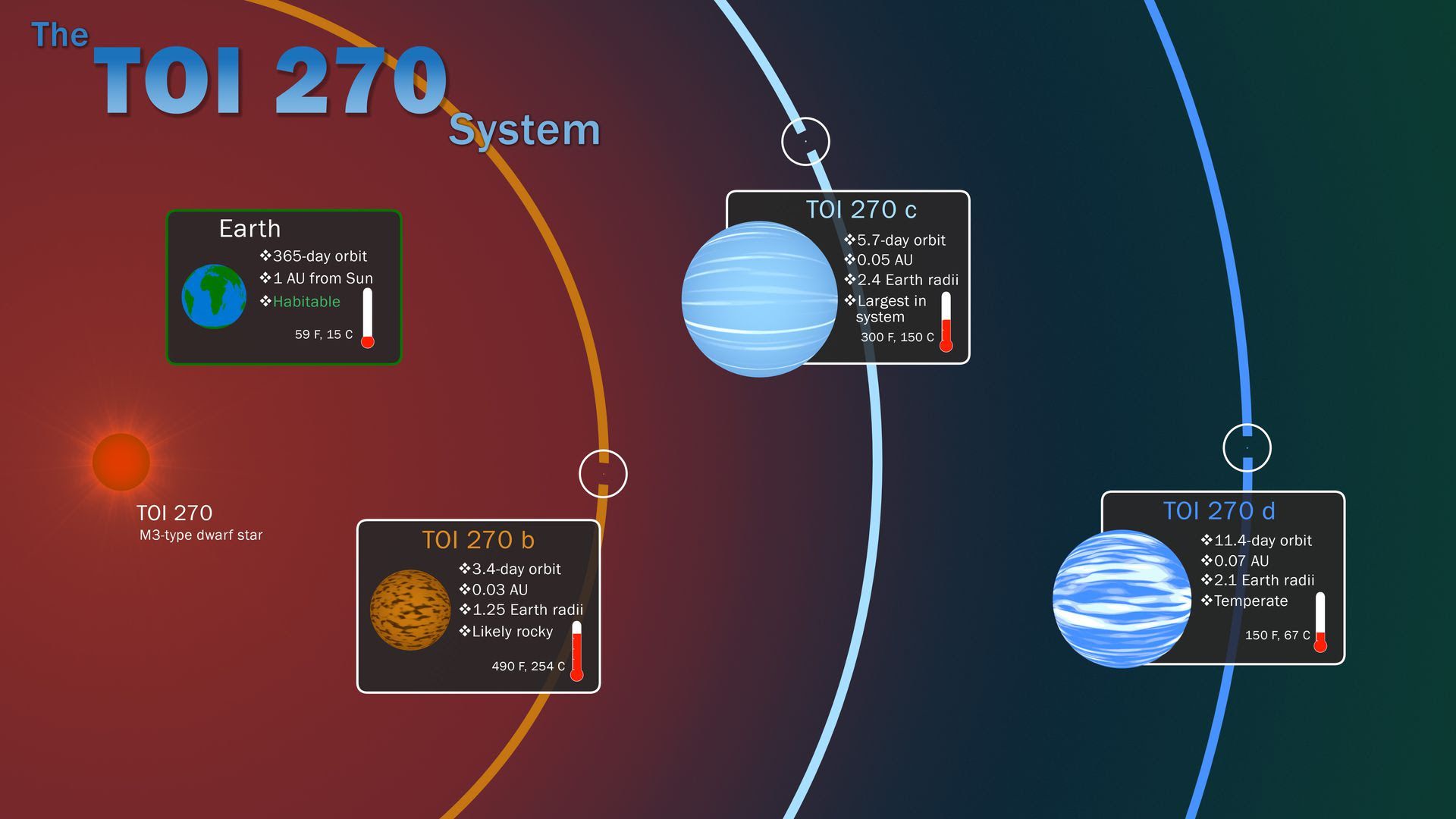
Three newly discovered planets just 73 light-years from our own are helping scientists learn more about the diverse solar systems that populate our galaxy, according to a new study in the journal Nature Astronomy.
Key takeaway: The 3 worlds all reside in the TOI-270 star system, a solar system that is very different from our own.
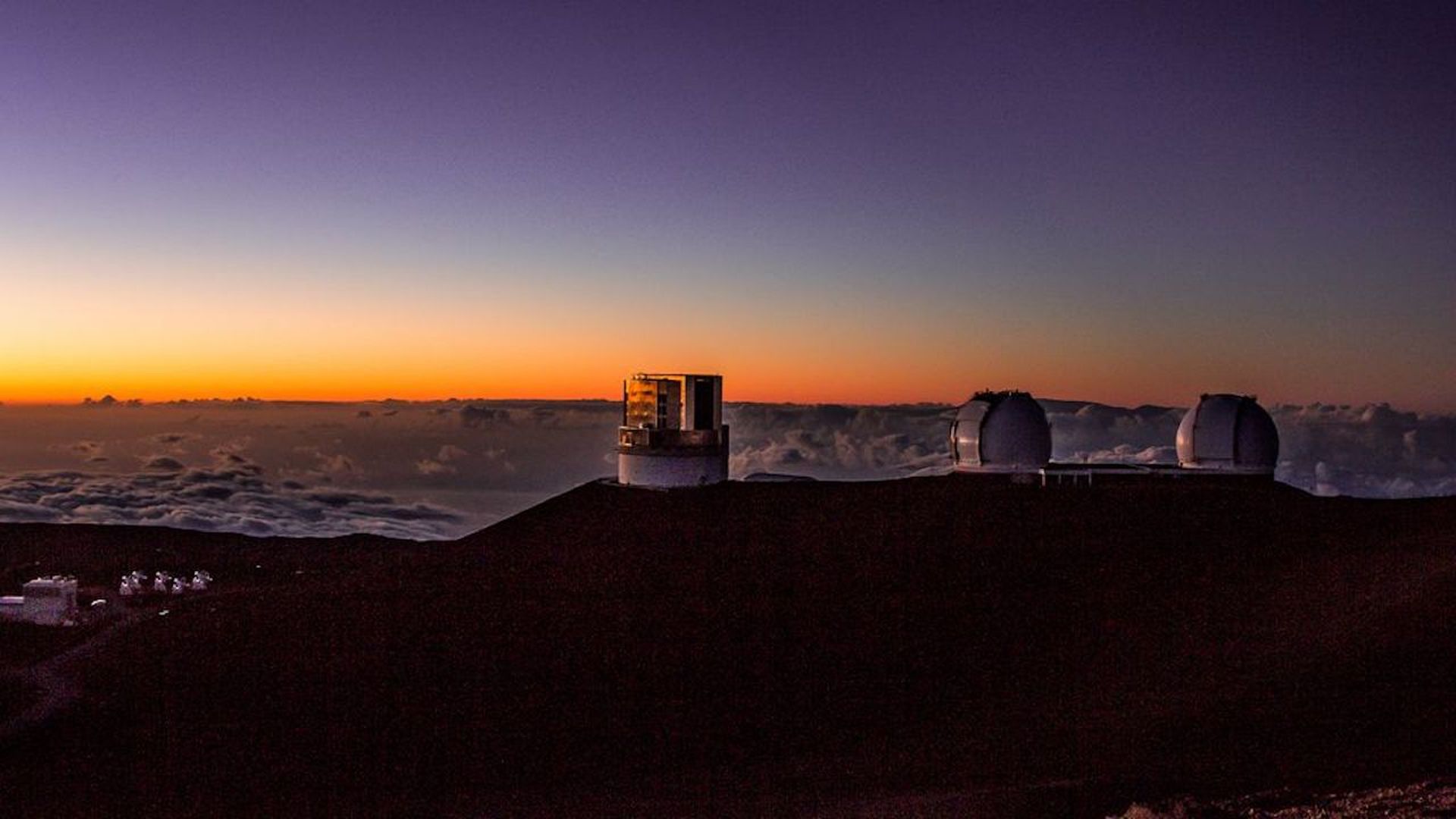
The protest this week on Mauna Kea opposing the construction of the Thirty Meter Telescope (TMT) is, at its heart, about who has a say in how science is done.
Why it matters: The TMT is designed to be larger and more sensitive than any other optical telescope in use today, and it could revolutionize how astronomers conduct their work.
Scientists continue to find dangerous asteroids in Earth's vicinity, but to fully capture the threat these nearby space rocks pose, they need tools that aren't in operation now and may not be for years to come.
Driving the news: Last week, an asteroid large enough to destroy a city buzzed by Earth not long after scientists first spotted it.
Some six millennia ago, temperatures abruptly plunged, and a profound drought ensued in the then-tropical Middle East: To survive, people abandoned their land, migrated, and ultimately organized into a string of cities, stewarded over by strong rulers including the pharaohs in Egypt.
Quick take: Today, geopolitics usually mean war, human ego, big economics, or disease. But the Middle East drama in the third and fourth millennia BC illustrates the much-underestimated role of earthly forces in shaping and utterly turning history — and is a window into what may be in store for current and future generations.

/2019/07/30/1564506057873.gif?w=3840)