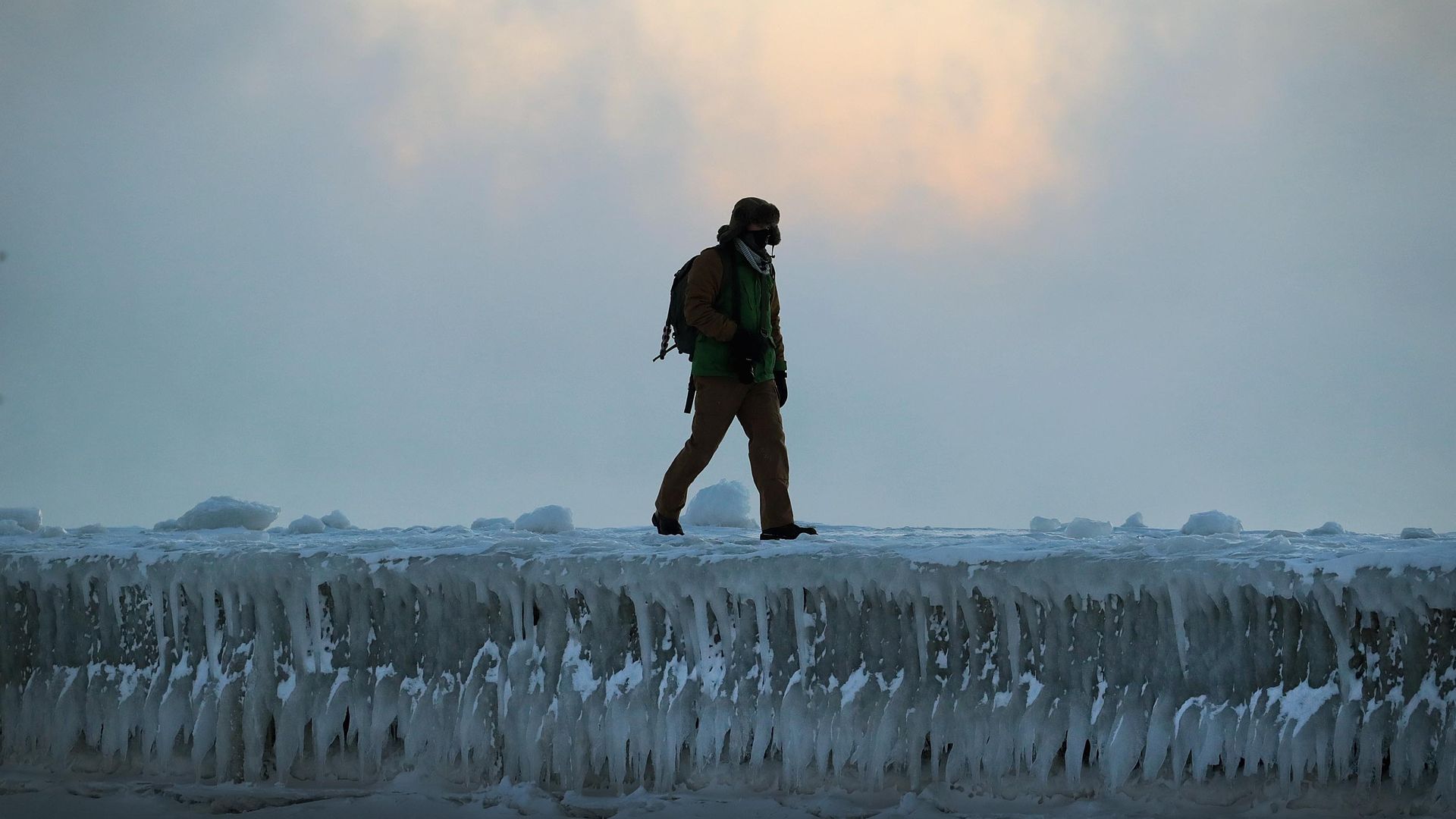
The polar vortex came swirling back into the U.S. this week, bringing with it record cold temperatures not seen in 20-plus years, and wind chills capable of causing frostbite in mere minutes.
Why it matters: It was a reminder that it's possible to have extreme cold in a warming world. That's partly because there will always be weather variability. But there's also some evidence that, paradoxically, global warming may be leading to more frequent disruptions of the polar vortex — which can cause extreme cold and high-impact winter storms across the U.S., Europe and Asia.
Cities across the Midwest and Northeast U.S. set new record low temperatures Wednesday and Thursday morning as a once-in-a-generation cold snap swept through the U.S. The frigid conditions have been linked to at least nine deaths already.
The big picture: An air mass that originated in the High Arctic is sweeping through the U.S., but even though temperatures are expected to start easing this afternoon and be above freezing this weekend in parts of the Midwest, this is likely not the last time this kind of sudden cold snap could affect large portions of the nation. Recentstudies show climate change could cause more southward jogs of the polar vortex in the future.
An extreme winter weather event is unfolding across the Midwest on Wednesday through Thursday, and numerous daily and some all-time temperature records have been shattered.