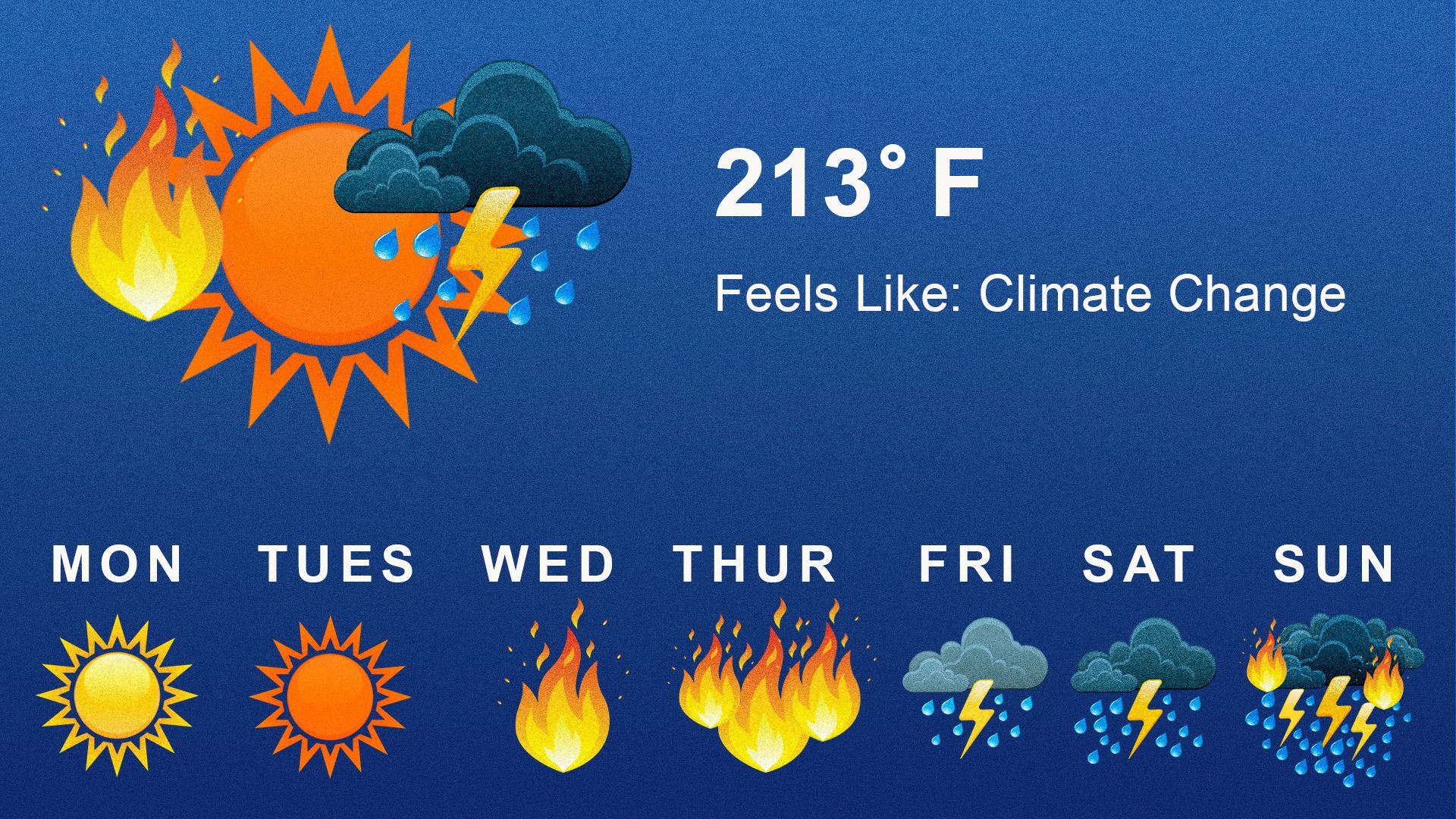
The deadly heat waves, floods and fires occurring from Japan to the Middle East, and North America to Europe have clear links to human-caused climate change, according to climate scientists, and this summer's abnormal weather is just the beginning of what's in store for us in coming years.
Why it matters: The biggest near-term impacts of climate change on society come in the form of weather and climate extremes, so this summer illustrates the danger of even a relatively small amount of warming. So far, the planet has only warmed by close to 1°C, or 1.8°F, above preindustrial levels. We're on a trajectory to reach 3 degrees Celsius, or 5.4°F, by 2100.
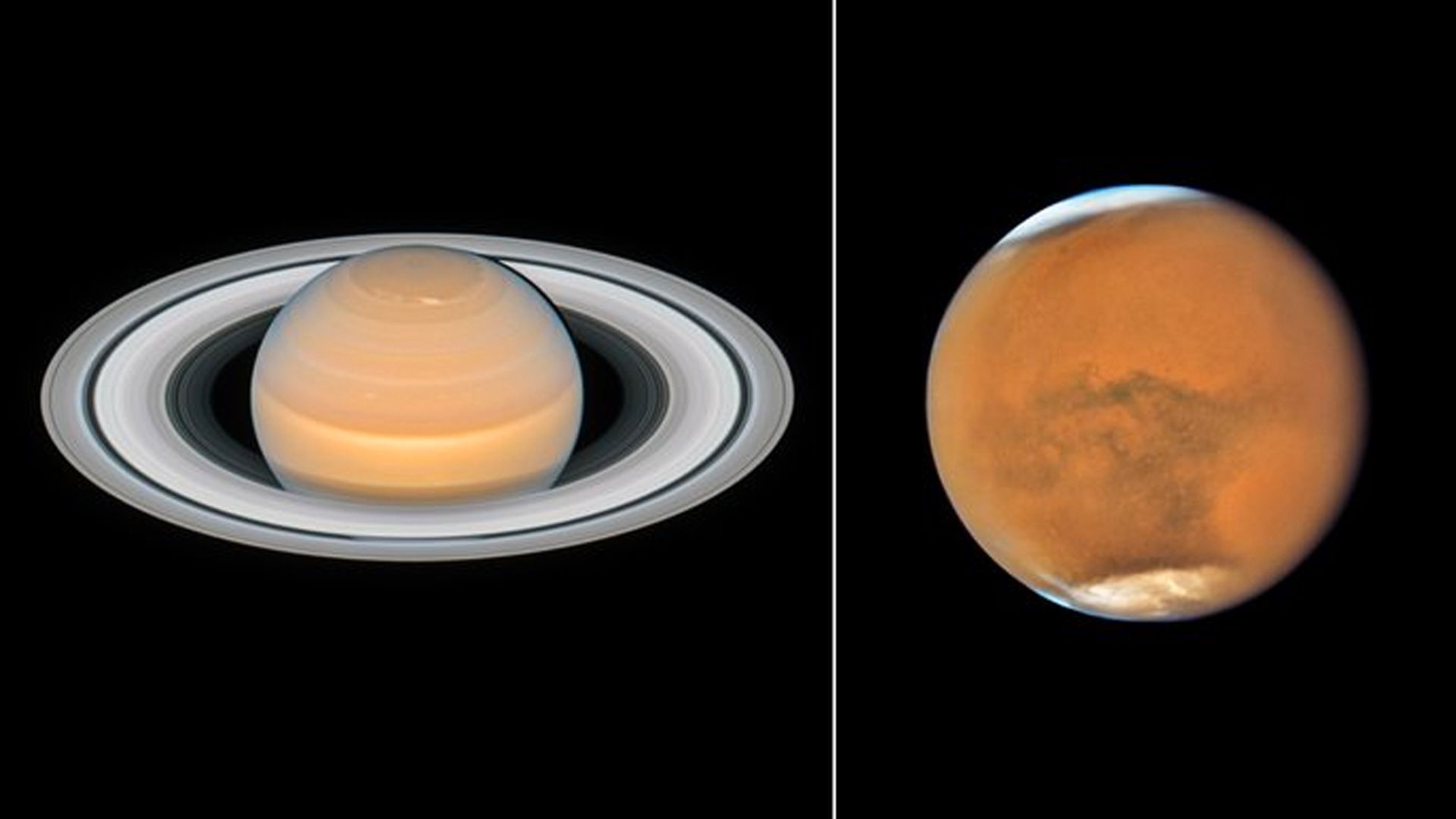
The NASA/ESA Hubble Space Telescope has captured new photos of Saturn and Mars, taken shortly before each was at its closest point to Earth, referred to as being in opposition. This occurs when the Sun, Earth and an outer planet are lined up, with Earth directly in between the two. The outer planet is fully lit up by the Sun as seen from Earth, according to the ESA.
The details: Opposition allows astronomers to notice details on the planet's surface more clearly. The image of Saturn shows its ring system tilted towards Earth, which put its rings and the gaps between them on full display — the rings stretch out eight times the radius of the planet. Saturn was in opposition to Earth on June 27, and Mars will be on July 27, the ESA said.
Hubble's image of Mars shows a "gigantic sandstorm enshrouding the entire planet," as well as the planet's white polar ice caps. These images allow astronomers to examine "how cloud patterns and large-scale structures on other planets in our Solar System change over time," the ESA said.
Small-bodied anole lizards (Anolis scriptus) do not run and hide from oncoming hurricanes like one might think. Instead they cling to tree branches for survival, their bodies transforming into sails, anchored in place thanks to toe pads.
Why this matters: A new study published in the scientific journal Nature this week found that hurricanes can accelerate natural selection, favoring anole lizards that have larger toeholds and shorter rear legs. It also may help solve an enduring mystery about these commonly found lizards.


/2018/07/26/1532626627379.gif?w=3840)