Every second on Earth, 100 lightning bolts strike the planet. That's about 8 million strikes per day, and 3 billion a year, on average. But as this map of nearly 9 billion lightning strikes shows, lightning is not evenly distributed around the world.
The bottom line: Each continent, except for the frozen reaches of Antarctica, has lightning hotspots — usually the parts that have clashing air masses or mountains. Spin the map and see where you're at the greatest risk of getting zapped.
The most important instrument on board a newly-deployed, state-of-the-art U.S. weather satellite is malfunctioning, the National Oceanic and Atmospheric Administration (NOAA) said Wednesday. The satellite in question is part of the GOES-R program of geostationary satellites that orbit above a fixed location on Earth.
The problem: The problem concerns an instrument known as the Advanced Baseline Imager, or ABI, aboard the satellite. During the trial run following the satellite's launch on March 1, the instrument, which functions as the satellite's eyes on our planet, showed irregularities.
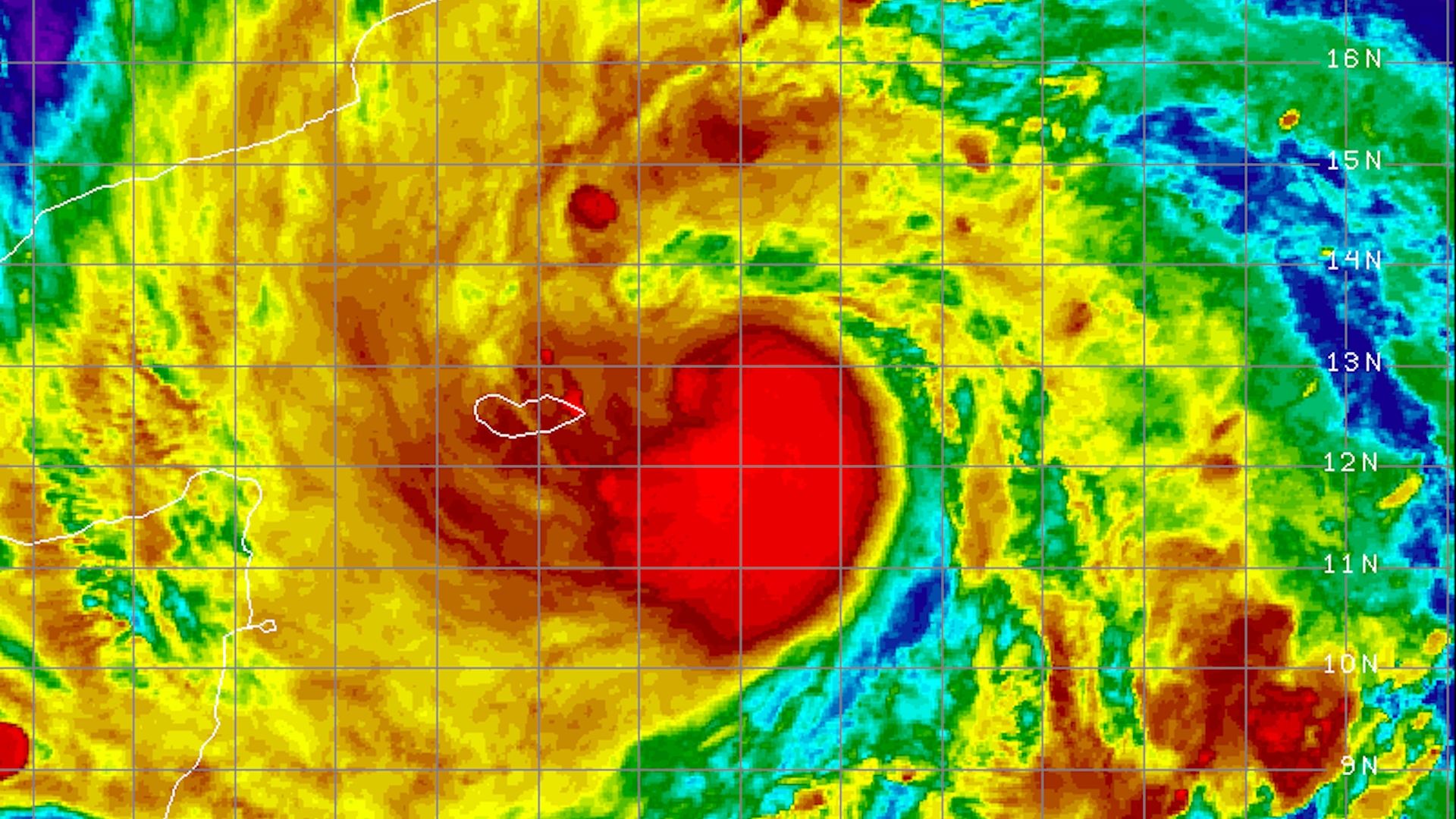
Tropical Cyclone Mekunu is gathering strength in the Arabian Sea, where it could become the equivalent of a Category 2 or even Category 3 storm prior to making landfall in an unusual place: Southwestern Oman.
Why it matters: The storm is projected to move to the north-northwest through Saturday, eventually making landfall near the port city of Salalah. The city has a population of about 360,000, and typically receives just 5 to 8 inches of rain in an entire year. This storm could bring that same amount in under a day, presenting the risk of life-threatening flash flooding, in addition to damage from high winds.