Thursday's science stories

Scientists detect signals from first stars in the universe
Scientists have detected a signal from what may be the universe’s first stars, which started shining about 180 million years after the Big Bang, reports Space.com. The signal was so strong, scientists think it may have been caused by early star material interacting with dark matter.
Why it matters: "It’s quite possible that this is worth two Nobel Prizes,” if the interpretation is correct, theoretical astrophysicist Avi Loeb of Harvard University told Science News. One prize for finding cosmic dawn, and another because of the implications for understanding dark matter.
Potential life faces tough road near neighboring stars
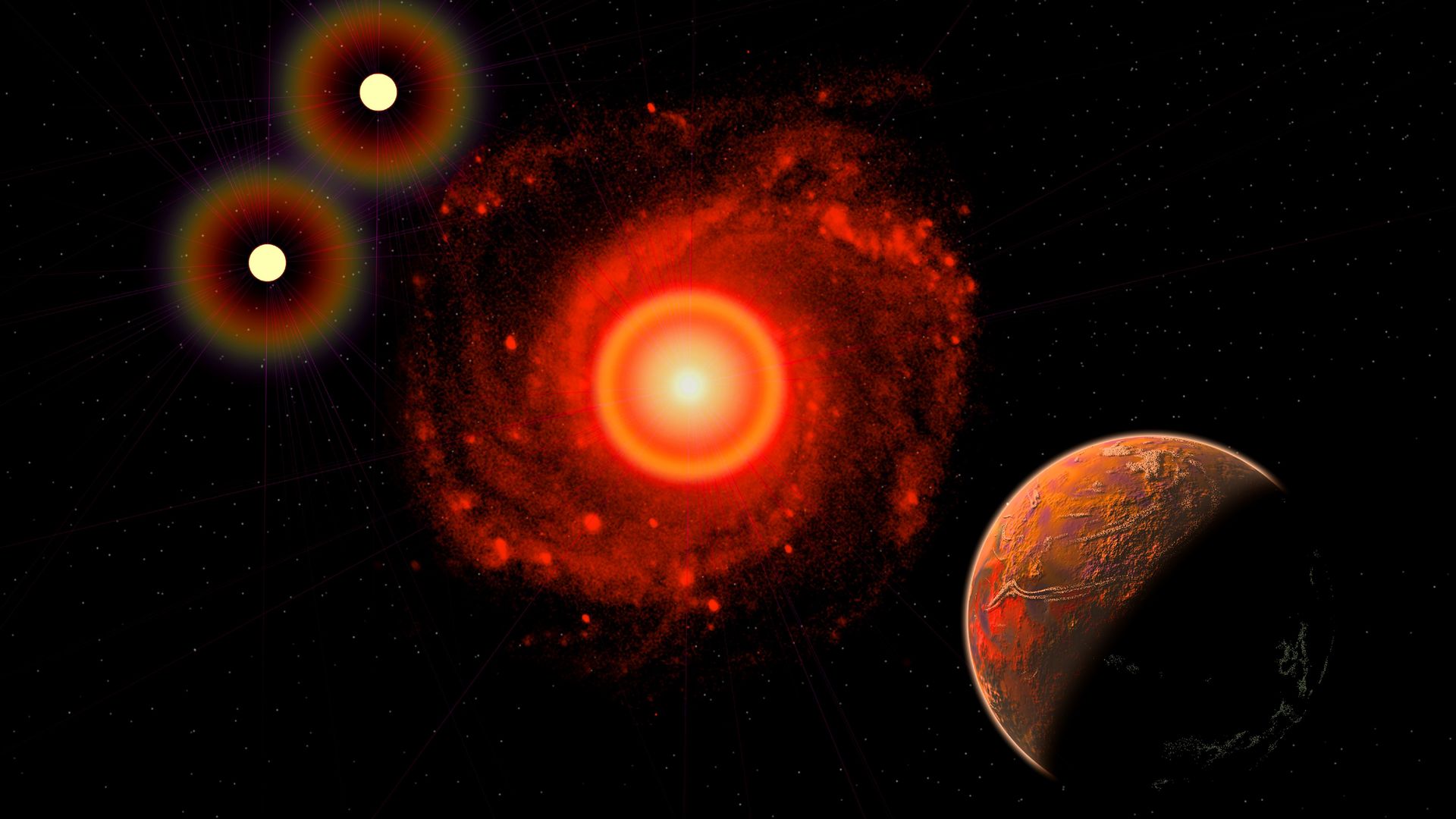
Small stars are unpredictably violent, as seen in recent observations of a powerful flare ejected from our nearest neighbor Proxima Centauri that wowed astronomers. Proxima b, a small rocky planet orbiting within the star's "habitable zone," was surely irradiated when the star flared to over 1,000 times its usual brightness in a matter of 10 seconds. Whether life could survive such extreme conditions is unknown.
Why it matters: Proxima b was a tantalizing candidate in the search for life that perhaps has been all but wiped out. Small dwarfs are the most common variety of stars in our galaxy. It's possible that the majority of planets — which we continue to learn are common, too — circle these weak stars. And, we're finding more and more planets in the habitable zones of these red dwarf stars, meaning liquid water could potentially exist on their surfaces. But if they aren't hospitable, the arena to look for viable life may shrink again.
One more thing: If any life arises on a planet like this, they'll have a view quite unfamiliar to us. Their small parent star is less energetic, and instead of emitting bright white light it instead fills their skies with redder hues.
Paul Sutter is a cosmological researcher at Ohio State University's Center for Cosmology and Astro-Particle Physics.

Earth bacteria could survive on one of Saturn's moons
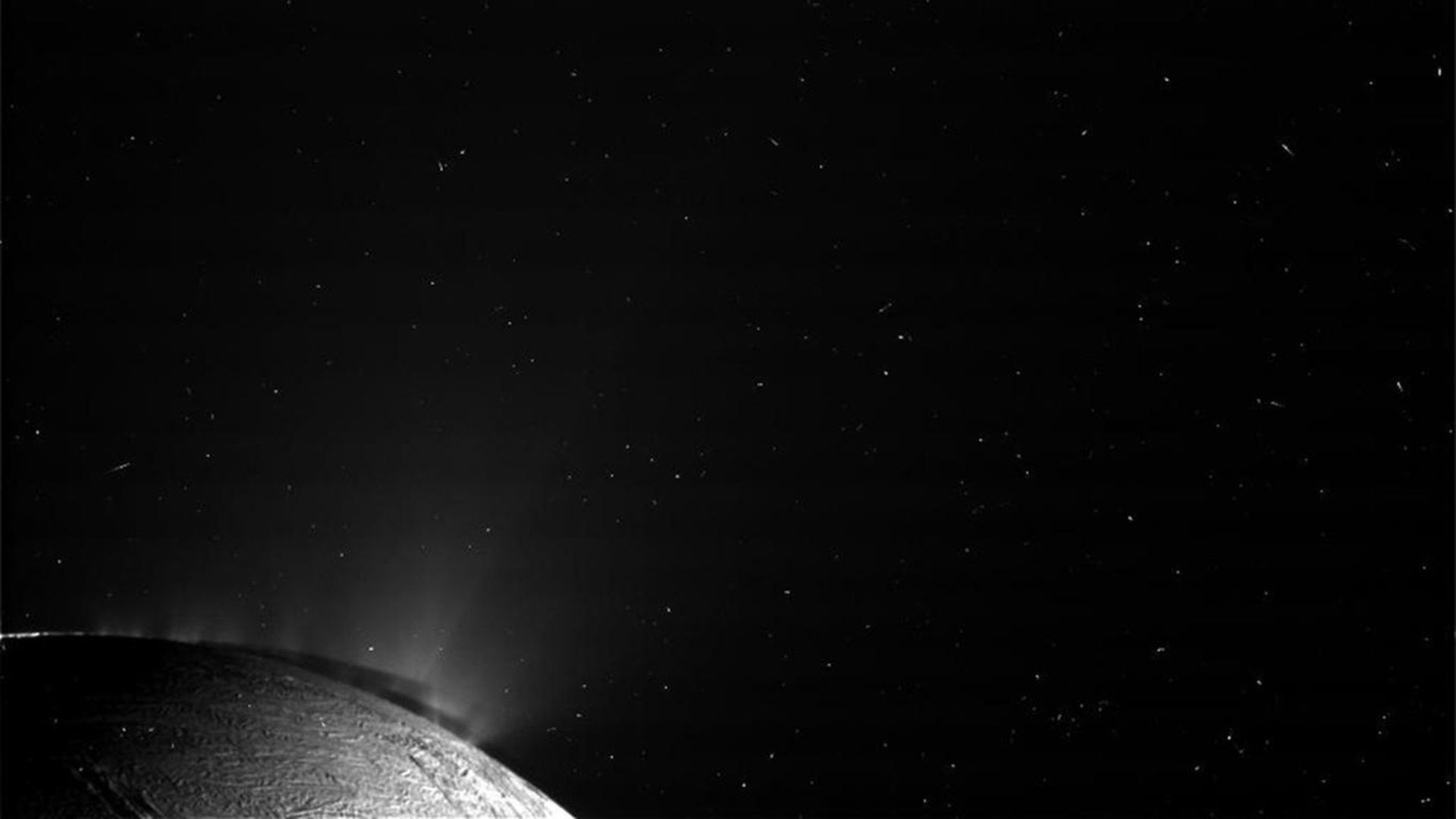
Bacterial life could survive in the ocean beneath the surface of one of Saturn’s icy moons, according to new research published Tuesday in the journal Nature Communications.
Why it matters: The Saturnian moon Enceladus is considered one of the best possible places to look for life in our solar system — and our galaxy — so far. If we were to find life on Enceladus, it would also broaden the types of places we could search for life. Right now, we just look for Earth-like planets close enough to the sun to have liquid water.