Friday's science stories

Harvey intensifies to Category 4 storm
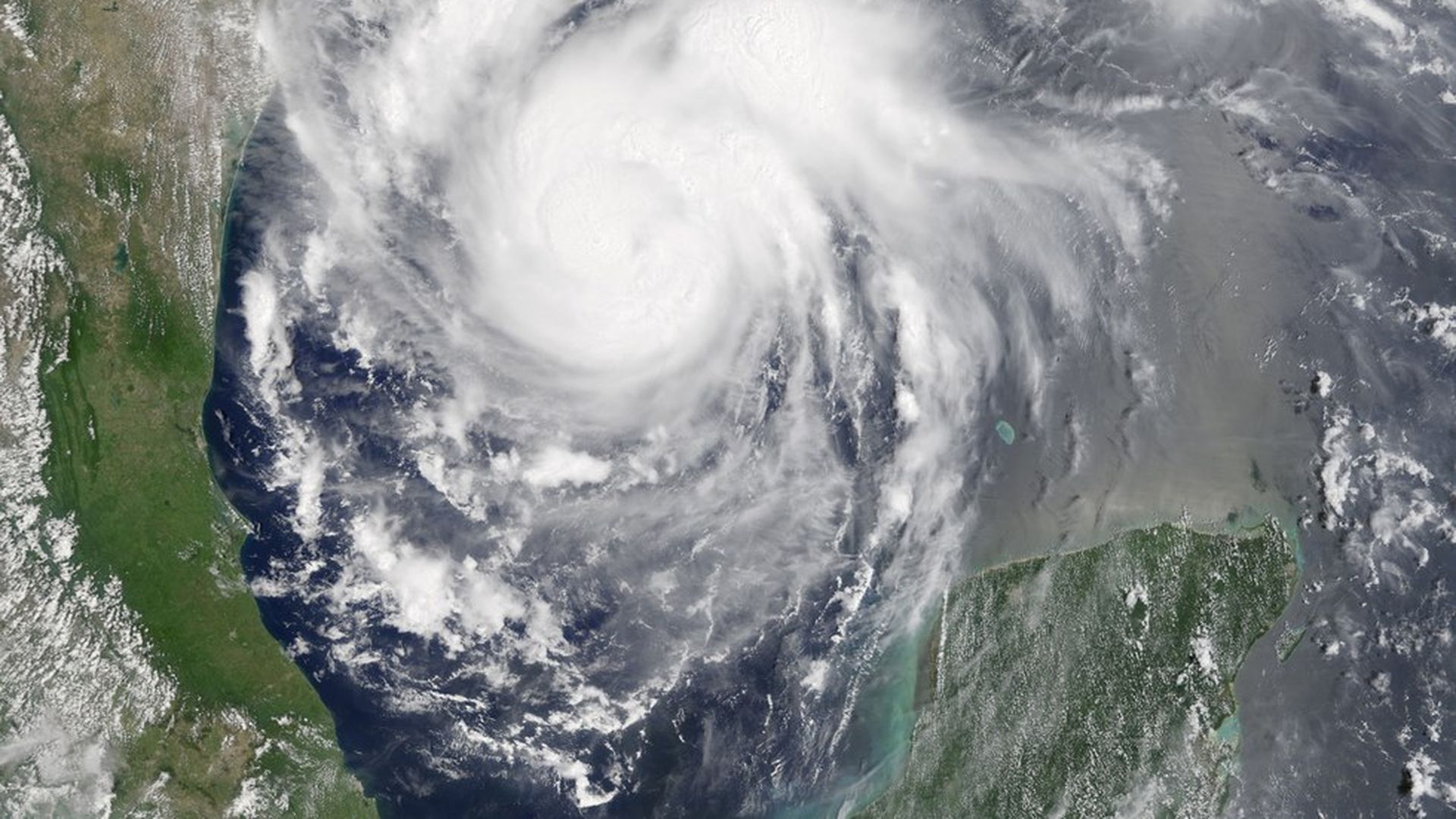
Hurricane Harvey is officially a Category 4 storm with winds of 130 mph, per the National Hurricane Center, setting the stage for Harvey to become the first major hurricane to make landfall in the United States in over a decade.
- As of 7 p.m. ET, Harvey was 45 miles east of Corpus Christi, and moving northwest at just 8 mph with landfall expected sometime overnight. Corpus Christi had "strongly [encouraged]" its residents to evacuate as Texas Gov. Greg Abbott declared that the storm would be a "very major disaster" for his state during an afternoon press conference.
- Harvey is expected to stall out on the Texas coast for days, potentially bringing feet of rain.
- The National Hurricane Center's forecast: "Harvey is expected to produce total rain accumulations of 15 to 30 inches and isolated maximum amounts of 40 inches over the middle and upper Texas coast...Rainfall of this magnitude will cause catastrophic and life-threatening flooding."
From Rick Knabb, former director of the National Hurricane Center: "[It's] rare that I've seen a hurricane threat that concerns me as much as this one does."

Harvey likely to cause gas price surge
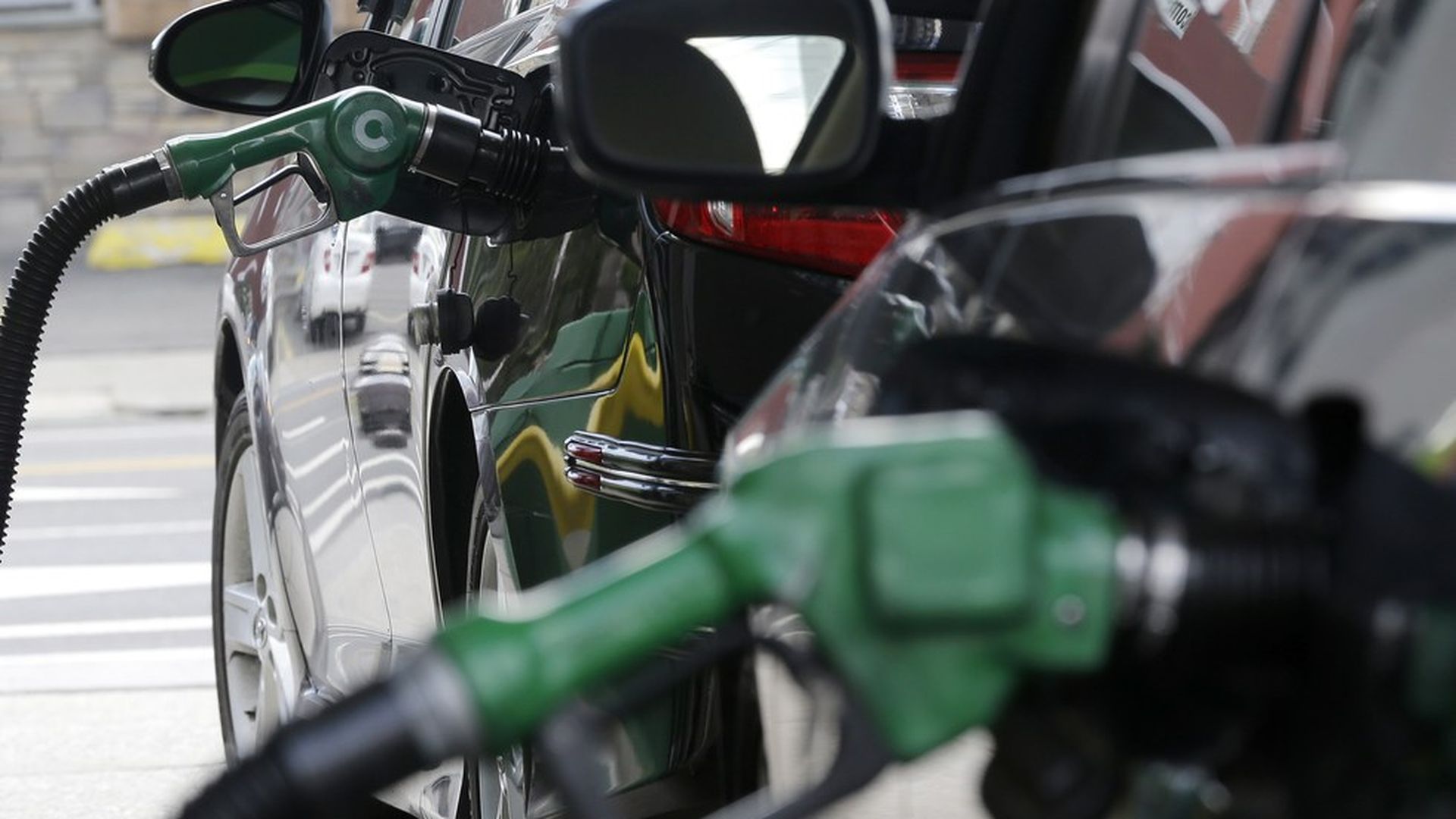
Hurricane Harvey, expected to make landfall this weekend over southeast Texas, could cause gas prices to surge due to the oil and natural gas infrastructure in the region, according to the U.S. Energy Information Administration.
- The U.S. Gulf of Mexico accounts for about 20% of U.S. crude oil production. Texas accounts for about a quarter of U.S. natural gas production. Some refineries are expected to shut down temporarily and many oil and natural gas operators have already evacuated.
- An increase of 5 to 15 cents per gallon is most likely but could increase by as much as 25 cents, Oil Price Information Service analyst Tom Kloza told the AP.
- Flashback: Take it from Gustav, Ike, and Isaac — they on average shut down more than one million barrels per day of crude oil production and more than 3 billion cubic feet per day of natural gas production, as well as pipeline and refining capacity.
Map: Every storm that has hit Texas since 1960

Why it matters: Hurricane Harvey is expected to wallop the Texas Coast, lingering through the weekend and bringing heavy rains and catastrophic flooding. Current forecasts present a possibility of the storm returning to the Gulf and then heading to Houston — the heart of America's petrochemical industry.
Hurricane Harvey could bring "catastrophe" to Texas coast
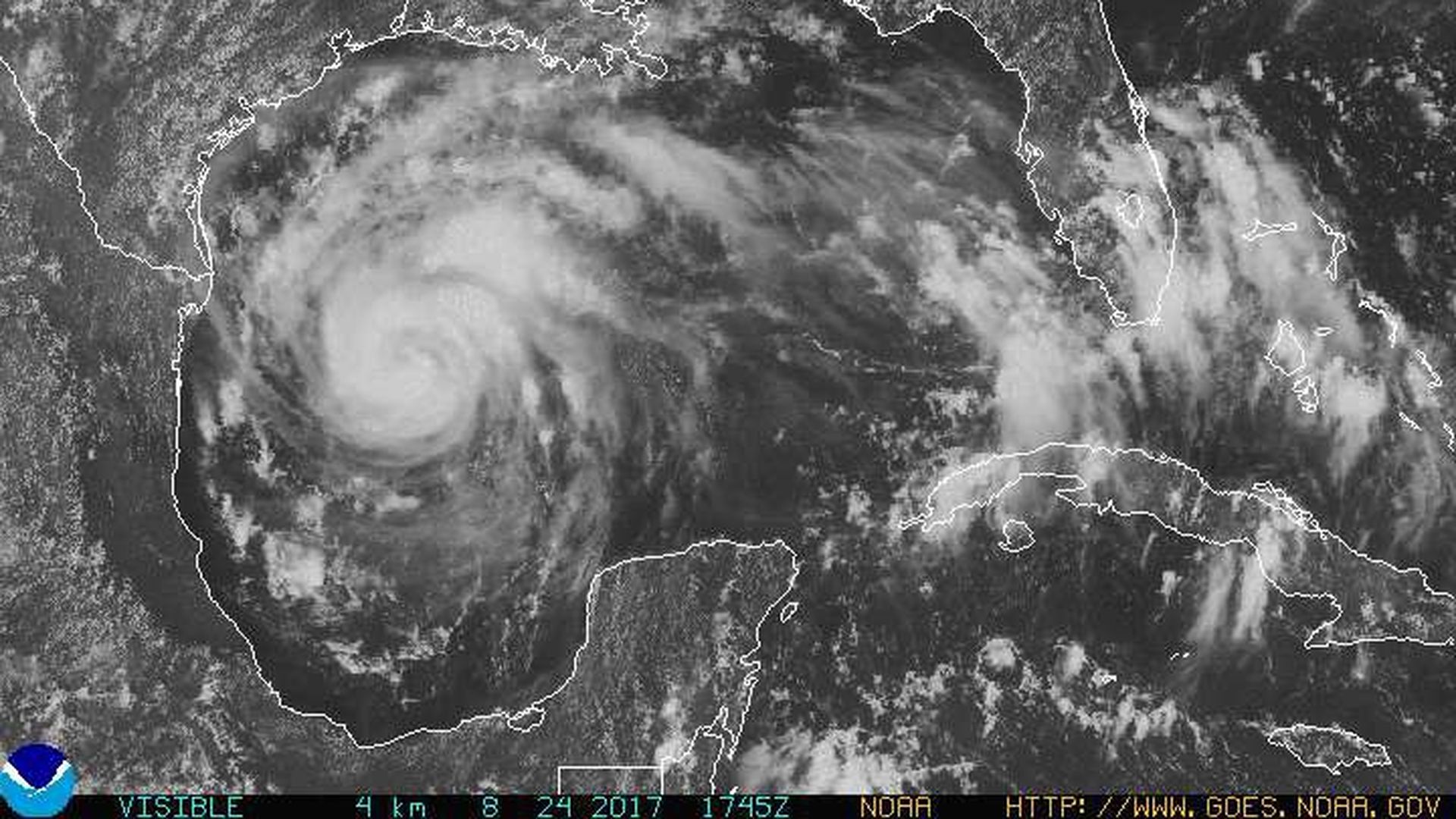
Harvey officially reached hurricane status in the Gulf of Mexico this afternoon after a period of rapid intensification, setting the stage for the first landfall of a major hurricane in the United States since Hurricane Wilma in 2005, per The Washington Post's Capital Weather Gang.
- Where it's headed: Harvey's expected to show up somewhere along the Texas coast on Friday night. The biggest city in the hurricane warning zone is Corpus Christi (population: ~325,000), but it looks highly possible that Houston will receive historic rainfall.
- The biggest impacts: The rain from Harvey is the biggest threat as the storm is expected to stall out on the Texas coast for days, causing some weather models to predict over four feet of rain in certain areas. With predicted winds of 115 mph and a storm surge of 6 to 12 feet, there's the possibility for 900,000 people across Texas to lose power.
The future of data storage might be frozen

Researchers at the University of Manchester in the UK have shown that by controlling the magnetic properties of individual molecules, it could be possible to create hard drives that can store 30+ terabits of data per square centimeter, New Scientist reports.
- Because the molecules are unstable, they have to be frozen to -213° Celsius. With those temperature requirements, this won't work for amping up your cell phone storage.
- Hard drives on desktops are divvied up into small magnetized areas that encode data in the direction of molecules' magnetic fields. Until now, this approach has limited how small a hard drive can be because single molecules can't remember their magnetic direction. The researchers were able to do get a molecule to do that at -213°C.
- What's next: They want to make it work at -196°Celsius so it can be used in data centers cooled with liquid nitrogen. Another possibility? Space-based data centers operating at a cool -270°C.