Thursday's science stories

Hurricane Harvey could bring "catastrophe" to Texas coast
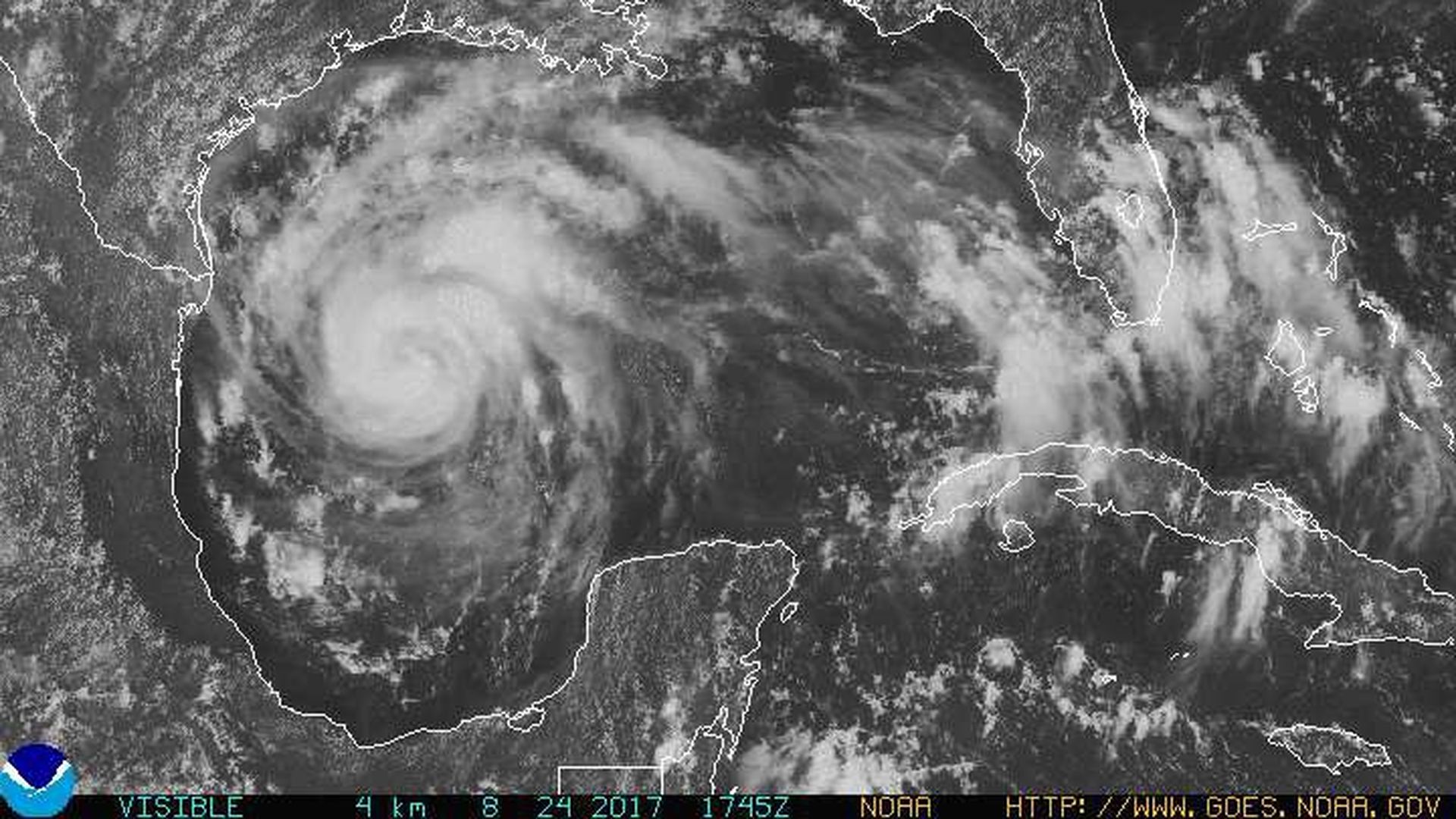
Harvey officially reached hurricane status in the Gulf of Mexico this afternoon after a period of rapid intensification, setting the stage for the first landfall of a major hurricane in the United States since Hurricane Wilma in 2005, per The Washington Post's Capital Weather Gang.
- Where it's headed: Harvey's expected to show up somewhere along the Texas coast on Friday night. The biggest city in the hurricane warning zone is Corpus Christi (population: ~325,000), but it looks highly possible that Houston will receive historic rainfall.
- The biggest impacts: The rain from Harvey is the biggest threat as the storm is expected to stall out on the Texas coast for days, causing some weather models to predict over four feet of rain in certain areas. With predicted winds of 115 mph and a storm surge of 6 to 12 feet, there's the possibility for 900,000 people across Texas to lose power.

The future of data storage might be frozen

Researchers at the University of Manchester in the UK have shown that by controlling the magnetic properties of individual molecules, it could be possible to create hard drives that can store 30+ terabits of data per square centimeter, New Scientist reports.
- Because the molecules are unstable, they have to be frozen to -213° Celsius. With those temperature requirements, this won't work for amping up your cell phone storage.
- Hard drives on desktops are divvied up into small magnetized areas that encode data in the direction of molecules' magnetic fields. Until now, this approach has limited how small a hard drive can be because single molecules can't remember their magnetic direction. The researchers were able to do get a molecule to do that at -213°C.
- What's next: They want to make it work at -196°Celsius so it can be used in data centers cooled with liquid nitrogen. Another possibility? Space-based data centers operating at a cool -270°C.
Scientists capture most detailed image yet of star other than Sun
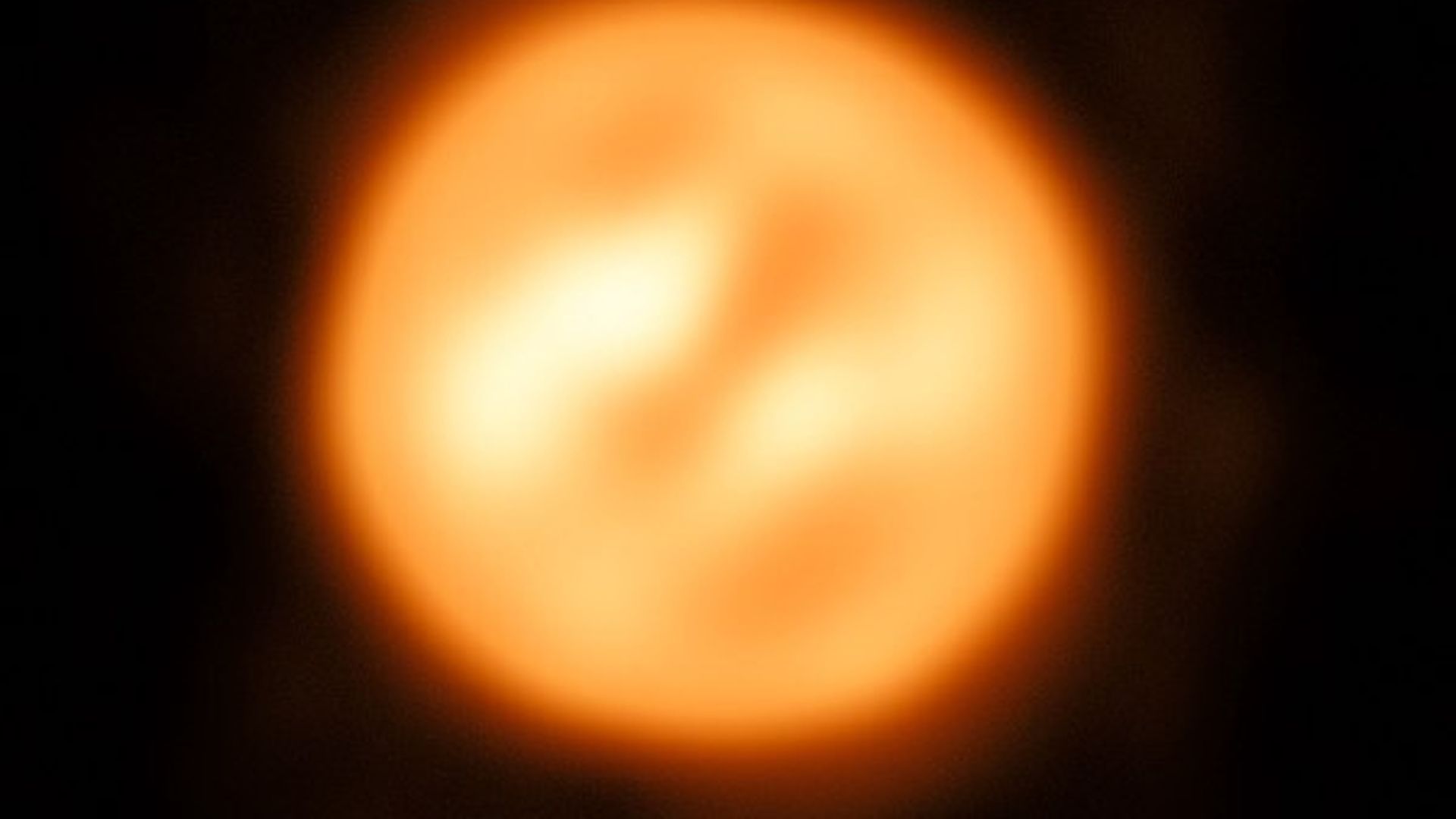
Scientists at the European Southern Observatory have captured the most detailed image of a star other than the Sun by mapping the motions of the surface of the red supergiant Antares — 550 lightyears from Earth.
- How they did it: The ESO used its Very Large Telescope Interferometer in Chile, which combines light from four different telescopes to create a virtual telescope more than 650 feet across.
- What they were looking for: Scientists wanted to figure out why Antares is losing mass during the final stages of its life as it approaches supernova, discovering in the process that Antares is likely undergoing a previously unknown type of stellar energy transfer.
- Why it matters: From Keiichi Ohnaka, the head of the team: "In the future, this observing technique can be applied to different types of stars to study their surfaces and atmospheres in unprecedented detail…Our work brings stellar astrophysics to a new dimension and opens an entirely new window to observe stars."