January 08, 2024

Welcome back. We have a look at how doctors are testing their political clout by demanding relief from Medicare payment cuts that took effect at the start of this year.
- Plus, the topline government spending deal sets the stage for at least four key health policy decisions that will shape the year ahead.
🚨 Situational awareness: Rep. Larry Bucshon became the latest lawmaker-physician to say he's leaving Congress at the end of the 118th session, announcing his retirement today.
1 big thing: Time for a new kind of "doc fix"

Illustration: Annelise Capossela/Axios
Doctors are ramping up pressure on Congress to use the next government funding package to reverse cuts to their Medicare payments that took effect on Jan. 1, Peter reports.
Why it matters: Congress is still stuck in an annual dance of being pressured to increase physician payments, even after the 2015 remedy that put an end to the perennial "doc fix."
- This time, doctors are raising alarms about a 3.37% cut in physician reimbursements — this one stemming from a CMS plan to adjust a key metric governing physician pay, known as the conversion factor, and a new billing code for complex office visits.
- Doctors argue it will particularly harm rural physicians who work on thinner margins, and that it compounds previous reimbursement cuts.
What they're saying: American Medical Association president Jesse Ehrenfeld told Axios the cuts are "placing enormous pressure on physicians."
- "We see the expiring continuing resolution on January 19 as the deadline for also addressing the Medicare physician payment cuts that went into effect January 1," he said.
Yes, but: Josh Gordon, director of health policy for the Committee for a Responsible Federal Budget, said the sky is not falling, but that it's reasonable to make reforms to avoid the game of annual payment updates if the changes are paid for.
- "Medicare beneficiaries still have very good access to physicians under the current trajectory of the fee schedule," he said.
- "The bigger issue is this continuous annual game, which was supposed to have ended in 2015, when we got rid of the [Sustainable Growth Rate] and regular doc fixes, and it seems like we're kind of back in that world again," he said. "So it's probably time for Congress to do a more long term reform."
- Moving to site neutral payments for hospitals would be a way to generate savings that could in part be used for changing doctor payments, he said.
Driving the news: Sources expect Congress to deliver some partial relief.
- Doctors have plenty of sway, and members hear from them when they go back home, keeping the issue prominent on Congress's radar.
- The Senate Finance Committee, for example, approved as part of a larger November package a measure to reduce the cut from 3.37% to just over 2%.
- CBO estimated that partial relief as costing $670 million over 10 years, far from an insurmountable amount to cover, especially because money in the Medicare Improvement Fund can be used.
What's next: The AMA is touting a bipartisan bill from lawmakers who are doctors: Reps. Raul Ruiz, Larry Bucshon, Ami Bera and Mariannette Miller-Meeks.
- That measure would provide for annual payment increases for doctors tied to inflation.
- What still can get done by Jan. 19 is unclear, though, amid broader uncertainty around government funding.
- "We're not going to have wholesale reform by January 19, we know that, but it's a goal that we still hold to, because we've got to get off this hamster wheel of these short-term fixes every single year," the AMA's Ehrenfeld said.
2. Big health questions after spending deal

Illustration: Lindsey Bailey/Axios
The topline spending deal that congressional leaders announced on Sunday should accelerate a series of key health policy decisions that will shape the year ahead on the Hill, Victoria reports.
What we're watching: At least four things must be answered:
What's the status of toplines for individual spending bills?
- This will determine if funding levels for HHS, the FDA, NIH and other health agencies remain flat or face program cuts.
What happens to the poison pills?
- The House's Agriculture-FDA and the Labor-HHS bills, along with others, are laden with contentious riders on issues like abortion and gender-affirming care. Will they stay or go? (Here's a a breakdown of what's on the table.)
What is being targeted by the COVID rescissions?
- The framework outlined on Sunday includes $6.1 billion in COVID rescissions, but it's not clear yet what that all includes.
- House Appropriations Ranking Member Rosa DeLauro slammed the rescissions, stating that she was "infuriated that it includes cuts to the Internal Revenue Service that only benefit tax cheats and cuts to COVID and public health funds — cuts I opposed."
- When Republicans targeted COVID rescissions last year during the debt ceiling debate, Democrats told us they were worried that it could affect public health initiatives which have already allocated funds.
What other health provisions might tag along on a funding deal?
- It's likely that community health centers, Medicaid DSH cuts to safety net hospitals and some type of fix to the doctor Medicare payment cuts (see above) will all be addressed.
- But as we wrote last week, it's still up in the air whether transparency provisions for PBMs, hospitals and insurers, or any site-neutral measures will catch a ride on a spending package.
3. Fauci returns to Hill to meet with COVID panel
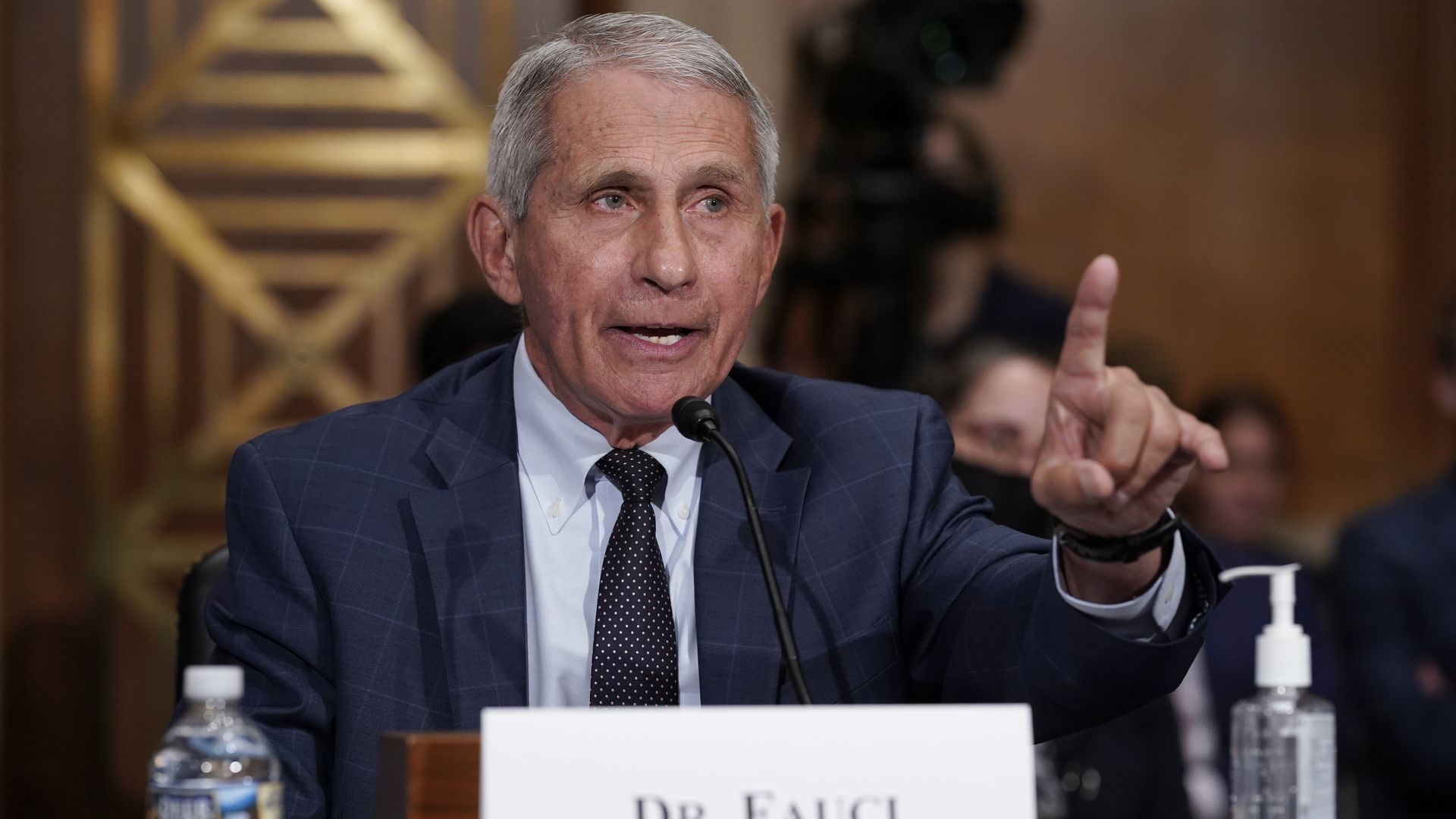
Fauci testifying before the Senate HELP Committee in 2021. Photo: J. Scott Applewhite-Pool/Getty Images
Former NIAID director Anthony Fauci is returning to the Hill today and tomorrow for a two-day interview with the House's COVID Select Subcommittee about the pandemic's origins and the government response, Victoria reports.
- It's the first time Fauci will be appearing before Congress since he retired, and the subcommittee says it's planning for a 14-hour transcribed interview.
- A subcommittee spokesperson told Victoria that topics to be covered include efforts to downplay the lab leak theory, misleading narratives about natural immunity, conflicting positions on mask mandates, and explaining the "science" behind lockdowns and social closures.
- "Staff and Members have prepared more than 200 pages of questions and approximately 100 exhibits related to Dr. Fauci's role as the face of America's COVID-19 public health response," subcommittee Chairman Brad Wenstrup in a statement.
Panel Republicans have charged that Fauci knew the coronavirus was lab-engineered, but decided to push a narrative that it was an animal spillover event. Democrats have said the focus of the investigation should not be on Fauci and urged lawmakers not to villainize public health officials.
✅ Thank you for reading Axios Pro Policy, and thanks to editor Adriel Bettelheim and senior copy editor Bryan McBournie.
- Do you know someone who needs this newsletter? Have them sign up here.
View archive