March 05, 2024

🌮 It's a big week on the Hill. Take some time for tacos.
- You won't hear from us if the minibus passes as expected — but if it blows up, we'll be back in your inbox ASAP on what happens next.
⚡️ Join Axios virtually tomorrow at 9:30am ET to hear from Energy Secretary Jennifer Granholm, Rep. Mike Levin and Biden climate czar John Podesta on clean energy industry growth. Livestream the event here.
🚨 Situational awareness: Sen. Kyrsten Sinema isn't running for reelection. She was among the architects of the IRA, which she backed after insisting on adding climate and drought provisions.
🎶 Today's last song is from Jake Rubin at Siemens: "100 Bad Days" by AJR.
1 big thing: Geothermal gets spotlight

Illustration: Aïda Amer/Axios
Geothermal power's permitting woes will get a spotlight in committee tomorrow, Nick and Jael write.
Why it matters: New geothermal technologies could deliver huge amounts of low-carbon energy around the clock.
- We're about to learn how much support there is for addressing policy constraints that industry says limit potential growth.
Driving the news: The House Natural Resources energy and mineral subcommittee has a hearing planned on a big slate of geothermal leasing and permitting bills. BLM official Ben Gruber is among those testifying.
- The slate includes Russ Fulcher's bill to exempt geothermal exploration wells from NEPA reviews and John Curtis' proposal to limit the impacts of judicial review on geothermal permitting.
- Also on tap is a bill from Rep. Young Kim to exempt geothermal wells on private and state land from federal drilling permit requirements, and legislation from Rep. Alexandria Ocasio-Cortez on cost recovery for permit processing.
- This comes after the committee reported a bipartisan geothermal permitting bill that would create an industry-specific categorical exclusion.
How it works: Geothermal taps into Earth's heat deep underground to generate power. It currently makes up a tiny fraction of the energy mix because it requires highly specific geologic conditions.
- But new companies developing "enhanced geothermal systems" promise to deliver benefits without ideal subsurface conditions.
- They're generating a healthy amount of private and public investment, as well as interest from tech companies needing to power data centers.
Zoom in: What geothermal actually needs is parity with other energy technologies, said Xan Fishman at the Bipartisan Policy Center.
- Fishman said the categorical exclusion would be a preferred option in this case — especially for geothermal exploration, because oil and gas gets similar treatment.
- Generally, the industry wants to see consistency both in permitting processes and agency staffing and resources, said Ben Serrurier, government affairs and policy manager at Fervo Energy.
- "There's a wide variation of how different permitting processes are implemented across field offices and between states," Serrurier said. This legislative slate would start to address that.
Between the lines: House Republicans included some similar provisions in H.R. 1, last year's big energy bill.
- With that pretty much dead, this hearing is a good indicator of whether we'll see floor action on geothermal this year.
- And lawmakers across the board have said they want to see geothermal provisions in any broader permitting package (though we remain skeptical about the prospects for that).
- "My hope is that this is included in a broader bipartisan permitting reform," Serrurier said.
2. Dealing with radiation is rad again

Illustration: Shoshana Gordon/Axios
Nuclear radiation is once again a hot topic on the Hill, write Jael and Health Policy's Victoria Knight.
Why it matters: The energy transition will emit lots of radiation — and many are still suffering health problems from the last industrial age.
- The Senate's lined up a vote this week on Josh Hawley's one-man crusade to reauthorize and expand the Radiation Exposure Compensation Act. It promises compensation to victims from nuclear weapons testing.
Driving the news: A separate new bipartisan bill — the Health Care for Energy Workers Act — would allow individuals to use federal radiation exposure benefits to get home care services from physician assistants and nurse practitioners.
- Specifically, it would allow that care to be covered under the Energy Employees Occupational Illness Compensation Program Act, a 2000 law intended for workers at waste sites managed by the Energy Department as well as hazardous mines.
- The bill was introduced by Sens. John Hickenlooper and Marsha Blackburn, who represent states on the frontlines of future nuclear development — and where legacy waste sites remain.
What they're saying: Hickenlooper told Jael the bill is part of his efforts to get a grip on nuclear's true environmental impacts — while serving more rural communities that rely on at-home health care.
- "When this bill first appeared I immediately thought, what is the connection to the modern-day nuclear industry?… Most of the people we talk about now were afflicted 30 to 50 years ago. The next question is, [what next] now that we know more?"
- Blackburn told Victoria that she talked to nuclear workers at the Y-12 energy facility in Tennessee who lived in rural areas and found it difficult to access a doctor.
- "Our goal is to make certain that these energy workers, who many times are working in dangerous situations, have the opportunity to do their job but to know that there is a reliability of access to health care," she said.
What's next: Blackburn said she's optimistic that the bill could find a ride on any end-of-the-year health care package.
- Hickenlooper considers moving this bill a breeze, even in today's chaotic Congress. He noted it includes "veterans who've been screwed again and again."
3. Barrasso's whip race could leave ENR opening
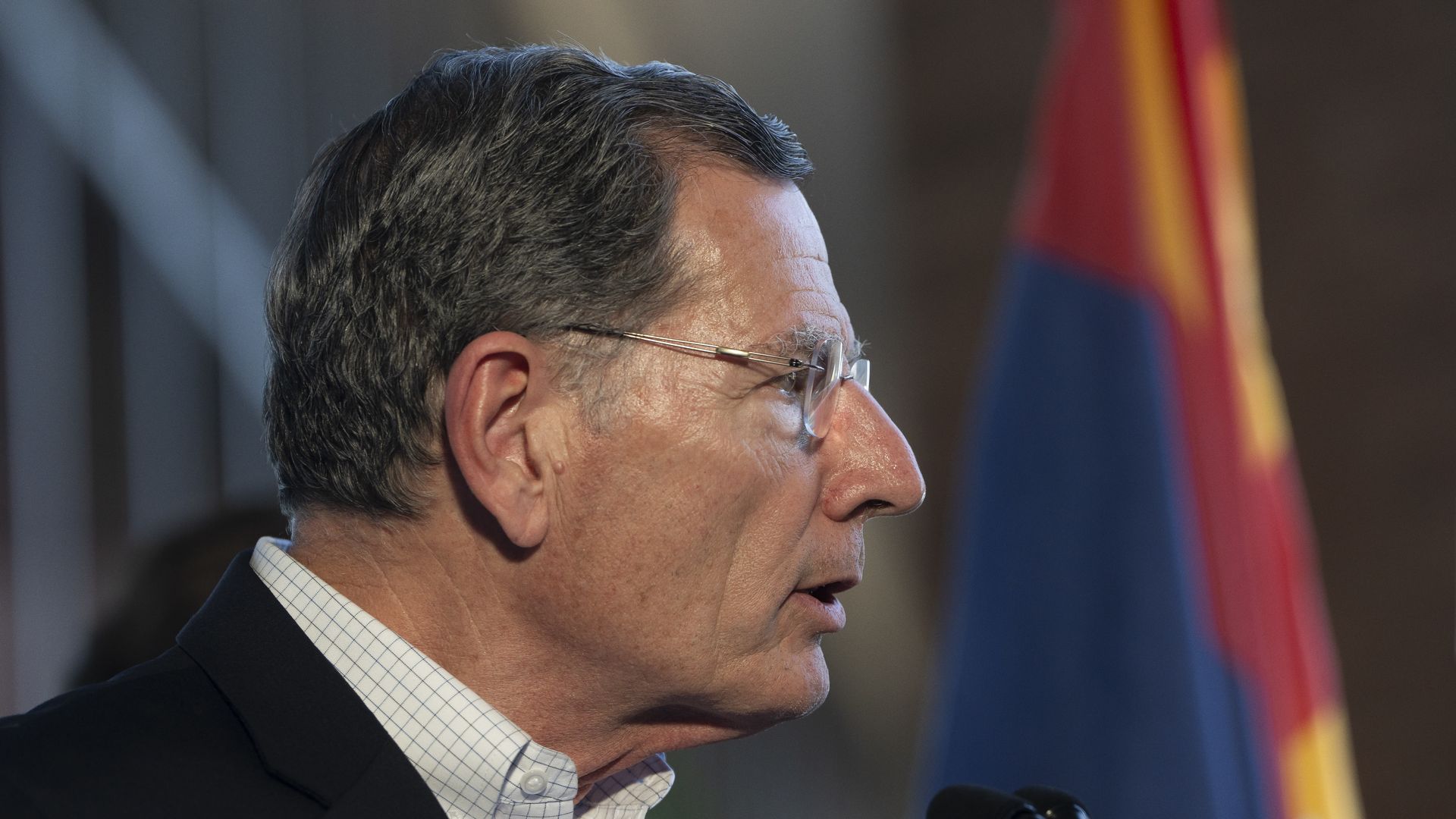
Barrasso in February. Photo: Rebecca Noble/Getty Images
Sen. John Barrasso is running for Republican whip, potentially opening up the top GOP spot on the Energy and Natural Resources Committee, Nick writes.
Why it matters: It takes Barrasso out of the "three Johns" race for majority leader and could mean a big shakeup for energy policy in the next Congress.
Zoom in: GOP conference rules prevent the top two leaders from serving as chair or ranking member on committees. Barrasso's office didn't immediately respond to a request for comment on his ENR future.
- Sen. Mike Lee would be a frontrunner for the ENR job. He'd be a move to the right on Western issues (he was the most vocal critic of the Trump-era bipartisan public lands bill).
- Among other senior committee members, Jim Risch is currently ranking on Foreign Relations, and Steve Daines is former President Trump's behind-the-scenes pick for GOP leader.
4. Catch me up: Lots of news!

Illustration: Tiffany Herring/Axios
🗣️ 1. NRC advances: The Nuclear Regulatory Commission has directed staff to revise and publish its proposed rule for advanced reactor licensing.
- The initial draft had been criticized by nuclear advocates.
- "I am pleased to see the NRC heeded our call and made significant improvements to their draft proposed rule to better support the next generation of nuclear reactors," Sen. Tom Carper said in a statement.
🛢️ 2. Legislative pipeline: The Energy and Commerce Committee announced a subcommittee markup tomorrow of the GOP's pipeline safety bill and a slate of legislation blocking DOE energy efficiency rules.
⛏️ 3. Moshe pit: The Senate may soon hold a procedural vote on Moshe Marvit's nomination for the Federal Mine Safety and Health Review Commission.
🚗 4. AM radio ramping: The Consumer Technology Association today announced it has expanded its ad campaign against an AM radio mandate.
✅ Thank you for reading Axios Pro Policy, and thanks to editors Chuck McCutcheon and David Nather and copy editor Brad Bonhall.
View archive