December 13, 2023

✈️ One more day. Recess is almost here (unless Schumer gets his way).
🎶 Today's last song is from Peter Hoffman in Senate EPW's Republican office: the holiday cheer of "O Come, O Come Emmanuel" as performed by the Oxford Trinity Choir.
1 big thing: The SAF credit's difficult landing

Illustration: Brendan Lynch/Axios
Brace for a clash over the IRA tax break for "sustainable" jet fuel, Jael writes.
Why it matters: The Biden team might just make the ethanol crowd happy with its rollout of the tax credit.
- If they do, it's sure to upset climate advocates — and some in the road transportation sector, where at least one group is threatening to sue over the matter.
Driving the news: The Treasury Department will roll out implementation plans for the tax break as soon as this week, department spokesperson Ashley Schapitl told Jael.
- Remember, the IRA created a credit for companies producing "sustainable aviation fuel," a form of jet fuel that's supposed to produce fewer planet-warming carbon emissions.
- To qualify, SAF producers must certify their products resulted in at least 50% fewer lifecycle emissions than traditional jet fuel.
What we're watching: If Treasury clarifies a dispute over whether the government must use an international metric for measuring carbon emissions specified in the IRA…
- Or regulators may measure fuel with GREET, a U.S. model previously used to measure biofuel for the purposes of qualifying for the federal renewable fuel standard.
Ag-state lawmakers, backed by leading airlines, want GREET because it would likely allow more fuel to count, including biofuel made with farm crops.
- Lawmakers failed to get GREET mandated for analyzing plane fuel in the NDAA and the FAA reauthorization.
Yes, but: There's a risk in allowing more crops intended for biofuel used by cars and trucks to enter the jet fuel space.
- The administration would agitate traditional consumers of biofuel, particularly road transit.
- Allowing GREET may invite legal challenges, according to David Fialkov, legislative director for the National Association of Truck Stop Operators.
- "I anticipate that if Treasury comes out with guidance or any type of policy that threatens to prompt feedstock to migrate away from over-the-road use cases, towards aviation, I think it's safe to assume that we'll litigate that," Fialkov told Jael.
Of note: GREET is more lenient on emissions impacts than the international model called for in the IRA. It could invite a climate world backlash much like the renewable fuel standard.
State of play: It's anyone's guess what Treasury will say on the modeling matter. But some tea leaves dropped during COP28 indicate the agency may make the biofuel folks happy.
- Senate Ag Chair Debbie Stabenow — who wants some version of GREET to be allowed for the credit — told Jael yesterday that she hadn't heard clarity from Treasury.
- Sen. Tammy Duckworth told Jael today that it was her "understanding" that Treasury may be incorporating the GREET model, but she hadn't gotten "final word yet."
At COP28, Agriculture Secretary Tom Vilsack told reporters that fuel made from "a variety of feedstocks" will be eligible for the credit.
- Meanwhile, White House climate czar John Podesta told Heatmap News they have "a game plan" on the credit that may require updating the GREET model.
- Treasury declined to comment on the modeling matter.
2. Schatz talks COP
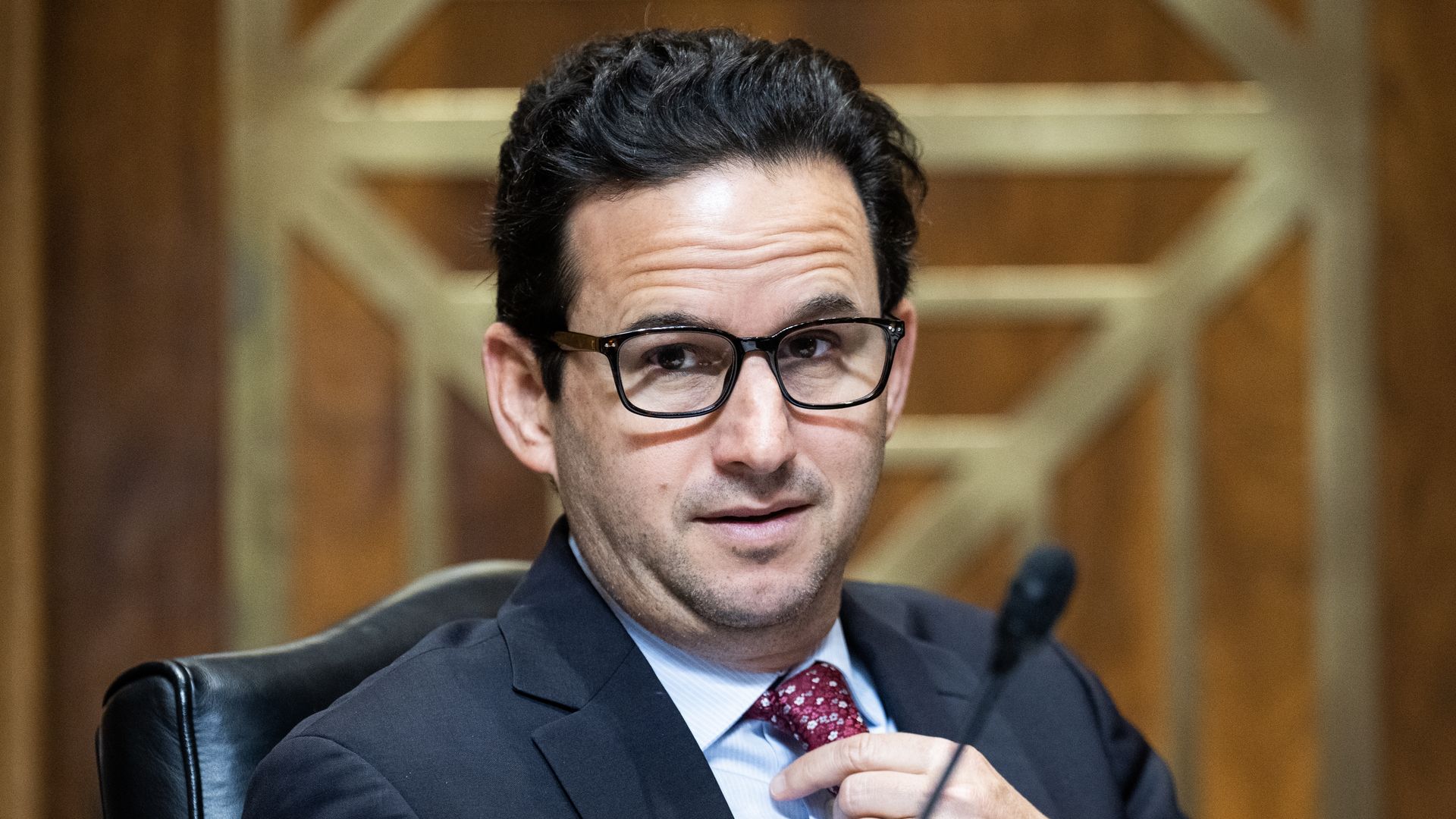
Schatz in November. Photo: Tom Williams/CQ-Roll Call Inc. via Getty Images
Sen. Brian Schatz came home from Dubai giving COP28 a B or B-plus grade, Nick writes.
Why it matters: For the first time, countries agreed on "transitioning away from fossil fuels." But there's considerable uncertainty in the U.S. and around the world about whether lawmakers can make that happen.
Nick spoke with longtime climate hawk Schatz today about the agreement …
Tell me how you're thinking about this agreement and the commitment to transition away from fossil fuels.
This at least gives us a fighting chance to reach climate safety, so I think it was a B, B-plus COP. You can never really give a better score than maybe an A-minus, because none of these commitments are mandatory.
- But we're getting a little closer to fidelity on these [Nationally Determined Contributions].
How could this impact Congress' ability to pass additional climate legislation?
We took the biggest climate action in human history [in the IRA]. That is the defining aspect to American climate policy right now.
- On the prospects for bipartisanship, I remain open for business.… Just color me at least a little skeptical because I have made many, many overtures.
- I think it's better than before, in terms of at least some of the Republicans going to the COP are not Jim Inhofe.
- Conservation and efficiency, geothermal, carbon capture, carbon storage and sequestration … there are opportunities for us to work together. It's just that Donald Trump leads the Republican Party, and he's affirmatively enthusiastic about warming the planet.
What did you make of the large GOP presence at COP28? Is there real change afoot among Republicans, or is this more of the same?
I think the proof will be in whether or not I get a phone call from one or several of these members to say "Hey, let's try to figure out a way to solve the climate crisis."
- And no pilot programs, no studies, no voluntary stuff, but real action to address the crisis.
- It's not impossible to find. I've done it with Lisa Murkowski and Mike Braun.
3. More on Dems' big transmission bill

Illustration: Natalie Peeples/Axios
We told you this morning about House Democrats' big transmission and permitting legislation. Nick's got a look at a few other interesting provisions.
Why it matters: It's got extremely long odds in this Congress. But ideas from the Clean Electricity and Transmission Acceleration Act could be in the mix in a permitting package or another energy bill.
💵 1. Transmission credit: CETA would create a new investment tax credit of up to 30% for building new transmission or modifying existing lines.
- It's a version of a proposal Sen. Martin Heinrich has been shopping for a while to help pay for big, expensive projects needed to get more low carbon power on the grid.
🥩 2. Beefing up FERC: The bill would try to support hiring more expert staff at FERC via direct appointment by the chair and authority for a new compensation plan.
- Notably, there's bipartisan support around the Hill to staff up the Nuclear Regulatory Commission — another independent energy regulator — to deal with the next generation of nuclear licensing.
⚡️ 3. Transformer money: The legislation would authorize $2.1 billion through the Defense Production Act to address the electric transformer shortage.
- President Biden has already invoked the DPA for this purpose, but the provision would be an effort to put real money behind it.
🔦 4. Right my way: Another provision would direct the Federal Highway Administration to issue a report on siting high-voltage power lines along highway rights-of-way.
- Some experts see this as an easy way to build new transmission, because it means power lines wouldn't need to cut new paths through a patchwork of private and public land.
✅ Thank you for reading Axios Pro Policy, and thanks to editors Chuck McCutcheon and David Nather and copy editor Brad Bonhall.
View archive