Axios What's Next

December 02, 2021
Mass adoption of electric vehicles could pose problems for the power grid, with so much extra demand being added when everyone gets home for the night.
- But electric companies are trying to solve that by connecting neighbors' EVs in the cloud and balancing the load by charging cars at better times, as Joann Muller writes.
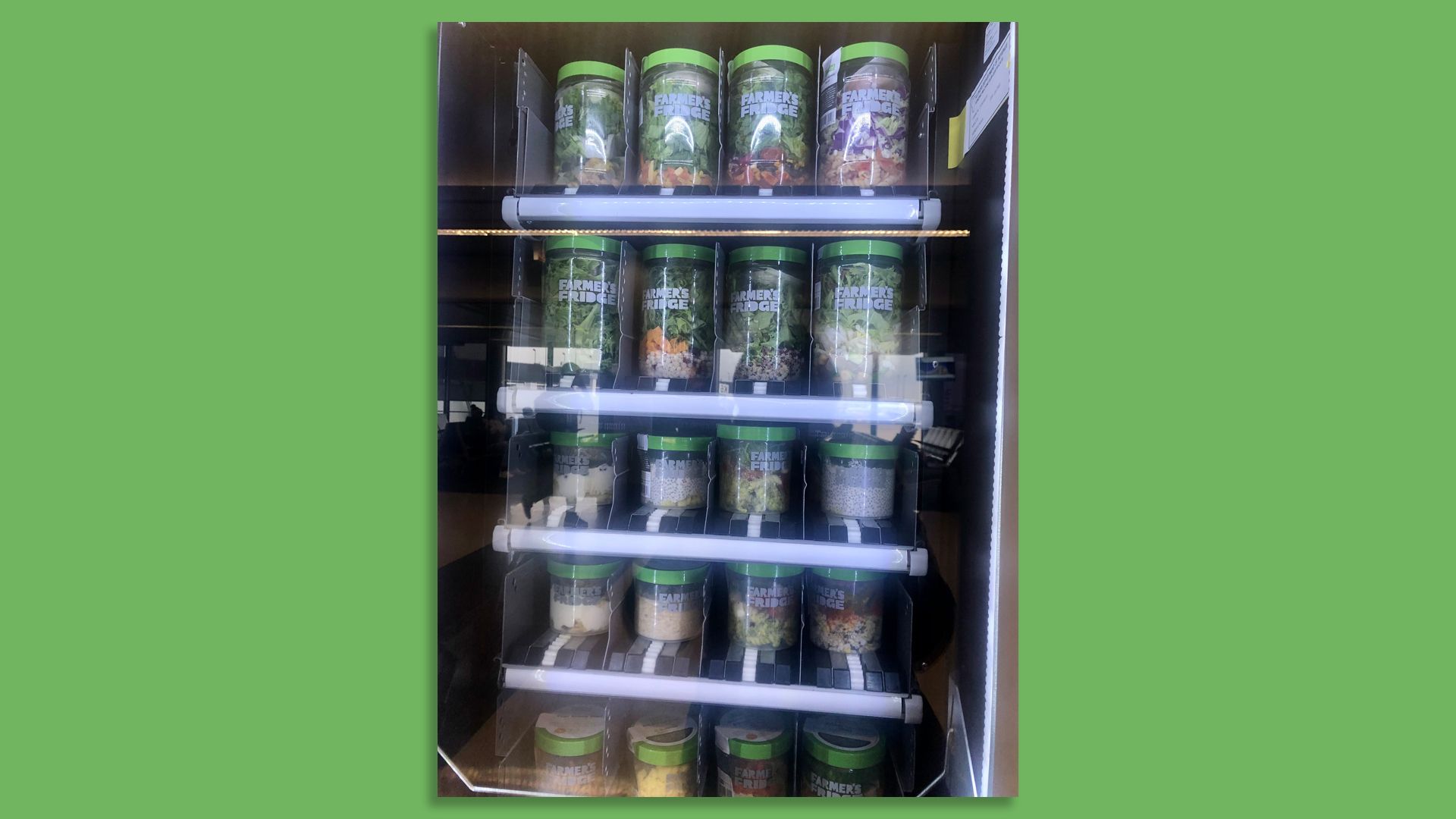
Today's reader photo is from Lakshmi Mahalingam of Washington, D.C., who liked something she stumbled on at Chicago O'Hare.
Today's Smart Brevity count: 1,185 words ... 4½ minutes.
1 big thing: Your electric car could become a virtual power plant
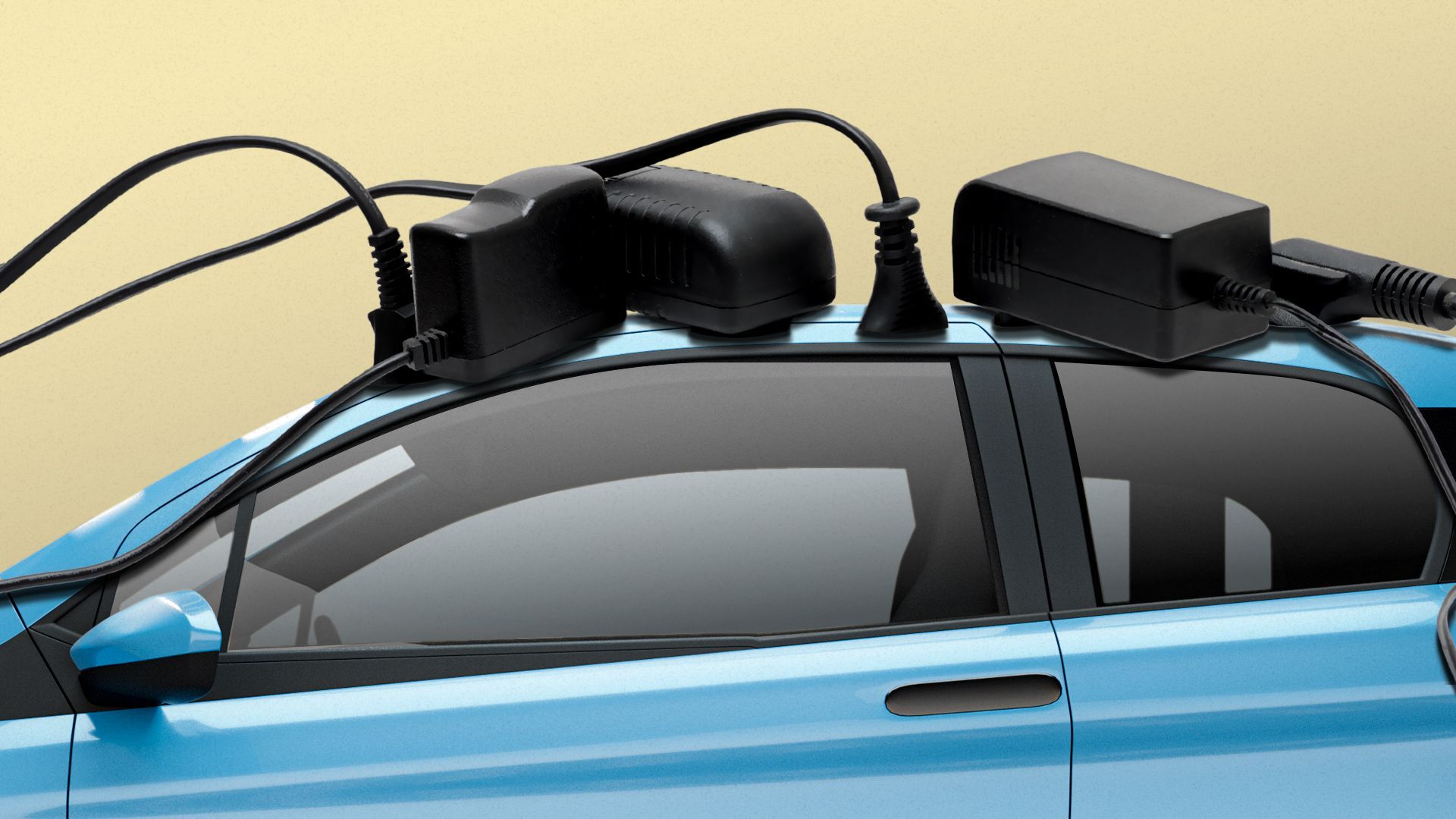
Illustration: Megan Robinson/Axios
That electric car parked in your driveway may soon be more than a fun, emissions-free ride, Joann writes.
- When lashed together in the cloud with other EVs in your neighborhood, it could help utilities manage electricity demand in your community.
Why it matters: Massive growth in electric vehicle adoption — which is widely expected — means that more car owners will be plugging in at home, putting pressure on America's electric grid but also creating power-sharing opportunities.
- Emerging smart-charging technologies aim to build in more flexibility so grid upgrades aren't needed and EV owners will have all the juice they need.
What's happening: EV owners can earn rebates and cash rewards from smart-charging programs by letting utilities control when their car is charged based on overall electricity demand.
- In Texas, for example, about 1,000 EV owners participate in a smart-charging project with the Electric Reliability Council of Texas (ERCOT).
- Together, those cars serve as a cloud-based "virtual power plant" that ERCOT can use to suck or store energy during demand peaks and valleys.
- In Wisconsin, Madison Gas and Electric shifts charging times for 2,000 EVs to off-peak hours so they can soak up renewable energy generated overnight by wind farms.
- Both utilities license the smart-charging technology from a London-based company called ev.energy, which has offices in Palo Alto.
The big picture: EV owners do more than 80% of their charging at home, according to a BloombergNEF analysis of ev.energy data from more than 1 million at-home charging sessions in the U.S., U.K. and Europe.
- Most of them plug in after work, start charging right away, and stay plugged in overnight, often setting the departure time for their morning commute.
Yes, but: The typical charging session requires just a little top-off — 2.5 hours of charging — which means most EVs are drawing energy in the early evening when residential demand is at its peak and electricity rates are highest.
Smart-charging technology can delay the session until demand has gone down, and greener, cheaper energy is more readily available.
How it works: EV owners plug in their car, set a departure time using ev.energy's app, and let the utility figure out the ideal charging time based on a 24-hour forecast of energy demand.
- The utility will never drain the car's battery, says Joseph Vellone, head of North America for ev.energy. "Your departure time is the holy grail."
2. Après ski as a non-slopes lifestyle
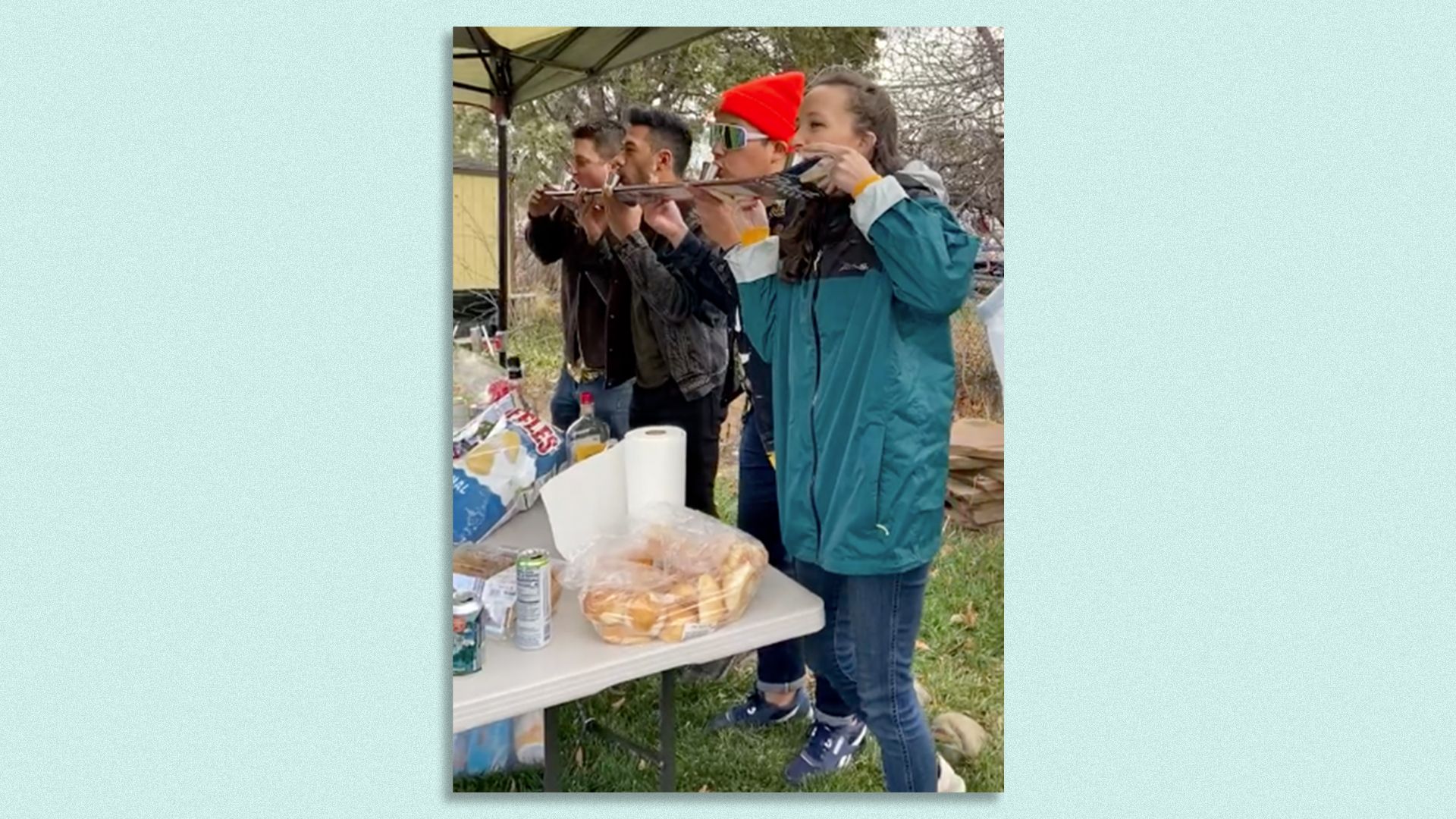
Doing "shotskis" at a football game tailgate. Photo: Jayme Dorsett-Sobel
The cool "après ski" vibe of relaxation and winter fun has moved beyond the lodge, as the lingering pandemic brings a wider appreciation of socializing that can be done in an outdoorsy way, Jennifer Kingson writes.
Why it matters: The trend of cities and towns endorsing "winter placemaking" as a way to coax people outdoors has continued this year. And even though climate change has kept ski slopes closed later than usual, ski culture — often in the form of "shotskis" — is migrating to new places.
What's happening: People attending football games, holiday markets and concerts are lining up to quaff booze (and the occasional hot chocolate) from shot glasses fastened to a downhill ski, whether or not they've ever donned a pair.
- Shotskis (or "shot skis") are part of an outdoor drinking ritual in which booze is consumed in unison and repeatedly.
- Punch, a website about wine and spirits, notes that a shotski "involves several shot glasses placed equidistant apart across the deck of a discarded downhill ski, allowing several folks to concurrently down a shot."
- Shotskis "are the sizzling fajitas of the barroom — you can’t help but notice when someone orders one."
The other side: This year's annual Shot Ski fundraiser by the Park City Sunrise Rotary in Utah was canceled due to rising COVID-19 cases locally.
- "In 2019, the last time the event was held in Park City, more than 1,300 people stood before 515 skis bolted together into a 2,600-foot-long ski with shot glasses on top."
3. Charted: We're getting used to this pandemic


Just as we think we're past the worst of COVID, a new variant pops up. Still, individuals, governments and companies seem to be getting used to living alongside the virus.
What's happening: Pandemic shocks have gotten easier for the stock market to stomach, Axios' Courtenay Brown reports.
Driving the news: "Covid-related stock market drops are getting milder and shorter," the New York Times' DealBook noted earlier this week. Bad pandemic news hasn't prompted nearly as much turmoil as in the early days of COVID-19.
Why it matters: Omicron — Wall Street's new bogeyman — is the latest to put that to the test.
- The S&P 500 saw the worst Black Friday on record when news of the variant trickled out last week.
- But reports of the variant sparked only the 27th worst one-day stock drop of the pandemic era, according to data from S&P Dow Jones Indices — putting plenty of other sell-offs (COVID-related or not) ahead of it.
Where it stands: After staging a comeback on Monday, those market gains disappeared yesterday.
- The sell-off may have had something to do with Moderna's warning that current vax shots may not be as effective against Omicron.
- Or it could have been tied to hints that the Fed will be taking its foot off the gas sooner.
- Or some combination of both (or neither).
What they're saying: "So far, at least, this is a normal drawdown, one we see multiple times in a year," says Brad McMillan, chief investment officer at Commonwealth Financial Network.
- "Markets are supposed to do exactly what appears to be happening here ... pricing in some risks, some damage, but not the end of the world."
4. COVID side effect: Wedding awkwardness

Illustration: Brendan Lynch/Axios
Many couples who postponed their weddings at the start of the pandemic are approaching the new dates for their big days — and noticing that their guest lists don't quite make sense anymore, Erica Pandey writes.
What's happening: People are making the difficult decision to disinvite guests from their weddings — or even kick members out of their wedding parties — upon realizing that they don't have the same friends and relationships they did when invites went out in 2019, the Wall Street Journal's Rachel Wolfe reports.
- Many people moved to new cities during the pandemic and lost touch with friends from their old neighborhoods. Others switched jobs and no longer feel obligated to extend invites to certain colleagues.
- Wedding planner Leanne Bybee told the Journal that one of her clients didn't hear from a bridesmaid for a year during the pandemic. So she ended up not only removing her from the party, but disinviting her from the wedding altogether.
The other side: From a guest's perspective, getting disinvited can be a relief. As we've reported, there will be upward of 2.5 million weddings in the U.S. in 2022 due to the pandemic-induced backlog.
5. Reader photo of the day
Photo: Lakshmi Mahalingam
What's Next: Salad in a jar
Lakshmi Mahalingam writes: "Chicago O’Hare — super cool and healthy concept — a salad vending machine! I got the pesto pasta salad, which was as delicious as it sounds.
"The machine had a fancy touch screen next to it with nutritional info, prices and a slot to return containers for recycling."
Was this email forwarded to you? Get your daily dose of What's Next magic by signing up for our free newsletter here.
Sign up for Axios What's Next

The next decade of big, sweeping changes will unfold in cities and communities where new technologies like 5G, AI and drones are transforming how we work, live and play together. What’s Next will guide you through the revolution.