Axios What's Next

July 03, 2024
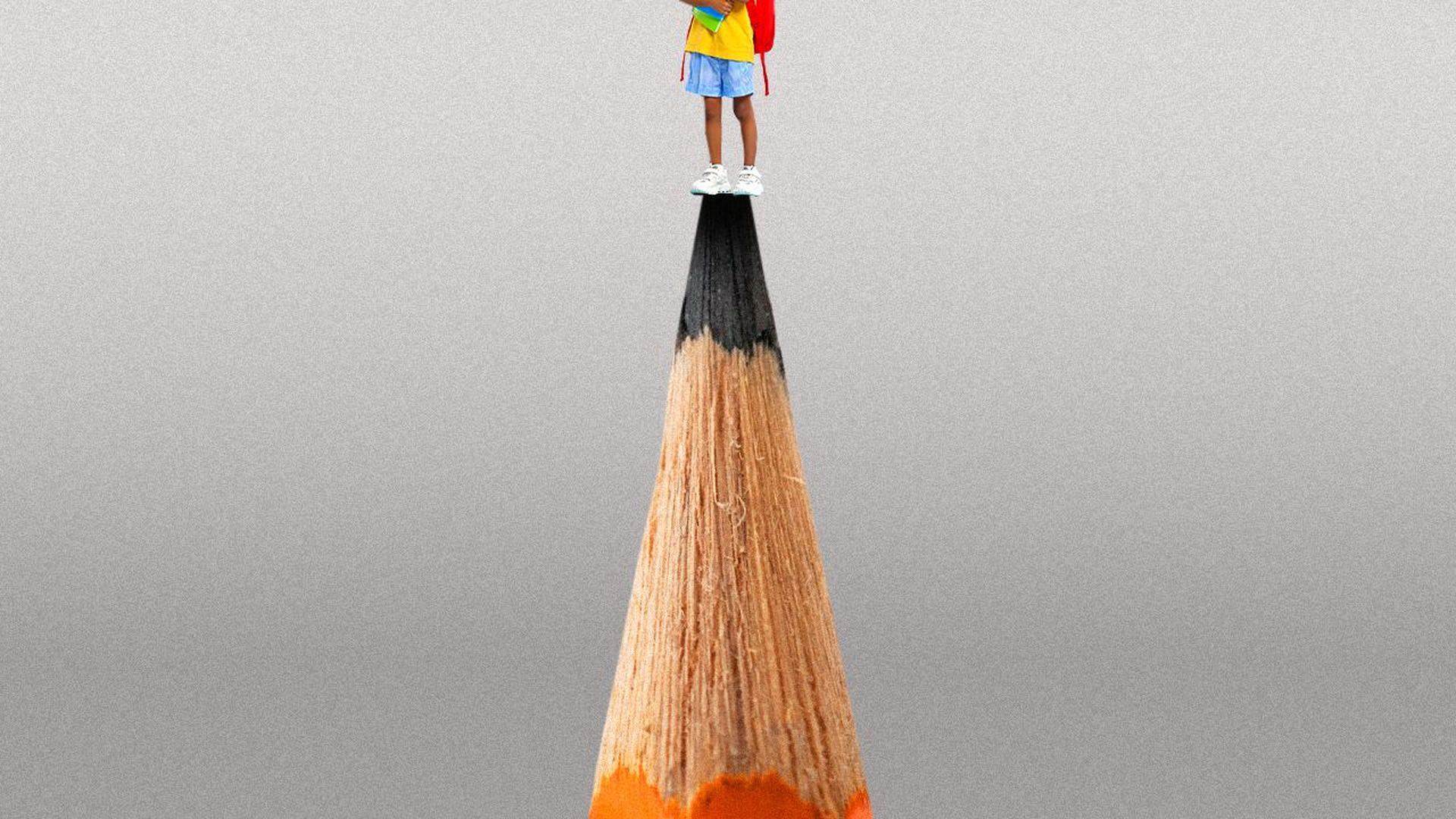
Schools at all levels are standing on the precipice of an "enrollment cliff," Jennifer reports today.
Today's newsletter is 1,039 words ... a 4-minute read.
1 big thing: "Enrollment cliff" looms
The number of U.S. high school graduates is expected to peak in 2025 or 2026 and then decline for years to come — posing severe challenges to schools at all levels.
Why it matters: Schools and colleges are closing, faculty members are being laid off, and districts are facing financial dilemmas — all as education is under political fire from every side.
Driving the news: Due to a birthrate drop after the 2008 recession, schools are planning for a decadelong dry spell that's being referred to as the "enrollment cliff" or "demographic cliff."
- Colleges — primarily small liberal arts schools in the Midwest, Northeast and California — are closing, and others are giving notice to faculty.
- K-12 schools — mostly in cities that lost population during the COVID-19 pandemic — are doing the same.
- Districts are cutting budgets and making tough choices as they plan for lower per-pupil financial allocations: Does tutoring get the axe? Sports? After-school activities?
What they're saying: "I think folks are getting a sense of the ramifications at this point," says Patrick Lane, VP of policy analysis and research at the Western Interstate Commission for Higher Education (WICHE).
- "The elementary schools are already living it — they're seeing smaller K-12 classes."
By the numbers: The U.S. is expected to reach "peak high school graduate" in 2025, when around 3.9 million young people will graduate, per WICHE.
Zoom out: There's a simultaneous "financial cliff" as K-12 schools brace for pandemic-era relief money to expire this September.
- Colleges are suffering from the Department of Education's FAFSA snafu — which delayed financial aid offers — as well as declining public trust in higher education.
- Campus protests — and the fall of the presidents of Harvard and the University of Pennsylvania — have contributed to skepticism about the value of pricey degrees.
Between the lines: This isn't the first time the number of school-age children has dropped — but prior dips dovetailed with an increase in high school graduation and college attendance.
- That's because more people saw the value of educational attainment, as Jon Boeckenstedt, vice provost for enrollment management at Oregon State University, wrote in the Chronicle of Higher Education.
- By contrast, Americans' confidence in higher education fell to 36% in 2023 — much lower than in 2015 (57%) and 2018 (48%), per Gallup polling.
Where it stands: Since the pandemic, "there has not been a rebound in public school enrollment," Thomas Dee, an economist and professor at Stanford's Graduate School of Education, tells Axios.
- He documented an enrollment decline of 1.1 million students — or 2% — nationally in K-12 public schools in the first full school year after the onset of the pandemic.
- A third of that was in kindergarten alone.
"Parents were confronted with putting a kindergartener or first-grade student in front of the laptop all day," Dee says.
- At the K-12 level, the continued rise of homeschooling and chronic absenteeism are playing a role too.
Risk factor: Colleges, meanwhile, are announcing closings at a rate of one a week, per the Hechinger Report — and others are in big financial trouble.
- Some are trying to combat the "enrollment cliff" by recruiting nontraditional students — adults with jobs and families, for instance.
- They're also beefing up their "distance learning" options — i.e. Zoom classes.
Reality check: A shrinking candidate pool may make it easier for your kid to get into less competitive schools, but it's not going to be their ticket to the Ivies.
2. Summer travel hotspots


Cancun, Aruba and London are the hottest global destinations for American travelers this summer, Mastercard says.
- Also ranking in the top 10: Tokyo, where a relatively weak yen is driving a huge — and controversial — post-pandemic tourism explosion.
How it works: Mastercard's findings are based on each city's share of total flight bookings from the U.S. for global travel between June-August 2024 as compared to the same period in 2019.
Zoom in: Albania is emerging as a top destination for global travelers, thanks to relatively low prices, compared to classic European draws.
- Romania, too, is increasingly hot — in part because it recently partially joined Europe's Schengen Area, an ID-check-free travel zone.
3. American eyes hydrogen flights

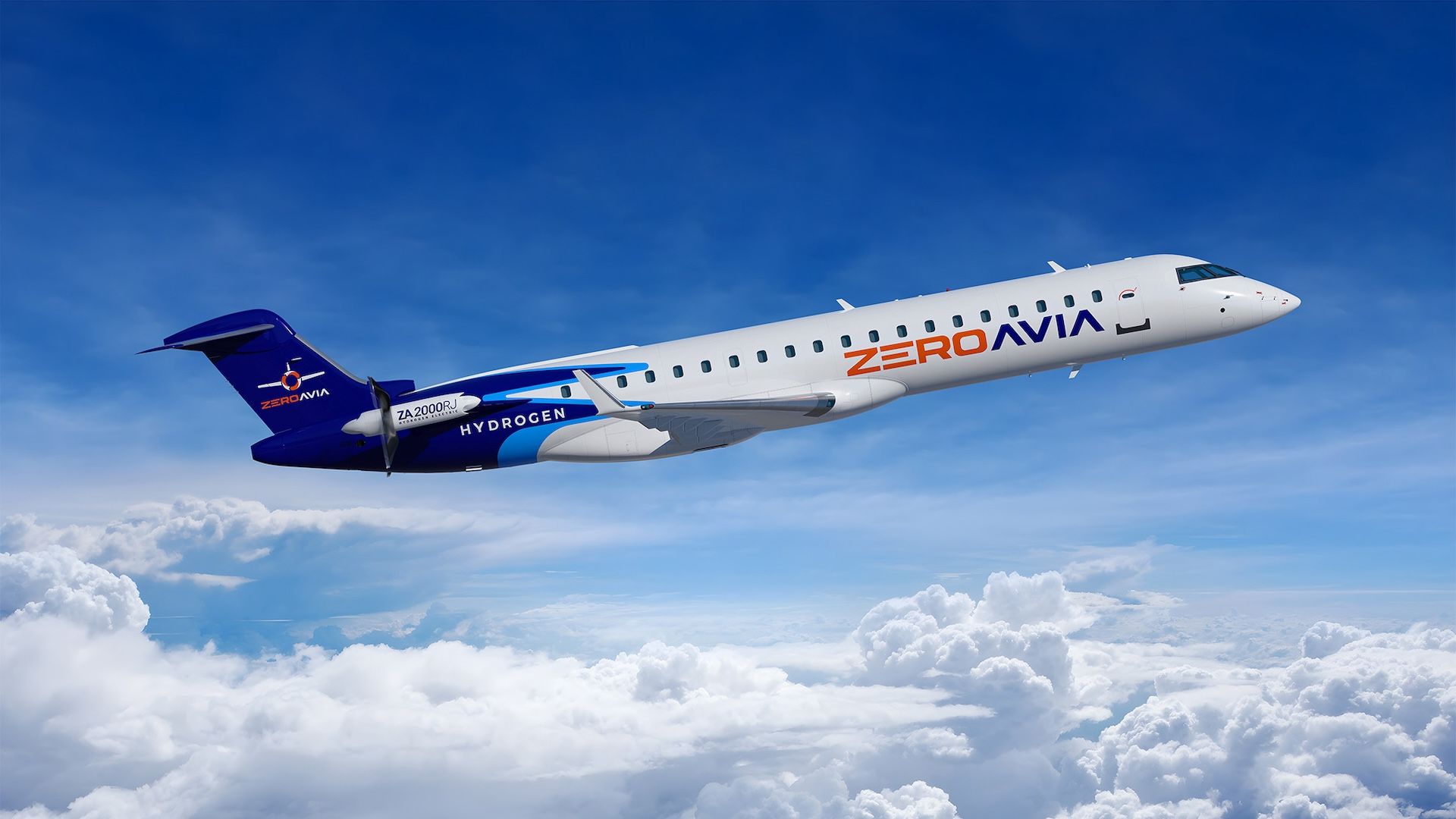
American Airlines has entered into a conditional purchase agreement with upstart ZeroAvia for 100 hydrogen-electric engines intended to power regional jets with zero in-flight emissions.
Why it matters: American sees ZeroAvia's engines as a potential game-changer as it seeks to go net zero by 2050.
Driving the news: This is American's first engine order from ZeroAvia, in which it has been investing since 2022.
- The Dallas-based airline is also investing an undisclosed additional sum in the company, according to details shared exclusively with Axios.
Zoom in: ZeroAvia is developing hydrogen-electric engines for commercial aircraft that it says can reduce in-flight emissions to close to zero.
- Such engines use hydrogen in fuel cells to generate electricity, which then is used to power motors on an aircraft's engines.
The emissions from such engines are designed to be just water vapor, rather than the pollution from traditional jet engines, which emit a range of planet-warming greenhouse gases.
- American is looking to ZeroAvia to provide cleaner propulsion systems for its Bombardier CRJ700 regional jets.
4. Youths turn to "Bank of Mom and Dad"

A notable share of young adults are turning to their aging parents to bail them out after blowing their budget on non-essentials, finds the latest Axios Vibes survey by The Harris Poll.
The big picture: One-third of millennials and over 60% of Gen Zers say they rely on their parents for at least some financial support.
- Reliance on parents is most prevalent among those who say they exceed their monthly budget because of overspending on wants rather than needs.
The intrigue: Boomers and Gen Xers who feel financially squeezed are more likely to blame higher prices, but younger consumers more often blame their own choices.
- About 40% of millennials and Gen Zers who say they are financially squeezed primarily attribute that to "excessive spending on non-essentials."
- Just 17% of financially squeezed Boomers and Gen Xers say the same.
The bottom line: The huge question is whether these patterns reflect younger generations' tendency to be less financially secure, or if there's a cultural shift around overspending and immediate gratification.
Big thanks to What's Next copy editor Amy Stern.
Was this email forwarded to you? Get your daily dose of What's Next by signing up here for our free newsletter.
Sign up for Axios What's Next