Axios Vitals

May 23, 2024

Good morning, Vitals crew. Today's newsletter is 947 words or a 3.5-minute read.
1 big thing: Shedding pounds, boosting reps
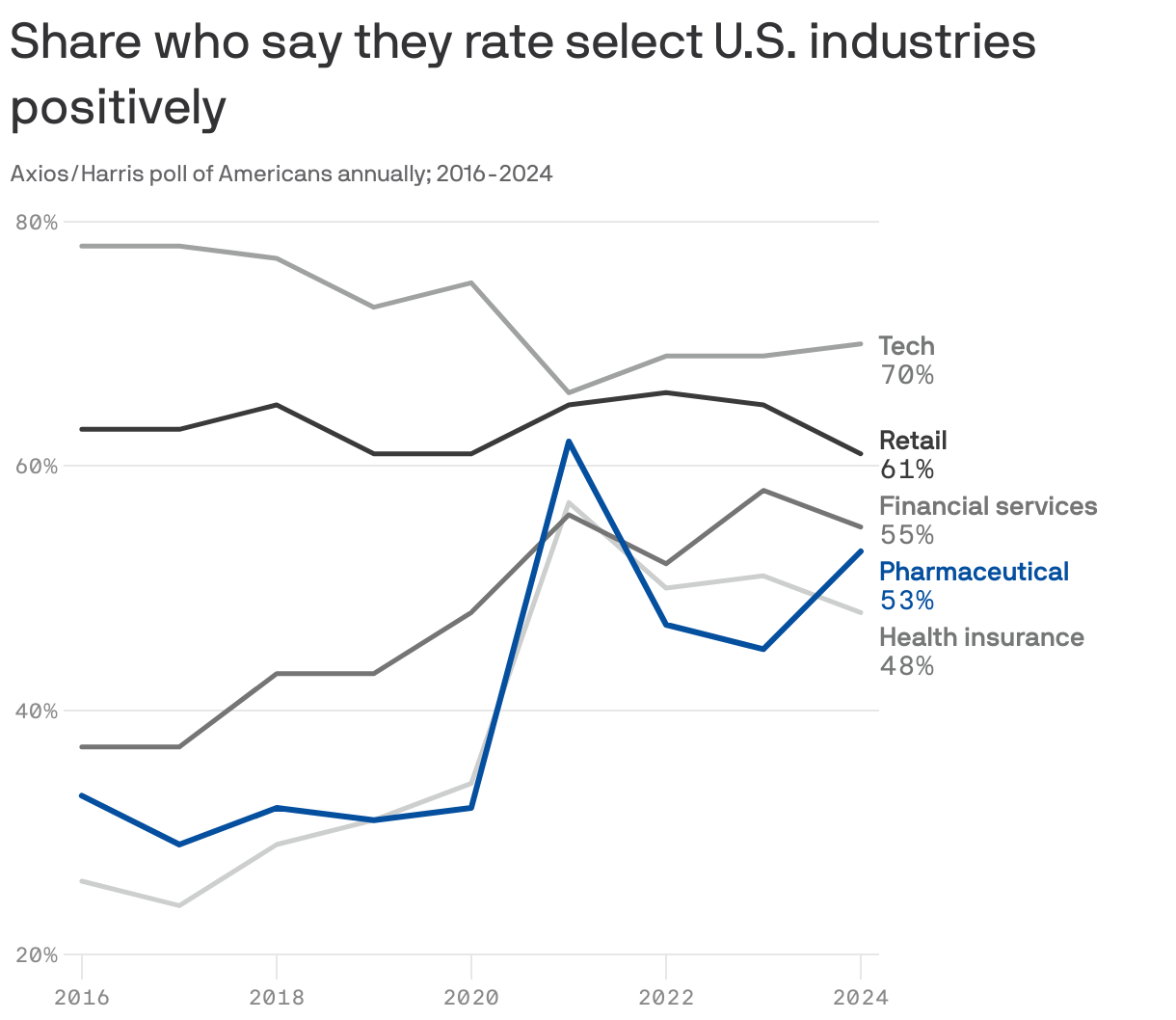
The blockbuster success of new anti-obesity drugs helped boost the corporate reputations of pharmaceutical brands, according to new rankings from the annual Axios/Harris Poll 100.
Why it matters: For now, drugmakers are largely getting a pass from the public on the high prices of these transformational treatments, even as inflation-weary consumers have soured on other industries over price hikes.
- The poll also marks a rebound for pharma, which had seen its reputation decline after soaring to record heights amid the rapid development of COVID-19 vaccines.
The big picture: Novo Nordisk, whose market-leading drugs Ozempic and Wegovy have become cultural and economic phenomena, is the first pharmaceutical company to crack the poll's top 30 since the start of the pandemic.
- The spotlight on Novo casts a glow on the rest of the industry, with more than half of consumers (53%) rating pharma positively. That was nearly two times above an industry low point in 2007, but below its pandemic high of 62%.
- Of those who said they're familiar with GLP-1 drugs, 55% said they have a positive impact on the industry's reputation.
"In an environment where Americans at large are really being more picky ... the pharma industry has come back with Novo Nordisk and something that has real innovation and seemingly a real consumer benefit," Harris Poll CEO John Gerzema told Axios.
State of play: Novo has faced increased scrutiny over its pricing of Ozempic and Wegovy, as insurers and employers worried about their budgets placed tougher rules on who could access the drugs.
- But pricing hasn't yet seemed to factor into how consumers view the industry, said Gerzema, who called this moment "the honeymoon phase."

2. Safety risk cited for weekly insulin
A long-acting insulin from Novo Nordisk was shown to have a greater risk of excessively lowering patients' blood sugar without offering better management of sugar levels or other benefits, FDA staff found.
Why it matters: European regulators in March endorsed the injection, which has been touted as the world's first once-weekly insulin and a key part of Novo's business line.
What they found: The FDA briefing document said late-stage trial data show patients with Type 1 diabetes who took the long-acting shot after a year had 50% to 80% more clinically significant or severe hypoglycemia than those who took a Novo daily insulin
- The period of highest risk occurred within two to four days of receiving the injection and coincided with the peak glucose-lowering effect of the drug.
- Novo suggested potential ways to support safe and effective use, including limiting the weekly insulin to patients with Type 1 diabetes who wear a continuous glucose monitor or reducing dosages.
- However, FDA staff said there wasn't clinical data to assess these risk mitigation strategies.
What's next: An outside panel of FDA advisers meets Friday to evaluate the Novo shot.
- Eli Lilly also is testing a once-weekly insulin in adults with Type 2 diabetes.
3. Second bird flu case also mild
A second case of bird flu in a human was detected in a worker at a Michigan dairy farm where the virus had been identified in cows, federal officials said Wednesday.
Why it matters: Officials say the risk to the public remains low, and there's still no evidence of human-to-human transmission.
Driving the news: Michigan's health department identified the case by sending daily text messages to dairy workers asking if they were experiencing any symptoms, federal officials said.
- Similar to the Texas dairy farm worker who was the first human case earlier this spring, the Michigan worker's only symptom was an eye infection.
- USDA also said it is offering financial support to help farms reduce spread between herds and cover the cost of testing equipment, veterinary costs associated with testing and shipping costs for tests.
4. Daily weed use tops alcohol


Daily marijuana use has outpaced daily alcohol consumption in the U.S. for the first time, according to a new study.
Why it matters: Shifting consumption patterns reflect changes in attitudes toward marijuana as states embrace legalization and the Biden administration moves to reclassify it as a less dangerous substance under federal law.
By the numbers: Daily or near daily marijuana use grew by 269% from 2008 to 2022, according to the study in the journal Addiction.
- Meanwhile, the prevalence of daily or near daily alcohol use fell by 7%.
- In 2022, the median drinker reported consuming alcohol on 4-5 days in the previous month, compared with 15-16 days for the typical marijuana user.
Yes, but: More people drink alcohol than consume marijuana.

5. The appendix gets a glow up
As it turns out, the long-overlooked appendix may do some pretty important jobs keeping us healthy.
The big picture: A new analysis from Epic Research indicates the appendix may help individuals fight off a common and potentially deadly gastrointestinal infection.
- Other recent studies have found links between the appendix and the immunological functions of the human colon or improved gut health following an infection.
- These and other recent findings have researchers looking at ways to treat appendicitis without completely removing the organ, Heather Smith, a professor of anatomy at Midwestern University, recently told NPR.
The latest: Epic researchers examined data from over 57,000 patients who had their appendix removed between 2010 and 2021.
- Their risk of infection from Clostridioides difficile, or C. diff, more than doubled.
- The correlation was slightly stronger in males, the study found.
6. Catch up quick
⚠️ Drug dealers are posting photos of fentanyl strips online to make dubious claims that their supply is "clean." (NBC News)
💰 Medicare's spending power, which may factor into the Supreme Court's decision on emergency abortion care, previously helped desegregate hospitals. (Associated Press)
⚖️ UnitedHealth says it should be dropped from a lawsuit challenging algorithm-based care denials because plaintiffs didn't finish going through Medicare's appeals process. (Stat)
Thanks for reading Axios Vitals, and to health care editor Jason Millman and copy editor Matt Piper. Please ask your friends and colleagues to sign up.
Sign up for Axios Vitals