Axios Twin Cities

September 30, 2025

Good morning!
- Mostly cloudy with a high of 82.
🎶 Sounds like: "Wake Me Up When September Ends" by Green Day.
🌻 Keep local journalism thriving by becoming an Axios Twin Cities member today.
💵 Situational awareness: A partial federal government shutdown starts tomorrow unless congressional leaders and President Trump strike a funding deal by midnight. What happens in a shutdown.
Today's newsletter is 1,060 words — a 4-minute read.
1 big thing: St. Paul's citation question
St. Paul voters will decide in November whether to greatly expand the city's ability to hand out punitive fines for breaking municipal codes.
Why it matters: The city charter change would give St. Paul officials a powerful tool to, for example, pressure a landlord to clean up a neglected property or a business to quickly resolve a wage theft case.
- However, opponents fear that without safeguards, the city could turn its new powers against ordinary citizens for petty violations.
The big picture: Most Minnesota cities can issue civil penalties called "administrative citations" to enforce code compliance — but St. Paul's city charter doesn't include this power.
- That means St. Paul can clean up trash around a vacant building, then bill its owner for the work, but the city can't dangle the threat of a fine that might've prevented the mess.
What they're saying: Mayor Melvin Carter and other city leaders have long argued St. Paul needs more leverage to enforce its codes more proactively.
- Carter stood alongside his leading election challenger, DFL state Rep. Kaohly Her, at a press conference last week where both endorsed the charter change.
Zoom in: Supporters say administrative citations would've been useful to pressure Madison Equities over its crumbling downtown buildings; or the owner of a boarded up Midway CVS over trash and drug problems.
- Labor unions see these fines as useful in wage theft cases, believing they'll force quicker out-of-court settlements.
- The threat of a fine could also give teeth to St. Paul's rent control ordinance, city officials have long argued.
The other side: Critics say the city could misuse administrative citation powers to impose fines against everyday citizens for issues like unmowed grass or unshoveled sidewalks.
- Ferguson, Missouri, exemplified the risk. A civil rights investigation after Michael Brown's killing in 2014 helped expose how fines and fees made up nearly a quarter of that city's revenues.
Yes, but: St. Paul officials have insisted petty violators are not the target. The proposed charter change would require any fines to be "imposed equitably."
2. Eyes in the sky
Minneapolis' first five speed cameras go live tomorrow, kicking off the city's experiment with automated traffic enforcement.
Why it matters: Local officials hope the cameras reduce speeds at five intersections where lead-footed motorists have a history of endangering pedestrians, cyclists and other drivers.
How it works: The system will only flag vehicles going at least 10 mph over the speed limit, sending a ticket to the vehicle's registered owner.
- A driver's first citation will always be a warning — and the system will only issue warnings during the month of October.
- Subsequent offenses will cost far less than a regular ticket (starting at $40).
What we're watching: State law allows Minneapolis to place up to 42 cameras, and city officials have already identified 11 "high priority" locations where they'd like to expand the program.
3. The Spoon: Rocco OUT
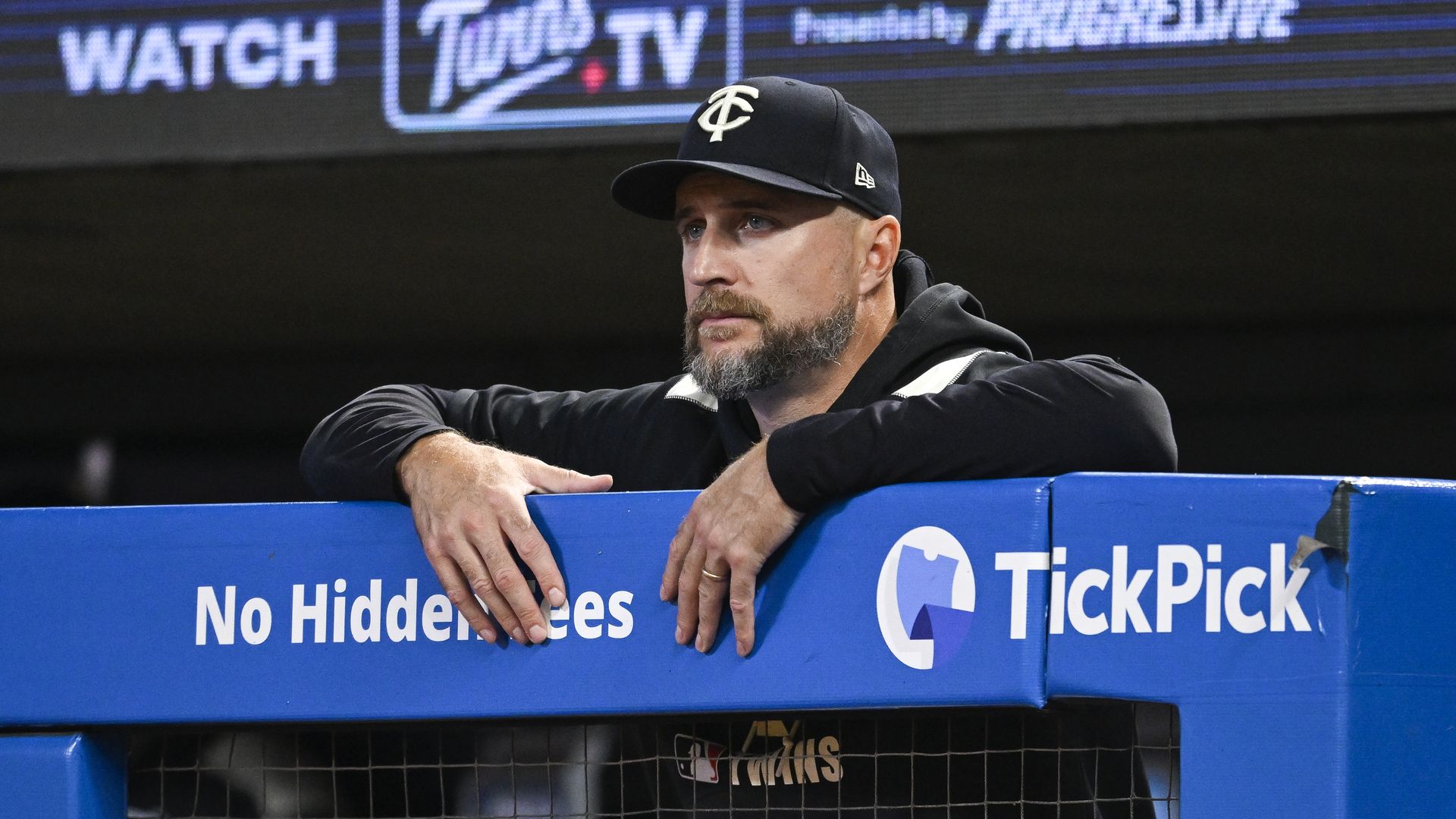
⚾️ The Twins fired Rocco Baldelli after seven seasons as manager. (Star Tribune)
- Baldelli's teams went a combined 527-505 and made the playoffs three times, advancing once. But they didn't qualify for the postseason the last two years.
- "This game is ultimately measured by results, and over the past two seasons, we did not reach the goals we set," Twins president Derek Falvey said in a statement. "I take personal responsibility for that. After discussions with ownership, we determined that this is the right moment for a change in voice and direction."
🚧 MnDOT paused road construction Monday to remember the two workers killed at separate work sites last week, and to raise awareness for safety in construction zones. (KARE 11)
🧗 First responders rescued two teenage boys who fell into a 100-foot-deep abandoned mine on the Iron Range (Fox 9)
4. ☕️ Hot coffee inflation

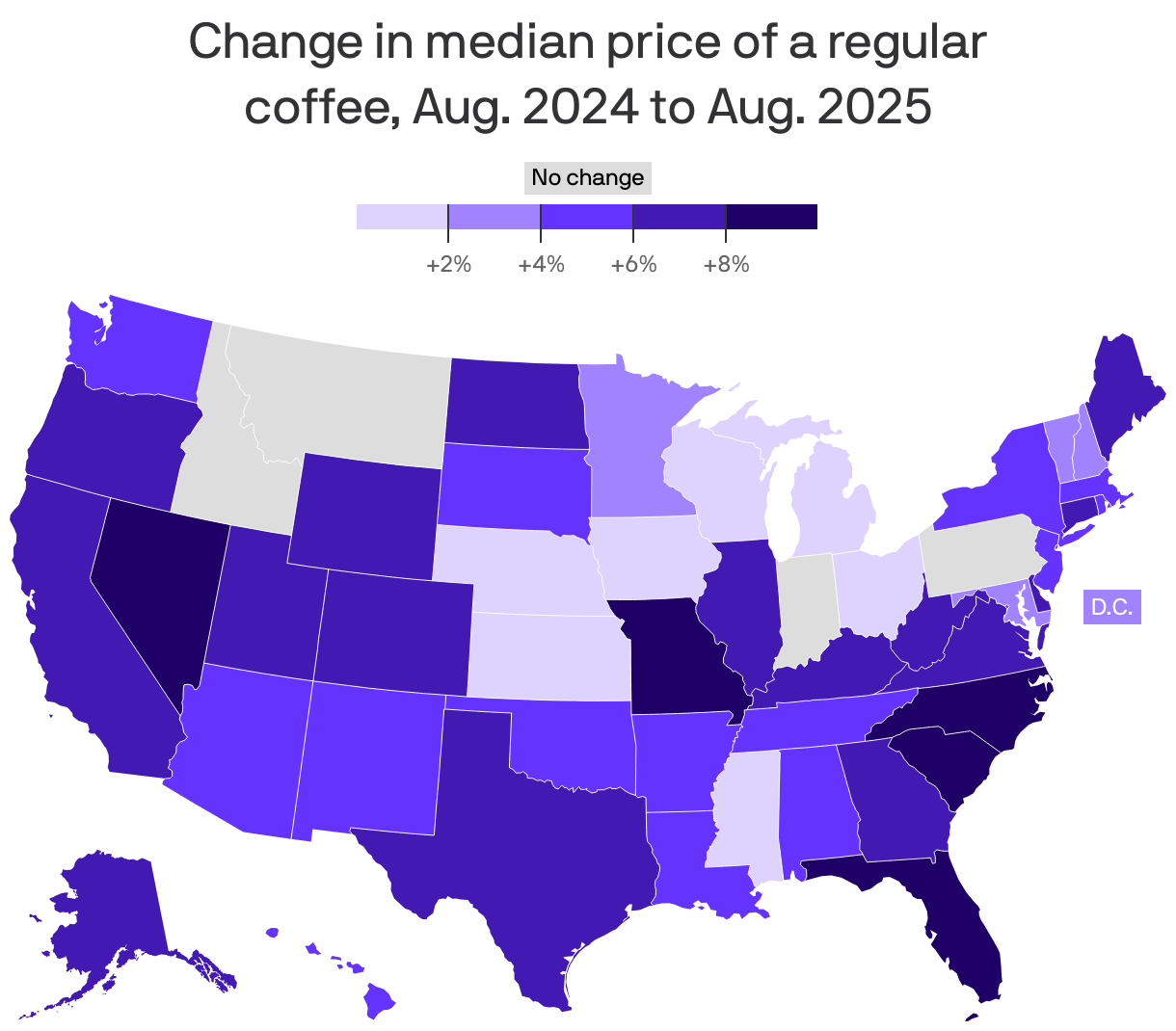
The typical price for a cup of joe in Minnesota reached $3.61 in August, up 3.5% compared to a year ago, according to new Toast data shared with Axios.
Why it matters: Coffee is among many commodities affected both by general inflation and the Trump administration's import tariffs.
- Coffee plants are also vulnerable to extreme weather tied to climate change, including droughts and heat waves.
Zoom out: The median nationwide cost of a regular cup of coffee hit $3.52 this past August, Toast says, up 2.9% from the same time last year.
How it works: These prices are based on restaurants using the point of sale technology from Toast.
What comes next: The Trump administration has recently opened the door to lower tariffs on coffee and other items, Axios' Ben Berkowitz reports, but that is dependent on dealmaking with other countries.

5. Another fall heat wave
Thermometers in the Twin Cities could hit 90 on Friday, a mark that would tie a record that dates back to 1997.
Why it matters: Another late-September/early October heat wave underscores a major shift here, with autumn feeling like an extension of summer due to climate change.
- As meteorologist Paul Douglas noted on TPT's Almanac, this warm weather could mean dull fall colors.
Stunning stat: September 2024 was the hottest September on record in the Twin Cities, barely edging out 2023.
- With highs reaching the mid-80s yesterday and likely again today, 2025 could crack the top 10.
Context: The normal high for this time of year is around 65, per the Minnesota DNR.
Threat level: Two years ago, organizers cancelled the Twin Cities Marathon due to a forecasted high of 90.
- NWS is predicting a cooldown starting this weekend. Sunday — race day — is only projected to hit 74.
What we're watching: That cooldown will continue. Douglas shared one model showing a high of just 46 on Oct. 13.
👑 Nick is reading this story about how Burger King's creepy king mascot of the 2000s hurt the brand.
🎾 Torey, who pledged almost two years ago in this very newsletter to get back on the tennis court, played three times last week and will be back at it tomorrow night.
😖 Kyle just sampled the line of "Skittles Drinks" on a whim and regrets it very much.
This newsletter was edited by Lindsey Erdody.
Sign up for Axios Twin Cities