St. Paul's big bet on big fines

Add Axios as your preferred source to
see more of our stories on Google.
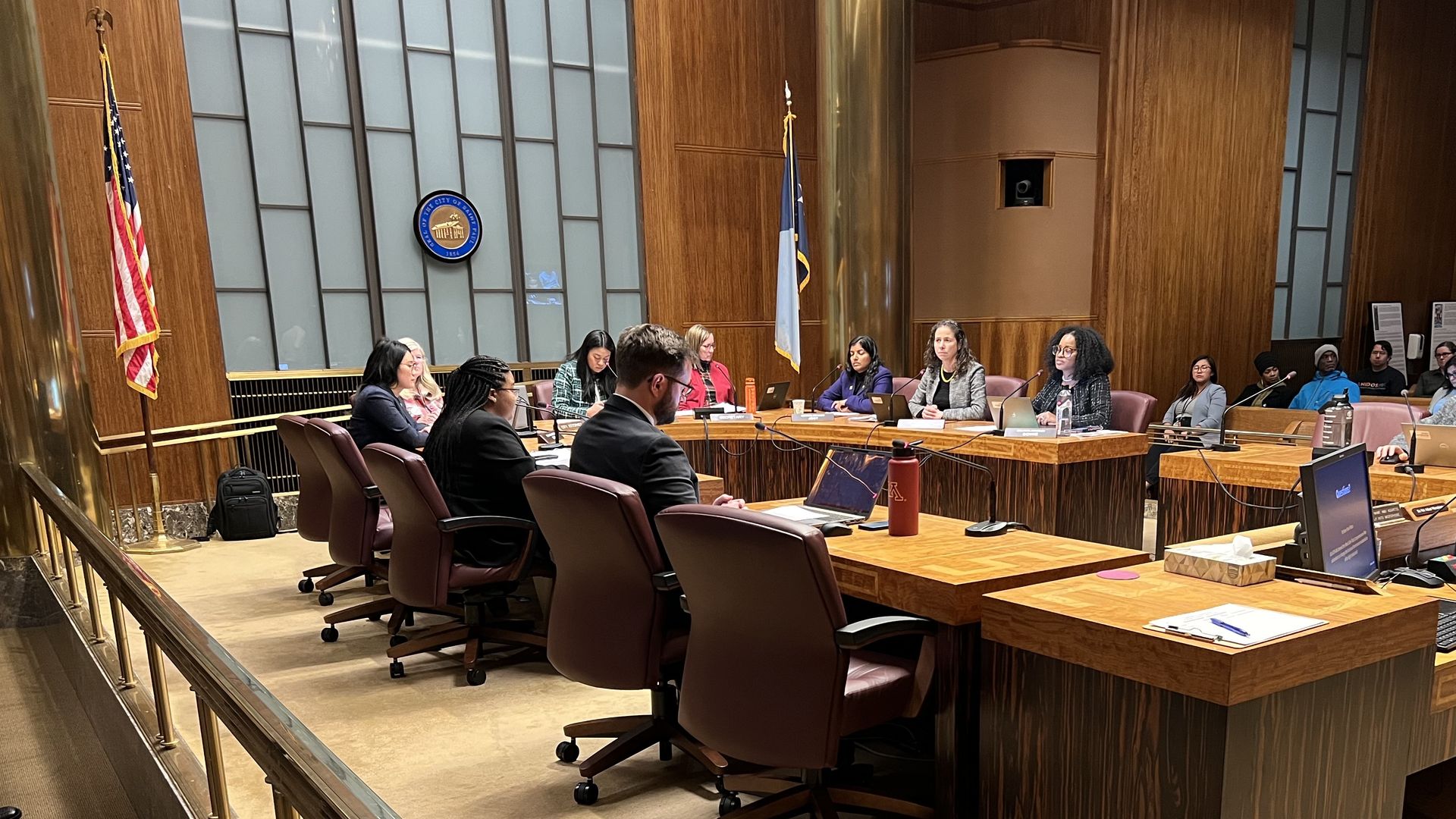
The St. Paul City Council is set to vote on a charter amendment that would give the city powers to issue punitive fines to enforce its ordinances. Photo: Kyle Stokes/Axios
St. Paul city leaders could vote Wednesday to expand their powers to levy fines against negligent landlords, wage thieves and other bad actors.
Why it matters: Supporters say a city charter change is necessary to enable St. Paul to go after powerful violators with the money to fight — or flout — enforcement of city codes.
What they're saying: "This is about holding the people accountable that do not suffer the consequences when they violate our ordinances because we don't have the tools," City Council Member Saura Jost said last week.
Catch up quick: Right now, St. Paul workers can clear your unshoveled sidewalk, then bill you for it — but that's different from a punitive fine.
- St. Paul is currently the only large Minnesota city that doesn't issue these civil penalties, known as administrative citations, to enforce its ordinances.
- The proposed charter amendment would change that.
State of play: A unanimous vote is required, but all seven City Council members and Mayor Melvin Carter have voiced their support.
Zoom in: The charter change doesn't specify which violations would be subject to the new fines, but St. Paul officials have detailed some areas where the current enforcement options aren't working:
- 🏚️ Property maintenance: City Council President Mitra Jalali has pointed to the troubled, vacant CVS location at Snelling and University, saying stiffer fines might force its owner to either sell or redevelop it.
- 💸 Wage theft: Cases can get tied up in court for years. The threat of a fine might force settlements that more quickly deliver employees' back pay.
- 🏘 Rent control: Short of filing criminal cases, city officials admit they lack leverage to force landlords to follow St. Paul's ordinance.
- 🐕 Dog bites: Cases often end up in criminal court because city officials don't have a less heavy-handed remedy at their disposal.
The other side: Opponents say that creating a parallel city bureaucracy to handle enforcement and appeals would be wasteful.
- The court system "has very good rules of evidence, doesn't allow hearsay," former City Council candidate Patricia Hartmann said at a hearing last week. "We're already paying for it with our tax dollars."
Friction point: Local governments can abuse their powers — and when they do, a federal investigation warned, it disproportionately affects low-income people and residents of color.
- St. Paul City Council Member Anika Bowie pledged advisory groups would review any new ordinances that impose fines to ensure they "won't be used as a city revenue generator."
- If someone appeals a penalty, the proposed charter change would allow the city to consider violators' ability to pay the fine.
What's next: Opponent Peter Butler, who believes council members are "overselling" the change's benefits, is collecting signatures for a ballot measure meant to freeze the charter change, the Pioneer Press reported.