Flannel T-shirts? Minnesota autumns are getting warmer

Add Axios as your preferred source to
see more of our stories on Google.
T-shirt and shorts weather is lasting longer in Minnesota.
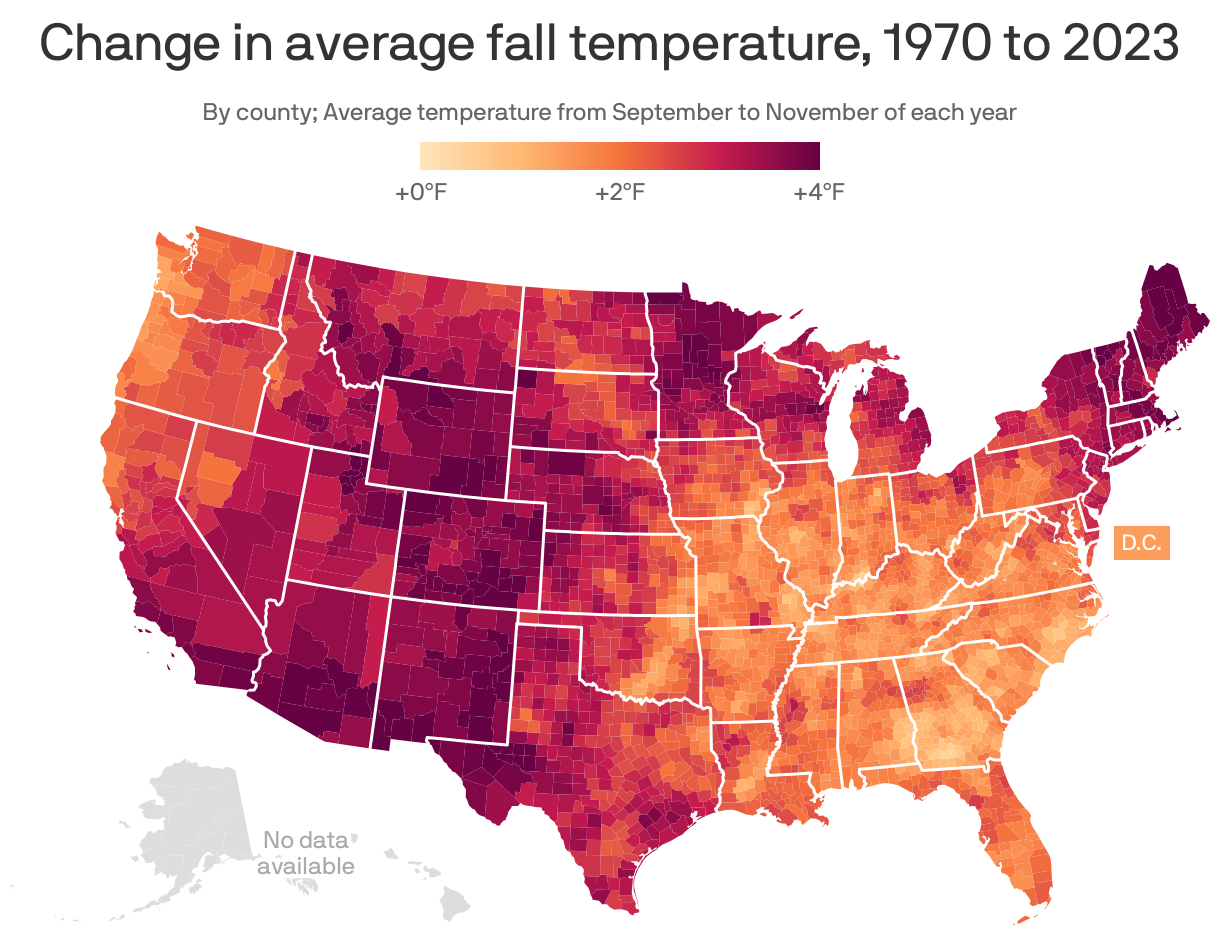
Zoom in: Fall has warmed by 3.6 degrees in the Twin Cities since 1970.
- That's a faster pace than the U.S. average of 2.5 degrees, according to a new Climate Central report.
The big picture: The rise in autumn temperatures across the U.S. means more demand for cooling (and thus higher energy use), longer wildfire seasons and big changes for farmers and gardeners.
State of play: Meteorological fall is off to a hot start, and September is on pace to be above average yet again.
- Today is likely to be the fifth-straight day we top 80 degrees at MSP Airport. The normal high for this time of year is in the mid-70s.
- Average temperatures last September ran 5.8 degrees above normal, according to DNR data.
Between the lines: The fall trends are consistent with climate science findings about how the planet is responding to human-caused increases in greenhouse gasses, such as carbon dioxide.
- All other seasons are also warming.
What's next: Expect above-normal temperatures across much of the country this fall, including Minnesota, according to the National Weather Service long-term outlook.
Warm fall means heightened allergies
A warm fall might feel nice to some, but for those who suffer from allergies — particularly ragweed — it's prolonging their misery.
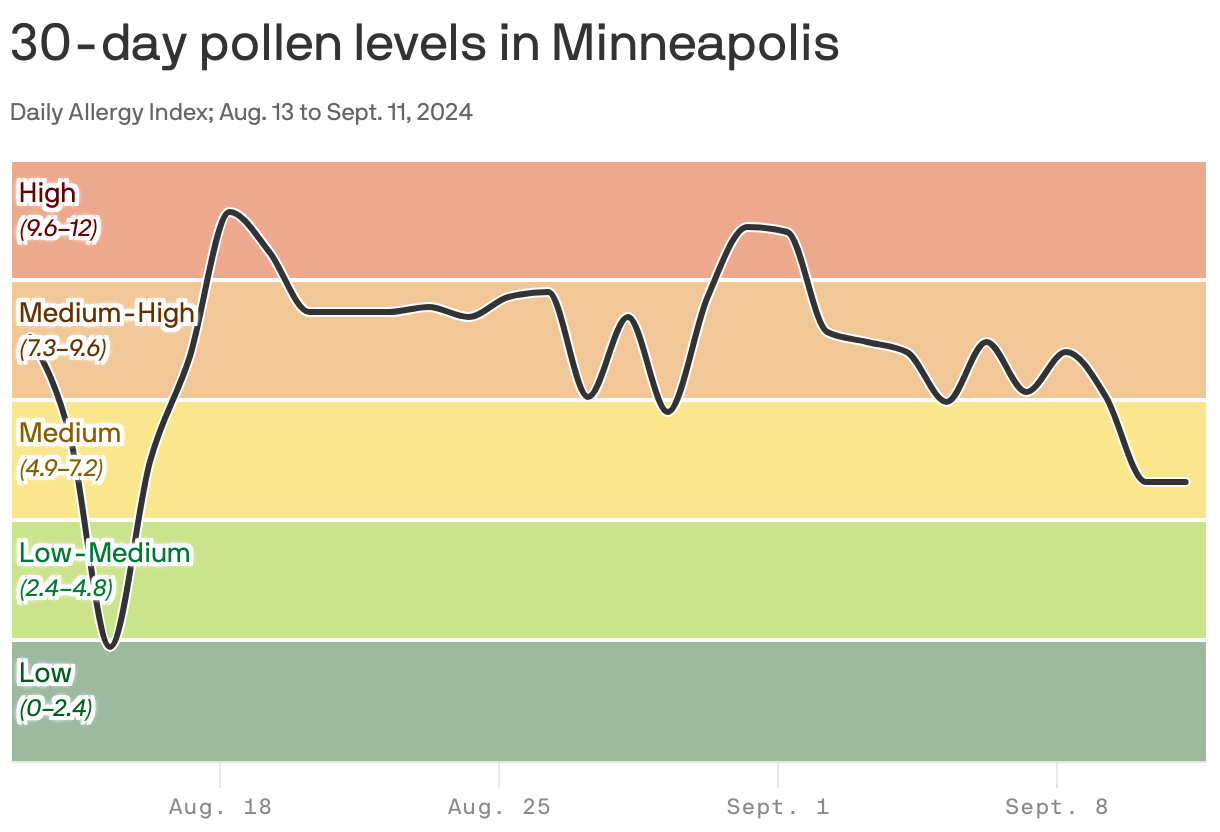
State of play: Pollen levels in the Twin Cities have been in the high or medium-high range for most of the past 30 days.
- Rain — which tends to scrub pollen from the air — has been mostly MIA since Aug. 29.
What they're saying: "When we have longer days that are warmer, drier and windier, we are going to have more pollen and more allergens in the air making people miserable," Allina Health allergist Pramod Kelkar told Axios.
- Climate change, he said, has extended the fall allergy season by two-to-three weeks, in part because the average date of the first frost has been getting later.
Yes, but: Kelkar said Minnesotans with allergies shouldn't have to miss out on some of the best weather of the year.
- Over-the-counter medications like Flonase, Claritin, Allegra and Zyrtec are highly effective, he said. Plus, the generic brands work just as well as the name brands, he added.
- He also suggested regularly using sinus rinses or neti pots.
- If those don't do the trick, then sufferers should see an allergy doctor who could prescribe them allergy shots, which are over 100 years old and reduce symptoms over time, Kelkar said.