Axios Sneak Peek

December 18, 2022

Josh Kraushaar here. Thanks for joining Sunday Sneak Peek, our weekly look ahead at the forces shaping American politics.
- Smart Brevity™ count: 1,176 words ... 4.5 minutes.
1 big thing: GOP's 4 must-win counties
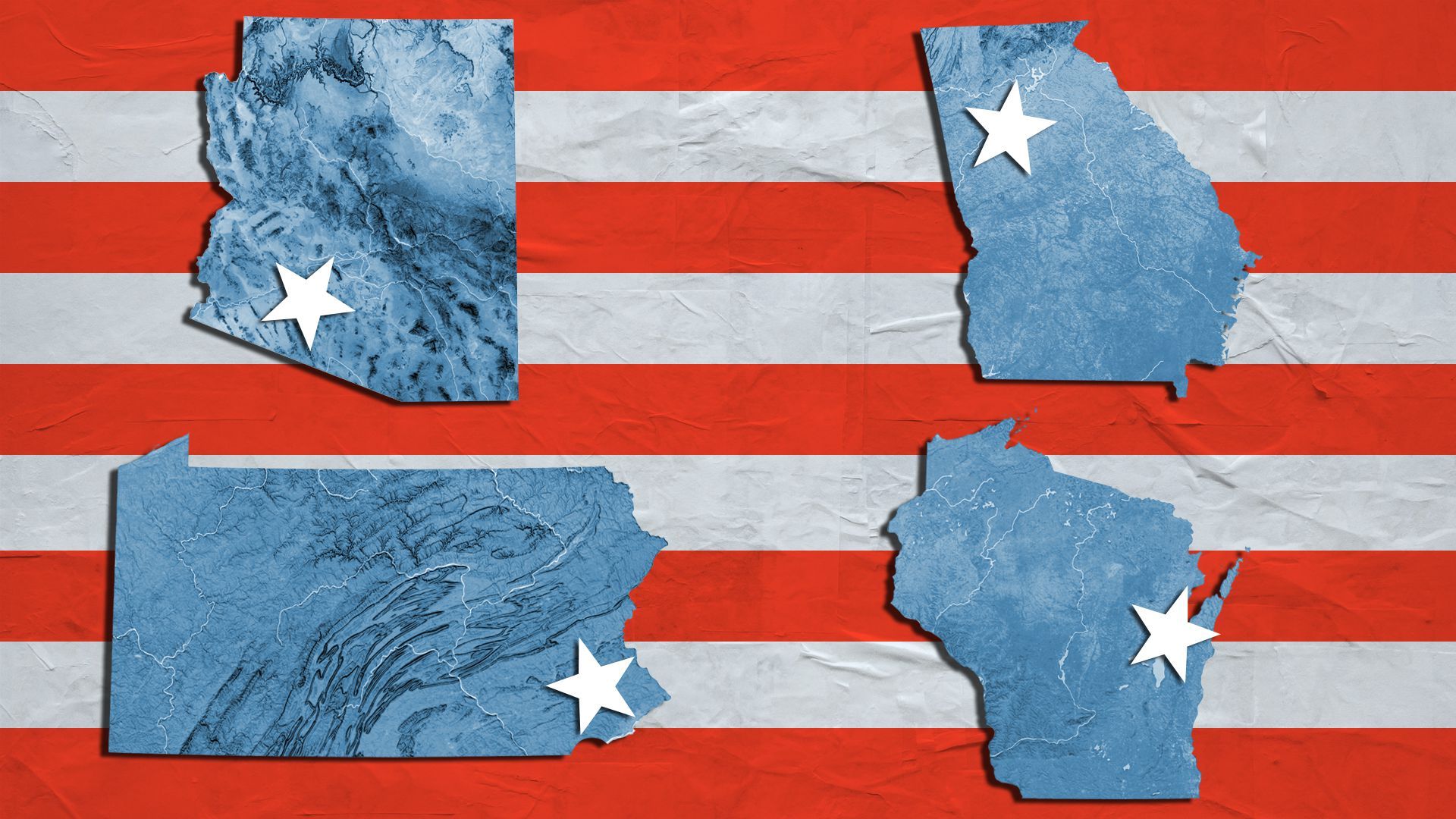
Illustration: Sarah Grillo/Axios
In the four battleground states likely to decide the outcome of the next presidential election, clawing back swing-voter support in the suburbs will be the key to unlocking a Republican revival.
Why it matters: Republicans lost six of the eight Senate and governor's races in Arizona, Georgia, Pennsylvania and Wisconsin in 2022. A suburban bellwether county in each of these states could make all the difference for the GOP in 2024.
1. Bucks County, Pennsylvania: The epicenter of any GOP comeback in Pennsylvania starts in Bucks County. One of the only bright spots for Republicans in Pennsylvania is that moderate Rep. Brian Fitzpatrick (R-Pa.) easily won re-election, even as the county he represents swung blue.
- Sen.-elect John Fetterman (D-Pa.) won 52% of the vote in Bucks, while Gov.-elect Josh Shapiro (D-Pa.) scored a whopping 59%.
- Outgoing Sen. Pat Toomey (R-Pa.) won Bucks by five points in 2016, but former President Trump and Trump-aligned candidates have been tough sells to voters here.
2. Brown County, Wisconsin: Centered in Green Bay, the fourth-most populous county in Wisconsin doesn't get as much attention as those including Milwaukee and Madison — but its competitive nature is pivotal to any GOP candidate's prospects.
- Both Sen. Ron Johnson (R-Wis.) and losing GOP gubernatorial nominee Tim Michels carried Brown, but Johnson's double-digit margin there made the difference in his close race.
- Former Gov. Scott Walker carried Brown County by 17 (!) points in his 2014 election, and even won by eight points in his unsuccessful 2018 campaign.
3. Cobb County, Georgia: This was once former House Speaker Newt Gingrich's rock-ribbed Republican home base, but now it's a fast-growing, diversifying and affluent corner of suburban Atlanta that has favored Democrats in the Trump era.
- Sen. Raphael Warnock (D-Ga.) trounced Republican Herschel Walker by 20 points in Cobb during the runoff, even as Republican Gov. Brian Kemp lost the county by only five points.
4. Maricopa County, Arizona: Once a GOP stronghold, the population center of Arizona has become the focus of the election denial movement that Trump has championed.
- Maricopa backed Trump in 2016, and Gov. Doug Ducey (R-Ariz.) won 56% of the vote here in 2018. But suburban voters in affluent areas like Scottsdale have been deeply resistant to extreme, MAGA-oriented candidates.
- According to the AP VoteCast exit poll, independents backed Gov.-elect Katie Hobbs (D-Ariz.) by 30 points over Trump-endorsed Kari Lake, and Sen. Mark Kelly (D-Ariz.) by 36 points over Trump-endorsed Blake Masters.
The bottom line: "You’re going to have your soccer moms and Peloton dads. Those college-educated voters, specifically in the suburbs, are ones that Republicans have to learn how to win," Virginia Gov. Glenn Youngkin's campaign strategist Kristin Davison told the New York Times.
2. 🗳️ Poll of the week: No love for Biden-Trump rematch

Illustration: Sarah Grillo/Axios
Few voters are pining for a rematch between President Biden and former President Trump, instead hoping that 2024 will usher in a younger generation of leadership, according to the latest polling.
Why it matters: Top Democrats are coalescing around Biden's re-election bid after the party's overperformance in the midterms. But a clear majority of Democratic voters still want new blood at the top of the ticket.
- A whopping 57% of Democrats say Biden shouldn't run again, according to a CNBC survey released this week.
- Meanwhile, nearly as many GOP voters say they want Trump to step aside as those who prefer that he run again — 45% to 47%, according to a recent USA Today/Suffolk University poll.
Why it matters: The prospect of an octogenarian president running against a 78-year-old former president doesn't square with the forward-looking mood of voters in both parties.
- Concerns about Biden's health and Trump's mental fitness will be glaring vulnerabilities in a general election.
The bottom line: The average American is often more sensible than the pundits.
- Voters expressed similar unease in 2015 about leading scions of two political dynasties — Jeb Bush and Hillary Clinton — running against each other at a time of anti-establishment sentiment.
- Both lost to Trump, the consummate political outsider.
3. 🏛️ Virginia on verge of electing first Black congresswoman
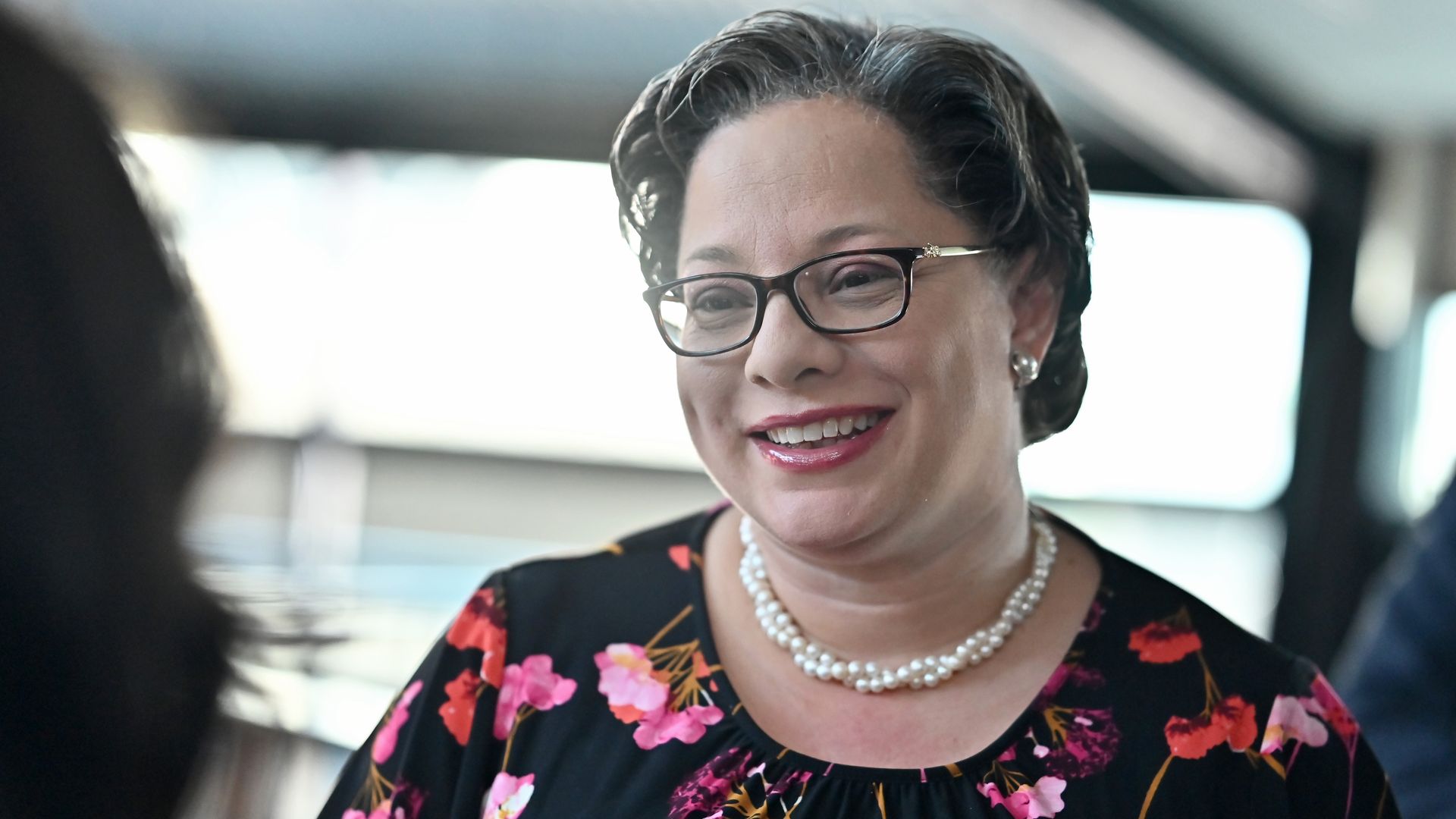
Photo: Shannon Finney via Getty Images
State Sen. Jennifer McClellan, a leading progressive in the Virginia legislature, is the favorite to win the House seat vacated by the untimely death of Rep. Donald McEachin (D-Va.).
State of play: The election process to fill McEachin's seat has been unusually compressed. Candidates had just about one week to campaign for the firehouse primary, which will be held on Dec. 20.
- McClellan's top challenger is attorney Joe Morrissey, an independent-minded Democrat who favors some abortion restrictions.
- State Del. Lamont Bagby, the chairman of the Virginia Legislative Black Caucus, dropped out of the race Thursday and endorsed McClellan.
- Axios Richmond's Ned Oliver described Morrissey as a "flamboyant, disbarred lawyer with a criminal record and knack for winning elections."
Why it matters: McClellan would be the first Black woman elected to Congress in Virginia. Last year, Republican Lt. Gov. Winsome Sears became the first woman of color to be elected to statewide office in Virginia.
- Based in Richmond, Virginia's 4th District is solidly Democratic — voting for President Biden with 67% of the vote. It was drawn to elect a Black representative, though white voters narrowly outnumber Black voters in the district, 43% to 41%.
- Virginia doesn't have registration by party. Republicans and independents can participate in the Democratic firehouse primary if they sign a document stating they're a Democrat.
The bottom line: This is the last congressional election of 2022. Assuming a Democrat wins McEachin's seat in the Feb. 21 special election, Republicans will hold 222 House seats and Democrats will hold 213 in the next Congress.
4. ⛰️ Overlooked: Dem blowout in Colorado

Illustration: Brendan Lynch/Axios
It's hard to remember that Colorado used to be reliably Republican and was a battleground state at least through 2014. But after this year's midterms, it's clear that Colorado is solidly blue.
The big picture: Even though he faced a center-right GOP opponent who kept his distance from Trump (Joe O'Dea), Sen. Michael Bennet still cruised to victory by 15 points.
- Gov. Jared Polis won nearly 60% of the statewide vote, showing particular strength in the vote-rich Denver and Colorado Springs metropolitan areas. Polis came within a point of carrying Douglas County, a historically Republican Denver exurb.
- Despite GOP expectations that they'd make gains with Hispanic voters, Republican Barb Kirkmayer narrowly lost to Democrat Yadira Caraveo in a new swing district drawn to represent Hispanics.
- Even Rep. Lauren Boebert, running in a Trump +8 district, barely hung onto her seat. She won by the narrowest margin of any elected lawmaker.
By the numbers: Republicans lost every competitive state legislative seat in Colorado too, according to an analysis by Ryan Brune. The bluest seat they hold is a Trump +8 seat.
- Democrats grabbed a supermajority in the state House, and hold a dominant 23 of 35 state Senate seats. As recently as 2018, Colorado Republicans controlled the state Senate.
📬 Thanks for starting your week with us. This newsletter was edited by Zachary Basu and copy edited by Kathie Bozanich.