Axios Science

September 05, 2024

Thanks for reading Axios Science. This final edition of the newsletter is 1,421 words, about a 5-minute read.
- Axios Science spanned a dizzying 7.5 years that included a pandemic, the breakout of generative AI, intensifying science and tech competition around the world, countless other advances and so many wondrous things.
- I'm grateful to all the subscribers, my sources and my colleagues — it's been fascinating to follow what's happening in science and emerging tech alongside you. And I've greatly appreciated hearing from so many of you over the last week about how much you enjoyed the newsletter.
- I'll continue writing about science so follow me, send your tips and stories, and please stay in touch ([email protected]).
- Subscribe to Axios Vitals to get the latest health care news and sign up for AI+ to stay on top of what's happening with AI and other technologies.
1 big thing: What to watch in science
One refrain I've heard over the time writing this newsletter is that this century is being driven by scientific talent, tools, knowledge and know-how.
Why it matters: News about science can get lost in the chaos over markets, elections and wars, but scientific developments are increasingly important as the challenges people and the planet face become more complex.
- A country's competitive edge — and alliances — are no longer defined by trade and manufacturing and now also hinge on ideas and expertise.
- In a speech in June at a major science and tech conference, Chinese leader Xi Jinping said the "[science and tech] revolution and the game being played between the great powers are intertwined, and the high-tech field has become the front line and main battlefield of international competition."
- At the same time, the world is banking on science-generated solutions to address shared problems like global warming and emerging diseases.
Against that backdrop, here's what I'll continue to watch...
AI frontiers. No doubt AI is advancing but there are massive gaps between today's AI systems and a human-like artificial intelligence that require some combination of better algorithms, computing power and theory to fill.
- Different AI techniques are being brought together to try to give machines more abilities.
- But there are big questions about how these systems work and how to evaluate whether AI can be trusted to make important decisions.
Science powerhouses. Today, no country dominates science overall. China, the U.S. and the EU are each leaders in a handful of fields.
- That raises questions about how they'll collaborate and compete in a re-ordered world, and where the centers of research power will reside.
China is blocking the view. The U.S., Europe and the West are focused on the rise of China but there is a wider array of players acting on their science ambitions.
- India's unfolding partnerships in biotech, Saudi Arabia's investments in AI and space, the UAE's collaborations, and a slew of telescope, particle accelerator, and high-security biolab projects in the works in Africa and South America all hint at how countries will position themselves.
It's all about the people. Xi acknowledged one of China's weaknesses is a lack of elite science and tech talent. And, there are also concerns about a STEM talent crisis in the U.S.
- How nations train and attract a new generation of scientists, engineers and technologists will shape their standing in the new world order.
It's material. Like past technological revolutions, raw materials and resources are crucial. Those that own them — or figure out how to create them — will be out in front.
Biology is power. There's a vision of economies built on biologically engineered and produced materials, fuels and food. But there are science problems and scaling challenges to solve.
- AI's application to biology and genome editing are also fueling debates about what guardrails might be needed for technologies that could help develop new medicines and vaccines but could also be used for bioweapons and other nefarious uses.
Who benefits. Science hasn't included or served everyone, and carries a legacy of exploitation and atrocious experiments in the name of progress.
- Efforts are underway to better represent different groups in datasets and discussions, and to figure out how to compensate countries for their valuable resources.
- The U.S. is trying to bolster science research and development across the country, potentially changing who does science and creating more opportunities to tap it as an economic engine.
Science of science. For all its advances and promises, there are concerns that progress in science is slowing down despite big investments.
- Out on the horizon, how science is done could change with the advent of self-driving labs, computing advances and AI-generated synthetic data.
Somethings wondrous. Politics and pitfalls aside, there are the simply wondrous — and potentially unifying — discoveries in astronomy, geology, biology and more that are bound to come.
- Those deserve our attention, too.
2. NOAA bolsters its AI forecasting capabilities

Axios' Andrew Freedman, who authored this newsletter for more than a year and whose countless contributions I'm extremely grateful for, writes... The National Oceanic and Atmospheric Administration is adding to its high-performance computing resources in a bid to bolster its uses of AI and machine learning for weather and climate.
Why it matters: The agency's $100 million investment comes as it faces rapid advances in forecasting techniques, and new entrants build accurate weather models trained on historical data.
- These competitors include big tech companies like Nvidia and Google, as well as private forecasting startups like tomorrow.io and WindBorne, plus NOAA's peer agencies abroad.
- The money comes from the 2021 infrastructure package and 2022 climate laws.
Zoom in: According to the atmosphere and oceans agency, the money will be used to install a new high-performance computer from General Dynamic Information Technology.
- The new machine, called Rhea, after the Greek goddess and mother of gods, will be located at a modular data center in West Virginia.
- It would both benefit the agency's physics-based models and provide better training data for its AI/machine learning efforts, the agency told Axios.
- It would also help to "get more data into our forecast models."
Between the lines: NOAA, particularly its National Weather Service, has consistently fallen behind its peer agencies when it comes to computing power and model accuracy, although that has been alleviated to some extent.
- The advent of AI-based models increases the pressure on the agency to bolster its computing resources even faster.
- "NOAA has had a persistent need for additional computing power," Michael Morgan, assistant secretary of commerce for environmental observation and prediction, tells Axios via email. "With this recent investment, we are positioned to more ably meet the existing demand. AI/ML is a driver of this need."
By the numbers: Rhea would add about 8 petaflops of computing speed and capacity to NOAA's existing capacity of 35 petaflops.
- One petaflop is one quadrillion operations per second.
- Another machine is also in the pipeline for that facility, which NOAA says would bring its total research and development computing power to 48 petaflops.
The bottom line: This move is a step toward a more AI-centric NOAA since the modular data center approach could accommodate additional machines.
3. Worthy of your time
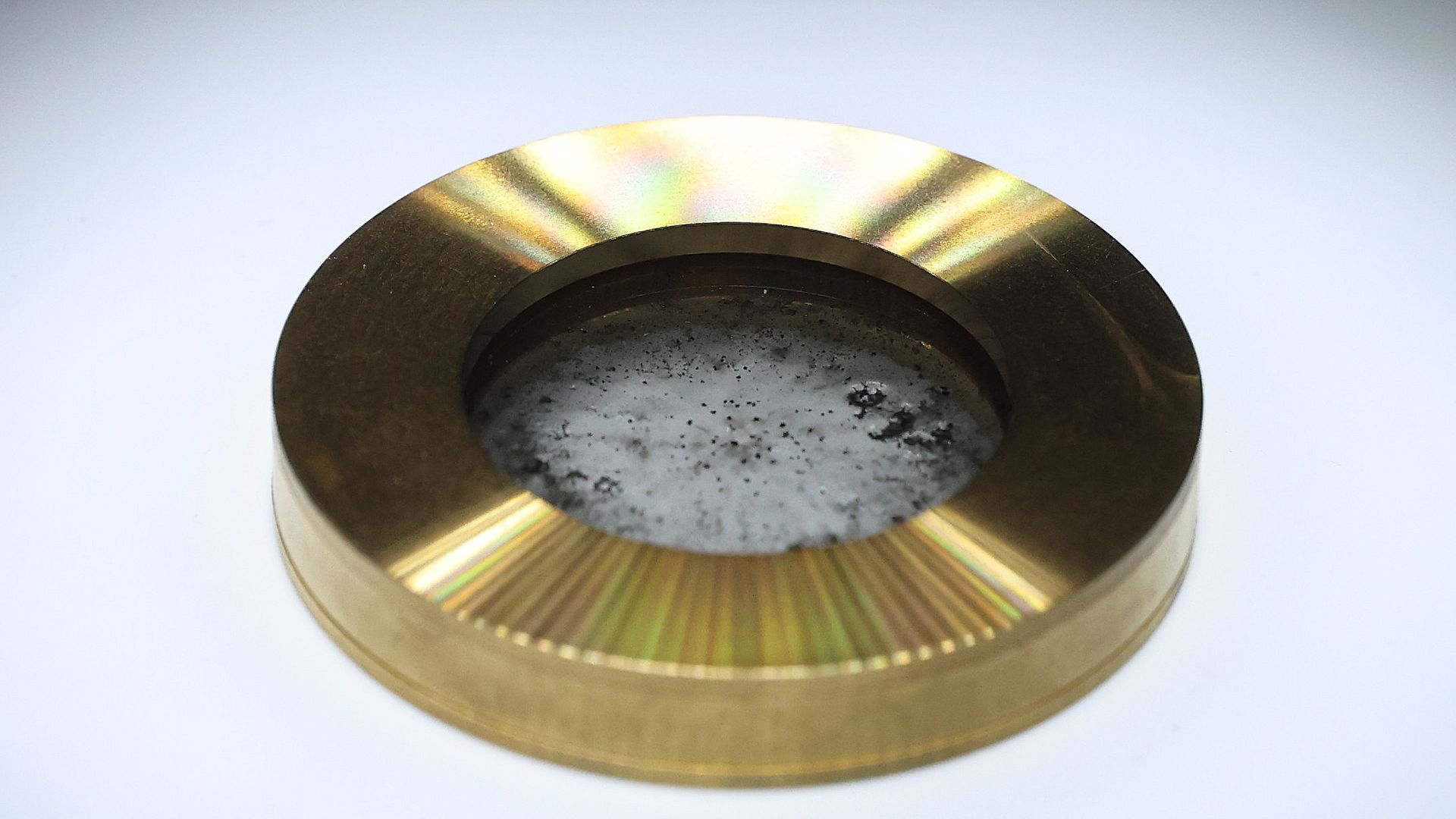
Tiny glass beads suggest the moon had active volcanoes when dinosaurs roamed Earth (Adithi Ramakrishnan — AP)
Nuclear clock prototype hints at ultraprecise timekeeping (Emily Conover —Science News)
The biology of smell is a mystery — AI is helping to solve it (Kerri Smith — Nature)
4. Something wondrous
/2024/09/05/1725558133495.gif?w=3840)
A common food dye can temporarily make the skin, tissues and muscles of a mouse transparent, revealing the blood vessels, nerves and organs inside, scientists reported today.
Why it matters: The process hasn't been tested in people but could point to new ways to detect and treat cancers, image back injuries, monitor diseases and a range of other medical applications.
What they found: Stanford University researchers discovered that applying a topical solution of tartrazine — the dye found in FD&C Yellow 5 — dissolved in water to skin transforms opaque tissue into a transparent window into the inner workings of a living animal.
- When they applied the dye to the abdomen of a mouse, the scientists could see its liver, small intestine, bladder and other organs down to the resolution of microns, they reported in the journal Science.
- The blood vessels in the brain could be seen when the dye was put on a mouse's scalp and viewed with a technique called laser speckle contrast imaging.
- Rinsing off the dye with water reverses the process, they reported.
How it works: Most of the light that hits the body's tissue is scattered because the fluids and structures inside (the plasma membrane, mitochondria and others), have different refractive indices (RI) — a measure of how much light will bend when it moves through a material.
- Light scatters as it moves through these different components of the cell and the tissue appears opaque.
- The researchers' hypothesis was that dyes that strongly absorb certain wavelengths of light can shift the RI of fluids within cells.
- That could then be leveraged to reduce the contrast between the fluid and fats, proteins and other materials that make up cell structures. The process minimized unwanted light scattering and allowed the light to penetrate further into the body.
What's next: ″Looking forward, this technology could make veins more visible for the drawing of blood, make laser-based tattoo removal more straightforward, or assist in the early detection and treatment of cancers,″ study co-author and Stanford University assistant professor of materials science and engineering Guosong Hong said in a press release.
Big thanks this week to editor Adriel Bettelheim and copy editor Carolyn DiPaolo. And a thousand more thanks to my newsroom colleagues, especially Eileen Drage O'Reilly, who contributed to this newsletter over the years.
Sign up for Axios Science
Gather the facts on the latest scientific advances