Axios Science

August 29, 2024

Thanks for reading Axios Science. This week's newsletter is 1,717 words, about a 6.5-minute read.
- Some big news: Next week's edition will be the last for Axios Science. More on that then.
- Please send your feedback to me at [email protected].
1 big thing: Insect illnesses on the move
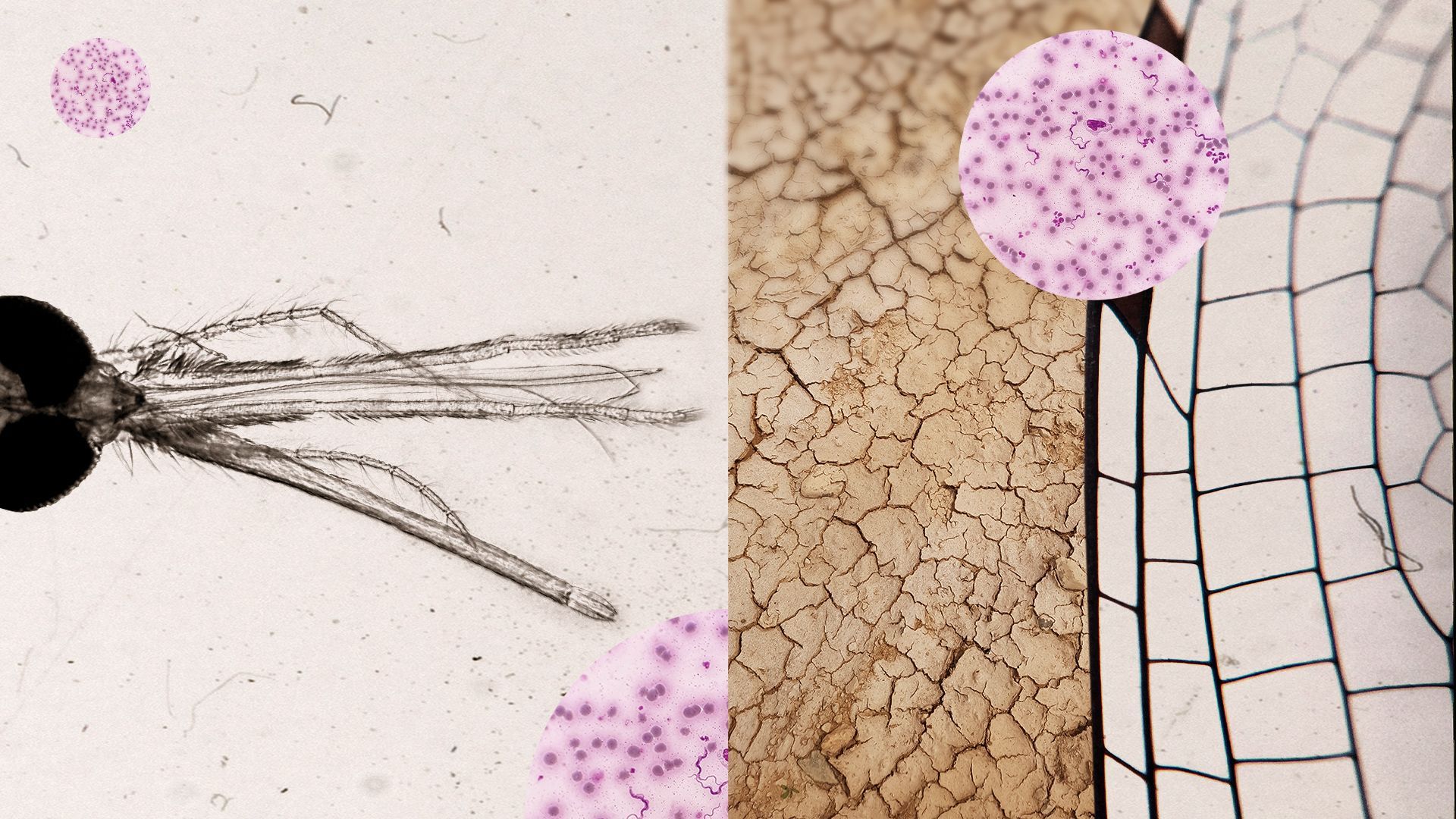
Almost daily headlines about the spread of rare, potentially deadly insect-borne diseases such as eastern equine encephalitis (EEE) and Oropouche fever highlight the expanding threat that mosquitoes, ticks and other bugs present, Axios' Tina Reed and I write.
Why it matters: Longer, hotter summers, milder winters and changes in land use and travel are giving insects more time and space to spread diseases or compound the misery in places where they already exist.
Driving the news: The death of a New Hampshire resident from EEE brought home the threat.
- The CDC has also warned this summer about an increased risk of dengue fever, which is spread by the same type of mosquitoes that carry the Zika virus and chikungunya.
- West Nile virus has become a perennial threat throughout much of the continental U.S.
- Malaria, a parasite spread by another species of mosquito, is also on the rise around the world, and several cases were reported in the U.S. last year, though the risk of catching it here remains low.
Zoom in: In the U.S., experts say the environment for insects in the northern half of the country has become far more hospitable because of rising temperatures.
- Global warming is "changing where mosquitoes and ticks live, and thus what diseases are moving around in different regions," CDC director Mandy Cohen said yesterday.
Yes, but: More travel and globalization also fuel the spread of vector-borne diseases, said Michael Osterholm, director of the University of Minnesota's Center for Infectious Disease Research and Policy.
- For example, researchers believe Oropouche fever, which is spread by mosquitoes and midges, was brought to the U.S. and Europe by travelers who had been to Cuba and South America. Officials do not have evidence of local transmission in the U.S.
- Changes in land use also play a role. Lyme disease is believed to be spreading in North America, in large part, due to the suppression of wildfires, which has allowed for the maturation of forests and animals that allow ticks to thrive.
Between the lines: "We're putting out more fires, and it takes more to put them out," says Colin Carlson of the Yale School of Public Health.
- The rise in malaria in Africa and dengue fever in Asia and the Americas has been linked to global warming, but it's harder to attribute individual outbreaks or rare diseases to climate change, in part because of limited data, he said.
- "It's also important to remember that explosive epidemics of arboviruses are standard fare," says Carlson, who studies whether changes in certain diseases can be linked to climate change. It happened with Zika and chikungunya in the Americas.
- "With both Oropouche and EEE, I think it's important to not jump the gun and immediately go to, well, this is climate change in practice," Carlson says.
The intrigue: Some mosquito species are migrating around the world — presumably being transported on shipping routes, says Sadie Ryan, a medical geographer at the University of Florida.
- One concern is a mosquito species could be deposited in a habitat that suits them and has "blood meals running around on the streets," Ryan said. If there's a disease there, the new species could pick it up and become part of the transmission cycle, she says.
- "These are new paradigms," she adds. There's natural invasion biology happening at the same time as transformations in the landscape and climate change.
What to watch: Insect immunology could offer new avenues for fighting the diseases and is beginning to mature as a field, says microbiologist and National Science Foundation program director Joanna Shisler.
- By studying how a virus replicates in a mosquito and how the insect's immune system fights it, scientists may be able to understand why some mosquitoes are resistant while others are susceptible to different types of virus infections, Shisler says.
2. Canada's 2023 wildfires were top global carbon emitter
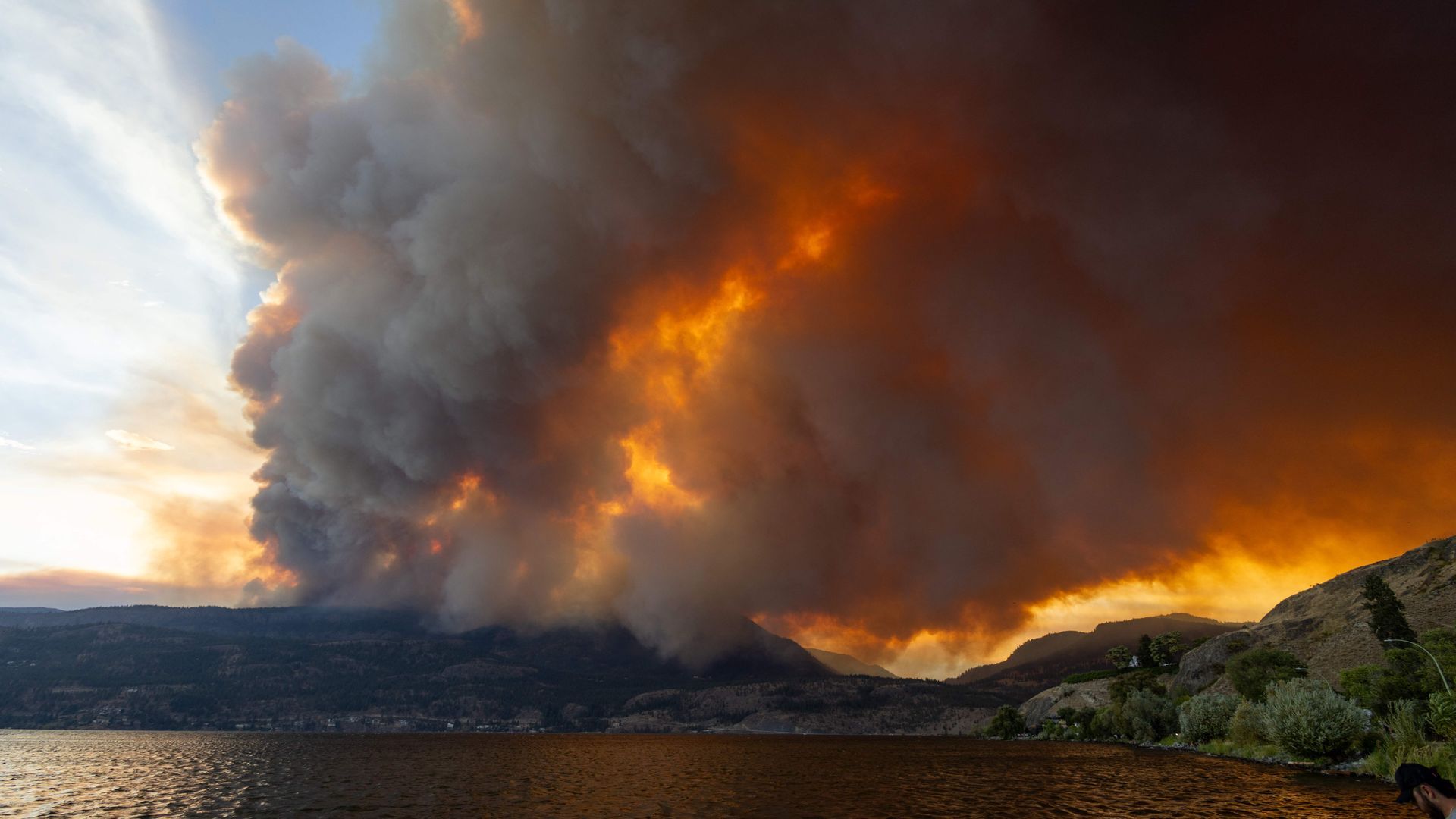
Canada's record 2023 wildfire season emitted so much carbon into the atmosphere that it put the country on par with the annual fossil fuel emissions of India, Axios' Andrew Freedman reports from a new study.
Why it matters: The fires, which burned 4% of the nation's vast forest area, demonstrated the effects that extreme heat and drought have on the boreal forests that ring the Arctic — greatly increasing their tendency to burn.
- The paper, published in the journal Nature by an international team of researchers, also provides a warning about designing carbon offset programs around ecosystems long thought to be relatively stable.
How they did it: The study examined estimates of trace gas emissions in fire plumes from satellite-based wildfire sensors, such as TROPOMI.
- It also looked at satellite detections of heat signatures from wildfires and used knowledge of vegetation and other factors to determine carbon emissions.
What they found: In just five months, Canada emitted enough carbon from wildfires in 2023 — 647 million metric tons — to be comparable to the annual fossil fuel emissions from the top 10 largest emitters.
- The wildfire-related emissions were more than four times larger than Canada's annual fossil fuel emissions.
- The research also notes that climate projections show an increasing tendency for extreme fire weather conditions to occur and lead to larger and more intense blazes. This could hurt the ability of Canada's ecosystems to be a net absorber, or "sink," of carbon.
Zoom out: Many companies and governments are choosing to offset their carbon emissions by purchasing carbon credits earned from leaving healthy forests intact.
- But with climate change causing wildfire seasons to become more severe in the U.S., Canada and elsewhere, some of the forests used for offsets have gone up in flames — negating the carbon benefits.
3. Rogue worlds provide clues about how stars form

Six planet-size "rogue worlds" spotted by the James Webb Space Telescope may have formed like stars, researchers reported this week.
Why it matters: The objects blur the line between stars and planets and could offer scientists new clues about which forms under what conditions.
What they found: JWST surveyed NGC 1333, a young star-forming cluster nearly 1,000 light-years from Earth, and detected six rogue worlds, objects that are free of any star's gravity.
- The free-floating worlds are five to 15 times the mass of Jupiter and they likely formed when clouds of gas and dust collapsed under gravity — similarly to a star's formation — researchers report in a study to be published in The Astronomical Journal.
- These brown dwarfs — or "failed stars" — aren't massive enough to fuse hydrogen into helium but are too large to be considered a gas giant planet.
Zoom out: What "strikes me is what we didn't find," said study co-author astrophysicist Ray Jayawardhana of Johns Hopkins University.
- JWST is sensitive enough to spot objects less than five times Jupiter's mass, but no rogue objects of that size were detected.
- That suggests any objects smaller than that in this star cluster form like planets rather than stars, the team reports.
What we're watching: It "suddenly raises the question of: Are we beginning to see the lowest mass object that can form the way that stars do?" Jayawardhana said, adding he's been trying to understand that threshold for nearly two decades.
Yes, but: They need to look at other star clusters of varying density to be sure they've found the stellar cutoff, Jayawardhana said.
The intrigue: The lightest of the six objects is surrounded by a disc of dust and gas.
- The disc suggests the object formed like a star because it would be difficult for an object to carry that material if it were ejected from a star system — it would have been stripped away in the process, Jayawardhana says.
- The disc of dust, which is required for the formation of planets, raises the possibility that a mini-planetary system — smaller than our own — could be forming around the rogue world.
4. Worthy of your time
Alaska's permafrost is thawing, releasing a concerning amount of mercury (Anita Hofshneider — High Country News)
Inside China's race to lead the world in nuclear fusion (Gemma Conroy — Nature)
How studies of Maya children challenge a paradigm in psychology (Carolyn Johnson — Washington Post)
5. Something wondrous
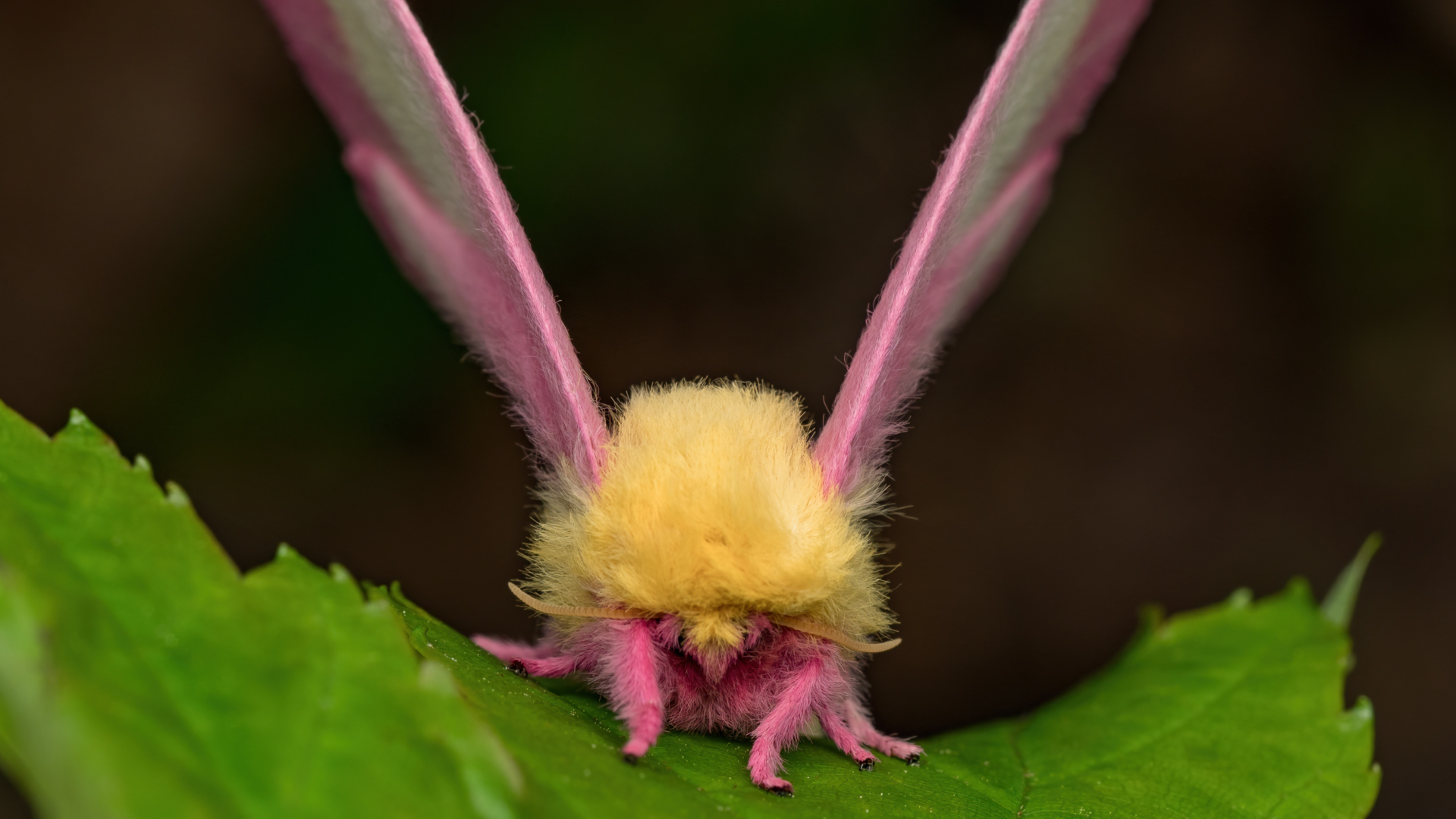
A time-keeping gene in two closely related moths is offering scientists a window into how new species arise.
Why it matters: Much of what's known about biology's fundamental processes is largely limited to studies of fruit flies, lab mice and other model organisms.
- But if scientists want to engineer species to better cope with climate change, it is crucial to have an understanding of a broader pool of genes, Yash Sondhi, co-author of a new study on moths, said in a statement.
How it works: New species can emerge when one group of individuals in a population becomes geographically isolated from another and develops new characteristics and eventually stops mating with their original group.
- But the new study looks at another barrier: time.
Researchers at Florida International University and the Florida Museum of Natural History looked at two moth species that are closely related and have overlapping ranges and habitats in the southeastern U.S. but are active at different times of day.
- Vibrant-colored rosy maple moths (Dryocampa rubicunda) — males and females — fly largely at night.
- Male pink-striped oakworm moths (Anisota virginiensis) fly (and mate) during the day, and females fly in early evening when they lay their eggs.
- The two species diverged about 3.8 million years ago.
What they found: The researchers compared the moths' transcriptomes — the set of genes that are "on" or "off," or expressed, to make proteins at any given time.
- The found "300–700 genes with different expression levels between day and night," the researchers report in Proceedings of the Royal Society B.
- For example, there was more expression of genes associated with smell in
nocturnal rosy moths and more related to vision in the day-flying oakworm moth.
Zoom in: They also found a gene called disco, which plays a role in the circadian rhythm.
- The gene was expressed at different levels in each species of moth at night and during the day.
- When they compared the disco gene of each moth, the researchers found 23 mutations in active parts of the gene, suggesting they could be involved in the different physical characteristics seen in the moths, they report.
If confirmed, "this is a really concrete example of the mechanism behind how they speciated at the molecular level, which is rare to come by," Sondhi said.
Big thanks to senior editor Adriel Bettelheim, Aïda Amer on the Axios Visuals team and copy editor Jay Bennett.
Sign up for Axios Science