Oropouche virus, also known as "sloth fever," explained

Add Axios as your preferred source to
see more of our stories on Google.
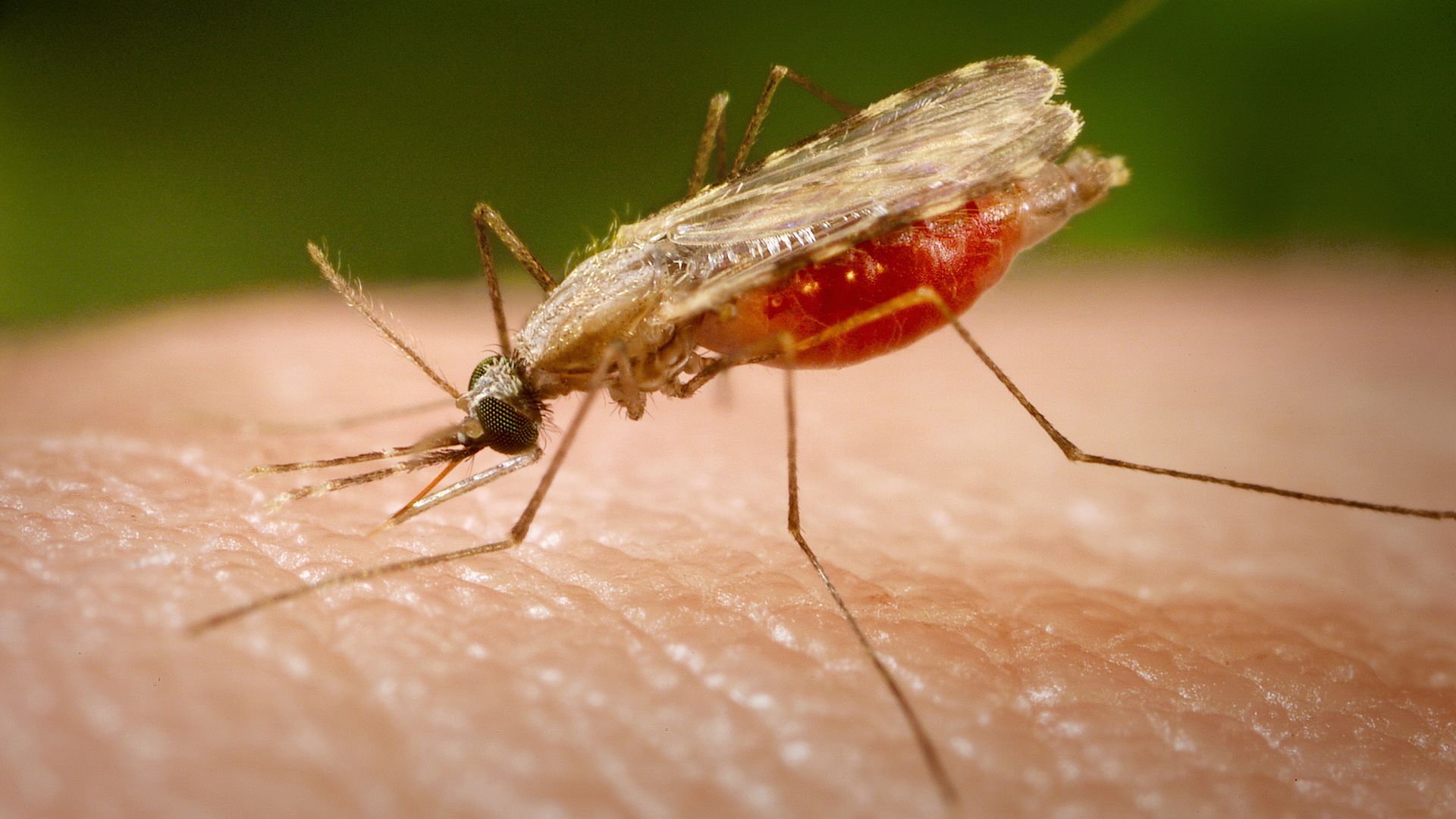
A mosquito feeding on a human host. Photo: Smith Collection/CDC/Gado/Getty Images
The detection of 21 cases of the insect-borne Oropouche virus disease, also known as "sloth fever," in U.S. travelers returning from Cuba has prompted health officials to issue a warning.
Why it matters: "Recent reports of outbreaks in areas without previous endemic transmission, fatal cases, and vertical transmission associated with adverse pregnancy outcomes have raised concerns about human health risks," per a CDC report issued Tuesday on the virus that's infected thousands in South America and the Caribbean.
- "No vaccines to prevent or medicines to treat Oropouche virus disease exist; treatment is supportive."
What is sloth fever and how is it spread?
The Oropouche virus was first detected in Trinidad and Tobago in 1955 and is endemic in the Amazon basin and scientists in Brazil found it in a sloth five years later.
- However, it is not spread by sloths. It's an emerging arthropod-borne virus in the Americas that's transmitted by tiny biting insects called midges, sometimes referred to as "no-see-ums," and some mosquitoes that also spread West Nile virus.
Threat level
More than 8,000 cases of Oropouche have been reported in Brazil, Bolivia, Peru, Colombia and Cuba from Jan. 1 to Aug. 1, according to the CDC.
- Fatalities are rare, but two patients have died in the latest outbreak.
- There have been five instances of vertical transmission, where a virus passes from the mother to the baby in utero, which is associated with fetal death or congenital abnormalities.
- These cases, combined with "possible congenital malformations in Brazil have raised concerns about the threat of Oropouche virus to human health," the CDC said.
- "Pregnant people should reconsider non-essential travel to Cuba," per a CDC advisory.
- For other affected regions, pregnant travelers are advised to discuss travel plans, reasons for travel, steps to prevent bug bites and potential risks with their health care provider.
What are the symptoms?
The symptoms are similar to other diseases that are spread by insects, such as dengue and Zika.
- These include fever, chills, nausea, diarrhea, vomiting, headache, rash, muscle and joint pain.
- Although illness is typically mild, some people can experience more severe symptoms, including meningitis and encephalitis.
State of play
Travel-associated cases have been identified in travelers returning from Cuba and Brazil to the U.S. and Europe, with Florida confirming 20 and New York one, per the CDC.
- No U.S. patient has died from the virus and there's no evidence of local transmission existing within the United States or its territories as of Wednesday morning.
- Most patients in the U.S. have recovered without needing further medical intervention, but the CDC notes that at least three experienced recurrent symptoms after recovering from their initial illness.
- "This reported reoccurrence of symptoms is unique to Oropouche virus disease and is not typically reported in cases of similar arboviral diseases, such as dengue or Zika virus disease," the CDC noted in its Tuesday report.
How to prevent catching Oropouche
Per the CDC:
- Use Environmental Protection Agency (EPA)-registered insect repellents.
- Use effective window and door screens.
- Use a fan when outdoors to help blow biting insects away.
Go deeper: What to know about potentially deadly mosquito-borne virus EEE
