Axios Science

June 27, 2024

Thanks for reading Axios Science. This week's newsletter is 1,865 words, about a 7-minute read.
- This edition reports from Manhattan, Kansas, where I spoke last week at a Kansas State University training program for graduate students interested in animal health. K-State covered the cost of my travel and hotel.
- Send your feedback and ideas to me at [email protected].
- Axios Science will be off for July Fourth and, after that, my vacation. We'll be back in your inbox at the end of July.
1 big thing: A biodefense project rises on the plains
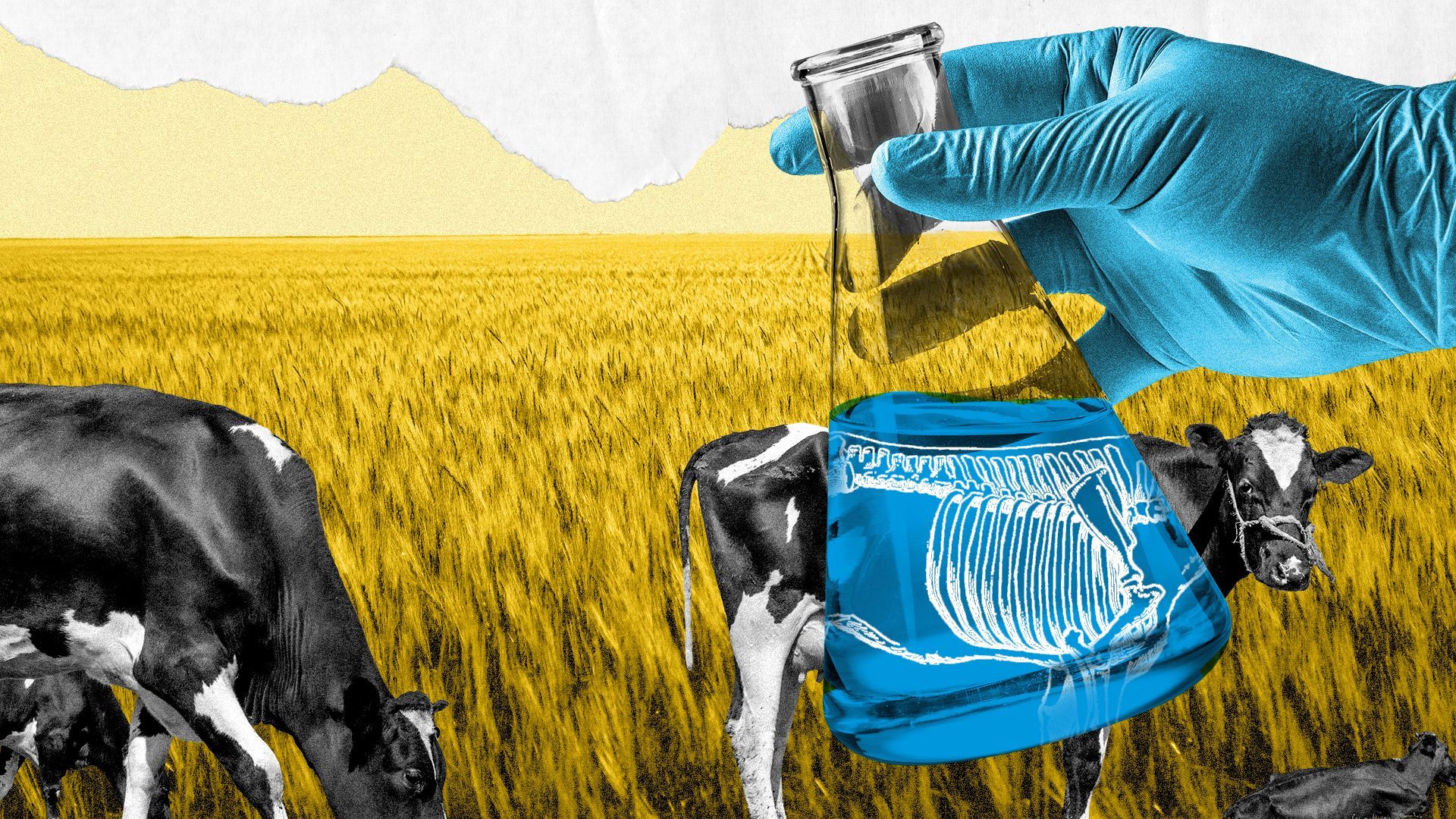
MANHATTAN, Kan. — Two hours west of Kansas City, a multibillion-dollar research hub is emerging on the prairie as a new first line of defense against animal diseases that can decimate livestock, rattle financial markets and potentially spill over into humans.
Why it matters: The growing avian flu outbreak in the U.S., highly contagious swine fever circulating in Europe and Asia and other pathogens have put a premium on the ability to amp up production of vaccines and other medical countermeasures — and pulling more of that work back to the U.S. from overseas.
Catch up quick: A public-private partnership is trying to position the city of Manhattan as a hub for biosecurity, biodefense and biomanufacturing technologies.
Zoom in: The work is rooted in two adjacent facilities on the northern edge of Kansas State University: the university's Biosecurity Research Institute (BRI) and the USDA's National Bio and Agro-Defense Facility (NBAF).
- NBAF is a $1.25 billion facility that opened last year and is a successor to the Plum Island Animal Disease Facility on Long Island, which will be decommissioned, as the premier animal disease research lab in the U.S.
- It's the only facility that can work with livestock and the most deadly pathogens. It will focus on seven foreign animal diseases, including Nipah virus, Foot and Mouth disease and African swine fever.
BRI, which opened in 2008, houses more than a dozen laboratories that operate at the second-highest biosafety level. Scientists there study nearly three dozen different plant and animal diseases, including wheat blast, swine influenza and Rift Valley fever, as well as food safety.
- It was involved in testing the first mRNA vaccine, which was developed for Zika virus, and has been studying the avian influenza virus fueling the current outbreak in cattle across the U.S.
"We will be the epicenter of animal health research" in five years, says Jürgen Richt, the director of K-State's Center of Excellence for Emerging and Zoonotic Animal Diseases.
Yet to be fully realized is a third pillar of the effort: the manufacturing infrastructure needed to produce vaccines and treatments on a quick turnaround when there's an outbreak, biological attack or other crisis.
- "The more robust, supported, diversified that [manufacturing] can be, the better," says Raj Panjabi, a former Biden administration official who oversaw the U.S. global response to COVID.
- And it all needs to be done without derailing the production of vaccines and treatments for more common afflictions, he adds.
BRI — and eventually NBAF — has a production lab to develop scientific discoveries into vaccines, therapeutics and diagnostics.
- K-State is also looking to stand up a lab for developing customized vaccines for smaller manufacturers that focus on more localized outbreaks.
- "I'm building a whole bio-manufacturing empire," says Beth Montelone, senior associate vice president for research at K-State who is leading the region's bioeconomy development under a National Science Foundation grant.
- "That's my end game."
2. Made in Manhattan
While K-State and the USDA loom large, the anchor tenant and a key force to Manhattan achieving its bio-hub ambitions is the San Antonio-based third-party contractor Scorpius BioManufacturing.
- The company, which develops and manufactures antibodies, vaccines and large molecule drugs for customers including the Department of Defense, DARPA and other government agencies, picked Manhattan two years ago for a new manufacturing facility.
- Scorpius plans to make the anthrax antitoxin Anthim there for the U.S. Strategic National Stockpile, in addition to other medical countermeasures and traditional commercial drugs.
Some other projects went to the wayside in the biotech slump of the past few years but some are coming back and new ones are emerging, says Daryn Soldan of the Manhattan Area Chamber of Commerce.
- He's optimistic the groundwork Manhattan has laid in the meantime will match up with what may be a recovering biotech market.
Between the lines: The Scorpius facility will be the largest U.S.-owned contract development and manufacturing organization (CDMO) in the U.S. producing large molecules, the company's president and chief operating officer Joe Payne says.
- Scorpius is one of the few CDMOs to voice public support for the Biosecure Act that seeks to restrict U.S. market access for Chinese biotechs that have until now been a pillar in supply chains for U.S. life sciences companies.
The latest: After scrapping plans to build a 500,000-square-foot facility, Scorpius now plans to start with a smaller plant to begin manufacturing at the site by 2027.
- They expect to break ground this fall and to still ultimately hire 500 employees at the Manhattan campus, which will grow to fill the original footprint, Payne says.
- Reality check: The company received notice on June 14 that they will be delisted by the NYSE, but tells Axios it's appealing that decision and is in the process of raising capital or finding a partner to fulfill its Kansas plans.
Yes, but: Manhattan, nestled in the Flint Hills with a population of 54,000, still lacks some critical pieces, Montelone says.
- One is incubators, accelerators and investors that are plentiful in places like Boston, the Bay Area or Austin. Montelone says those will be built if the region secures a large NSF award or a Department of Commerce Tech Hub designation.
- But Payne says, "I don't need it to be Boston or S.F."
- His concern: a workforce.
Editor's note: This story was updated with additional information about Scorpius.
3. Building a bio-workforce

A slate of programs and degrees at K-State and Manhattan Area Technical College (MATC) aims to train the next generation of workers needed to support the region's burgeoning biosecurity hub.
Why it matters: The labs and manufacturing facilities that will power U.S. biosecurity and biodefense require personnel — from scientists to technicians to facilities managers — trained in how to contain dangerous pathogens.
The big picture: Richt leads a training program at BRI for students and researchers interested in biocontainment work, biodefense and zoonotic diseases. BRI runs other training programs for scientists, offers classes for credit and has an agricultural biosecurity certificate.
- K-State is standing up a biomanufacturing certificate program for undergraduates majoring in an engineering or science discipline.
- Montelone says the university, which is hiring a dozen faculty members in biomanufacturing, hopes to build the program into a full bachelor's degree.
Zoom in: MATC is slated to launch an associate's degree program to train people for entry-level jobs operating and maintaining the complex exhaust, temperature and other systems in biocontainment labs.
- They're finishing up construction on a simulated lab where they can fake failures and teach people how to troubleshoot a range of problems — a pressure drop in the room, water leaks, blown-out light fixtures and others — while maintaining the secure environment, the project's architect Daniel Crouch told me on my visit to the school.
- The goal is to have existing students start testing the facility in the fall and to have the first full class start in fall 2025, says Jim Genandt, the college's president and CEO.
"Most of our students have low to no student debt. They've got a job," Genandt says.
- "This is the most direct return on investment in higher ed, most pointed, most local I've ever seen."
Between the lines: Wooing companies to set up shop in Manhattan and developing the workforce for them is a bit of a chicken-and-egg proposition.
- "We have to have the university bring in some horsepower," Payne says. "The needs are technical but there is also an education element that we'll be paying a lot of attention to in the next year to make sure it comes to fruition."
- But, students need to see the value in going this route, Montelone says."If they start to see there are jobs in the region, then that will get their attention."
4. Bird flu update
Preliminary results from a small study bolster the theory that bird flu is spreading in U.S. cattle through milking equipment and not through a respiratory route.
Why it matters: If that's the case, it should be easier to control, says Richt, who conducted part of the study at BRI.
- "It is very good news," he says.
- The data is still being analyzed and has not been peer-reviewed or published.
What they did: Richt and his collaborator Martin Beer of Germany's Federal Research Institute for Animal Health each led experiments using the same avian influenza H5N1 virus isolated in the U.S.
- The scientists in Germany infected five lactating cows with the virus via their udders and the team in Kansas inoculated — through their nose and mouth — six non-lactating cattle.
- After two days, the team in Kansas added three other cows that act as "contact sentinels" to see if they become infected.
- Pigs, humans and other animals infected with the flu virus typically shed a lot of virus and transmit it to others they come into contact with via a respiratory route.
What they found: The cows shed the virus — though not a lot — for eight days, mainly through their nose but also through their mouth, Richt says.
- So far, the cows that are in contact with the infected animals aren't showing signs of disease.
- When Beer's team put the virus in their cows' udders, they saw signs of severe disease within two or three days, Richt says, adding it is a striking contrast.
The findings suggest "the main route is not respiratory," he says.
- "That's my gut feeling from our limited number of experiments."
Yes, but: That doesn't mean it couldn't be transmitted through a respiratory route, Richt says, just that they didn't see it in their experiments.
The intrigue: When Beer's team infected cows with an avian influenza virus he isolated from a wild bird, the animals also became ill.
- The virus strain circulating in cattle in the U.S. has not been detected in Europe and FLI says the risk of an outbreak in cattle in Germany remains low.
The bottom line: The most important question now is, "Why haven't we controlled it?" Richt says.
- The U.S. response to the outbreak has been criticized for not figuring out how the virus is being transmitted, among other issues.
5. Worthy of your time

DHS report: AI holds promises, risks for biosecurity (Colin Demarest and me — Axios)
Ex-Meta experts at AI-biotech startup offer tool to create new molecules (me — Axios)
Scientists create smiling robot face from living human skin cells (Rebecca Falconer — Axios)
China returns first lunar samples from Moon's far side (Jacob Knutson — Axios)
6. Something wondrous
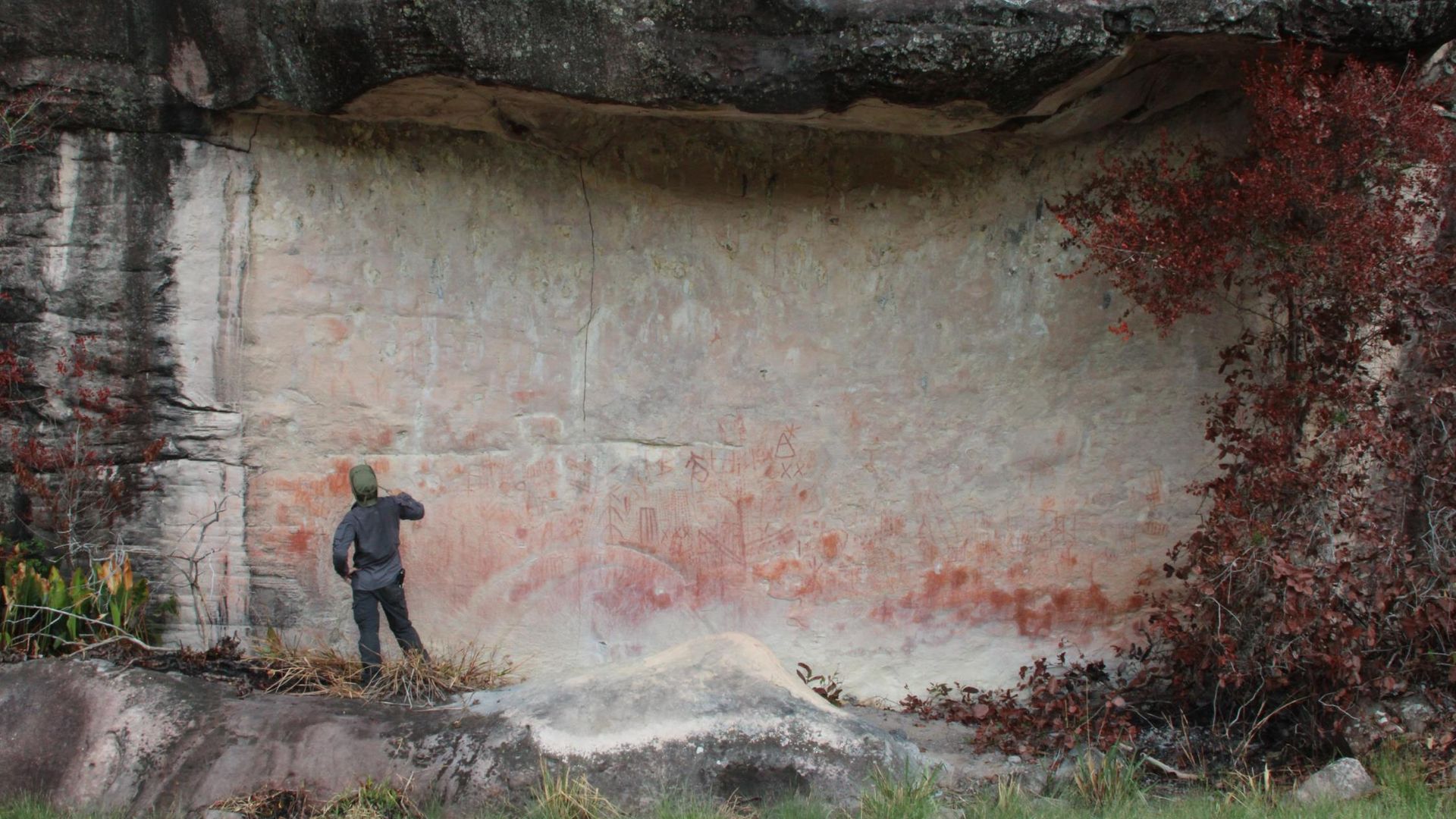
Rock art recently discovered in Venezuela is providing new clues about how early South American settlers spread out across the region, Axios Latino co-author Marina E. Franco writes.
Why it matters: It is the first rock art to be discovered in southern Venezuela, a country mired in crisis — and may even point to "a heretofore unknown culture," the lead researcher says.
What they're saying: "This is relevant not only for Venezuela but points at a cultural and ethnic richness that will enhance, worldwide, how we think about the region," says archeologist José Miguel Pérez-Gómez, affiliated with Simon Bolívar University.
- Pérez-Gómez, who presented the findings internationally for the first time in a UNESCO-backed conference in Italy today, says he and his team have found 20 caves or sites with the rock art in Canaima National Park in Venezuela.
The glyphs, pictograms, engravings, and geometric forms bear some similarity to rock art already studied in parts of the neighboring countries of Brazil, Colombia, and Guyana.
- Pérez-Gómez says he's in touch with researchers from those countries about joining forces to determine if all the sites are from the same period or perhaps attributable to a single group or a yet unidentified people.
Big thanks to senior editor Adriel Bettelheim, Lindsey Bailey on the Axios Visuals team and to copy editor Carolyn DiPaolo.
Sign up for Axios Science