Axios San Francisco

January 08, 2025

It's Wednesday. Halfway to the weekend.
Today's weather: Sunny with a high in the mid 60s and lows near upper 40s.
🎂 Happy birthday to our Axios San Francisco member Dana Marinellli!
📢 Situational awareness: The inauguration of San Francisco's new mayor, Daniel Lurie, will take place today at 11:30am in Civic Center Plaza.
Today's newsletter is 892 words — a 3.5 minute read.
1 big thing: 📈 Population shifts

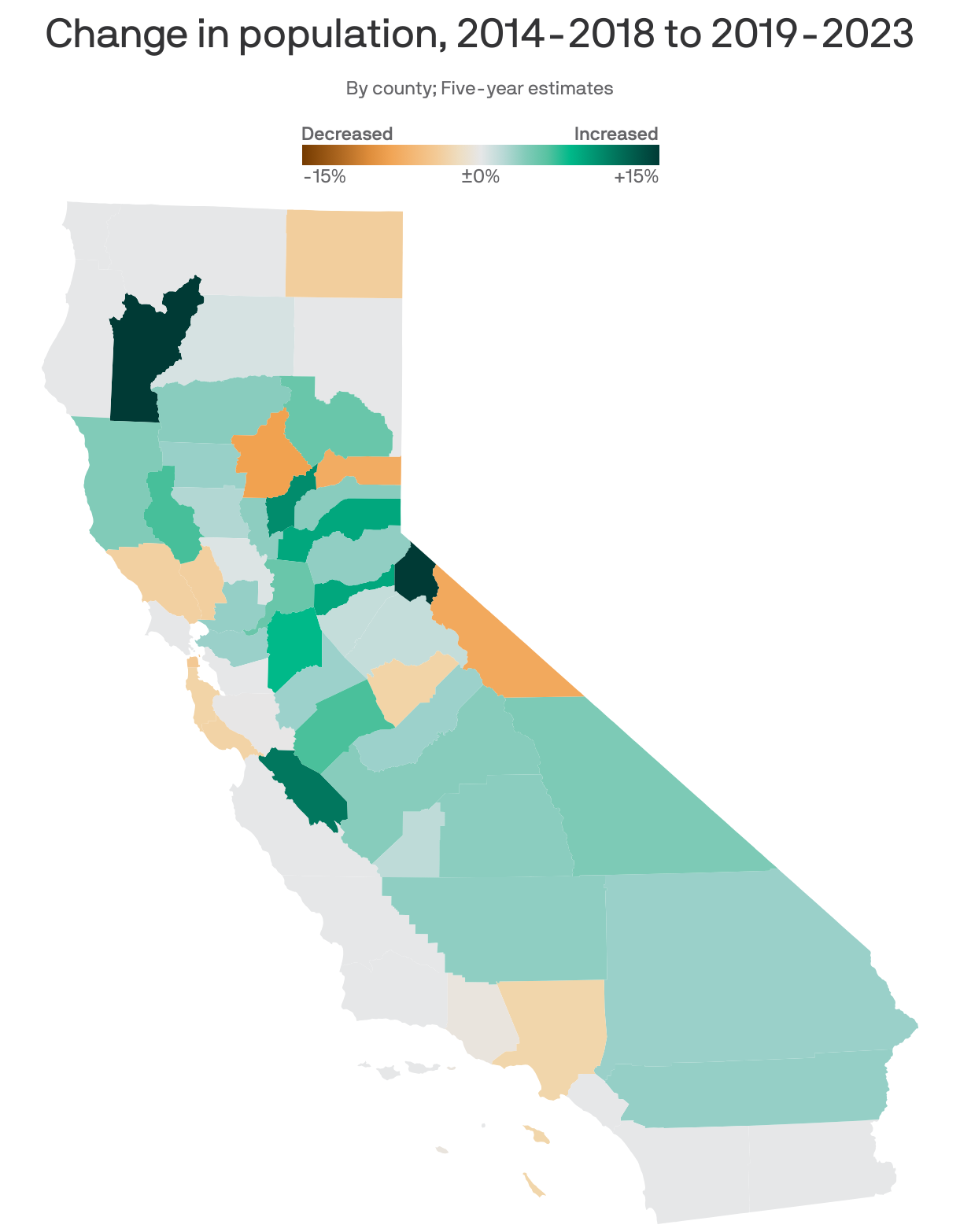
California's fastest-growing counties are in the state's inland and rural areas, while some of its biggest metro areas are experiencing the largest population declines, per an Axios analysis of the latest census data.
Why it matters: The zoomed-in analysis offers a close look at population change within individual states.
Driving the news: San Francisco County's population fell by 33,723 people from 2014-2018 to 2019-2023, or a change of 3.9%.
- Sacramento County grew by 4.9% during that same time, while Los Angeles County's population shrunk by 2.5%.
- San Diego County's population shrunk by 20,051 or a change of 0.6%.
The intrigue: California's shifts vary from what's occurring in states that are seeing growth near big cities.
- Texas, for instance, is experiencing huge increases around major cities while rural counties are shrinking.
Threat level: Some of the nation's fastest-growing counties, including those in California, are also among the most vulnerable to climate change.
- Alpine (+47.9% more people in 2019-2023 compared to 2014-2018) and Trinity counties (+23.5%) — which saw the biggest population booms — are both extremely vulnerable to wildfires, per the state's wildfire risk map.
- One exception to that trend is Butte County, which saw a 7.8% population decrease. The county is home to Paradise, the town that was destroyed in 2018 by the state's deadliest and most destructive wildfire.
Between the lines: Although Americans sometimes relocate domestically in search of better jobs and lower costs, international migration is the main driver behind population growth at the national level.
What's next: Population trends could be notably affected by President-elect Trump's plan to deport millions of people
2. A slower pace of growth
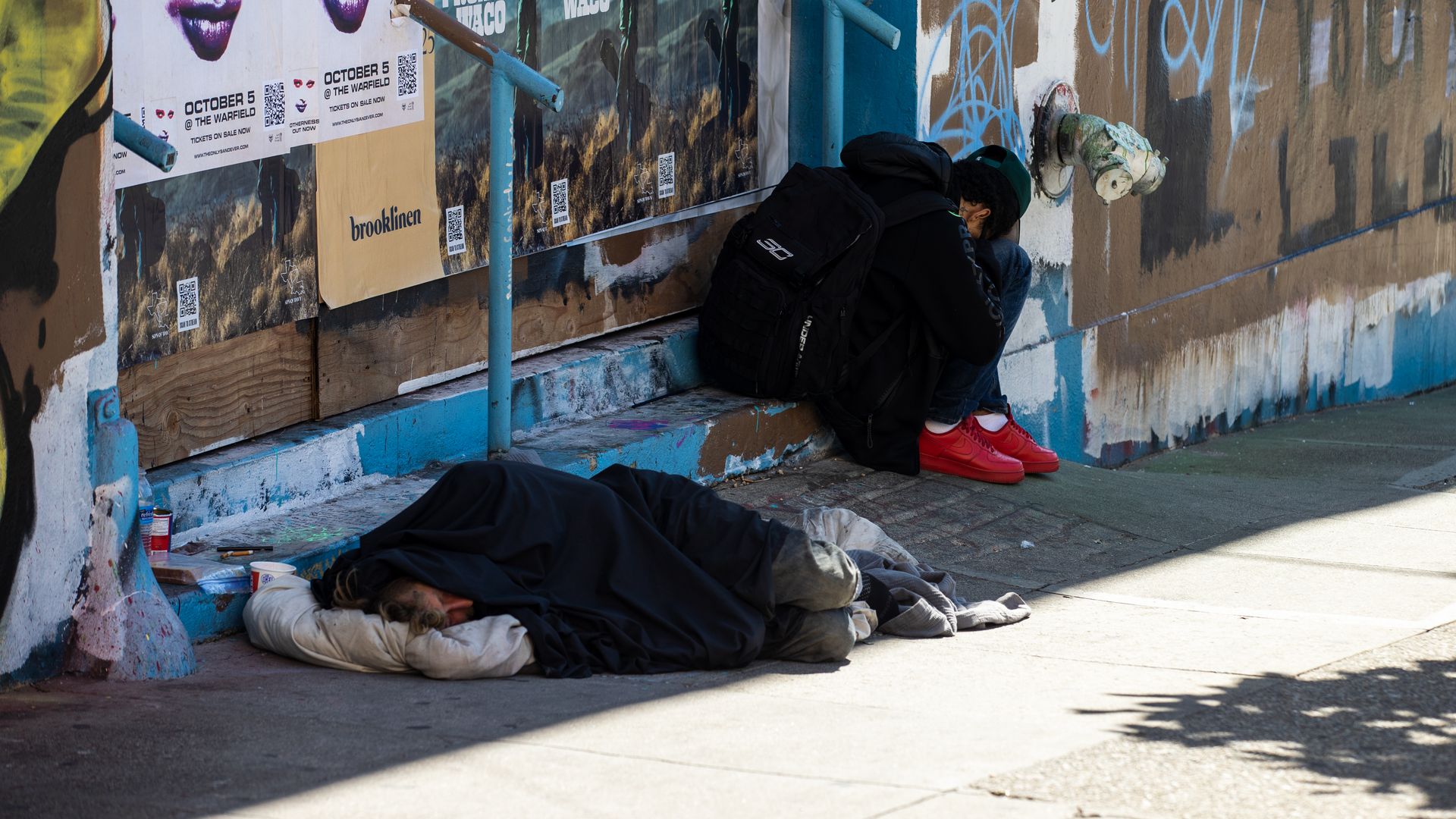
California's homeless population is still rising, but the rate of increase appears to be slowing.
Why it matters: The state's homeless population remains the largest in the nation, but the new figures indicate the crisis is worsening at a slower pace than the rest of the country.
By the numbers: The unhoused population in California increased by over 3% last year compared with the prior year, federal data shows.
- That's in sharp contrast to the rate of growth for the overall U.S. homeless population, which recorded a roughly 18% increase.
Context: The findings come by way of the U.S. Department of Housing and Urban Development (HUD), which issues an annual report on the estimated number of people experiencing homelessness on a single night to provide a snapshot for policymakers.
Zoom in: About 187,000 people in California slept on the streets or in shelters as of January 2024, when the point-in-time count took place.
Caveat: The numbers don't reflect the whole picture.
- Each county conducts the count differently — San Francisco's was reportedly haphazard last year — and relies on volunteers, outreach workers and government employees who often get varying levels of training.
3. The Wiggle: SF crime drop
San Francisco's crime rate hit a 20-year low as property crimes were down 31% from 2023 and violent crimes were down 14%, according to outgoing Mayor London Breed. (CBS News)
👮 The San Francisco Police Department is no longer under state oversight after having achieved 97% of its recommended goals, ending a seven-year reform initiative that began in response to several controversial police shootings. (San Francisco Chronicle)
🚨 Paul Yep, Mayor-elect Daniel Lurie's new chief of public safety, was accused in a 2018 civil lawsuit of driving while intoxicated and abusing his authority after being involved in a traffic collision that took place two years prior. (San Francisco Standard)
🍣 The team behind China Live announced they will be opening a new restaurant, Asia Live, at the Westfield Valley Fair mall in Santa Clara this fall. (San Jose Mercury News)
4. 🥚 Egg warning as bird flu spreads
As the bird flu outbreak grows, egg prices soar and food recalls mount, consumers may be left wondering whether it's safe to have that morning omelet.
The short answer: Yes, eggs sold at grocery stores remain safe for human consumption, according to U.S. Food and Drug Administration.
Catch up quick: California declared an emergency over the outbreak last month after a child in Alameda County was confirmed to have bird flu and experienced mild symptoms.
- Egg prices quickly soared to new highs, increasing 70% from last month to reach $8.97 in California, per the U.S. Department of Agriculture's egg markets report.
- Egg shortages have also forced local restaurants to grapple with altering their ingredients while some grocery markets are enforcing egg carton limits.
Reality check: The risk of people becoming infected with bird flu through the consumption of contaminated shell eggs is low, the FDA and the the USDA Food Safety and Inspection Service found in a 2010 risk assessment.
5. ⛰️ More national monuments
California is getting two new national monuments.
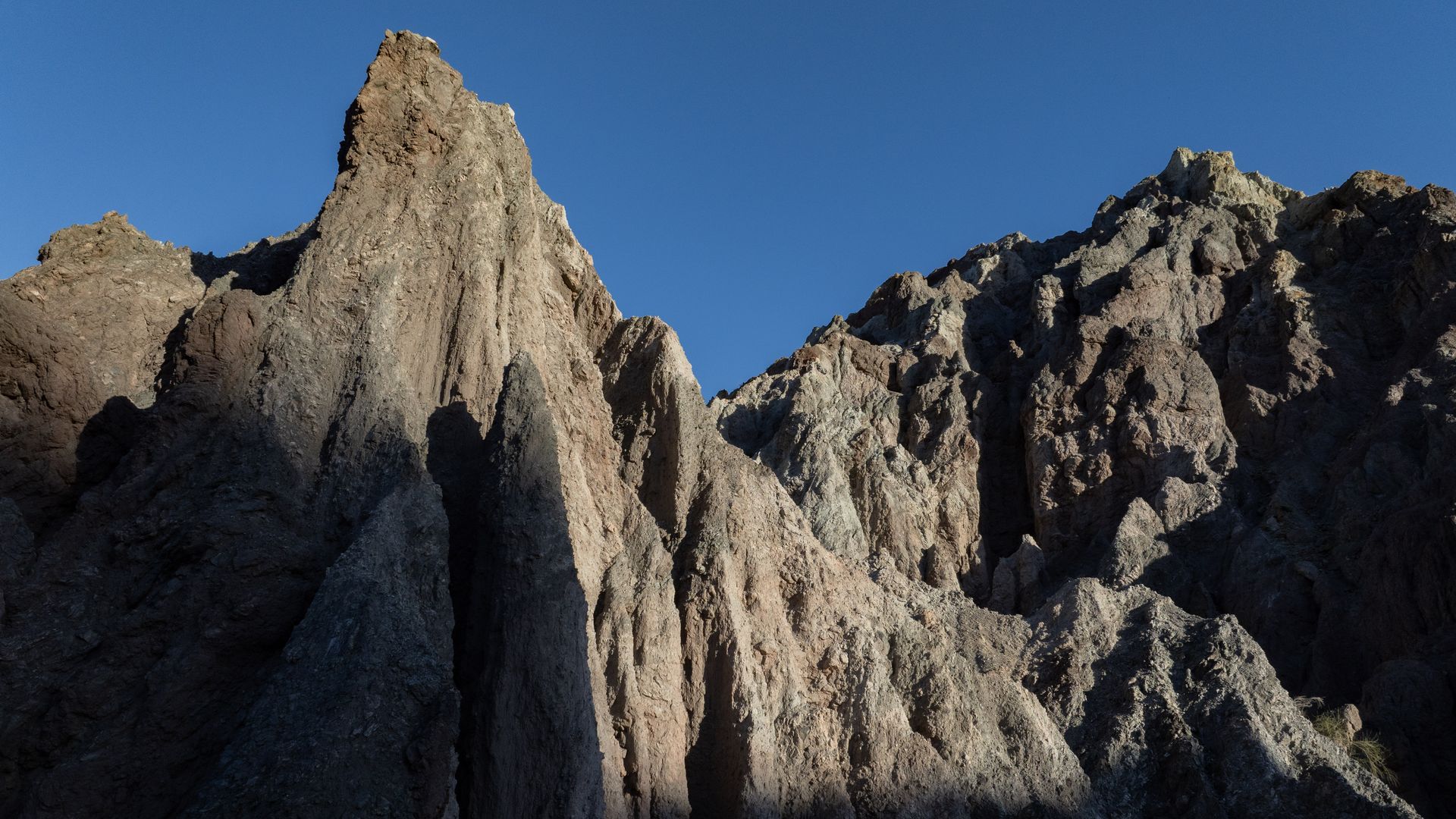
Why it matters: President Biden's move to establish the Chuckwalla and Sáttítla national monuments honors the Indigenous tribes that stewarded the combined 848,000 acres and bolsters protections against mining, drilling and other extraction activities.
State of play: The Sáttítla Highlands National Monument, located north of the Bay Area, covers over 224,000 acres of land, including a dormant volcano and lava tube system.
- The site is the ancestral homelands of the Pit River Tribe and Modoc Peoples, which rely on the land's aquifers for drinking water and fisheries.
- The Chuckwalla National Monument covers more than 624,000 acres south of Joshua Tree National Park. It encompasses sacred sites significant to multiple Indigenous groups, including the Cahuilla, Chemehuevi, Mojave, Quechan, Serrano Nations.
🏊 Shawna is trying to get into the habit of swimming at the pool at least once a week.
🥀 Nadia is excited to finally see "Nosferatu" this weekend.
🐶 Claire wants to see more dogs in backpacks this year.
This newsletter was edited by Ross Terrell.
Sign up for Axios San Francisco