Axios Salt Lake City

April 06, 2026

It's Monday, April 6.
- Joseph Smith officially founded the Church of Jesus Christ of Latter-day Saints 195 years ago today in New York state.
🎂 Happy birthday to our member Tawni Anderson!
🌤️ Today's weather: Mostly sunny, with a high of 72 and a low of 47.
Today's newsletter is 924 words — a 3.5-minute read.
1 big thing: 📻 KRCL's next move
KRCL is launching a $7 million overhaul to transform the longtime radio station into a new community hub on the west side.
Why it matters: The renovation will expand the grassroots station, founded in 1979, into a public-facing space for emerging musicians and listeners, bringing new energy to an area that's historically seen less investment.
State of play: Plans include a 200-capacity all-ages venue, three new studios, an art gallery and a conference room.
- The venue will also host year-round dialogues, exhibits and other public events, with a focus on live music, visual arts and civic engagement.
- The project is expected to be completed by the end of 2027.
Driving the news: KRCL broke ground last Thursday, backed by local investors and a surge of individual donors who responded to pullbacks in federal funding for public media, station executive director Gavin Dahl told Axios.
Catch up quick: Dahl said the station lost $136,000 in annual funding — about 10% of its budget — after the Corporation for Public Broadcasting shut down last year following Congress' decision to cut more than $1 billion in federal support.
The big picture: KRCL's trajectory stands out as public radio stations nationwide grapple with layoffs and financial strain tied to Trump administration-imposed cuts.
What they're saying: "We need to invest in places that will be here forever, and that's exactly what this facility will be — a permanent facility for musicians and people who love music," Chris Parker, director of Giv Group, a local developer partnering with KRCL on the project, said at the groundbreaking.
2. Navigating Utah's surrogacy laws

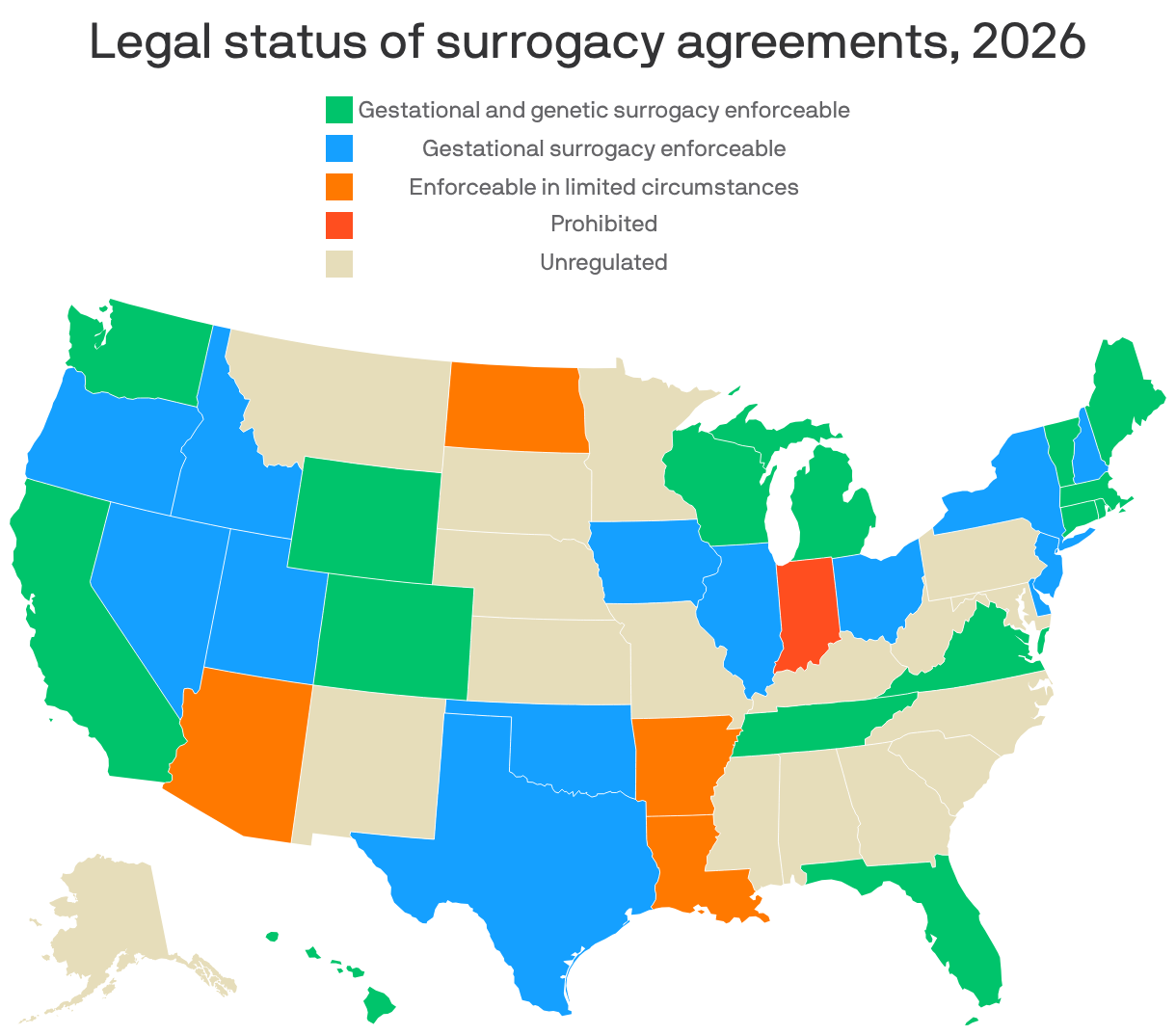
Without a federal law, surrogacy in the U.S. is governed by a patchwork of state regulations.
Why it matters: As more Americans turn to surrogacy to build their families, varied local rules can determine everything from whether agreements are legally binding to who is recognized as a parent at birth.
Zoom in: Utah law enforces surrogacy agreements with multiple restrictions.
- At least one of the intended parents must be genetically related to the child.
- Neither the surrogate nor their spouse may be genetically related to the child.
- The intended parents must be married to each other.
Between the lines: Not all states that enforce surrogacy agreements have the same restrictions. The agreements often happen across state lines, so multiple state laws might need to be considered.
- Nevada, for instance, allows single intended parents, unlike Utah.
- State laws also vary as to how surrogates are compensated.
By the numbers: As of 2026, surrogacy agreements are enforceable in 31 states (with some limitations), void in one, and unregulated in 17, Surrogacy360 tells Axios.
What they're saying: A growing number of lawyers "have begun to specialize in advising either intended parents or being the separate counsel for a surrogate," said Ming Wong, an attorney and the director of community justice and access at the National Center for LGBTQ Rights.
- Because contracts involve so many potential risks, like one party changing their mind midway through the process, "we always encourage people to at least talk to an attorney … even in a state where it's not criminalized," Wong told Axios.
3. Fry Sauce: Antitrust allegations on the slopes

⛷️ Skiers have filed a class-action lawsuit accusing Vail Resorts and Alterra Mountain Company of using their market dominance to inflate daily lift ticket prices at ski resorts and "coerce" visitors into buying costly season passes. (Deseret News)
💧President Trump's new budget proposal includes the $1 billion Utah leaders requested for Great Salt Lake sustainability. (via the White House)
🚨 A 36-year-old man was arrested on suspicion of lewdness involving a child after he disrobed and streaked through Temple Square during General Conference on Saturday, police said. (KUTV)
4. 💒 Weddings turn to AI
Over a third of engaged couples now use artificial intelligence in their wedding planning — a share that nearly doubled in just one year, according to new data from The Knot.
Why it matters: Utah weddings drove a $1.5 billion industry last year, and AI tools could change how much couples spend on traditional services.
By the numbers: Hiring a wedding planner cost $2,100 on average nationwide last year, per a 2025 study.
The big picture: You can do a lot with AI, like generate custom images, moodboards and vows. But you can't add a human touch to your event.
- Couples are also increasingly turning to AI tools, like Canva, to create save-the-dates, invitations or other illustrations.
- "Budget can play a role, but it's really about people wanting to have full creative control at every stage of the journey," the platform's Kailyn Nunn tells Axios.
The intrigue: Wedding inspiration from AI tools might encourage couples to hire vendors to produce a vision.
5. 🍒 Fruits of procrastination
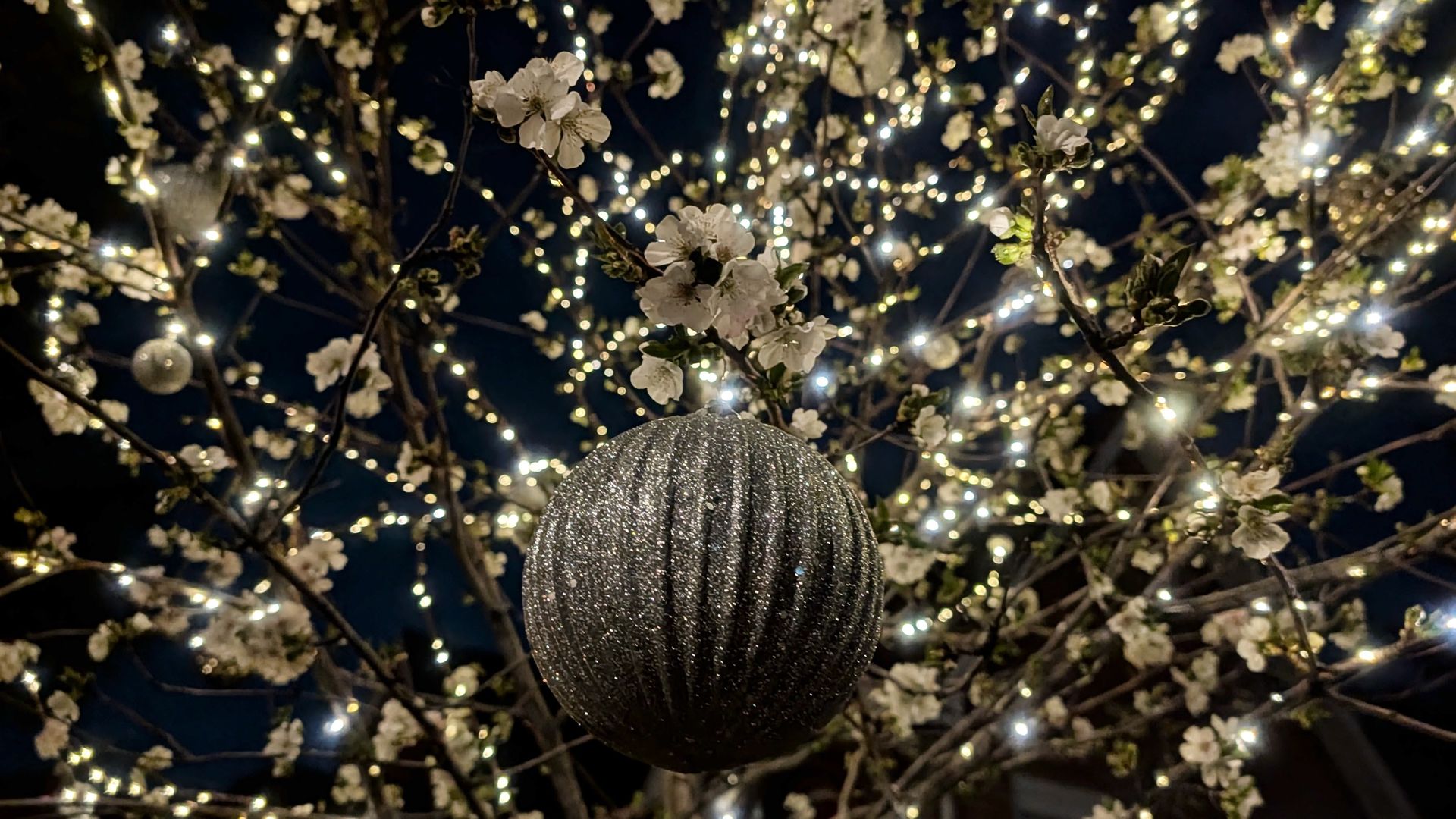
I've been known to leave my Christmas lights up until Easter — but I've never before been pre-empted by my cherry tree.
- Imagine my embarrassment when the record-high spring temperatures brought the blossoms out before I could remove the fairy lights.
- Now the lights are stuck there so the fruit can set undisturbed.
The other side: Neighbors have generously described the effect as "magical."
- Maybe I'll finally take the lights down after the cherries ripen in July.
🥚 Erin is going through one of her poached egg phases.
🇲🇽 Kim is touring the Teotihuacan pyramids today.
This newsletter was edited by Hadley Malcolm.
Sign up for Axios Salt Lake City