Axios Raleigh

June 29, 2026
🙏 Monday, Monday! Thanks for being back with us.
⛅ Today's weather: Partly sunny, with a high of 90 and a low of 68.
Today's newsletter is 1,049 words — a 4-minute read.
1 big thing: Rethinking parking minimums
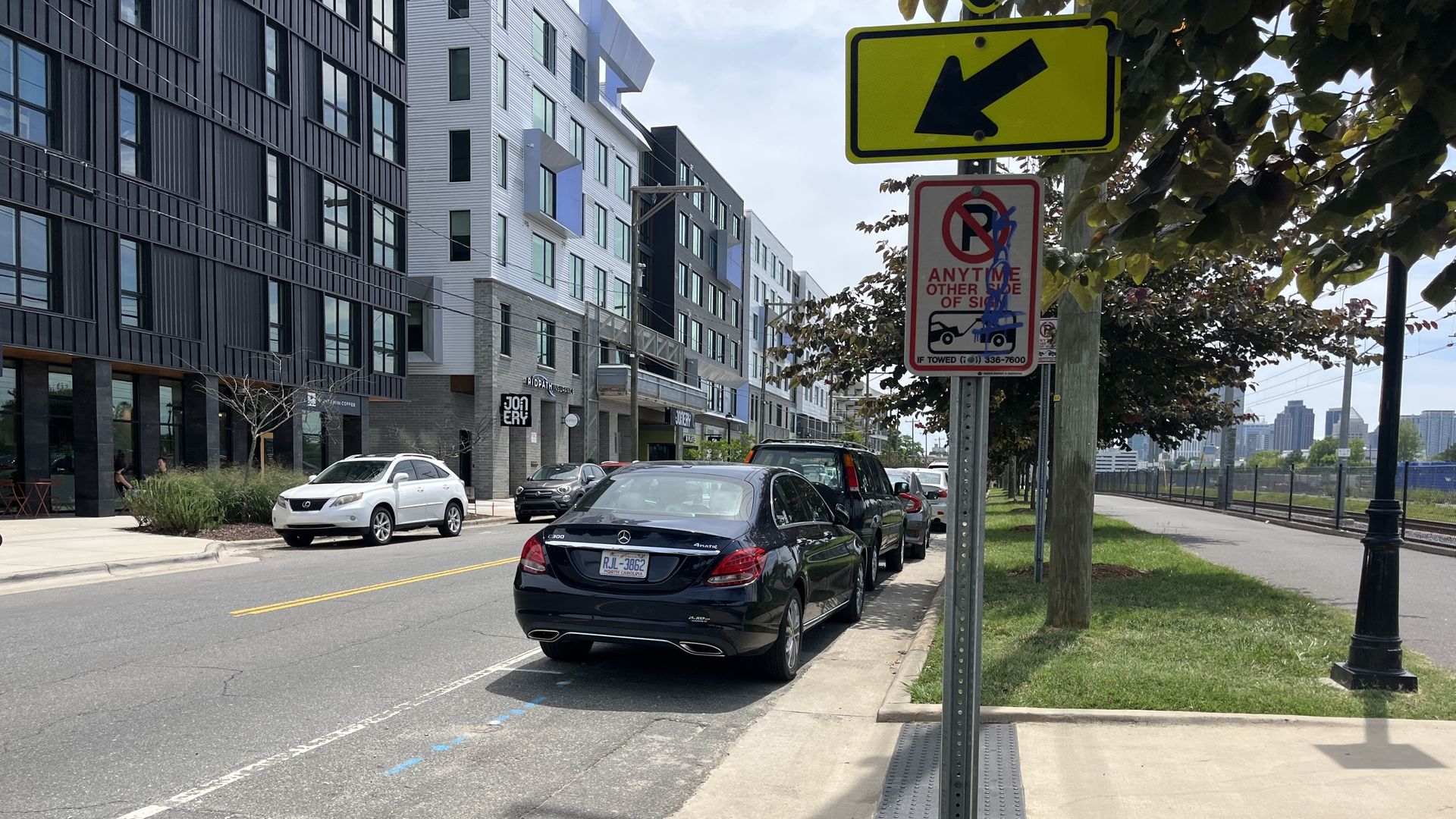
The General Assembly could soon pass a bill eliminating off-street parking requirements for developers nearly statewide, overriding local regulations to bring other North Carolina cities in line with Raleigh and Durham's rules.
Why it matters: Supporters say relaxed regulations could lower housing costs, make for nicer neighborhoods and reduce stormwater runoff by preventing excessive paving.
Driving the news: The state Senate voted 44 to 1 to pass House Bill 162 last week.
- Another version of the bill passed the House last year, Axios previously reported. Time ran out, and now it's back with more momentum.
Zoom in: The legislation would prohibit local governments from requiring developers to build a certain number of parking spaces for new projects.
- It would also allow local governments to create incentives, such as tax breaks or waived fees, for developers to take extra stormwater control measures.
- Since last year, lawmakers added an exemption for the state's 20 coastal counties to quell concerns of vacation homes creating traffic headaches by neglecting to provide enough guest parking.
The big picture: Parking reform unites many developers and business leaders with environmentalists.
- "Parking reform might not sound like a water quality issue, but impervious surfaces, like parking lots, are the leading cause of water pollution in North Carolina," says Ryan Carter, Catawba Riverkeeper's policy director.
- According to the organization, one inch of rain on an acre of pavement generates 27,000 gallons of runoff.
State of play: Many North Carolina communities — including Raleigh and Durham — have repealed parking minimums and seen new business activity and housing development as a result.
Follow the money: Banks and lenders still require parking when financing projects, but a reduction in parking has made many projects cheaper to build, Patrick Young, Raleigh's director of planning and development, noted previously.
- Parking can cost anywhere between $5,000 to $50,000 per space. Those building costs are often passed on to consumers through higher rent or other prices.
What's next: The House could consider the legislation this week.
- If passed and signed by Gov. Josh Stein, the law would take effect Jan. 1.
2. The South bucks population trends


America's child population fell by 1.8 million from 2020 to 2025 — with the under-18 population shrinking in every region but the South.
Why it matters: Most of America is preparing for fewer students and young families, while much of the South faces the opposite problem: crowded classrooms, new housing pressure and rising political stakes.
The big picture: The South had 303,969 more children in 2025 than in 2020, according to new Census Bureau Vintage 2025 estimates reviewed by Axios.
- The South's total population grew 6% from 2020 to 2025 — nearly double the nation's 3.1% growth.
State of play: Overall growth reflects strong migration patterns that are adding children, people in prime family-building years and retirees — making the South the only region gaining population across all five age groups tracked by the Census Bureau.
Go deeper: The North Carolina counties with growing under-five populations.
3. The Tea: Divide over funding a baseball stadium

⚾️ The N.C. House and N.C. Senate are divided over a plan to put taxpayer money toward a potential baseball stadium in Raleigh. (WRAL)
🌀 Sen. Ted Budd said he would block any of the Trump administration's funding requests until Hurricane Helene relief money is included. (News & Observer)
🥒 Mount Olive Pickle Co. will no longer participate in North Carolina's exhibit at the Great American State Fair after a video went viral of Confederate flags being displayed in the booth. (Spectrum)
💻 SAS laid off roughly 300 employees as part of a restructuring. (Triangle Business Journal 🔒)
4. Heat wave incoming
Forecasters are projecting that an extreme heat wave will settle over the Triangle heading into the July 4 holiday.
Why it matters: Heat waves — which are growing longer on average in North Carolina — bring dangerous health risks for vulnerable groups like children, pregnant women, the elderly and homeless people.
Driving the news: The National Weather Service's Raleigh office predicts that heat index values between July 1 and July 4 could exceed 100 to 105 degrees across the Triangle.
- Peak temperatures could break 105 degrees in some places, the NWS warned.
What they're saying: "Bottom line ... begin preparations now for the potential for highs [of] possibly 100+ for 3-4 consecutive days," NWS Raleigh meteorologists said in their written discussions of the forecast.
- "To make matters worse, overnight lows may have a hard time dropping below 80, with 90 still possible at midnight."
This Independence day, help keep Local news strong

For 250 years, a free press has helped keep communities informed.
The big picture: Trusted local reporting helps you understand the decisions, developments and issues shaping Raleigh. A membership helps keep that journalism independent and accessible to everyone.
🗽 Become a member today. You'll help power independent journalism and ensure local news remains free and accessible.
We appreciate your support.
5. Inside Michael Lee's upscale Korean restaurant
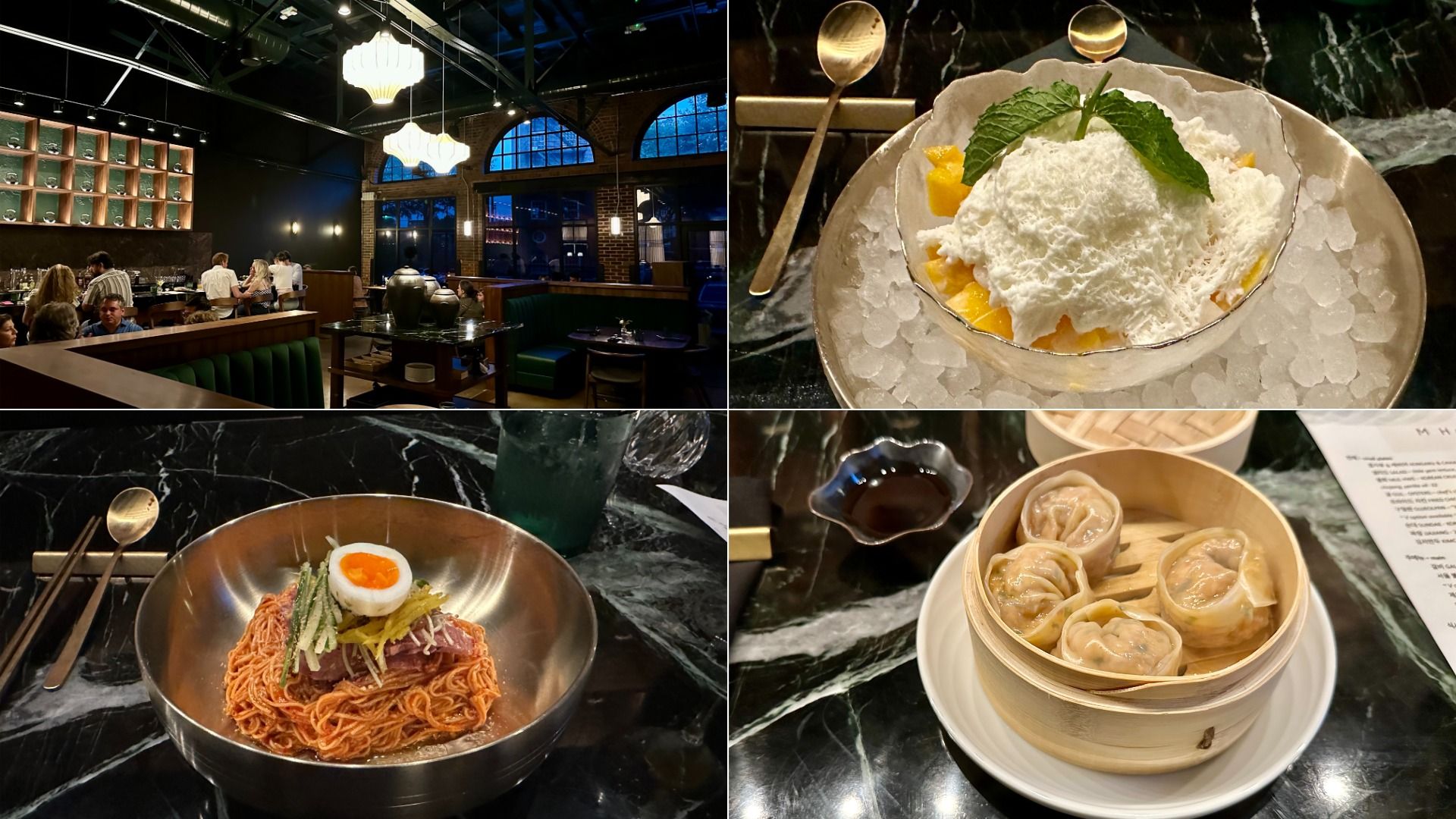
For years, chef Michael Lee has captured the hearts and stomachs of Triangle restaurant goers through the top-notch sushi crafted at M Sushi, the expertly fried meals at M Tempura or the delightful noodle and chicken dishes at M Kokko.
Why it matters: But his newest restaurant — No. 7 in total — adds upscale Korean to the mix for the first time.
- While the South Korea-born chef has always added elements of his home country throughout his restaurants, M Hansik has a laser focus on the dishes of the Korean peninsula.
What to expect: The food is meant to be shared among the table, starting with small plates, like the tangy and slightly spicy kimchi dumplings, or Korean-style fried chicken wings.
- But the menu expands to a series of grilled meats, like a bulgogi made from wagyu steak, and rice and noodle dishes, including a Korean paella that offers a panoply of seafood.
- The drinks menu includes several in-house cocktails featuring Korean spirits like soju and other ingredients from the region as well as a rice lager made in collaboration with Fullsteam.
What we ordered: The juicy kimchi dumplings ($12 for four).
- Bibim guksu, a cold-and-spicy noodle dish that accompanies a humid, southern night perfectly ($18).
- And the bingsu, a shaved ice cream with sweet chunks of mango and rice cakes, for dessert ($13).
Location: 501 Washington St., Durham
Hours: Wednesday through Sunday, 5pm-9pm.
What's next: Lee already has another Durham restaurant in the works.
- Earlier this month, he closed Asian street food spot M Pocha. He plans to replace it with M Nikkei, a Japanese-Peruvian-fusion restaurant.
🏀 Zachery is wondering what exactly the Charlotte Hornets are cooking up.
👰♀️ Mary Helen spent the weekend trying on wedding dresses.
Thanks to Mike Szvetitz for editing this newsletter.
Sign up for Axios Raleigh