N.C. bill to end parking minimums statewide poised to pass

Add Axios as your preferred source to
see more of our stories on Google.
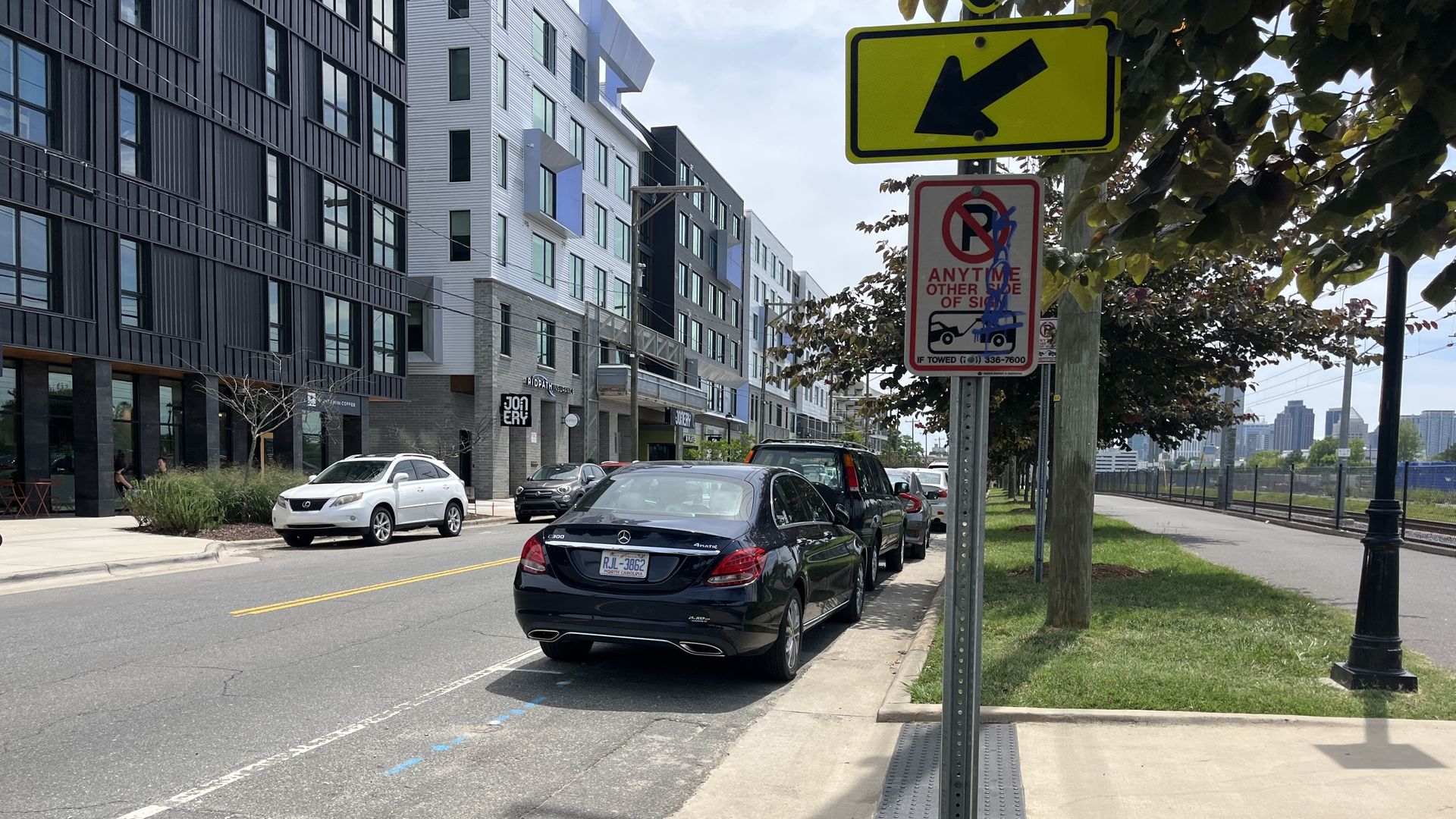
Photo: Alexandria Sands/Axios
Update: Gov. Josh Stein signed this bill into law on July 6.
The North Carolina General Assembly could soon pass a bill that would eliminate off-street parking minimums for developers statewide, overriding local regulations and a longstanding debate in Charlotte and other cities.
Why it matters: Supporters say the relaxed regulations could lower housing costs and reduce stormwater runoff by ending excessive paving.
The latest: The state Senate voted 44 to 1 to pass House Bill 162 on Tuesday.
- Another version of the bill (formerly House Bill 369) passed the House last year, Axios previously reported. Time ran out, and now it's back with more momentum.
- The bill must return to the House floor for a concurrence vote before heading to Gov. Josh Stein's desk.
- If passed, the law would take effect Jan. 1, 2027.
What's inside: The bill would prohibit local governments from requiring developers to build a certain number of parking spaces for new projects.
- It also allows local governments to create incentives, such as tax breaks or waived fees, for developers to take extra stormwater control measures on projects.
- Since last year, lawmakers added an exemption for the state's 20 coastal counties after concerns were raised that vacation homes may not provide enough parking for guests.
State of play: Charlotte has considered ending parking minimums in the past to promote a less car-dependent city. But many local leaders believed the city wasn't ready. Those against it argued that public transit isn't used enough, and people would still drive and park along quiet neighborhood streets.
- Developments built with minimal parking, such as Space Craft's the Joinery, have become controversial because the adjacent streets are crowded with cars.
- In Charlotte, even a bar next to the light rail would need a certain number of spaces if it's within a specified distance of a single-family home.
- "Developers and business owners know their product best, and it's in their best interest to build enough parking," says Ellie Riggs, advocacy communication manager at Catawba Riverkeeper.
The big picture: Parking reform is uniting not only developers but also environmentalists, farmers and business leaders.
- "Parking reform might not sound like a water quality issue, but impervious surfaces, like parking lots, are the leading cause of water pollution in North Carolina," says Ryan Carter, Catawba Riverkeeper's policy director.
- According to the organization, one inch of rain on an acre of pavement generates 27,000 gallons of runoff.
Follow the money: Parking can cost anywhere between $5,000 to $50,000 per space. Those building costs are often passed on to consumers through higher rent or other prices.
- "The top floors of [an apartment] parking garage sit empty because they have been required to build way more parking than they actually needed to," Riggs says. "The affordability piece is huge."
- Charlotte is lacking more than 40,000 affordable units to meet the city's needs.
- A growing number of renters in Mecklenburg County — about half — are cost burdened, meaning more than 30% of their income goes toward housing,
Zoom out: Many North Carolina communities — including Gastonia, Raleigh and Durham — have repealed parking minimums and seen new business activity and housing development as a result.
- Democratic state Sen. Natalie Murdock, of Durham, cast the Senate's lone vote against this bill. She did not immediately respond to Axios' request for comment.
What's next: If the House concurs with the Senate's changes, the measure heads to Stein's desk. That could happen as early as this week.
- A Charlotte spokesperson told Axios that the city would update its ordinances and "further assess potential development impacts" if the legislation passes.