Axios Media Trends

August 05, 2025

Good afternoon. Today's Media Trends, edited by Christine Wang and copy edited by Sheryl Miller, is 2,138 words, an 8-minute read. Sign up.
π Mark your calendars: We're bringing Media Trends to life with Axios' inaugural Media Trends Live event in NYC on Sept. 18.
- Axios' Kerry Flynn and I will be joined on stage by Shari Redstone, CondΓ© Nast CEO Roger Lynch, Associated Press CEO Daisy Veerasingham, Feed Me founder Emily Sundberg and more.
- Reserve your spot here.
βοΈ Situational awareness: President Trump and Rupert Murdoch reached a deal late last night to postpone Murdoch's deposition in a libel lawsuit related to the Wall Street Journal publishing a report on an Epstein birthday book. Go deeper
1 big thing: Creator app boom
With AI-driven content flooding social media feeds, creators are pivoting to apps like Patreon, Substack, OnlyFans and Beehiiv to build their businesses.
Why it matters: Social media is still a great place for creators to grow their free audiences. But connecting with fans on a deeper level and getting them to actually pay for content often requires a specialized focus that most social apps don't offer.
π° Zoom in: Creators on Patreon have received more than $10 billion in payments from fans since the company was founded in 2013, CEO and co-founder Jack Conte tells Axios.
- The company now has more than 25 million paid memberships on the platform, he added. More than $2 billion flows to creators annually on the platform.
- Newsletter platform Ghost on Monday also announced a new payout milestone, writing on its blog that publishers have earned more than $100 million on the platform since its launch in 2013.
Reality check: Creator platforms that are designed to foster closer connections between paying fans and creators tend to have looser content rules than social firms that make money from lots of free, public content.
- Patreon, for example, reminds its community to adhere to certain public content standards to ensure the company stays compliant with its payment partners.
- OnlyFans tried to ban explicit content to remain compliant with payment processors, only to reverse its ban shortly after a user revolt.
- Substack removed some publications last year after writers threatened to quit over its refusal to remove Nazis and white supremacists from its platform. Last week, the company apologized for sending a push alert that encouraged users to subscribe to a Nazi newsletter.
Between the lines: While some social media companies are investing more in creator payout and revenue-share programs, those efforts aren't designed to help creators grow their networks outside of those platforms.
- Meta, notably, shuttered its audio and newsletter platforms in 2022 to focus on helping supporters grow on its platform directly.
Zoom out: Patreon is still privately held, and Conte says he currently has no plans to take the company public, but investor interest in these types of platforms is surging.
- Patreon, which has raised more than $400 million to date, was most recently valued at over at $4 billion in 2021.
- Substack, which says it has more than 5 million paid subscriptions on the platform, recently raised $100 million, putting its valuation at over $1.1 billion.
- Beehiiv, another newsletter platform that's investing in a broader range of creator tools, was valued at $225 million last year after launching in 2021.
- OnlyFans was reportedly in talks with an investor group to sell at a roughly $8 billion valuation.
2. πΏ Summer of belated sequels

Several of this summer's top movies are sequels arriving decades after the original film premiered.
ποΈ Why it matters: With franchise fatigue setting in, studios are tapping into the nostalgia of older gems that haven't been exploited yet to lure viewers back to the box office.
- The streaming era has also made it possible for studios to take risks on older films that are seeing revived interest online.
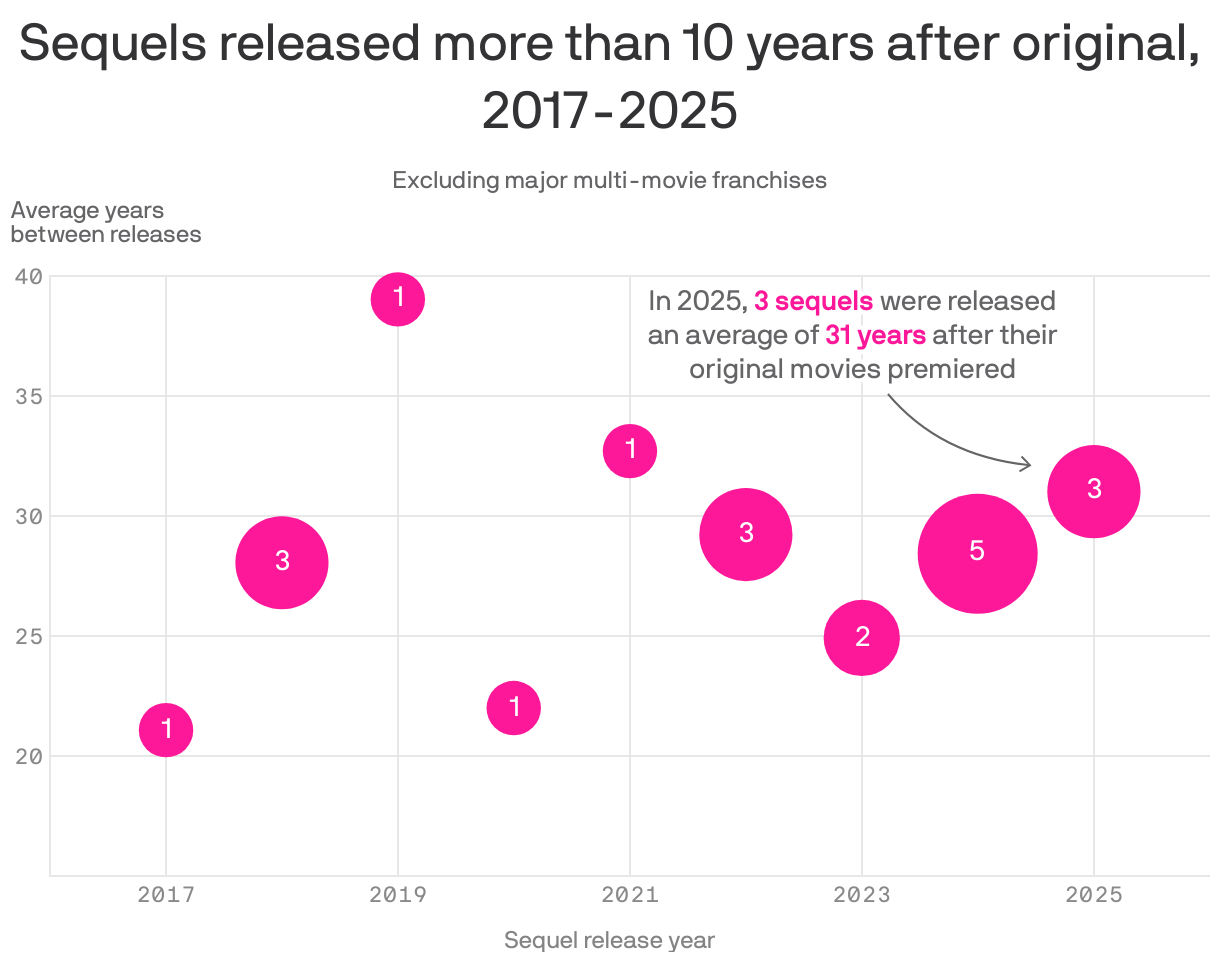
Zoom in: As of next month, there will have been eight sequels released in the past two years for movies that are more than 10 years old, according to an Axios analysis. That's far more than the 12 that were released in the seven years prior.
- π "Freakier Friday," starring Lindsay Lohan and Jamie Lee Curtis, hits theaters this week, more than 20 years after "Freaky Friday's" original box office debut.
- ποΈββοΈ "Happy Gilmore 2" debuted on Netflix July 25, nearly 30 years after the Universal Pictures original opened in theaters in 1996.
- π€ "Spinal Tap II: The End Continues" opens at the box office next month, more than 40 years after the original "This Is Spinal Tap" film debuted in 1984.
3. Exclusive: Vox redesigns SB Nation
SB Nation, one of the highest traffic brands within the Vox Media portfolio, has redesigned its website and its dozens of niche sports fan websites to include a new community content section called "The Feed," Vox Media president of revenue and growth Ryan Pauley told Axios.
Why it matters: The redesign, which places user and fan content alongside SB Nation's professionally created content, is meant to help the brand recapture engagement that occurs on external social media feeds instead of its sites.
- It also gives SB Nation, which relies on traffic-based ad revenue, to hedge against the decline of Google Search referrals in the AI era.
- SB Nation operates 185 active sports fan communities, each with their own distinct websites and branding, that generate over a million user comments per month.
Zoom out: The SB Nation redesign is part of a broader push by Vox Media to hedge against AI's impact on search traffic, especially from Google.
- The Verge, Vox Media's tech news site, last month released new site features that allow readers to directly follow its journalists and topics in a personalized feed on its homepage. It also launched a new suite of newsletters.
4. π Social media eyes hardware as next frontier

Social media giants have spent more than a decade building apps that rely on smartphone devices they don't control.
- Now, those companies and their CEOs are looking to new personal devices, like smart glasses, as their next big opportunity for growth.
π±Why it matters: Investing in personal, AI-powered hardware will free companies like Meta and Snapchat from relying on Apple's and Google's operating systems for their businesses.
State of play: Meta CEO Mark Zuckerberg last week took a big swipe at smartphone companies, writing in a public memo that he expects people to start spending "less time in productivity software [like apps], and more time creating and connecting."
- "Personal devices like glasses that understand our context because they can see what we see, hear what we hear, and interact with us throughout the day will become our primary computing devices," he wrote.
Reality check: Meta's investment in what it calls "personal superintelligence," or AI-driven experiences that help users better interact with the real world, comes after years of investing billions in virtual reality wearables that have struggled to achieve mass consumer adoption.
- π» Zuckerberg's latest vision for hardware much more closely resembles what Snap's Evan Spiegel has been trying to build for years, using augmented reality and artificial intelligence.
βͺ Flashback: "We're focused on three core building blocks of augmented reality: understanding the world through our Snapchat camera, providing a platform for creators to build AR experiences, and investing in future hardware to transcend the smartphone," Spiegel wrote in an internal memo in 2018.
- "That starts with unlocking the value of our platform on camera-enabled devices. It also means investing in Spectacles hardware as an enabler of our augmented reality platform."
5. π΅βπ« Media's measurement mess


The measurement landscape that underpins the $1 trillion global ad industry is more crowded and fragmented than ever, leaving advertisers overwhelmed with trying to hold publishers to account, we wrote in our latest members-only Media Trends Executive deep dive.
Startling stat: Based on Axios research, there are at least 142 measurement vendors for television and online content in the U.S.
Measurement vendors by category:
- 74 for audience
- 15 for verification
- 27 for identifying context (like market research and social listening)
- 12 for attention
- 48 for outcomes
- 28 for attribution
Reality check: Nielsen remains the default audience measurement currency even as buyers, sellers and rivals question the accuracy, transparency and consistency of its methodology.
Go deeper: The full interactive vendor map is available for members here.
6. π΄ Golden State rush
The New York Post's move into Los Angeles is one of several new efforts to capture the attention of Californians who are increasingly starved of viable news options.
Why it matters: With a massive population and a burgeoning tech sector, news entrepreneurs see California as a logical place for commercial expansion.
π° Driving the news: The New York Post will launch a new daily Los Angeles-based newspaper called the California Post in early 2026, the Post's editor-in-chief Keith Poole told Axios.
- Los Angeles is home to the second-largest concentration of Post readers, per News Corp.
- The vast majority (90%) of the Post's digital readership lives outside of New York.
π The big picture: The launch comes amid a fallout of viable news options in Los Angeles.
- The Los Angeles Times, once one of the most powerful regional newspapers in the country, cut 115 staffers last January, months after laying off 74 newsroom staffers amid advertising declines in 2023.
- LAist cut 24 employees through buyouts and layoffs last year amid financial challenges. It laid off 21 staffers the year prior.
- LA Weekly, an alternative weekly magazine, saw most of its senior staffers exit following a buyout announcement last March.
Zoom out: Philanthropists and news executives are paying more attention to the untapped opportunity in Los Angeles.
- Last year, a group of well-known media leaders and philanthropists teamed up with the American Journalism Project to raise $15 million for a Los Angeles-based local news initiative set to launch this year.
- A slew of new trade publications and newsletters, such as Puck, The Ankler and Breaker Media, have launched to take on Hollywood's established trade publications.
What to watch: New specialized nonprofit newsrooms, such as AfroLA for the Black community, CALΓ News for Latinos, are also being launched to serve underrepresented populations in the city.
7. πΌ Paramount execs out, new Skydance board in
With Skydance Media's deal to merge with Paramount set to close this week, the company's future is starting to become more clear.
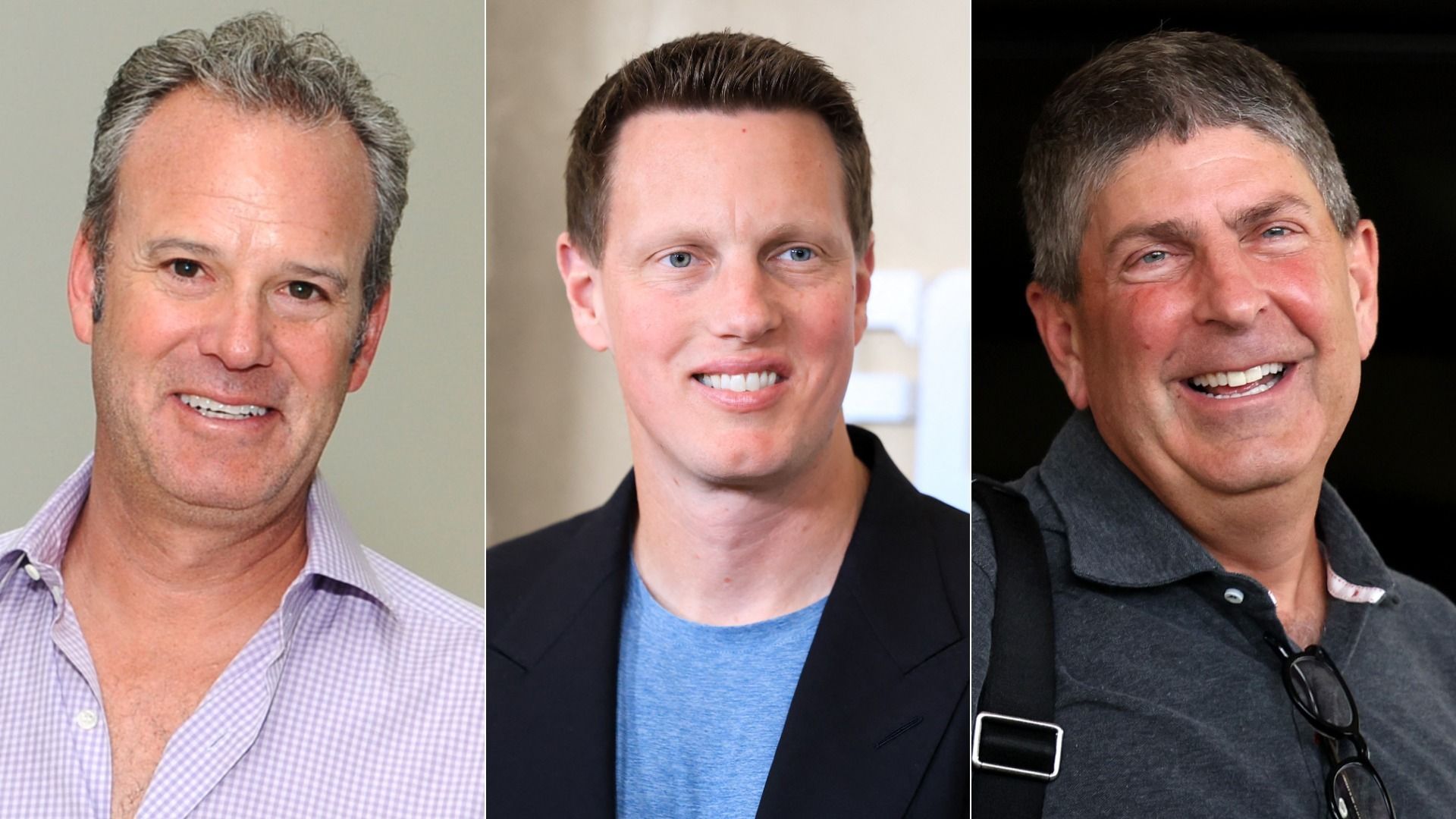
State of play: The company announced a new leadership team yesterday that includes Skydance Media CEO David Ellison as the combined firm's CEO, former NBCU-turned RedBird Capital Partners executive Jeff Shell as president, and RedBird Capital executive Andy Gordon as chief strategy officer and chief operating officer.
- CBS boss and Paramount co-chair George Cheeks will oversee TV media.
- Skydance's Dana Goldberg will serve as co-chair of Paramount Pictures alongside former Sony Motion Picture Group president Josh Greenstein.
- Former Netflix senior executive Cindy Holland will lead the company's streaming arm.
Noticeably absent from new leadership lineup are Cheeks' peers Chris McCarthy and Brian Robbins. The two Paramount co-CEOs are expected to exit following the deal.
- Tom Ryan, who rose to oversee Paramount's streaming business after Viacom acquired his startup Pluto TV, will also exit.
Zoom out: The company also announced a new board today consisting of 10 directors, including three independent directors. None of the new board members β which include Shell, RedBird Capital founder Gerry Cardinale, Oracle CEO Safra Catz, and others β previously served on Paramount's board.
- Paramount's current board of directors, including non-executive chair Shari Redstone, will step down upon the close of the combination.
8. Exclusive: SmartNews launches new app
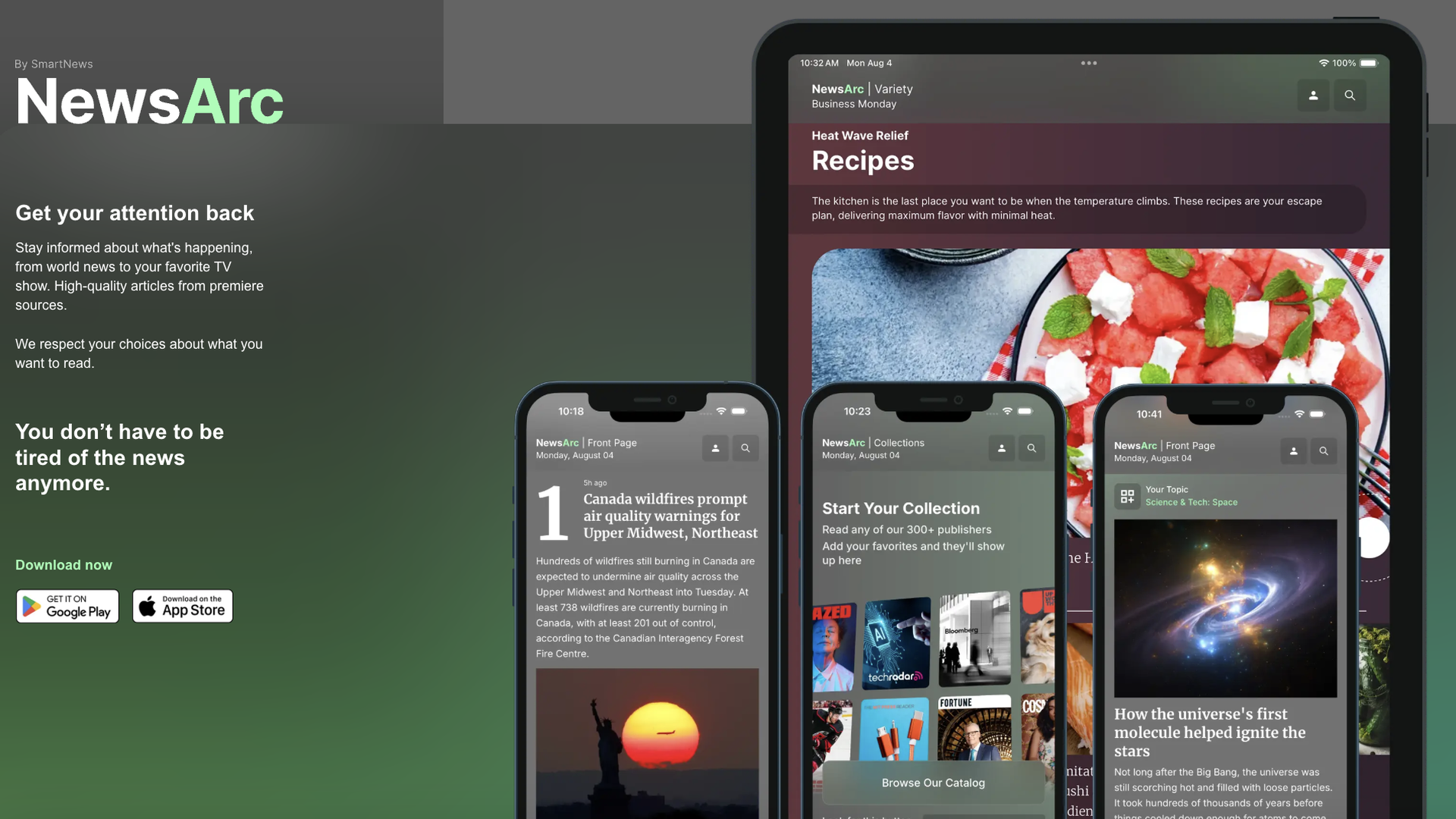
SmartNews, the Japanese news discovery app founded in 2012, is releasing a new artificial intelligence-powered app, executives tell Axios.
ποΈ Why it matters: The new app β called NewsArc β is meant to offer heavily engaged news readers a more personalized experience without putting them in echo chambers.
- NewsArc uses AI to filter, identify and serve news stories, chief technology officer Cory Ondrejka says.
- The app is currently free, but executives said NewsArc may introduce subscriptions in the future.
Zoom out: The company, which is private, does not disclose the size of its U.S. audience, but SimilarWeb estimates that it's in the top 50 news apps on Apple's iOS in the U.S.
- SmartNews has raised more than $400 million to fuel its expansion. Its latest public funding round in 2021 valued the company at over $2 billion post-money.
Editor's note: This item has been corrected to remove a reference to reading pattern data. It has also been updated to clarify NewsArc is free, but may later add subscriptions.
9. The People rebrand: A name everyone knows


Dotdash Meredith's rebrand to People Inc. is a nod to the complex and storied history of Time Inc., the original owner of People.
Why it matters: People's history makes it Dotdash Meredith's most popular and recognizable title. The rebrand capitalizes on that brand equity in a way that the Dotdash Meredith name did not.
π Zoom out: Dotdash Meredith is by far the largest company within Barry Diller's IAC portfolio, and its performance has kept its publicly traded parent from being swallowed by changes to Google Search.
- Search revenue for IAC, which are comprised mostly from Ask.com, declined 39% last quarter year-over-year, while People Inc.'s revenues increased 1%.
Sign up for Axios Media Trends