Axios Media Trends

May 26, 2026

Hello! Today's Media Trends, edited by Christine Wang and copy edited by Sheryl Miller, is 1,737 words, a 6½-minute read. Sign up.
🇫🇷 Mark your calendar: Axios is returning to Cannes Lions this summer for a week of exclusive programming and events.
- New confirmed speakers include Formula 1 world champion and 11-time Grand Prix winner Lando Norris, UTA CEO David Kramer, 2026 Pulitzer-winner Pablo Torre, People Inc. CEO Neil Vogel, Netflix advertising president Amy Reinhard and many more.
- Request an invitation here.
🍕 For my Jersey readers: My CNN colleague Elie Honig and I will be co-moderating a debate for my hometown congressional district, NJ-7, tomorrow morning. A rarity in politics today, the district is a true toss-up. Join us.
1 big thing: 🇬🇧 Scoop... Record revenue


The Guardian's U.S. operation generated more than $81 million in revenue in its most recent fiscal year, its highest level since launching in the U.S. 15 years ago, according to an internal presentation obtained by Axios.
Why it matters: Strategic investments in its U.S. business have helped The Guardian tap political news demand in America through reader donations.
- Digital reader donations make up most (70.7%) of the annual revenues for The Guardian U.S., according to the presentation. Advertising makes up around a quarter.
- The vast majority of reader donations are recurring, which means they function much like subscriptions or memberships.
📈 By the numbers: The Guardian's revenue has increased 25% annually for the past two fiscal years, according to the presentation. Profits increased 56% (2025) and 41% (2026).
- In addition to growing its top line, The Guardian U.S. also saw its most profitable fiscal year ever, which ended on March 31.


Zoom out: The Guardian represents a unique growth story at a time when traditional media is consolidating.
- Beginning around 2022, the company made a strategic decision to invest in the U.S. market, hiring a new U.S.-based leadership team to oversee its expansion editorially and commercially.
- It has since hired more than 100 people, expanding its newsroom from 75 to 150 and its business team from 25 to more than 50.
Reality check: The U.S. expansion had to work, or The Guardian was nearly doomed.
- It wasn't long ago that the nonprofit — which is owned by a trust committed to the outlet's progressive mission — was losing tens of millions of pounds annually.
🇺🇸 The big picture: While most major U.K. publications are expanding to the U.S., with hopes of tapping America's lucrative subscription and advertising markets, The Guardian has carved a niche in chasing reader donations.
- A decade ago, only 8% of The Guardian's reader revenue came from outside the U.K., the outlet's U.S. managing director Steve Sachs said on "The Rebooting" podcast last month. Today, it's more than 40%.
- The Telegraph was acquired by Axel Springer, the German parent to Politico and Business Insider, in a £575 million cash deal in March.
- The Daily Mail, a traffic juggernaut, hired its first president for North America last year as a part of a broader revenue growth push.
What's next: The Guardian anticipates bringing in nearly $100 million in revenue for its current fiscal year, which will end March 31, 2027, per the presentation.
2. 🍿Summer box office reveals new media reality

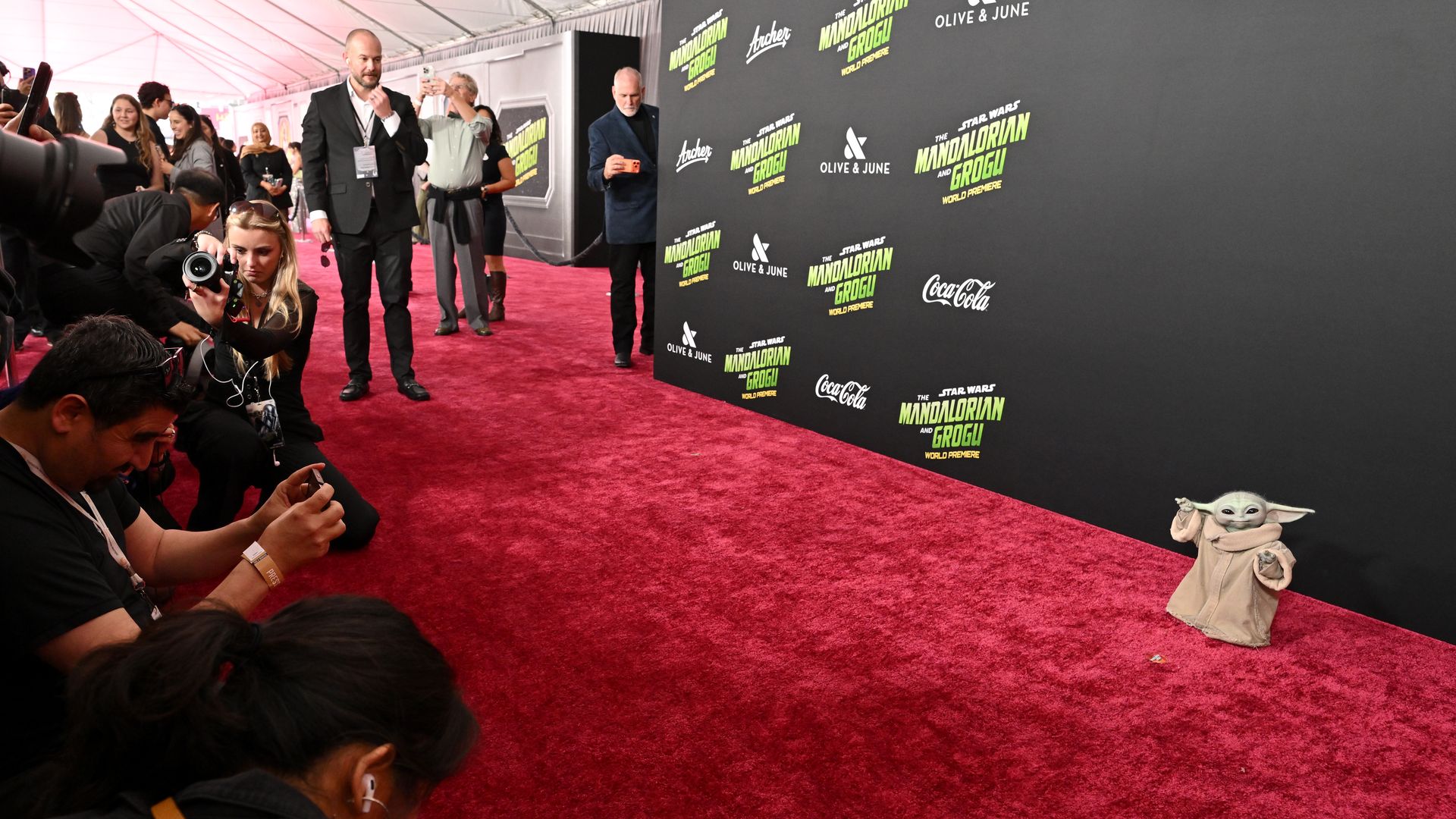
A disappointing theatrical debut over the weekend for Star Wars' newest film "The Mandalorian and Grogu" suggests streaming hits don't always translate to box office success.
- But that might not matter as much as it once did.
⭐️ Why it matters: For Disney, Star Wars has always been bigger than ticket sales. That's true now more than ever as the entertainment giant further diversifies its business across screens, consumer products and experiences.
- At the same time, lower-budget films are emerging as box office success stories, including the new horror film "Obsession."
🎟️ State of play: "The Mandalorian and Grogu" opened to roughly $81 million for the three-day domestic box office over the Memorial Day weekend. The film added about $64 million internationally over the three days.
- That marks the lowest opening for a Star Wars film under Disney's ownership. The previous low was "Solo: A Star Wars Story," which opened to $85 million over the three-day Memorial Day weekend in 2018.
Between the lines: The new Star Wars film benefited from premium ticket sales. About 41% of tickets were sold for premium large formats like IMAX and Dolby, according to EntTelligence data cited by CNBC.
- That turnout shows how moviegoers are increasingly opting for higher-quality theater experiences over standard showings.
- IMAX is exploring a sale amid its successful run, the Wall Street Journal reported.
🎬 The big picture: Hollywood is recalibrating as the pandemic-era streaming boom hits a saturation point. Entertainment giants are no longer touting subscriber numbers and instead focusing on profitability and creating intellectual property flywheels.
- "The Mandalorian" ranks as the most-watched original series on Disney+. But the character Grogu, widely known as Baby Yoda, is also a major commercial asset, fueling merchandise sales and theme park tickets.
☀️ What to watch: Analysts are broadly optimistic about the summer box office, thanks to the density of "huge films" and studio marketing power behind them.
- The summer movie season remains Hollywood's most important window, typically accounting for about 40% of the annual box office, Comscore's head of marketplace trends Paul Dergarabedian tells Axios.
3. 🎙️ Spotify's enterprise opening
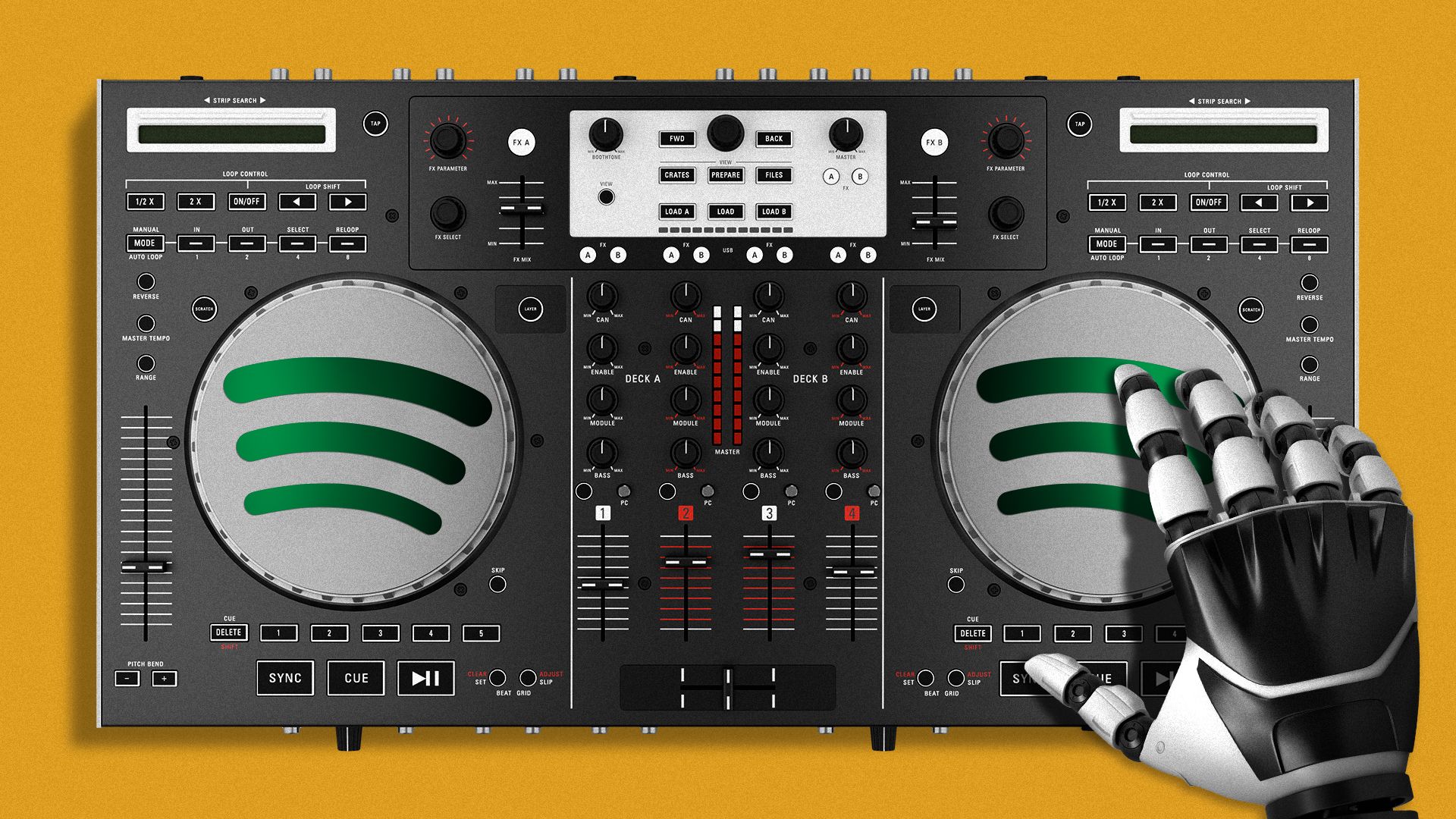
Spotify's new AI-powered personalized podcasts could unlock a broader opportunity for the company to one day create custom content for groups, not just individuals, vice president and global head of podcasts Roman Wasenmüller told Axios in an investor day interview last week.
Why it matters: Spotify makes the vast majority of its revenue from consumers and advertisers. Aside from a small portion of revenue coming from podcast hosting, the Swedish audio giant doesn't have a huge enterprise business.
🎧 State of play: Last week, Spotify executives revealed a new feature that will soon let users generate their own podcasts based on their interests and listening patterns.
- The company will use generative AI to create a custom podcast from those user inputs, such as a daily briefing.
- Knowledge categories, such as fitness, technology and business, are ripe for that type of custom content, Wasenmüller said.
- To that end, Spotify recently announced a partnership with Peloton to make more than 1,400 fitness classes available to Premium users.
🎶 Reality check: Spotify is a consumer business driven mostly by music consumption, and there are no plans to pivot outside of that, but targeting groups with certain products could unlock different business opportunities.
- "I think there's something in there," Wasenmüller said when asked about the enterprise opportunity.
- "If we think about the two extremes we have right now: We have a piece of content created for truly everyone at the same time — that's a typical creator-publisher approach — and we now have this piece of content just generated for you," he said.
- "There's probably other units of measure — like smaller units, smaller groups, corporations, universities, other things in between — that could be super interesting."
Zoom out: Last week, Spotify unveiled its plan to become more profitable over the next four years by leveraging AI to build a "large taste model" that supports interactive sharing over passive listening.
- In doing so, it committed to building a wider set of higher-margin products, instead of just focusing on premium and free tiers.
- It also said it would prioritize user loyalty — or return visits — in addition to time spent.
What to watch: Should Spotify ever consider new products for groups, the company's "price-to-valuation" principle should hold, Wasenmüller said.
- "If you have like a very secure environment — you have a corporate environment where this is truly delivering outsized value — because your employees are better informed, they get access to information faster, and they can consume it on their platform of choice, not like some weird third party."
4. 🐭 Disney fights back
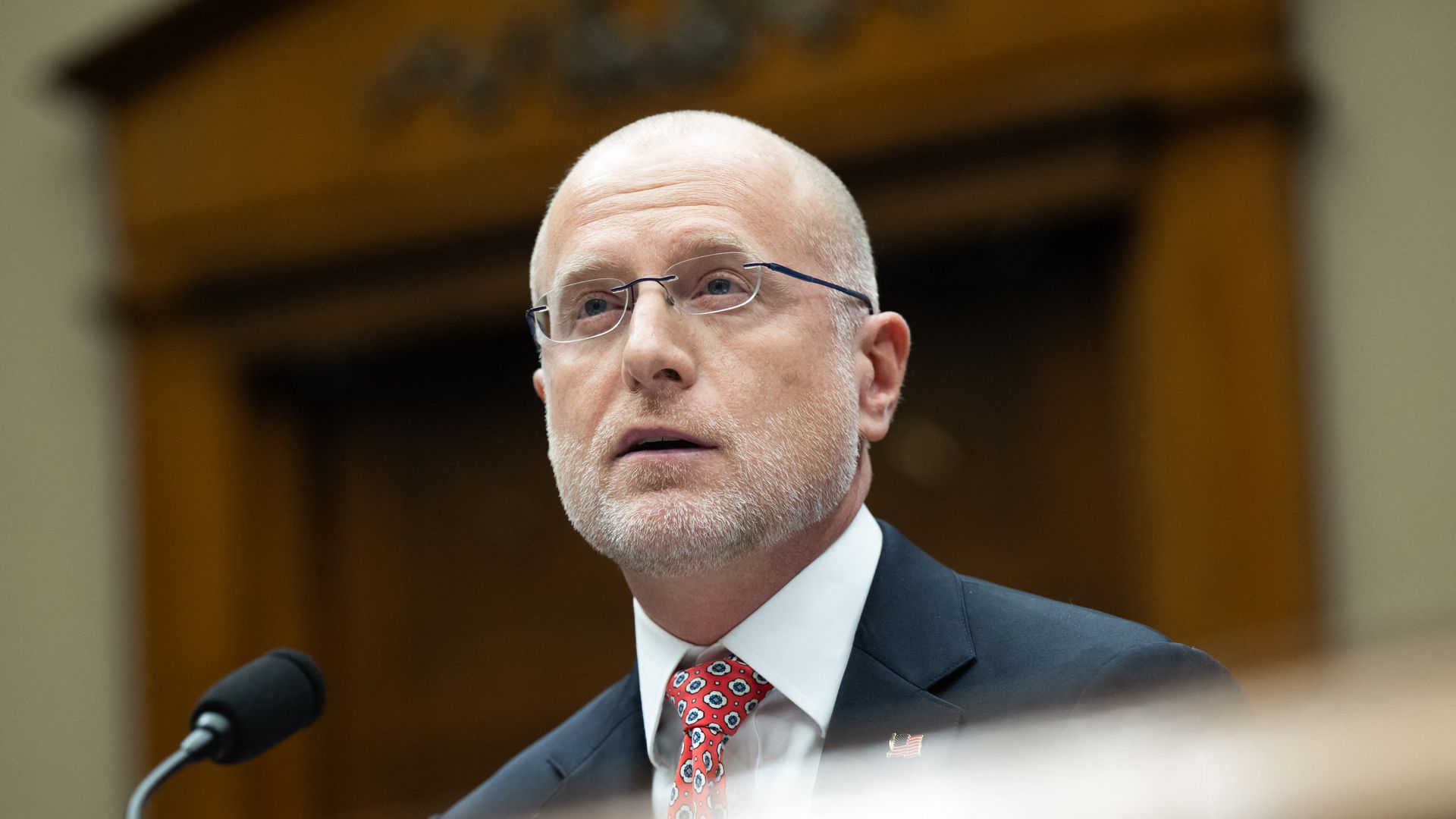
In a notable departure from its previous move to acquiesce to political pressure, ABC has publicly lambasted FCC chair Brendan Carr, arguing the agency is overstepping its authority in threatening changes to a long-settled policy that protects the network's free speech.
Why it matters: The Trump administration's legal track record against media companies has gotten significantly worse since 2024, when ABC settled a lawsuit with the president that legal experts say it could've easily won.
🏛️ State of play: Carr is going after late-night and daytime talk shows, such as ABC's "The View," arguing they shouldn't be exempt from rules that require "bona fide news programs" to allot equal air time for political candidates.
- ABC, in a public filing in response to the commission's request for public comments on the issue, says the FCC's actions "threaten to upend decades of settled law and practice and chill critical protected speech, both with respect to The View and more broadly."
📡 Zoom out: The FCC has simultaneously ordered an accelerated review of ABC's local station broadcast licenses as it investigates whether those stations violated rules that are meant to prevent "unlawful discrimination" related to ABC's diversity, equity and inclusion policies.
- The agency has launched investigations into multiple broadcasters for their DEI practices, including NBC and CBS.
The big picture: The FCC's efforts to target broadcasters it deems critical of the president speak to a broader trend of regulatory agencies losing power to the executive branch during the Trump era.
- Carr has suggested the FCC isn't independent and that commissioners who are supposed to independently regulate broadcasters are ultimately governed by the president.
5. 🚀 1 big reveal: X ads spiral


X, formerly Twitter, brought in $1.8 billion in ad revenue last year, compared to around $4.5 billion in 2021, the last full year Twitter existed as a public company.
📑 Why it matters: The figures, buried deep in SpaceX's blockbuster IPO filing, show how much the platform has struggled to win back advertisers since Elon Musk took over.
Between the lines: Musk tried to reassure Madison Avenue he cared about their business by hiring former NBCUniversal advertising head Linda Yaccarino as CEO in 2023.
- But his disparaging rhetoric toward the advertising community, combined with his dismantling of Twitter's sales, safety and product teams, made it impossible for X to recover from a brutal ad market in 2022, the way many of its peers have.
🤔 What's next: In SpaceX's IPO filing, the company said it intends to drive X's revenue growth by continuing to evolve X into an "everything app" that will make it more useful to young people. From there, it hopes to sell more X Premium subscriptions and ads.
- It says improvements to its AI chatbot Grok will makes its ads platform more efficient for a broader set of marketers.
Sign up for Axios Media Trends