Spotify bets on taste as differentiator in the AI era

Add Axios as your preferred source to
see more of our stories on Google.
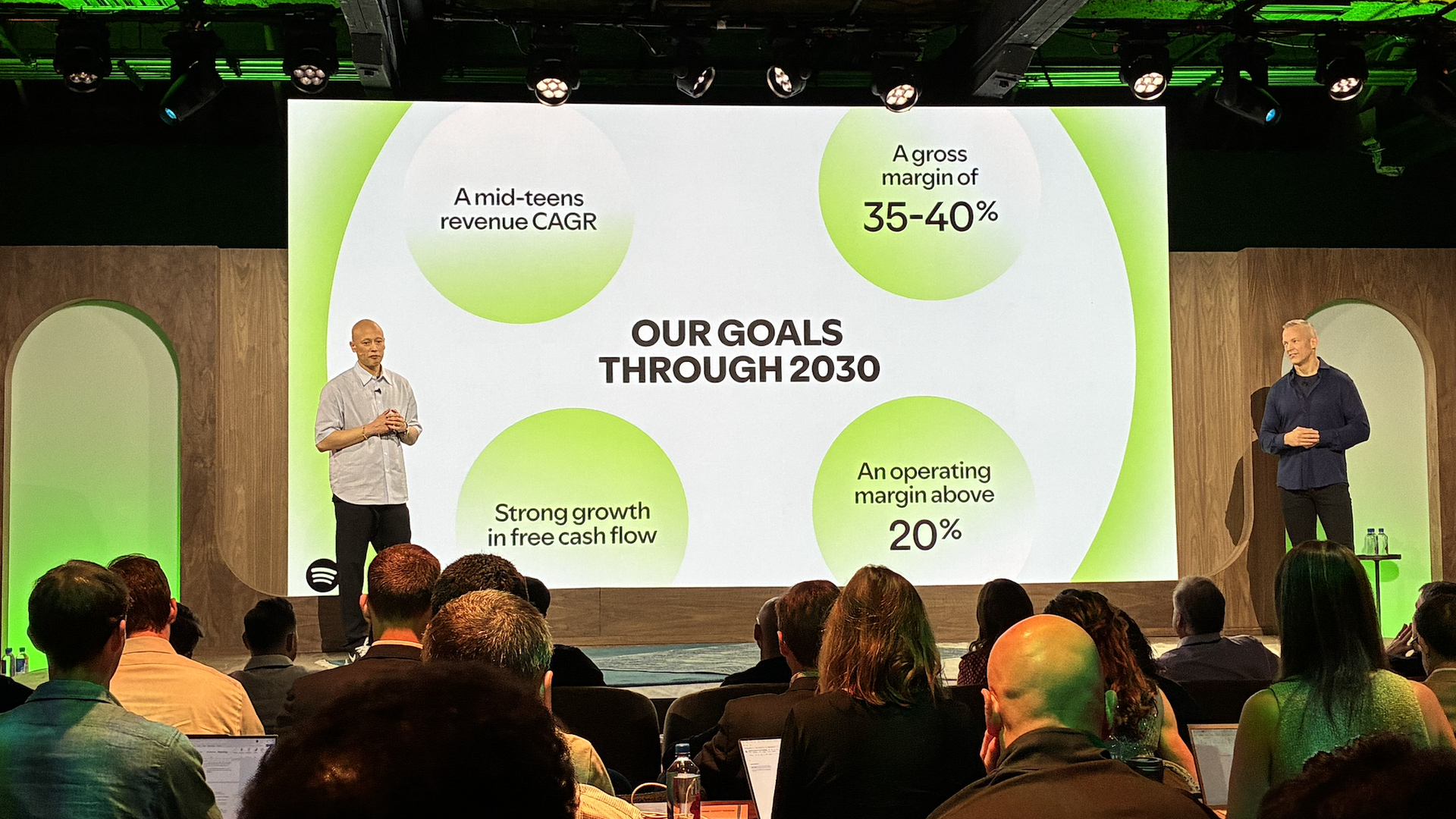
Spotify co-CEOs Alex Norström and Gustav Söderström present at Spotify's Investor Day in New York City. Photo: Sara Fischer
Spotify believes it will become much more profitable over the next four years by leveraging AI to build a "large taste model" that supports interactive sharing over passive listening.
Why it matters: The streamer spent the past four years proving it could turn its popularity into a meaningful business. Now, it wants to show Wall Street it can sustain and build on that momentum in the agentic era.
Driving the news: Leaning into taste as a strategic differentiator will help the streaming giant create a stickier audio ecosystem and strike more partnerships that serve fans, executives told investors at an event in New York City on Thursday.
- The company unveiled a new "Reserved" ticketing service, in partnership with Live Nation, that sets aside concert tickets for premium subscribers.
- It also announced a landmark deal with Universal Music Group to create a new tool that allows fans to create covers and remixes of their favorite songs from participating artists and songwriters.
- This summer, the company will roll out tools that allow eligible creators to offer subscriptions directly to their most dedicated fans on Spotify.
The big picture: It took Spotify nearly two decades to reach full-year profitability, but now it's starting to earn Wall Street's trust.
- Its stock surged 13% Thursday after executives unveiled its strategy alongside a slew of new partnerships and products.
Zoom out: Spotify's new co-CEOs Gustav Söderström and Alex Norström introduced four big ideas to drive the company's growth around its taste advantage.
- Tiered revenue products: The company said it's building its platform around a wider set of higher-margin products, instead of just focusing on premium and free tiers. Individually, those products may serve smaller audiences than Spotify's Premium tier, but in the long term, the company believes they will yield higher monetization potential.
- More interactivity: Spotify is moving from a single media player focused on passive music consumption to an interactive player designed for sharing and collaboration.
- AI personalization: The company plans to use AI to personalize users' media experience in real-time around their taste, context and intent. The company is introducing more ways to gather taste data from its users in order to generate stronger real-time recommendations.
- Time well spent: Spotify says it will prioritize user loyalty — or return visits — in addition to time spent. This reflects its focus on creating valuable experiences over engagement bait.
By the numbers: These ideas, executives said, will help support the company's new business targets, which include boosting its gross margin to 35%–40% by 2030 from around 33% today.
- The company forecast stronger revenue growth (a mid-teens compound annual growth rate) and a continued focus on efficiency to achieve an operating margin of above 20% and an increase in free cash flow.
- It will use that cash to fuel opportunistic deals, although it remains biased toward building over buying, chief financial officer Christian Luiga said.
- In the future, average revenue per user will become a more meaningful growth driver through price adjustments, more defined product tiers and the expansion of à la carte add-ons, executives said.
- Norström said Spotify believes it's still on its way to reaching 1 billion users by 2030.
Yes, but: Advertising continues to be a pain point for the company. The company said it expects reinvigorated ad growth in the back half of 2026, but it didn't offer any new product updates.
What to watch: Luiga emphasized a healthier balance sheet will enable the company to continue to take big swings that will pay off long term.
- Spotify poured more than $1 billion into its podcast business. Roman Wasenmüller, vice president and global head of podcasts, told Axios he believes podcasts will eventually drive 40% margins from ads.
- Global head of audiobooks Owen Smith said the company is on track to reach $100 million in annualized recurring revenue from audiobooks alone by this July.
