Axios Media Trends

September 22, 2026

Hello! Today's Media Trends, edited by Christine Wang and copy edited by Carlin Becker, is 1,986 words, a 7Β½-minute read. Sign up.
π€ Join us on Oct. 20 for Media Trends Live, featuring FCC commissioner Anna Gomez, SNL's longest-serving cast member Kenan Thompson, Versant CEO Mark Lazarus, Trump Media interim CEO Kevin McGurn and more.
1 big thing: π Link economy breaks
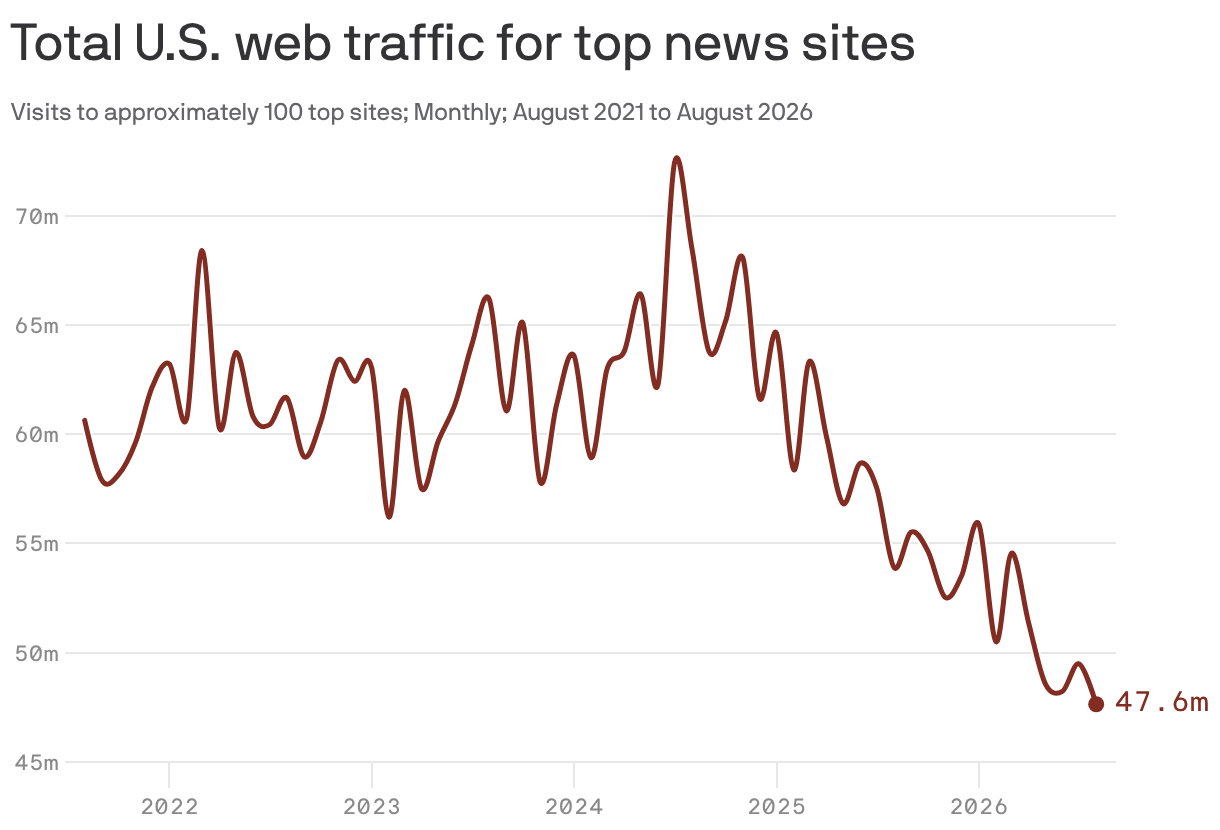
Traffic to news sites is plummeting in the U.S. as tech giants steer people away from search and toward AI.
Why it matters: Generative AI has upended the bargain that built the internet.
- Publishers are scrambling to find a sustainable business model for their content on the agentic web, but time is running out.
Zoom in: U.S. web traffic to roughly 100 of the top news sites fell to 47.6 million visits in July, down from peaks above 70 million in 2024, according to Similarweb data.
- While AI-driven referrals are growing, they remain far too small to offset traffic losses from traditional search engines and social platforms.
Context: 2024 marked a traffic peak before the digital tides started turning on publishers.
- That was the year Google introduced AI overviews within its search results and Meta rolled out a heavily expanded version of its Meta AI assistant.
Between the lines: Publishers are scrambling to make up those losses in the short term by buying search traffic and leaning on affiliate recommendations. But if current trends hold, those efforts will eventually be moot.
- In addition to paid search traffic, which has increased 160% since 2023, email and affiliate referrals have been the only growth areas for publishers for the past three years, according to Similarweb data.
- Direct traffic, traditionally one of publishers' largest funnels, has sunk 25%.


Zoom out: The agentic web is rapidly changing user behavior, and those habit shifts are reflected on publisher websites themselves.
- New data from Chartbeat provided to Axios shows there's been a significant drop-off in scrolling on publisher websites, with 40% of desktop visitors no longer scrolling web pages at all.
- For those that do engage, they're dropping off much earlier than they used to. The pixel depth at which 50% of visitors leave a page shrank 28% in that time on desktop and 27% on mobile.
- Average engaged time across Chartbeat's network of over 2,500 media sites studied was 24.3 seconds in the first half of this year, down from 26.7 seconds in 2024.


Reality check: Behavior shifts from chatbots are likely impacting how users discover information after they land on a web page, decreasing the incentive to scroll when they could ask an agent for follow-up information.
Yes, but: There's reason for optimism, says Chartbeat CMO Jill Nicholson.
- Some of the decreased scrolling could be attributable to a changing mix of traffic toward direct channels, like newsletters, that attract more loyal audiences.
2. π¬ Ellison's California pressure point worked
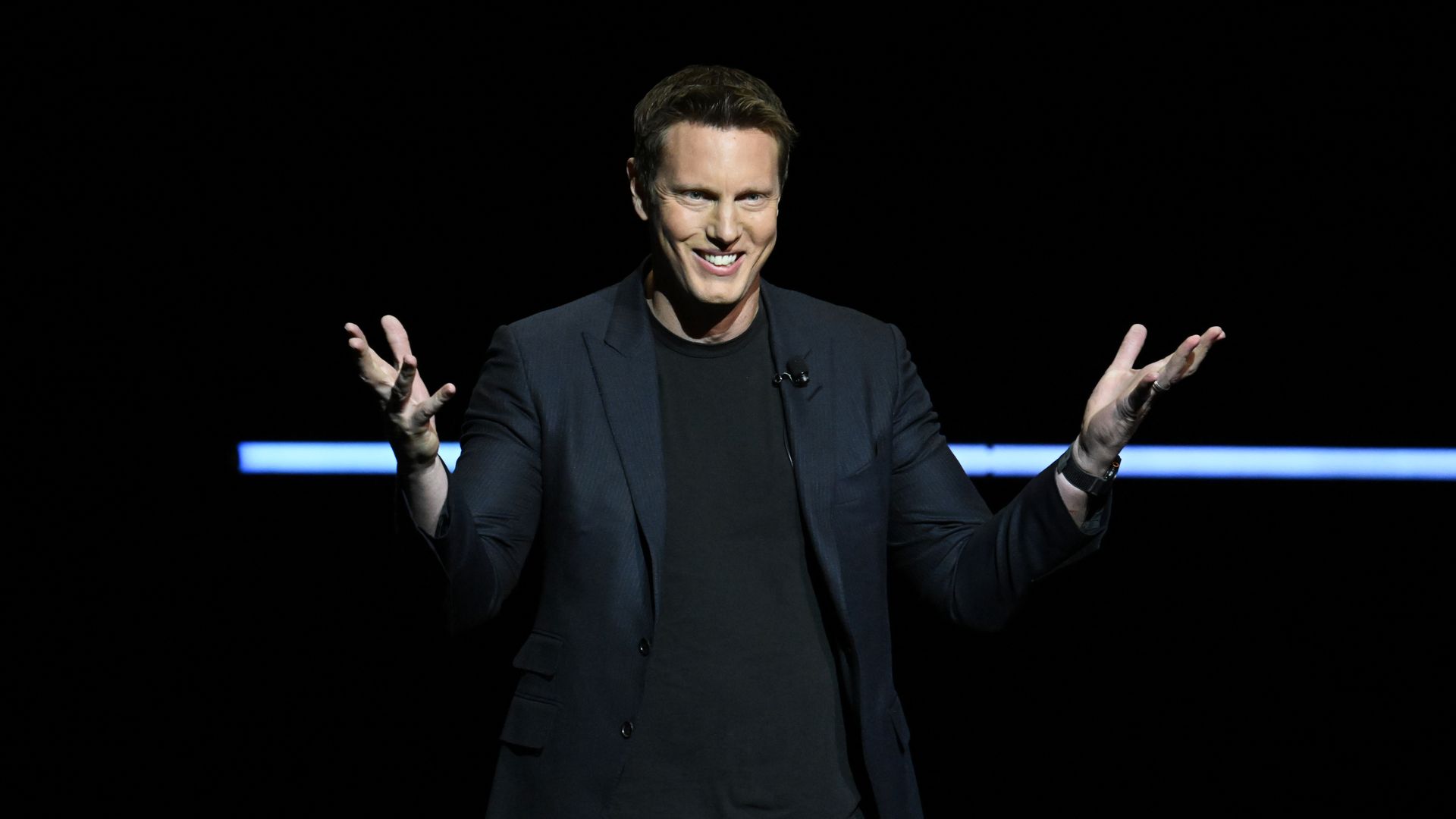
The terms and timing of Paramount Skydance's settlement with state attorneys general were the byproduct of clever maneuvering by CEO David Ellison, who identified a unique point of leverage over the plaintiffs' ringleader California Attorney General Rob Bonta.
Why it matters: With no divestitures mandated and mostly short-term behavioral remedies required, the settlement is a massive win for Paramount.
The big picture: Bonta lost political support for his lawsuit after it became clear Paramount was serious about its threat to leave California and take thousands of jobs with it.
- By late August, a slew of high-profile California Democrats had called on Bonta to settle. California Gov. Gavin Newsom played a key role in brokering settlement talks with Bonta, a source familiar with the negotiations said.
State of play: Several state AGs held out over the weekend ahead of the settlement, seeking additional concessions. They didn't face the same time pressure to settle as Bonta, but most had fewer resources to litigate without the support of California's Justice Department.
- "I do wonder how much money had to do with it, in the sense that Bonta has a disproportionate budget relative to the other state enforcers," says former Democratic FTC commissioner Alvaro Bedoya, who was a vocal critic of the deal.
- "My suspicion is that once all the dust settles, this is going to come down to: Bonta was going to fold, and the other state AGs simply did not have the resources to move this ball forward."
The intrigue: The states suing to block the deal have said for months that their case was rooted in traditional antitrust law, not politics.
- The divestiture of news networks was never part of what Bonta described as a "bread and butter, black and white, meat and potatoes antitrust case."
- But after the settlement was announced, Connecticut Attorney General William Tong said that "Connecticut wanted and demanded full divestiture of CNN and CBS News" as a remedy and that he was "deeply disappointed" the deal lacked it.
My thought bubble: Ellison said in early August he believed the states' antitrust suit was rooted in concerns about his stewardship of CNN.
- Tong's statement confirmed his suspicions.
The bottom line: Ellison played his hand brilliantly. Now the deal's historic debt load becomes his biggest issue.
3. π₯ The great access-attention standoff
President Trump's press ban isn't just a test of the media's constitutional rights, which legal experts overwhelmingly agree were likely violated, but also of the press' dependence on access and the president's appetite for attention.
Why it matters: In standing in solidarity with CNN, MS NOW and Politico, the White House press pool is signaling that access today isn't as important as setting a long-term precedent that benefits everyone.
State of play: The New York Times on Tuesday said it will "continue to withhold publication or distribution of images captured as part of the White House still photography pool, in support of the media organizations that President Trump has targeted with a ban."
- It said it would maintain that policy until a court hears arguments on the legal claims filed by those outlets, which are scheduled for Wednesday.
- On Monday, the president's video feed at a UN press conference was inaudible after he banned CNN, which was supposed to manage the White House press pool's video feed.
- The other members of the rotating press pool β ABC, CBS, NBC and Fox β backed CNN in declining TV coverage.
- Photojournalists from other outlets, such as the Associated Press, Getty, Reuters, the Washington Post and the Times, withheld pool photos in solidarity.
Zoom out: In indicating he would appeal a judge's decision in favor of the banned outlets that sued him β before a judge issued any decision β Trump made it clear Monday he knows he faces a losing case.
- The case has been assigned to Judge Timothy J. Kelly, a Trump appointee who ruled against his revoking of Jim Acosta's press credentials in 2018.
Reality check: Legal experts argue precedent overwhelmingly backs the news outlets, but if Kelly doesn't grant the outlets a temporary restraining order to reinstate access, the press corps' willingness to continue its boycott could be tested for many weeks or months.
The bottom line: If collective action by news outlets imposes enough of a practical cost for the White House to overturn the ban, it would show courts aren't the only effective lever for protecting press freedoms.
4. πΊ White House launched Trump "TV"
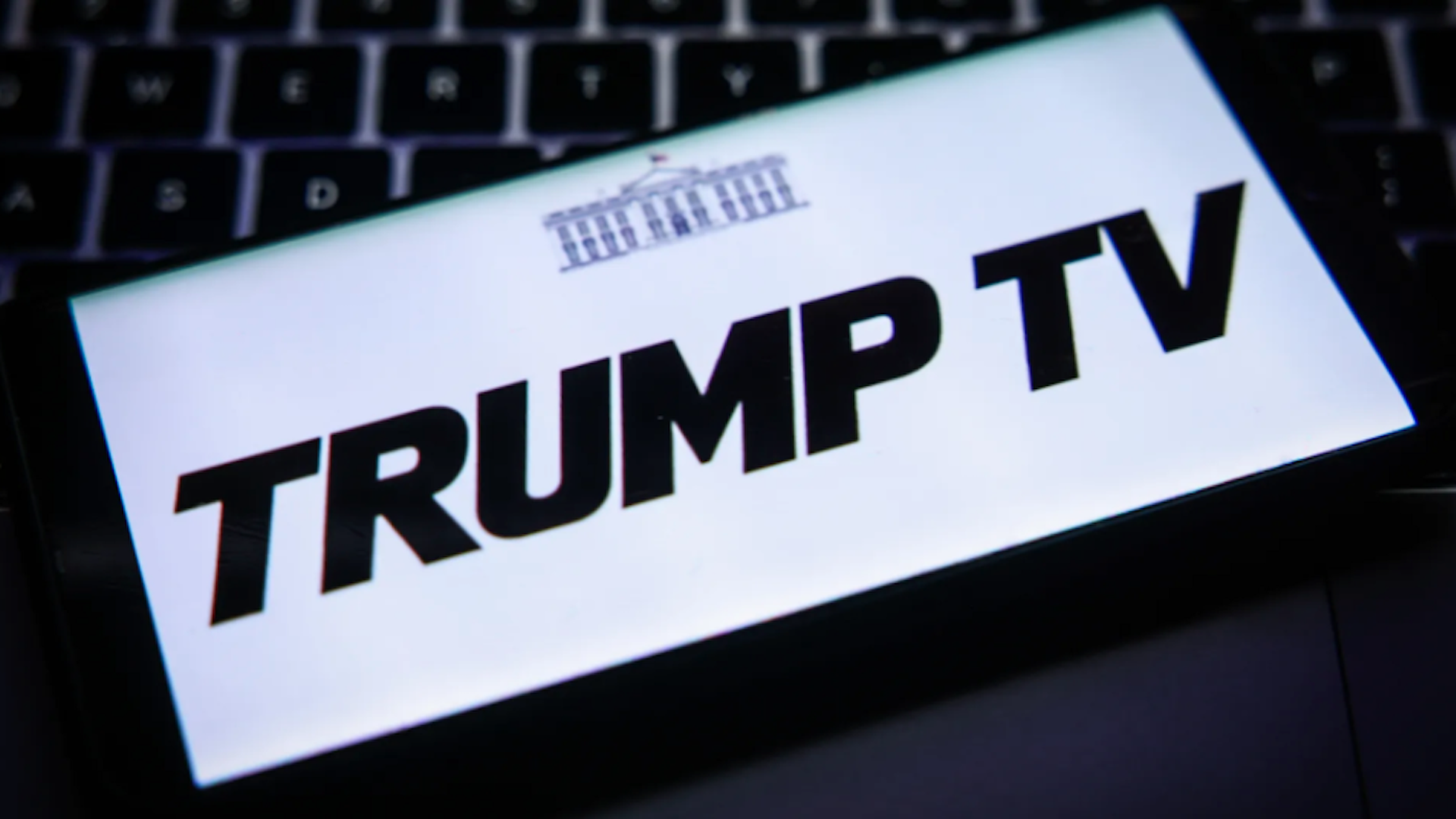
As Trump fights the press over coverage, the White House launched its own 24/7 streaming channel β Trump TV.
- It's unclear who staffs the channel, makes programming decisions or sets its schedule.
Why it matters: Trump TV gives the president a White House-run video platform to reach the public without relying on traditional news organizations.
- So far, it resembles a round-the-clock presidential highlight reel more than a news network. It shows curated clips of past Trump speeches and executive actions, along with live events.
- The White House had teased the channel through cryptic videos, and it went live on its YouTube account, WhiteHouse.gov and the official White House app.
5. π AI deals start to dramatically outpace lawsuits


Axios Media Trends Executive published our most comprehensive report yet on the state of AI, copyright and fair use across the creative economy.
By the numbers: AI companies have struck at least 299 media deals since 2023, versus 107 lawsuits, as the licensing market develops faster than courts can establish rules.
- News has moved furthest into the licensing market, although much of that momentum is coming from deals with smaller firms, like ProRata, rather than major companies like Anthropic.
- Music and book companies have become more litigious over the past two years. The ratio of deals to lawsuits for these companies is much smaller compared to news media, in part because of industry structure around copyright.
- Game developers have struck fewer deals, although agreements such as Electronic Arts' partnership with Stability AI suggest that could be starting to change.
The intrigue: OpenAI's early entry exposed it to more lawsuits, but also allowed it to set early deal terms.
- Lawsuits targeting OpenAI and Microsoft represented around 36% of total AI copyright cases filed before 2025. That share dropped to 16% of all cases filed since the start of 2025, according to an Axios analysis.
- OpenAI now has at least 24 deals with content companies, but rivals have rapidly built their own networks. The map includes 20 deals for Google, 14 for Meta, 12 for Perplexity, 11 for Microsoft and 10 for Snowflake.
The big picture: Dealmaking is shifting from licensing content to train LLMs toward new payment models, including retrieval-based agreements that compensate publishers based on usage.
What to watch: Only a handful of cases have produced major decisions so far, and many others could spend years working their way through district and appeals courts.
π Go deeper: We explain which cases matter, and which ones to watch in the full full report.
6. π Scoop: DOJ blindsides agencies
The Department of Justice's recent statement of interest supporting OpenAI and Microsoft in the New York Times' copyright infringement lawsuit surprised critical agencies like the U.S. Patent and Trademark Office and the Copyright Office, sources told Axios.
Why it matters: Statements of interest allow the government to declare an official position on a legal matter in private lawsuits. While not binding, they can hold significant weight and help persuade cases.
Zoom in: The Times' lawsuit against OpenAI and Microsoft argues AI firms illegally stole their copyrighted works to train their large language models, and that AI-generated outputs unlawfully produced market substitutions.
- The DOJ's SOI argues copyrighted works to train models should be considered fair use because that practice is new and transformative, but also says outputs aren't necessarily covered by that same legal argument.
- Unlike many SOIs, no career antitrust attorneys signed the filing alongside senior DOJ officials.
Between the lines: Publishers have criticized the claims in the SOI, including the idea that enforcing copyright laws is too cumbersome and would threaten America's AI dominance over foreign rivals.
- Vivek Shah, CEO of publicly traded publishing behemoth Ziff Davis, pointed out in a recent op-ed that the government's argument is muddled.
- The DOJ argues in its brief that licensing enforcement is cumbersome, but doesn't take a position on whether a licensing regime is feasible.
Reality check: The fact that the government's position on this issue was not coordinated among the bodies that work closely on it, especially the Copyright Office, is notable, but not shocking.
7. 1 fun thing: πΈ Top spot gets harder to topple
Country sensation Ella Langley has officially topped Mariah Carey's record for longest run for a song at No. 1 on the Billboard 100 list.
Why it matters: With 23 weeks in the top spot, Langley's "Choosin' Texas" has solidified its spot, not just as the song of the summer, but the song of the year.
Zoom out: MorΔ songs are staying on the Billboard 100 lists for longer as streaming algorithms encourage repeat listens and vertical video platforms serve as extended marketing tools.
Go deeper: More from Billboard.
Sign up for Axios Media Trends