
Axios Media Trends

August 27, 2024

Today's Media Trends, copy edited by Sheryl Miller, is 1,783 words, a 7-minute read. Sign up.
Coming up in NYC: Join me on the evening of Sept. 9 for a special reception as the final event in our TN50 series: The Business of Women's Sports. I'll be in conversation with top executives and athletes breaking ground on new name, image, likeness (NIL) rules. Register here.
Situational awareness: The NFL today will vote on allowing private equity ownership, making it the last major U.S. sports league to do so. (It's expected to pass.)
1 big thing: 🤑 Make-believe dealmaking

Edgar Bronfman Jr. pulled his bid for Paramount last night, marking the latest in a long line of hollow media takeover efforts.
Behind the scenes: It's unclear whether the money Bronfman planned to raise would have materialized in time for serious consideration by Paramount's special committee, if at all.
- While Bronfman's investment group included serious financiers such as Fortress and BC Partners Credit, others were lesser-known entrepreneurs and family offices.
The big picture: Media has seen a slew of hyped bids emerge for major assets in recent years, only to have those deals fall apart once it's obvious the cash isn't there.
- Forbes' sale died after Austin Russell, a 29-year-old CEO of an electric vehicle company, failed to come up with the cash on deadline.
- Group Black has teased major acquisitions for years but without committed financing, and it's never closed anything big.
- Byron Allen has tried for years to buy a swath of media assets, including Paramount, but none of his efforts have materialized.
Zoom out: It's not uncommon across industries for sellers to side with smaller bids that they feel more confident can close.
- Bids with loose commitments that don't materialize waste precious time that could've otherwise been spent on regulatory approval of a more certain deal.
- In this case, Bronfman's deal bid — which was upped to $6 billion from $4.3 billion last week — was lower than Skydance's, but Bronfman believed his offer was competitive because it didn't include a $4.5 billion valuation for Skydance, which would have diluted Paramount shareholders.
Zoom in: Skydance had argued to the special committee that extending a "go-shop" period for Bronfman's bid breached their agreement.
- It also asserted to the special committee that its bid, supported by private equity firm RedBird Capital Partners, had more stable financing.
The bottom line: In vanity industries, like media and sports, financial value is often divorced from what a buyer is willing to pay, given the prestige of the asset. And the viability of a bid is often wagered against the media attention a buyer could get for their efforts.
- Bronfman, who failed to acquire Time a few years back, may not have been able to pull a winning deal together, but he has put himself in the conversation for the next big media deal that comes along.
- Whether his handling of the Paramount deal process impacts his credibility as a media dealmaker remains to be seen.
2. Exclusive: Rare digital success story
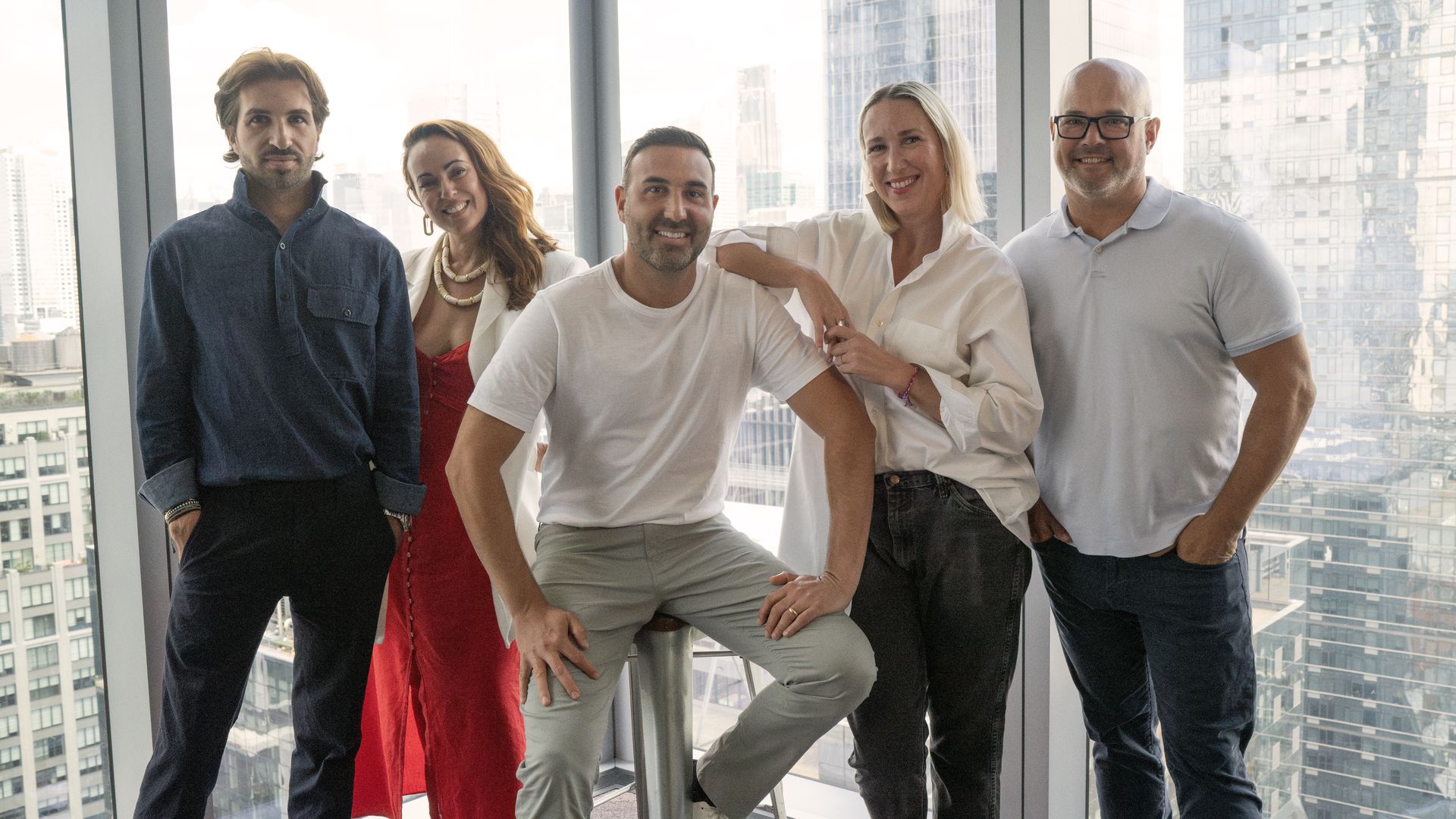
Gallery Media Group plans to end 2024 with $50 million in revenue, CEO and founder Ryan Harwood told Axios. The company, previously named after its biggest property PureWow, has been profitable since 2011.
Why it matters: With no debt, consistent growth and no major layoffs in its history, GMG is a rare digital media success story.
- While its business has expanded, the firm's core strategy of selling impression-based branded content has not shifted since launch.
Catch up quick: Harwood, a former banker, bought the domain for Purewow.com, a lifestyle site, in 2010.
- He sold the company for an undisclosed amount to entrepreneur Gary Vaynerchuk in 2017. PureWow was renamed Gallery Media Group.
- Gallery Media Group's cap table consists of VaynerMedia subdivision VaynerX and Steve Ross' RSE Ventures.
By the numbers: Today, Gallery Media Group is home to more than 50 social-first brands that touch a wide array of lifestyle topics, such as fashion, beauty, food and pets. Nearly 200 people work at the company.
- The company's biggest brands, @Recipes, @Moms, @Cocktails, @PureWow and @Ballplayers, exist primarily on social media and are monetized through branded content.
- The firm doesn't have any plans to stop selling impression-based native content, but it is seeing early success expanding into events and commerce, chief revenue officer Chris Anthony said.
The big picture: GMG has kept a relatively low profile over the past few years as it plotted expansion, mostly organically.
- While Harwood said he's not trying to proactively sell the business, he wants the industry to be aware of GMG's growth, as the firm is open to acquiring more brands or entering strategic partnerships.
3. 🥊 Free speech war is on
The long-standing tension between censorship versus safety online is coming to a head as CEOs start to publicly push back.
Why it matters: Tech companies have corrected what they consider a content moderation overreach during the 2020 election and the pandemic. Ahead of the 2024 race, they are standing their ground.
State of play: Meta CEO Mark Zuckerberg on Monday accused Biden administration officials of pressuring Facebook to "censor certain content" related to COVID-19 and said he regrets not being more outspoken about it until now.
- "I also think we made some choices that, with the benefit of hindsight and new information, we wouldn't make today," he wrote
Between the lines: His comments come in the wake of the arrest of Telegram's billionaire CEO and co-founder Pavel Durov, for what French authorities say is part of a criminal investigation related to illegal content shared on his platform.
- Durov has not been officially charged, but he faces allegations related to complicity in crimes associated with child exploitative material, fraud and drug sales on his service.
Zoom out: The arrest has rocked the global tech industry, which for years has operated under the assumption that platforms and their executives shouldn't be held personally accountable for illegal activity on their platforms.
- Rumble CEO Chris Pavlovski posted a message of support for Durov on Sunday, saying France had also "threatened" Rumble.
- Elon Musk, a vocal critic of government and platform censorship, posted "#FreePavel" on X on Sunday.
- Telegram said in a statement that it "abides by EU laws." It is "absurd to claim that a platform or its owner are responsible for abuse of that platform," it added.
The bottom line: French President Emmanuel Macron said the arrest "is in no way a political decision." But for tech firms with massive global user bases, any attempt to meddle with content moderation decisions can feel like a slippery slope.
- Zuckerberg and former Twitter CEO Jack Dorsey have both said their platforms made a mistake when censoring a story about Hunter Biden's laptop ahead of the 2020 election because of FBI warnings.
4. 📱 New media problem: Tracking virality

It's become nearly impossible to reliably capture what's going viral online without manually tracking engagement on posts.
Why it matters: The internet was supposed to unleash a new level of transparency around news consumption. But it's more muddled than ever.
- Instead, platforms are hoarding the data to avoid scrutiny over how their algorithms work.
Driving the news: Two weeks ago, Meta officially shut down CrowdTangle — a platform it acquired in 2016 that allowed users to measure the engagement of posts and accounts across social media.
- Originally celebrated as a breakthrough in transparency, CrowdTangle became a liability for Meta when it was used by journalists and researchers to suggest Facebook's algorithms favored hyper-political content.
State of play: Facebook is far from the only platform that has taken steps to keep insights about behavior on its platform out of view.
- TikTok used to publicly display trends data next to certain hashtags in its videos worldwide. But it pulled down that feature after the beginning of the Hamas-Israel war when it argued journalists were misinterpreting the data.
- X, Reddit and other social networks have begun limiting backend access to their data to limit AI firms from scraping it. That's also made it harder for researchers and journalists to analyze content trends.
- More news engagement has moved to private groups and encrypted chats that are difficult for third parties to measure amid privacy concerns. (Gen Z is particularly sensitive to posting public information about their personal lives.)
The big picture: Metrics cobbled together from third-party vendors and trending hashtags collectively show a more limited picture of consumer behavior on social today compared to the CrowdTangle era. But search data via Google Trends remains consistent and reliable.
What to watch: There's hope that generative artificial intelligence can help news companies analyze video content more easily in the absence of links. But getting access to the right data to analyze in the first place is harder than before.
5. Convention viewership gets more polarizing


Convention viewership was not only divided heavily along party lines, but partisan networks set new records.
- Fox News drew the most viewers across all major cable and broadcast news channels all four nights of the RNC. It set a new record for the most number of viewers for a single cable channel during the final night of the RNC with 10.4 million people watching during the 10pm ET hour.
- MSNBC drew the most viewers across all major cable and broadcast news channels all four nights of the DNC, its most-watched convention in network history.
Zoom out: Ratings for the RNC and DNC were up from the pandemic-era conventions in 2020, but they were down significantly from 2016, per Nielsen.
- Fewer viewers watched the RNC on average across all four nights this year (19.1 million) compared to the DNC (21.8 million).
Zoom in: The highest-rated moment of the RNC was former President Trump's speech, which drew 26.3 million throughout his 90-minute speech. (That number ticked up to 28.4 million viewers from 10:45 to 11pm ET, the point at which he recounted the assassination attempt against him.)
- The highest-rated moment of the DNC was Vice President Harris' speech, which drew 28.9 million viewers over the course of her roughly 40-minute speech.
The big picture: Live television ratings for most major political events have waned in recent years amid a broader transition to digital.
- The vast majority of viewers across all four nights of the RNC and DNC were over the age of 55.
What to watch: Top Trump advisers tell Axios' Mike Allen they expect he'll square off against Vice President Kamala Harris for ABC News' planned Sept. 10 debate, despite drama around muted mics.

6. 🎮 1 fun thing: Gaming traffic
The media industry's push to create more puzzles and other games comes as companies seek to boost engagement when attention and ad dollars are fleeting.
Driving the news: Last week, three media outlets released games-related announcements.
- BuzzFeed launched a redesign for BuzzFeed Arcade, home to Pyramid Scheme, AI generators and other games.
- Vulture released an archive of Cinematrix, its daily movie trivia game.
- Mashable announced its partnership with Arkadium to offer games like Mahjong and Sudoku.
The big picture: The New York Times has shown what a boon games can be, spurring publishers to take note.
- Daily Mail global affiliate director Paul Tipper says games are major drivers of repeat visits and time spent for the outlet, which partners with Arkadium.
How it works: Some publishers have partnered with game developers that require little investment unless publishers want bespoke games. Vulture's 10x10 crossword, for example, is powered by Amuse Labs.
Sign up for Axios Media Trends