Axios Media Trends

January 16, 2024
Today's Media Trends, copy edited by Sheryl Miller, is 1,312 words, a 5-minute read. Sign up.
📣 Carole Robinson, formerly of BuzzFeed and ViacomCBS, was named chief communications officer of Nielsen. Go deeper
Situational awareness: HBO's "Succession," FX's "The Bear" and Netflix's "Beef" took home the most prime-time Emmy Awards Monday night.
- 🏆 HBO led all studios with nine wins, followed by Netflix and FX with six each, per Deadline.
1 big thing: Scoop... CNET for sale


Red Ventures, the digital media and marketing juggernaut based in Fort Mill, South Carolina, has approached strategic buyers about offloading tech news and reviews site CNET, five sources familiar with the effort told Axios.
Why it matters: Red Ventures acquired CNET, along with a few smaller websites, from ViacomCBS, now Paramount Global, in 2020 for $500 million. It's hoping to get at least half of that for CNET alone.
Details: Red Ventures has been quietly approaching strategic buyers, mostly other large media holding firms, for several months to gauge their interest in CNET, but talks began to ramp up before the holidays, sources told Axios.
- The process, for now, is still informal, as the company looks to boost earnings before a possible sale. CNET is profitable, sources said.
- Red Ventures declined to comment.
Zoom in: Red Ventures acquired CNET six months into the pandemic when the digital media ecosystem was reeling from pullbacks in advertising and affiliate commerce revenue.
- The private equity-backed firm took on debt to fund the deal.
- Red Ventures has a strong reputation for being able to successfully integrate its acquisitions into its larger portfolio, helping to pay down debt. The CNET deal has proven to be an exception.
The big picture: A slew of challenges, including a slower ad market, plunging traffic, raising interest rates and brand reputation issues, have plagued the deal.
- Sources who have been pitched on the asset have cited concerns about CNET's reputation following a controversy last year over CNET's failure to disclose the use of AI in articles during a publishing experiment.
- The company cut roughly 10% of staff shortly thereafter, but it said the two incidents weren't related. Both the AI saga and the layoffs drove CNET workers to form a union a few months later.
2. Scoop: The Free Press raising in 2024

The Free Press founder Bari Weiss at the Ace Theatre in downtown Los Angeles during the company's first live debate event in September. Photo: Roger Kisby
The Free Press, a new media company launched by former New York Times writer and editor Bari Weiss, plans to raise funds this year to jump-start growth, executives told Axios.
Why it matters: Few media startups catering to general audiences have been able to successfully attract investment in today's bearish media market.
- The Free Press, which has seen its free and paid audience numbers grow consistently in the past year, would be a notable exception.
- The company has already received outreach from several prominent investment firms and individuals, three sources told Axios.
Details: In an interview with Axios, Weiss and The Free Press' new chief operating officer, Lars Kahl, confirmed that the firm plans to raise money in 2024, but declined to say how much.
- "We will look at the right partners for the beginning of next year to speak to map out the paths to growth," Kahl told Axios in late December.
- Kahl, who joined The Free Press earlier this month after almost a decade with German media giant Axel Springer, will lead the company's efforts to build out its sponsorship and events business in 2024.
- "There's a huge number of Americans that identify as centrist and independent," he said. "Business wise, there is unlimited potential to grow this company in various ways."
The big picture: More money is flowing to media outlets and platforms that provide an alternative to mainstream news sources.
- A slew of institutional investors backed Elon Musk's overpriced takeover of Twitter, now X, in late 2022.
- Omeed Malik, a financier known for backing companies with conservative values, is funding Tucker Carlson's media venture with $15 million from his private fund.
- Malik, along with a group of conservative operators, is eyeing a buyout of The Messenger that would value the outlet at $60 million.
- The commercial success of the Daily Wire has piqued the interest of institutional investors who have told Axios they would be interested in the asset if it were to ever go public or raise money.
What's next: Weiss said one of the editorial topics the company could go much deeper on this year is science and medicine.
3. 🗞️ Sinclair exec buys Baltimore Sun
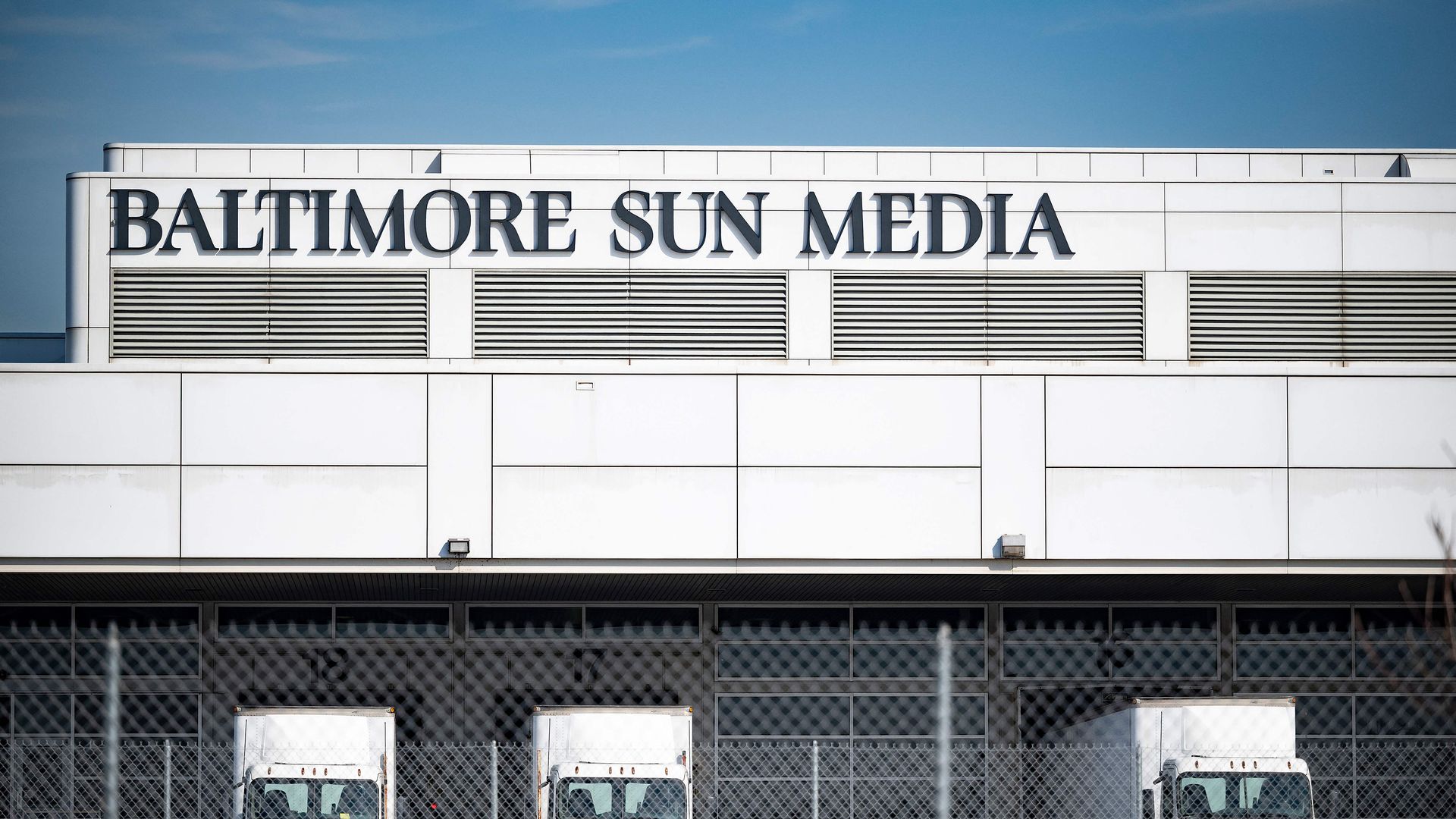
Photo: Jim Watson/AFP via Getty Images
The Baltimore Sun — Maryland's largest newspaper — has been sold by hedge fund Alden Global Capital to David Smith, the executive chair of local TV company Sinclair.
- Why it matters: The deal puts the Sun back in the hands of a local owner after nearly four decades.
Zoom in: Smith "has given generously over the years to conservative and local causes," The Baltimore Banner notes.
- Smith criticized the "mainstream media" in his interview with the Sun about the deal.
4. Most live-streamed event ever
Kansas City Chiefs quarterback Patrick Mahomes yells to fire up the crowd on Saturday at GEHA Field at Arrowhead Stadium in Kansas City, Mo. Photo: Scott Winters/Icon Sportswire via Getty Images
Saturday's NFL playoff game on Peacock was the most-streamed live event ever, according to NBC Sports.
Why it matters: The matchup between the victorious Kansas City Chiefs and the Miami Dolphins was the first NFL playoff game ever to be shown exclusively behind a paywall on a streaming service.
By the numbers: The game, which NBC Sports paid $110 million for the rights to air, averaged 23 million viewers across all platforms, per Nielsen.
- It drove the Internet to its "largest U.S. usage ever on a single day ... consuming 30 percent of Internet traffic during the game."
🚨 What we're watching: The NFL is in advanced talks with ESPN to acquire an equity stake in the network, the New York Post reported.
5. Music slowdown


There were about half as many major music catalog sales last year compared to the market's high point in 2021, according to data from music firm Luminate.
Why it matters: The music royalties market is coming down from its 2021 high, but that doesn't mean dealmaking has slowed, Axios' Tim Baysinger writes.
The big picture: The growth of streaming music has increased the value of holding song rights, while the financial troubles at Hipgnosis showed what happens when firms overpay.
- The global music industry had a record-setting 2023 with more than 4 trillion on-demand audio song streams, Shauneen Miranda writes.
- The figure represents a 22.3% increase from 2022's 3.4 trillion streams.
What's next: Music streamers and record labels are tightening their belts, Bloomberg notes.
- Universal Music Group plans to cut hundreds of jobs this quarter.
- Spotify cut 1,500 jobs in December — 17% of its workforce.
Go deeper: Sign up for Axios Pro Media Deals
6. 🤖 OpenAI's election plan

Illustration: Natalie Peeples/Axios
ChatGPT maker OpenAI says it's rolling out new policies and tools meant to combat misinformation and abuse ahead of high-stakes elections worldwide this year.
Why it matters: 2024 is one of the biggest election years in history — with high-stakes races in over 50 countries globally.
- It's also the first major election cycle where generative AI tools will be widely available to voters, governments and political campaigns.
🔎 Zoom in: Election-related changes include:
- Adding digital credentials to AI-generated images to make it easier to see where the images came from.
- Experimenting with a tool that can detect pictures made by DALL-E, OpenAI's image-generation tool.
- Adding more real-time news summaries, "including attribution and links."
7. Record ad dollars pour into Iowa
Illustration: Lindsey Bailey/Axios
Republican presidential campaigns have poured an unprecedented $124 million into video and TV advertising in Iowa, according to estimates from AdImpact.
Zoom out: As of last Friday, 46% of all Republican presidential primary video ad spend ($270 million) had been spent trying to pursue Iowa voters.
Why it matters: The Iowa caucuses not only kick off the 2024 presidential primary, but they set the tone for the remainder of the campaign.
Details: In the two weeks leading up to the caucuses, groups supporting former South Carolina Gov. Nikki Haley have spent $7.8 million on ads, followed by ads for Florida Gov. Ron DeSantis ($6.1 million), pro-Trump ads ($3.5 million), and ads supporting businessman Vivek Ramaswamy ($127,000).
Yes, but: "History has shown that ads do not win caucuses," said Tim Lim, president of Lim Consulting and a Democratic consultant.
The big picture: The advertising dollars spent on U.S. elections and advocacy issues will grow to a record $16 billion this year, up 31.2% compared to the last presidential election in 2020, Axios reported in December.
Editor's note: Item 2 has been corrected to reflect that Lars Kahl was with Axel Springer for nearly a decade.
Sign up for Axios Media Trends

Sara Fischer’s inside look at the forces reshaping media.