Axios Media Trends

January 07, 2025

🎲 Hello from Vegas! I'll be interviewing Meta CMO Alex Schultz and DoorDash CMO Kofi Amoo-Gottfried at 4pm ET. Join us.
- Today's Media Trends, copy edited by Sheryl Miller, is 2,439 words, a 9-minute read. Sign up.
🎉 Big news: We are launching a membership for media trends executives later this month, anchored around my coverage and a slew of new products for media professionals.
1 big thing: Meta goes MAGA
Meta said today it will end its fact-checking program in exchange for X-style community notes as part of a slate of changes targeting "censorship" and embracing "free expression."
Why it matters: The tech giant has taken a sharp turn right in its policies and corporate posturing since Trump was elected.
- 🐘 Joel Kaplan, a prominent Republican, replaced Meta's policy chief Nick Clegg last week. (He said Meta's third-party fact-checkers have demonstrated "too much political bias" in a Fox News interview this morning.)
- 🍗 CEO Mark Zuckerberg dined at Mar-a-Lago on Thanksgiving eve.
- 💰 The company pledged a $1 million donation to Trump's inauguration.
- 🥊 On Monday, it added three people to its board, including close Trump ally Dana White.
A big reversal: Beyond replacing its fact-checkers, Meta will also bring back more political content to its platforms and end restrictions that are "out of touch with mainstream discourse" on certain topics "like immigration and gender," Zuckerberg said,
- It will also adjust filters scanning for policy violations to only tackle "illegal and high severity violations." Those include topics like terrorism, child sexual exploitation, drugs, fraud and scams.
- The company's U.S. content review team will be moved to Texas from California, contending it will help Meta "build trust to do this work in places where there is less concern about the bias of our teams." (X last year announced the creation of a safety unit in Texas.)
Zoom out: The changes are part of a growing trend among online platforms to shift away from policing misinformation and content amid charges of bias.
- They echo calls from the right to walk back what they say is censorship on social media and coincide with President-elect Trump's return to the White House.
The big picture: The politicization of fact-checking has contributed to a decline in the number of fact-checking sites globally, according to data from Duke Reporters' Lab, Axios has reported.
- In North America, the number of active fact-checking sites decreased from 94 to 90 from 2020 to 2023.
2. Scoop: TikTok pushes users to Lemon8 as ban looms

TikTok's sister app Lemon8 has been sponsoring posts on TikTok encouraging users to migrate to Lemon8 amid a looming ban threat, according to sponsored posts viewed by Axios.
Why it matters: The TikTok ban law also applies to other apps owned by TikTok's Chinese parent ByteDance, like Lemon8.
- ByteDance could be betting that regulators and app store companies are so focused on TikTok they won't pay attention to its other apps.
State of play: In the last few weeks, Lemon8 has been promoting its app to TikTok users through sponsored TikTok videos.
- In one sponsored post, TikTok user @miller.dailylife shares a video with a creator saying: "So, just so you guys know, now that they're trying to do this ban, if you want to have somewhere else to go where the government is not 100% controlling what we see, what we consume ... Just go ahead and go on to Lemon8."
Our thought bubble: ByteDance would probably like to build Lemon8's user base even if TikTok isn't banned.
- But the ads, pegged to recently uploaded videos, suggest they aren't held over from an older, more general marketing campaign.
Between the lines: In November, TikTok began informing users of Lemon8 that beginning late that month Lemon8 would be powered by TikTok, and their TikTok usernames would also be used on Lemon8.
- A spokesperson for ByteDance said the backend integration between TikTok and Lemon8 was unrelated to the ban.
By the numbers: Lemon8 is still tiny compared to TikTok, although app engagement has picked up steadily over the past year, according to Similarweb data.
- Lemon8 has averaged a little over 1 million active daily app users since October, about double where it was for the same period the year prior.
The big picture: The TikTok ban law explicitly states that any app developed or provided by ByteDance is illegal unless it is sold to a company that is not controlled by a foreign adversary.
- But the discussion has largely centered on TikTok — and it's the only company, in addition to ByteDance, that lawmakers named in the law.
- That's in part because ByteDance's complicated corporate structure obscures which apps the company owns and operates.
What we're watching: The Supreme Court may decide to grant President-elect Trump's request to pause the ban, which is set to take effect the day before he takes office.
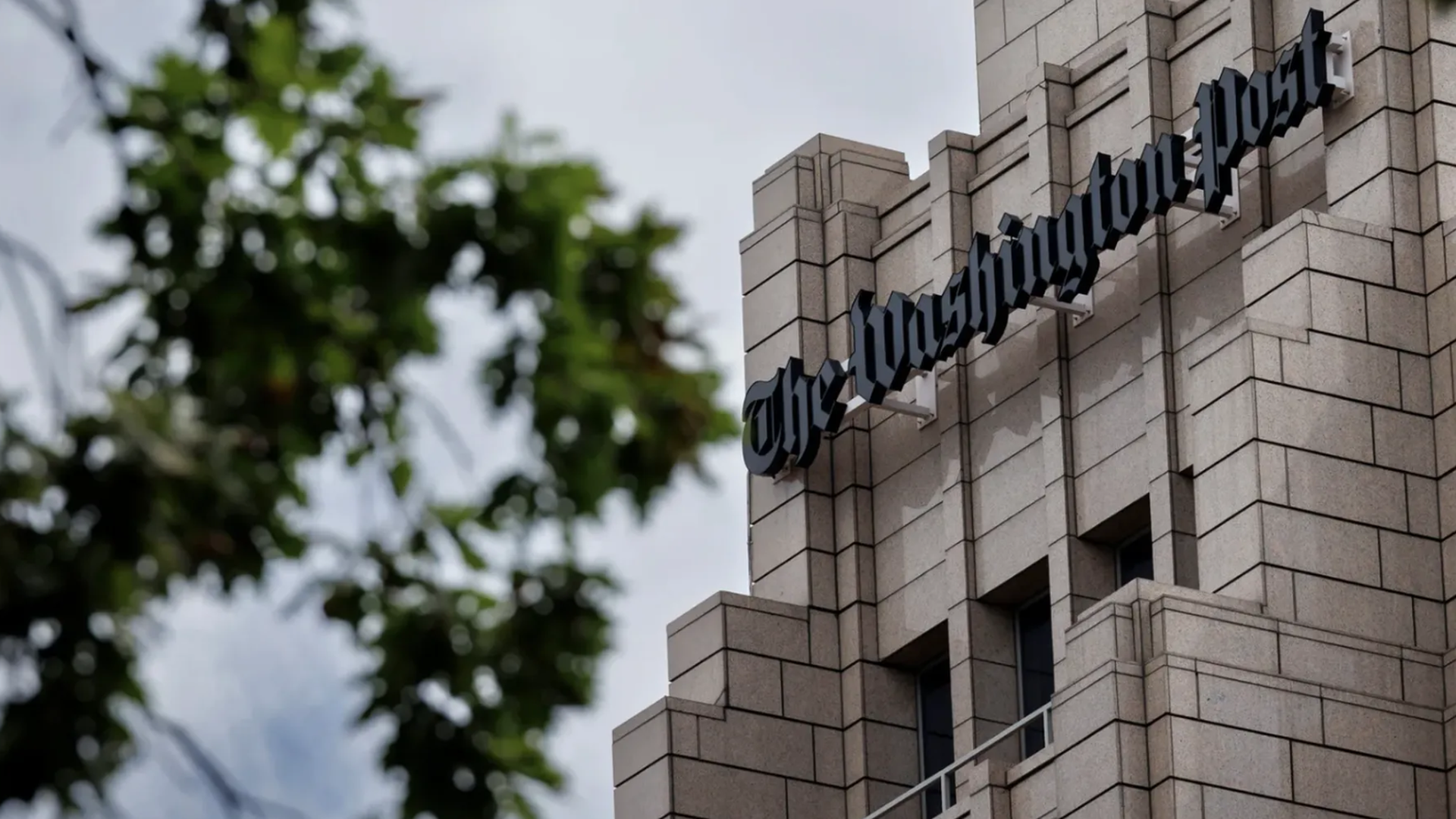
3. 🗞️ Layoffs hit WashPost
The Washington Post began informing staff today that it would be cutting 4% of its staff, impacting fewer than 100 roles across business functions.
Why it matters: The layoffs come amid an unprecedented number of newsroom defections and anxiety around expected leadership and structural changes.
Zoom in: The cuts will streamline the Post's workforce to focus on a new strategy under CEO Will Lewis, who has been at the company for a year.
🎰 Of note: Lewis is at the Consumer Electronics Show in Las Vegas this week, alongside other Washington Post executives, meeting with advertising and business partners.
The big picture: Once a close national competitor to the New York Times and the Wall Street Journal, the Post is now battling for relevance in its own backyard.
- While the Times and Journal continue to build their digital subscriber bases, the Post reported that 250,000 subscribers canceled after last year's endorsement debacle — about 10% of digital subscribers. NPR's David Folkenflik reported 300,000 canceled.
👟 State of play: The cuts come amid growing anxiety within the Post's newsroom as it prepares to cover the second Trump administration amid a slew of staff defections.
- Puck announced it hired Leigh Ann Caldwell as its chief Washington correspondent. The Wall Street Journal confirmed it hired Josh Dawsey, one of the Post's top Trump chroniclers.
- Last week, two of the Post's other top political reporters, Ashley Parker and Michael Scherer, moved to The Atlantic. Tyler Pager, a rising talent, was poached by the New York Times as a White House reporter, joining former Post managing editor Matea Gold, who announced last month that she's moving to the Times as deputy Washington bureau chief.
On the opinion side, cartoonist Ann Telnaes, a Pulitzer Prize winner, quit last Friday. Several opinion editors stepped down from the Post's editorial board last year after the paper's endorsement of Vice President Harris for president was spiked at the eleventh hour at the behest of owner Jeff Bezos.
Reality check: Staffing changes are expected at political news outlets following an election year.
- But the turnover at the Post ahead of a new administration taking office has been unprecedented, especially given that it offered voluntary buyouts to 240 staffers in late 2023.
- The Post also laid off 54 people at its publishing tech arm Arc XP last year.
4. Exclusive: GroupM to streamline brands amid AI push


GroupM, the largest media buying agency by revenue, is shifting its business to focus on many big data sets instead of a single proprietary one, Brian Lesser told Axios in his first interview since being named global CEO last year.
- That strategy, which he calls "predictive performance," will anchor GroupM's client focus moving forward.
Why it matters: The recently announced mega-merger between Omnicom and IPG underscores the pressure media-buying agencies face in trying to modernize their business to meet the demands of a data-driven advertising world.
Zoom in: Lesser, formerly the CEO of GroupM's North America division, has been quietly restructuring the company to center around WPP Open Platform, an AI-driven data center co-operated by GroupM and its parent WPP.
- That "federated" data model, he hopes, will yield stronger targeting results for GroupM's clients compared to rival agencies that rely mostly on a set of their owned and operated data.
- For example, IPG acquired data broker Axicom in 2018. Omnicom's acquisition of IPG will give it access to that data set. Publicis acquired another data broker, Epsilon, in 2019.
Zoom out: Reorienting the company around an open data platform is a key part of Lesser's five-year plan, which also includes reskilling GroupM's workforce and streamlining the company's product brands to make it simpler for clients to navigate GroupM and its parent WPP.
By the numbers: The Omnicom-IPG merger will make GroupM the second-largest ad-buying group globally, according to data from Comvergence, although GroupM will still be the largest in certain markets, like Asia and Europe.
What's next: Lesser plans to significantly cut back on the number of product brands within GroupM, and instead unify the company around Open Platform, he said.
- Mindshare, Wavemaker, and EssenceMediacom will remain the three primary client-facing brands within GroupM.
5. Scoop: The Block hunts for cash after funding scandal

Crypto media company The Block is looking to raise $10 million–$15 million over the next few months as it tries to rebuild its business following a damning 2022 funding scandal related to disgraced FTX founder Sam Bankman-Fried, according to sources familiar with its investor pitch.
Why it matters: The funding scandal, in addition to broader challenges facing the crypto industry, cut The Block's top-line revenue by more than half between 2022 and 2024.
- 2022: $18.7M overall revenue ($8.7M from subscriptions, $6.5M from advertising, and $3.4M from research.)
- 2023: $8M million overall revenue ($2.7M in subscriptions, $4M in advertising, and $1.3M from research.)
- 2024: Last year, it projected earning $11.4 in top-line revenue, although it's unclear whether it hit that goal. Investors pitched on the fundraising opportunity last fall were told the company had at that point only earned $7.4 million in top-line revenue.
Catch up quick: In late 2022, Axios reported that The Block's former CEO had been secretly funding the company with cash funneled from the disgraced Sam Bankman-Fried's cryptocurrency trading firm.
- The scandal led to the departures of several of its senior staffers and a round of layoffs that accompanied a leadership shake-up.
- The company sold a majority stake to Foresight Ventures in 2023. The deal, which valued the crypto outlet at $70 million, freed the company from its financial tie to the FTX scandal.
State of play: The company began talking to potential investors last fall, sources told Axios.
- It was looking to raise $10 million–$15 million, beginning with an initial $2.5 million capital injection into its existing businesses, such as its custom data dashboards business.
The big picture: The crypto news industry has been plagued by broader challenges related to the murkiness of the crypto market and the small number of players that control the ecosystem's funding.
- Last month, three editors at the crypto news site CoinDesk were let go amid what was labeled a "restructuring."
- The recent restructuring appears to be tied to CoinDesk parent Bullish's frustrations with a CoinDesk article written about Justin Sun, the founder of the Tron blockchain.
6. Disney, Fubo merger


Fubo and Disney have agreed to a deal to combine their live TV streaming businesses, the companies announced Monday.
- Fubo's stock, worth just above $1 per share prior to the news, more than doubled to $3.18 in early trading.
Why it matters: The combination of Hulu's live TV service with Fubo's would form the country's second-largest live TV streamer behind YouTube TV.
Zoom in: As part of the deal, Fubo settled its lawsuit against Venu Sports. Fubo's executive chair is Edgar Bronfman, the billionaire Canadian-American media mogul.
- The combined Hulu + Live TV and Fubo will operate under the Fubo name, and the new company will be publicly traded. Disney will own 70% of Fubo once the deal closes.
- Disney and its Venu partners, Fox and Warner Bros. Discovery, will pay Fubo $220 million. In addition, Disney agreed to provide a $145 million loan to Fubo in 2026.
- Fubo's existing management team, led by Fubo co-founder and CEO David Gandler, will operate the newly combined Fubo and Hulu + Live TV businesses.
- The deal does not include the rest of Hulu, just the live TV business.
Between the lines: Separately, Fubo is amending its carriage deals with both Disney and Fox. This will allow Fubo to create a sports and broadcasting skinny bundle that will also include ESPN+.
What's next: The settlement in the Fubo lawsuit removes the temporary injunction, clearing the path for Venu to launch later this year.
7. 🎰 Highlights from CES

Axios' Kerry Flynn and I are on the ground in Sin City this week to bring you all of the insights about what's hot at the Consumer Electronic Show for media.
The big announcements so far:
- Google's smart TV will summarize news: Google is introducing a new AI feature called News Brief to its TV operating system. Powered by Gemini, Google TV will share top news stories based on news articles and YouTube videos, per TechCrunch. Google plans to release the new capabilities toward the end of the year.
- Comcast launches new ad platform for streaming buys: Called Universal Ads, Comcast's new platform offers streaming ad inventory across several streaming services. Comcast announced Xumo, NBCUniversal, A+E, AMC Networks, DirecTV, Fox Corp., Paramount, Roku, TelevisaUnivision and Warner Bros. Discovery as partners. The platform will launch later this quarter, per CNBC.
- Paramount and VideoAmp renew partnership amid Nielsen standoff: VideoAmp extended its measurement and currency partnership with Paramount. The news comes as Paramount has still not renewed its Nielsen contract as the two sides failed to agree on a price. Nielsen increased pressure last month by cutting agencies' access to transactional tools while VideoAmp is offering free access to its dashboard, per AdAge.
- Disney adds real-time ad-buying partners for live sports and events: Disney has certified Google Display & Video 360, The Trade Desk, and Yahoo DSP for real-time programmatic buying of its live sports and events. Magnite will be its third-party supply-side partner, so far. It also announced Disney Compass, a new data hub for media buyers.
Go deeper: Axios' running list of CES announcements
8. 🎬 Globes ratings spike
About 9.3 million people watched the Golden Globes on CBS, a 2% decline from last year's viewership, per Nielsen's ratings.
Why it matters: Only a slight dip is good news for broadcasters after previous award shows previously faced years of decline as consumers' attention moved elsewhere.
Zoom in: The Globes' viewership was up 3% in people aged 25–54 and down 2% in 18–34 from the prior year, per Deadline.
- This year's event also competed with NBC's "Sunday Night Football" broadcast. The matchup between the Detroit Lions and Minnesota Vikings drew 28.5 million viewers across NBC and its digital platforms, per same-day data from Nielsen and from Adobe Analytics.
Between the lines: The Globes said the broadcast averaged 10.1 million viewers and that its streaming audience on Paramount+ and the CBS app was up 9% compared to last year.
- Yes, but: That viewership number relied on VideoAmp data, given Paramount's ongoing contract dispute with Nielsen.
What we're watching: The Grammys are Feb. 2 on CBS. The Oscars are March 2 on ABC.
Sign up for Axios Media Trends