Axios Markets

January 21, 2025


🏛️ Welcome back! It's the first full day of Trump 2.0. We take a look at how corporate America is reacting, the future of DEI, and the uncertain fate of tariffs.
- Plus: A final look at markets in the Biden era.
All in 1,150 words, a 4-minute read.
1 big thing: Corporate America's 1st commandment
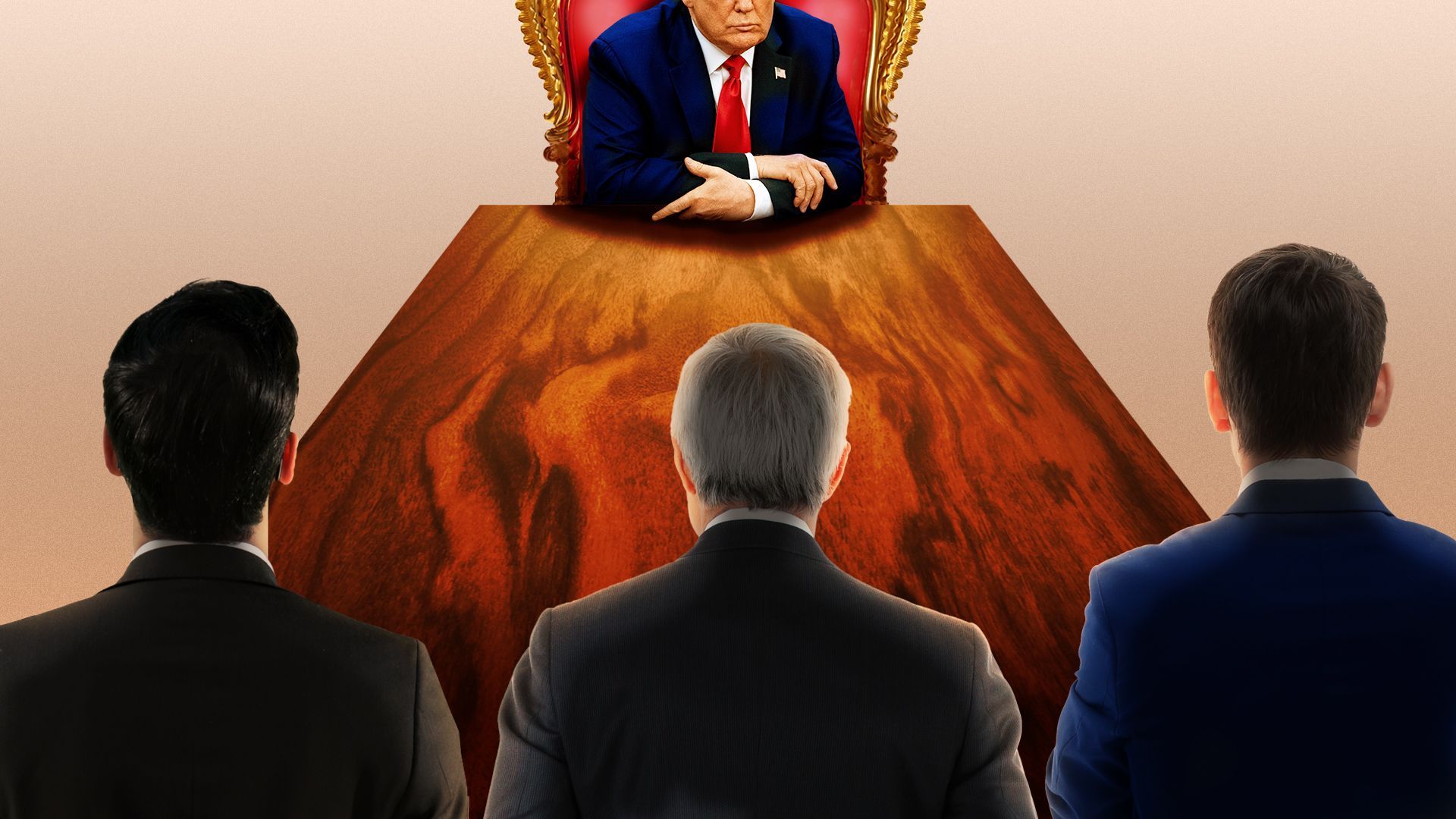
Corporate America has a new top priority: Give Donald Trump what he wants.
Why it matters: The next four years will be dominated not by technocratic rule of law but rather by the whims of America's most mercurial president.
- Getting into his good graces — and staying there — has taken on existential importance for many corporations.
The big picture: Trump is probably the most transactional president in U.S. history, and a seat at his table can be worth billions of dollars. (Even more in the case of first buddy Elon Musk, whose net worth has increased by some $170 billion since Election Day.)
- Trump has an almost unprecedented degree of influence over all three branches of government, which means that he personally has significant power over the fortunes of pretty much every corporation in the country.
How it works: Trump likes to think of himself above all as a dealmaker. The way into his good graces is to present him with a deal where he comes out ahead.
- TikTok's masterclass in sycophancy is an excellent example of what dealmaking in the Trump era looks like in practice.
- By giving Trump a W and Biden an L, the social media platform remains online even with a law in effect — upheld unanimously by the Supreme Court — saying it cannot operate in this country.
Between the lines: America's most powerful billionaires can validate Trump simply by turning up.
- As an outer-borough New York City property developer with a chip on his shoulder about never being fully accepted in the highest echelons of commerce, Trump basks in the way the world's richest men — Musk, Jeff Bezos, Mark Zuckerberg — are happy to make him the center of their attention.
Follow the money: Now that Trump has issued his own cryptocurrency, everyone else can attempt to butter him up the old-fashioned way, just by sending him money.
- "Through his meme coin, Trump has created a way to circumvent national security and anti-corruption laws, allowing interested parties to anonymously transfer money to him and his inner circle," Maxine Waters (D-Calif.) said in a statement yesterday, noting that "buyers could include large corporations."
- The president's stash of 800 million $TRUMP coins will start to be unlocked in April, at which point the Trump Organization will be free to sell them to anybody who would like to buy their way into his good graces.
The bottom line: Trump has a manichean world view: He is prone to dividing the world into friends and enemies.
- It behooves corporations to make sure they're on the "friends" side of that line.
2. Trump rolls back DEI initiatives
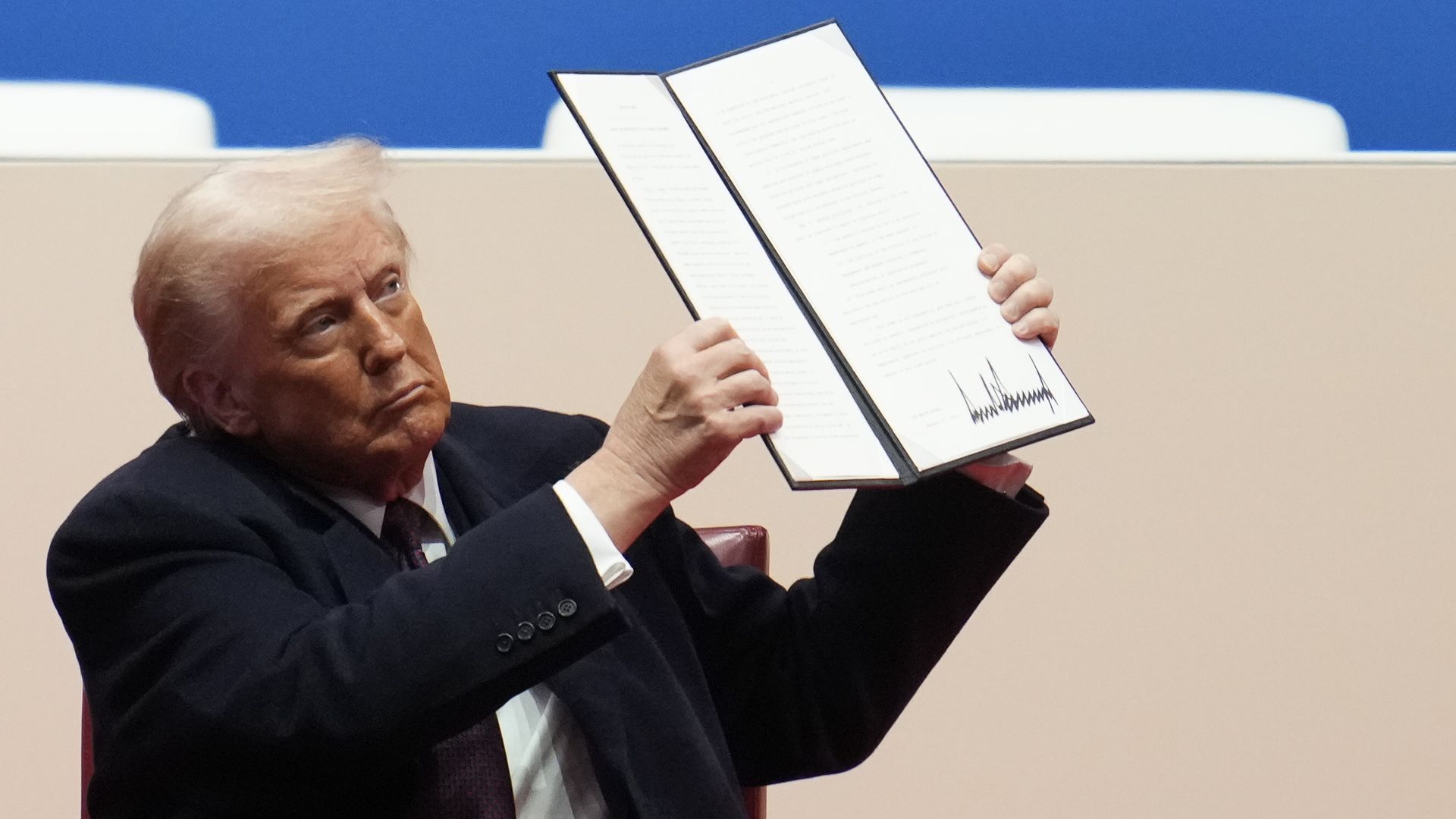
The president signed an executive order yesterday dismantling diversity, equity and inclusion initiatives within the federal government.
Why it matters: The U.S. government is the largest employer in the country, with 3 million workers — nearly twice as many as private sector job leader Walmart, which also recently rolled back its DEI policies.
- Federal policies set the tone at the top for workplaces around the country.
The big picture: Trump and his allies, particularly White House adviser Stephen Miller, have been outspoken critics of DEI, helping drive the wider backlash in the private sector.
- Though the executive order is limited to the federal government, a Trump official reportedly said more actions on DEI are coming soon that would impact private business.
Zoom in: The order calls for the "termination" of all DEI programs in the federal government, including in employment procedures, union contracts and training policies.
- All DEI positions, including federal chief diversity officers, should also be terminated, within 60 days, the order says.
Catch up quick: The Trump order rolls back actions by former President Biden that put many diversity initiatives in place.
- Through his executive orders, the Biden administration had prioritized collecting workforce demographic data, recruiting folks from underserved communities, evaluating hiring practices through a diversity lens, and addressing pay inequities.
- One order, put in place on Jan. 20, 2021, broadened sex discrimination protections to include sexual orientation and gender identity but had faced pushback from conservatives hostile to protections for transgender people.
What they're saying: "The injection of 'diversity, equity, and inclusion' (DEI) into our institutions has corrupted them by replacing hard work, merit, and equality with a divisive and dangerous preferential hierarchy," one Trump executive order reads.
Reality check: The DEI policy attack appears to be much ado about something Americans aren't very passionate about.
- A majority across nearly all demographic groups said DEI initiatives made no impact on their personal careers, per a new Axios Vibes survey by the Harris Poll.
- Meanwhile, nearly three-fourths of 3,200 global CEOs and business leaders said initiatives tied to social issues — like diversity and inclusion — have had a positive impact on their company's economic performance, per the AlixPartners Disruption Index.
The executive order on DEI was one of many Trump signed yesterday. Others include withdrawing from the Paris Agreement, rescinding a Biden-era effort to regulate AI, shunning a global tax deal, and rolling back the previous administration's moves to protect federal waters from oil and gas drilling.
3. Trump takes a beat on tariffs

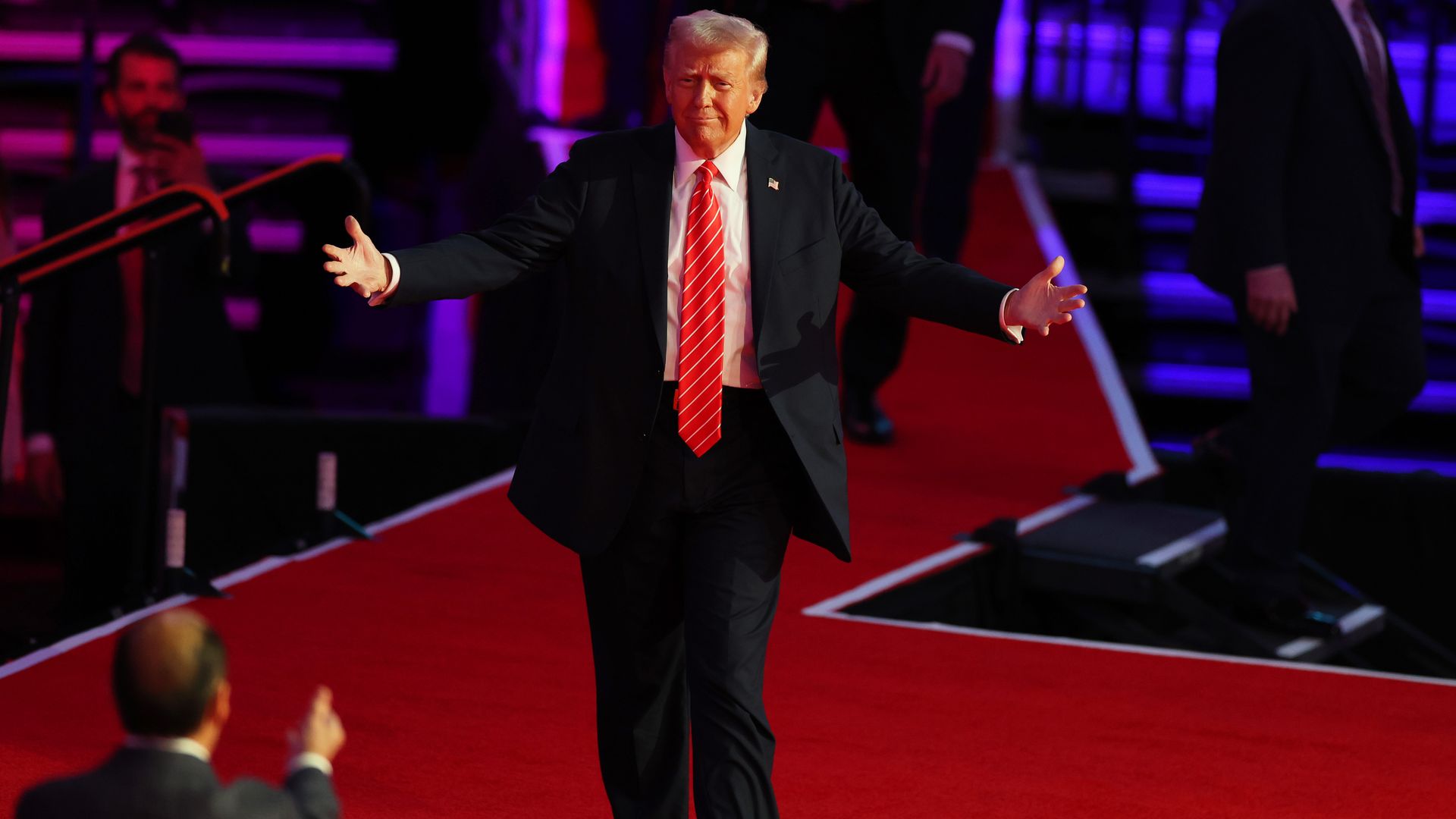
Trump did not impose broad tariffs on Day 1 of his presidency, letting global markets breathe a sigh of relief for now.
Why it matters: Had Trump made good on his campaign promise to place sweeping tariffs on U.S. imports, it could have sparked both inflation and a global trade war.
Driving the news: Trump ordered federal investigations of trade deficits, unfair trade practices, and currency manipulation by other countries.
- He directed specific attention to trade deals with China, Canada and Mexico, and whether their terms are being honored.
- An unnamed senior adviser told the Wall Street Journal that Trump was approaching trade in a "measured way."
- Even as he held back from global tariffs, he threatened broad levies against Canada and Mexico as soon as Feb. 1.
Zoom out: The U.S. dollar weakened on the news global tariffs would wait.
- The dollar strengthens on expectations of more tariffs, and weakens when the opposite happens. (There's ample research on the subject.)
What to watch: Trump has denied any softening of his tariff plans in recent weeks, despite reports to the contrary.
- The memo could signal a more moderate approach, even as he continues to call tariffs "the greatest thing ever invented" and among "the most beautiful words" in the language.
4. Biden's stock market trailed Trump's



Biden left office having presided over a very strong stock market, but not quite as strong as either of his two predecessors.
The big picture: The S&P 500, Dow Jones Industrial Average and Nasdaq Composite all gained more during Trump's first term than during Biden's.
- The S&P 500 gained 66.5% under Trump 1.0 and 57.9% under Biden.
Flashback: Trump warned in 2020 that the stock markets would "crash" were Biden elected. That didn't happen.
The bottom line: Presidents don't determine stock market performance, but their supporters like to use the markets as an economic measuring stick.
Thanks to Ben Berkowitz for editing and Anjelica Tan for copy editing. And thanks to you wonderful readers for sticking with us all the way to the end of the email.
👋 Now that we have your attention, consider writing to us. We'd love to hear from you! What are you hoping to read about in the new Trump era? What's the big issue on your mind?
- Send us your thoughts, hopes and article recommendations. Just reply to this email or click here. We're looking forward to hearing from you!
Sign up for Axios Markets