Axios Markets

April 21, 2026

🌅 Good morning! Markets are in wait and see mode. Vice President Vance may travel to Pakistan later today for talks with Iran before the ceasefire expires. But the plan is uncertain. U.S. stock futures are up slightly after yesterday's down performance.
Trump's Fed chair nominee, Kevin Warsh, is scheduled for a confirmation hearing at 10am. Axios' Neil Irwin has deets.
Today, a look at what's next for Apple. Plus, workers are not OK, and the Fermi paradox gets an update for our times.
📈 If you're a CEO or on a CEO's team: Request to join Axios CEO Jim VandeHei's free new Axios C-Suite weekly newsletter.
All in 1,247 words, a 4.5-minute read.
1 big thing: Apple is entering a new era

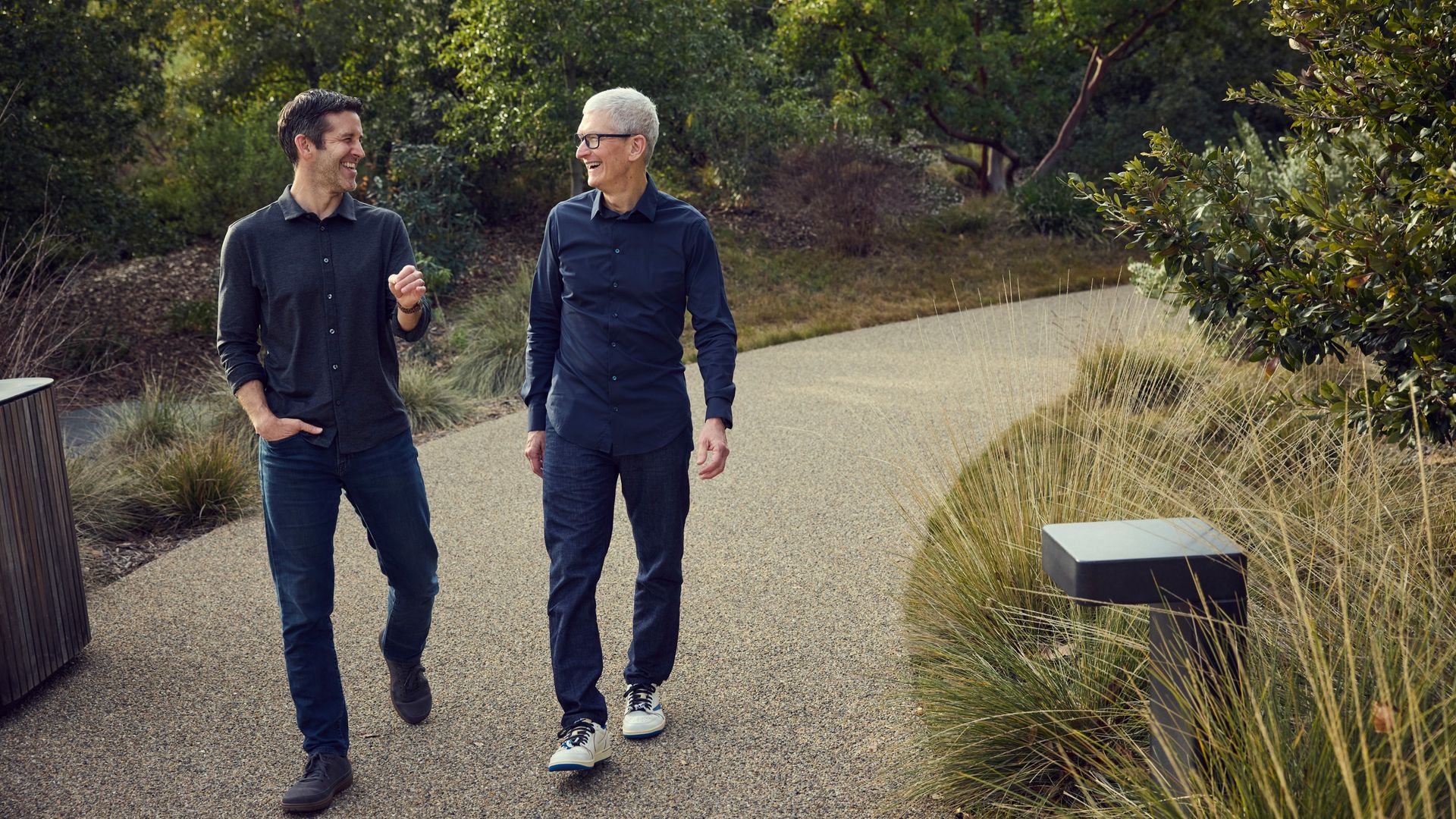
The Tim Cook era is coming to a close with an existential challenge for Apple: figuring out what comes after the iPhone.
Why it matters: Cook extended the iPhone's success into products like the Apple Watch and AirPods and built a powerful services business. But the company hasn't broken into a major new category — and has stumbled into the AI era.
Driving the news: Apple announced yesterday that Cook will cede the CEO reins to hardware expert John Ternus, while remaining as executive chairman.
- The company also promoted Johny Srouji, the driving force behind Apple's chip success, to the new role of chief hardware officer.
The big picture: Cook has executed masterfully to maximize the company's iPhone success and transform Apple into one of the world's most valuable companies.
Yes, but: His efforts to expand far beyond that device have largely sputtered.
- The company assembled a significant team to try to enter the autonomous car market, but gave up before bringing anything to market.
- The company's initial foray into the mixed reality market, Vision Pro, remains for sale, but at a price that has attracted relatively few buyers.
Zoom in: Apple's position in AI remains uncertain.
- In 2024, Cook painted a compelling vision for Apple Intelligence, personalized AI that would be able to answer questions from data stored in a variety of places, but do so in a way that would not be accessible to Apple or anyone else.
- Apple has struggled to turn the vision into reality, repeatedly delaying the most ambitious features outlined in that keynote.
- A revamped Siri with some of those capabilities is expected later this year.
Flashback: Ternus laughed off the idea that Apple should worry about being late to generative AI in a 2023 interview, Bloomberg reported last month in a piece about his likely promotion.
- But he "knows he needs bolder products and a strong approach to AI."
The other side: Apple's restraint could pay off if it can maintain its hardware advantage, while others spend heavily on AI models, as Axios' Dan Primack outlined last week.
- While most of its tech giant peers have spent billions of dollars on data centers and compute capacity, Apple has avoided such large outlays.
- If the AI models turn out to be a commodity, Apple may look the wiser.
Emily's thought bubble: Hardware expertise is an asset in an era of shifting geopolitics and fragile supply chains.
- None of the AI companies have yet come up with an AI-first product with any kind of broad appeal.
- Analysts and investors have wondered what comes after the iPhone for a long time.
Charted: How Apple became a $4 trillion company


Shot: When Cook took over at Apple, some analysts wondered if he had the chops to fill the shoes of legendary CEO Steve Jobs.
Chaser: Cook increased Apple's market cap 12-fold. It's gone from about $330 billion to $4 trillion today — and is the third-largest American company by that measure, after Nvidia and Alphabet.
What to watch: Similar questions are now being asked about Cook's successor.
- Ternus is 50, the same age as Cook when he got the job — and yet another Gen X tech CEO.

2. America's dissatisfied workforce
Workers have never been more dissatisfied with their pay or their ability to get ahead. But the likelihood of moving to a new employer is at multiyear lows.
- Those are the bleak findings from a New York Federal Reserve Bank survey, which showed plummeting job satisfaction alongside diminishing odds that workers will be able to make a change.
Why it matters: For most workers, switching jobs is the fastest route to a raise or a promotion. But with hiring at historically low levels, that path has all but disappeared.
- The results have implications for consumer spending and productivity. A stuck, underpaid workforce might be less likely to spend freely and more likely to be less engaged.
By the numbers: The share of workers who said they were satisfied with wage compensation fell 3.3 percentage points, to 52.3% in March, the smallest share in the survey's 12-year history.
- The New York Fed surveys consumers' labor market expectations every four months.
- A related indicator, which measures workers' satisfaction with promotion opportunities, fell by a similar amount to the lowest share on record.
- The only satisfaction gauge above record lows: non-wage benefits.
The intrigue: Record dissatisfaction is not accompanied by plans to exit, at least not in the near term.
- On average, workers see decreasing odds that they will have a new employer in the next four months: The likelihood of such a move dropped to 9.7%, the lowest since March 2021. (Coincidentally, that was when wage satisfaction was at its peak in this survey.)
The other side: Workers assigned slightly smaller odds that they would be fired in the next four months — about 3.4%, down two ticks from February.
- Workers are still bidding up pay expectations. The average reservation wage — the lowest wage respondents would be willing to accept for a new job — hit a survey high in March, an increase driven by male workers and respondents with a college degree.
3. 🤔 The Fermi paradox redux


The world's largest data center project is stalled by delays and logistical hurdles that could stop it before it even starts.
Why it matters: Fermi's Project Mastodon, a massive combination data center and power generating campus bearing Trump's name, is a high-profile test of whether the biggest, most ambitious AI infrastructure projects can deliver on their promises.
- It's not going great.
Catch up quick: The latest sign of trouble emerged Friday when CEO Toby Neugebauer abruptly departed.
- In an interview with Axios just the day before, he had given no indication that he was about to leave.
Zoom in: The company's shares, which already shed 75% in the last six months, sunk further.
The latest: By yesterday morning, the company announced a "Strategic Evolution," talking about Fermi 2.0.
Between the lines: Fermi hasn't been able to get any companies to sign on as customers.
- You know the saying, too big to fail? Well, this project might be too big to succeed — the proposed campus spans a space half the size of Manhattan with three times the power demand of New York City, according to Neugebauer.
The intrigue: Bloomberg's Liam Denning puts it thusly: "The Fermi Paradox asks why, given the vastness of the universe, there is no hard evidence of aliens," he writes.
- "The Fermi Inc. paradox asks why, given seemingly insatiable demand from hyperscalers for electricity, former Energy Secretary Rick Perry's AI-energy firm hasn't obtained a hard power contract from said hyperscalers."
Go deeper: Trump-branded AI data center megaproject stalls, CEO departs
Send vibes to [email protected] or just reply to this email.
Thanks to Jeffrey Cane for editing and Carlin Becker for copy editing this edition.
Tell your friends to sign up here. You can also hit me up on X.com or Bluesky at EmilyRPeck.
Sign up for Axios Markets