Axios Markets

November 07, 2024

👋 Welcome back. We're watching to see if yesterday's election exuberance continues in the markets.
- Plus, all eyes are on the Fed — Jerome Powell is announcing its rate decision this afternoon.
Today we're talking about workers, Biden's labor fixer and tariffs. In 968 words, 4 minutes.
1 big thing: End of an era
President-elect Trump may have been a pro-union candidate, but whether he'll be a pro-union president remains to be seen.
Why it matters: We're in the middle of a winning era for workers and unions, but with Trump's track record on labor during his first term — that time might be coming to an end.
- It's likely a raft of Biden-era labor regulations, some facing steep court challenges, are on the chopping block.
The big picture: Trump's populist economic messaging seemed to resonate.
- While most union leaders endorsed Vice President Harris, members in the more blue-collar unions were less enthusiastic.
- Trump picked up support from rank-and-file members, particularly in more traditional male-dominated unions.
By the numbers: At least one early exit poll shows that 54% of union households voted Democratic — a majority, but not the kind of healthy margin that pushes a candidate over the line.
- Democrats typically need 60% of the union vote to win presidential elections, said John Logan, a labor historian at San Francisco State University.
Reality check: In his first term in office, Trump was anti-worker — placing people with anti-union track records at the National Labor Relations Board and Department of Labor.
- Both agencies made moves viewed as harmful to workers during Trump's term like limiting overtime protections.
- Peter Robb, NLRB general counsel under Trump, even tried to curtail the use of "Scabby," the inflatable rat that unions use during strikes.
"There's nothing in his record that suggests that he stands up for working people. Especially working people in unions," said Sharon Block, a former official in President Obama's Labor Department and at the NLRB.
Yes, but: Trump's second administration could take a friendlier view given his warmer ties this cycle.
- "We're in uncharted territory," said Michael Lotito, co-chair of Littler's Workplace Policy Institute, at a pre-election webinar last week about the election and workplace issues.
For the record: "President Trump will once again fight to put more money in workers pockets, negotiate good trade deals around the world, and protect good paying union jobs here at home," Karoline Leavitt, Trump campaign national press secretary, said in a statement.
The bottom line: Teamsters president Sean O'Brien — who courted controversy when he spoke at the Republican National Convention, and then declined to endorse a presidential candidate, put it this way in a statement:
- "The Republicans, under the leadership of Donald Trump, indicated throughout the campaign that they want to be the party of working people. The campaign is over. It's time for Republicans to show up for American workers and American unions."
2. How Julie Su handled the Boeing negotiations
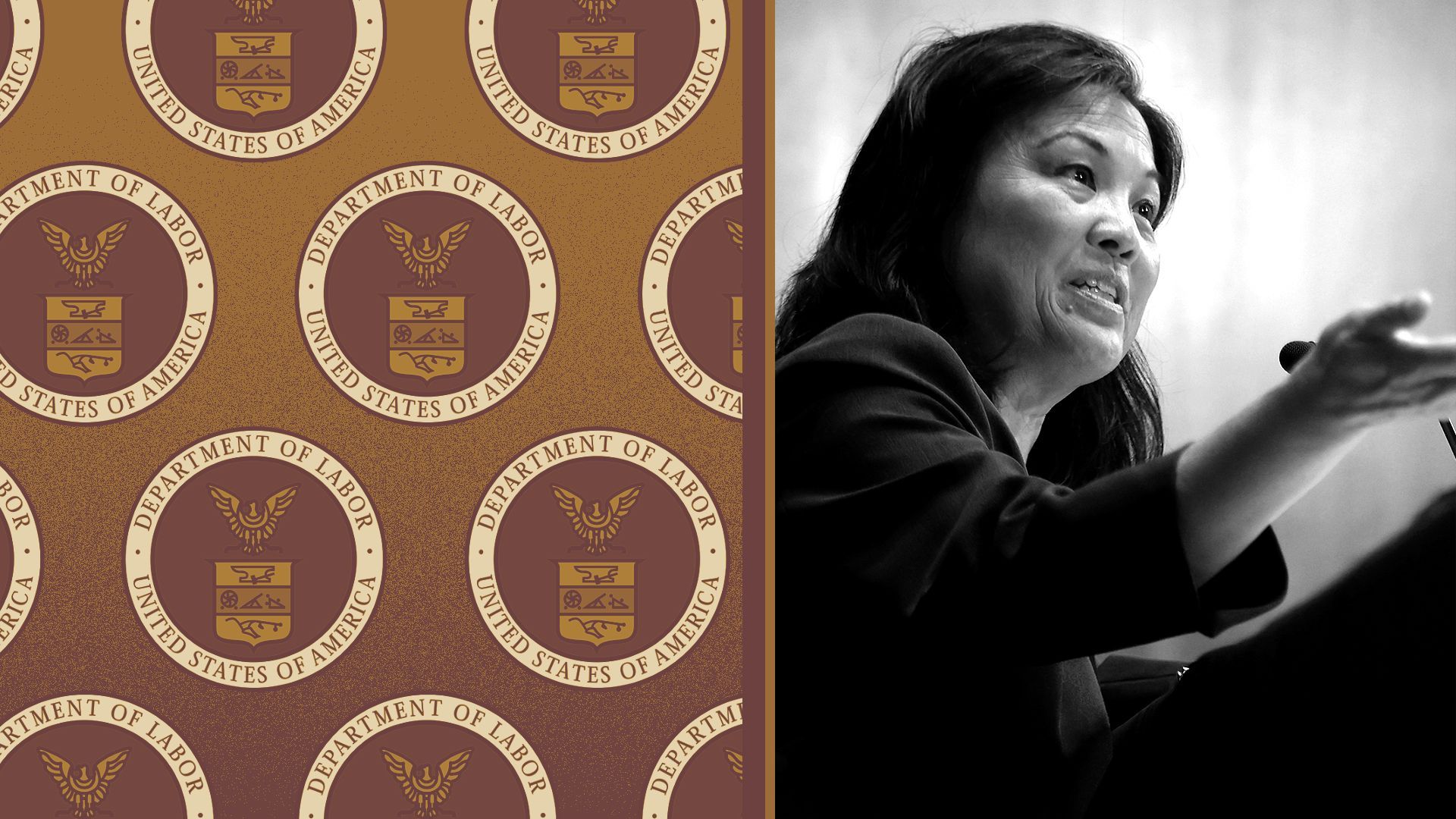
While the world braced for the election earlier this week, acting labor secretary Julie Su was busy solving another crisis — helping to end the Boeing strike.
The big picture: It was at least the fifth time Su's stepped in to wrestle thorny union talks to a deal in the less than two years she's been in her role.
Zoom out: Even for a Democratic labor secretary, the number of negotiations Su has been involved with has been outsized, for a couple of reasons:
- The extraordinary amount of union activity in the post-pandemic era.
- The administration's aggressively pro-labor posture.
Catch up fast: The acting labor secretary was instrumental in averting a strike and securing a deal for West Coast port workers last year.
- At the East Coast ports, she and President Biden successfully pushed shipping companies to raise their offer to striking dockworkers and get them back to work.
- This fall she also played a pivotal role with Transportation Secretary Pete Buttigieg in negotiations between the Association of Professional Flight Attendants and American Airlines.
Zoom in: Su told Axios that a challenge in hammering out the Boeing deal was that the aerospace manufacturer hadn't bargained with its union in over a decade.
- She went back and forth with each side last month — traveling to Seattle three times and hosting CEO Kelly Ortberg at her office in D.C. There was a marathon day at the end of October when everyone gathered at Department of Labor offices in Seattle.
What she's saying: "There was a real history here where the prior leadership of the company had really undervalued and undermined the relationship between management and the machinists. And so the workers really felt that."
- "This is something I've seen over and over again and why I say it's a new era of worker power in this country," Su said in an interview on Election Day.
What to watch: East Coast dockworkers still have a contract to finalize before a January deadline — and Su may not be around much longer to help.
- The coming Trump administration with ambiguous labor goals might push the sides to reach a deal sooner.
3. Toying with tariffs
Americans could see higher prices across a range of everyday goods if President-elect Trump raises tariffs as promised, a new report finds.
Why it matters: Frustrations with inflation propelled Trump's victory, but one of his marquee policies could be inflationary, too.
By the numbers: The proposed tariffs would reduce American consumer spending power for common household goods like appliances, furniture, clothes and toys by $46 billion — $78 billion per year, according to research conducted by a trade consultancy for the National Retail Federation.
- Toy prices would take a huge hit, rising as much as 56%, the report finds.
- The U.S. imports nearly all its toys — only 1% are made in the U.S. and 77% are made in China, which faces the steepest tariff threats.
Reality check: Analysts sounded the alarm about price increases during the first Trump administration but consumers didn't notice much difference.
The bottom line: Tariffs disproportionately hit lower-income households, since they spend a bigger share of income on goods — and because cheaper imports often face steeper taxes, as this recent report from the Progressive Policy Institute outlines.
Thanks to Kate Marino and Ben Berkowitz for editing and to Mickey Meece for copy editing.
Sign up for Axios Markets