
Axios Markets

June 04, 2024

🌮 Tuesday. We got you. In 724 words, 3 minutes.
1 big thing: A benefit for high earners
A mainstay of 401(k) retirement plans, the employer match, mostly benefits top earners and exacerbates income inequality in the U.S., finds a new study from Vanguard.
Why it matters: The 401(k) is a linchpin of the American retirement system, but as a record number of Americans are now turning 65, worries are rising that these plans aren't adequate, particularly for lower earners.
Catch up fast: The Vanguard report builds on a paper out late last year from economists at MIT, Harvard, Yale, and the Census Bureau.
- They found that these matches amplify differences in how much different groups save for retirement — Black and Hispanic workers contribute less to these accounts. And the rich (and their children) save more.
How it works: To incentivize workers to save for retirement, employers typically contribute to employee 401(k) accounts by matching some portion of the employee contribution.
- Vanguard found a wide range of match programs. In the most typical, if an employee puts in 6% of her income, the company will match half — meaning she's socking away an amount equal to 9%.
- Employers contribute $212 billion a year to worker 401(k)s, per Vanguard — 58 cents for each dollar participants saved.
By the numbers: Looking at data from more than 1,300 companies' 401(k) plans, the researchers found that the top 20% of earners within a company receive 44% of employer contributions.
- The bottom 20% receive just 6% of the money.
- "The system seems to be rewarding those who already can and do save the most," says Fiona Greig, global head of investor research and policy at Vanguard.
Follow the money: Vanguard finds the top 20% pull in 39% of the income — before considering these 401(k) matches.
- The 401(k) contributions are even more disproportionate — the top earners receive an 11% larger share of employer contributions than income.
- The bottom take in 29% less than their share of the income.
The researchers also conclude that employer matches aren't incentivizing workers to save more money for retirement — those who save more are typically those who earn more money and can better afford to save.
- Only 13% of workers contribute the exact amount required to get an employee match, suggesting that it alone is not much of an incentive to save, the researchers say.
Auto-enrollment, in which workers are put into 401(k)s and must opt-out if they don't want to participate, could promote more retirement savings for low-income workers, they conclude.
- So could "nonelective contributions," where an employer puts money into your 401(k) even if you contribute nothing.
Zoom out: We are in the midst of a "silver tsunami," in which 4.1 million Americans will turn 65 annually, this year through 2030, a record number per data from the Alliance for Lifetime Income.
- And these folks will be "going it alone," as Felix Salmon reported in April. They're the first generation to rely on private savings like 401(k)s instead of pensions.
- Those private savings, even combined with Social Security, may not be enough to sustain their lifestyles.
The bottom line: With a retirement crisis looming, workers need the money from those 401(k) matches — but that money is not distributed equitably.
2. "Roaring Kitty" returns


GameStop shares rose 21% yesterday on more meme stock shenanigans, apparently from Keith Gill, aka "Roaring Kitty" and "DeepF---kingValue" of WallStreetBets fame.
- Screenshots on Reddit, under the latter handle, showed what seemed like Gill's substantial holdings in GameStop stock and options.
Why it matters: Gill sparked a spike in meme stock prices after he returned to social media last month — this month's post isn't reverberating quite as much.
The intrigue: Gill's return has drawn the attention of his trading platform, Morgan Stanley's E-Trade.
- E-Trade is considering telling Gill he can no longer use the platform over concerns of stock manipulation, the Wall Street Journal reported yesterday.
3. Women's progress stalls
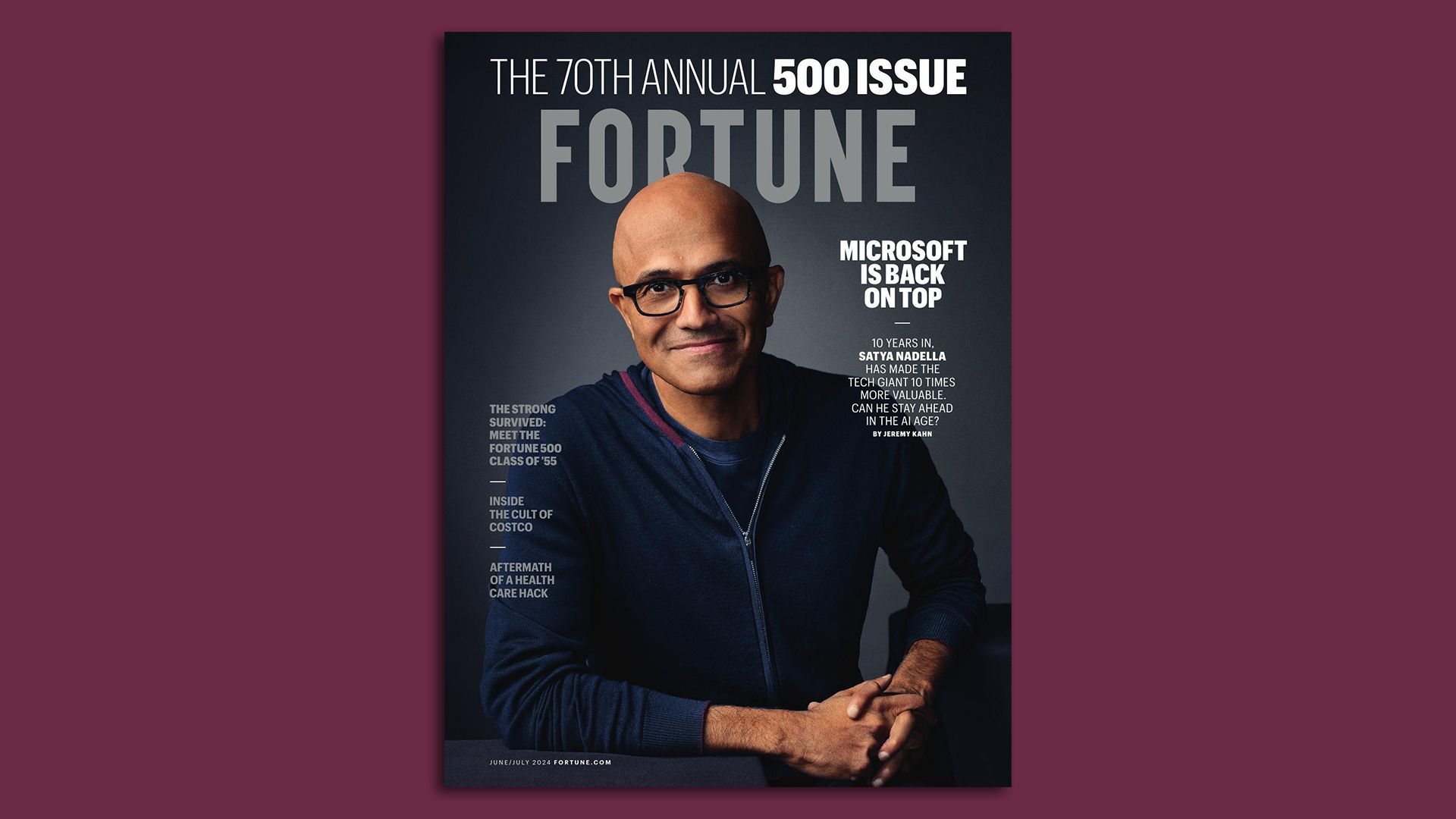
Only 10% of Fortune 500 companies are run by women, the same as last year, per the latest edition of the Fortune 500 out this morning.
- And, like last year, there are only 8 Black CEOs.
Why it matters: Progress appears to have stalled for women and Black executives, as a backlash against diversity efforts has grown.
Zoom in: Walmart beat Amazon to the top of the list, which tracks the largest corporations in the U.S. by revenue, for the 12th year in a row.
Go deeper: Read the complete list.
Thanks to Kate Marino for editing this newsletter and to Mickey Meece for copy editing it.
Did someone forward you this email? You can subscribe here.
Sign up for Axios Markets