Axios Markets

November 03, 2023

1 big thing: Guilty

Photo illustration: Sarah Grillo/Axios. Photo: Yuki Iwamura/Bloomberg via Getty Images
2. Catch up quick
3. 🤖 Higher, longer, more productive
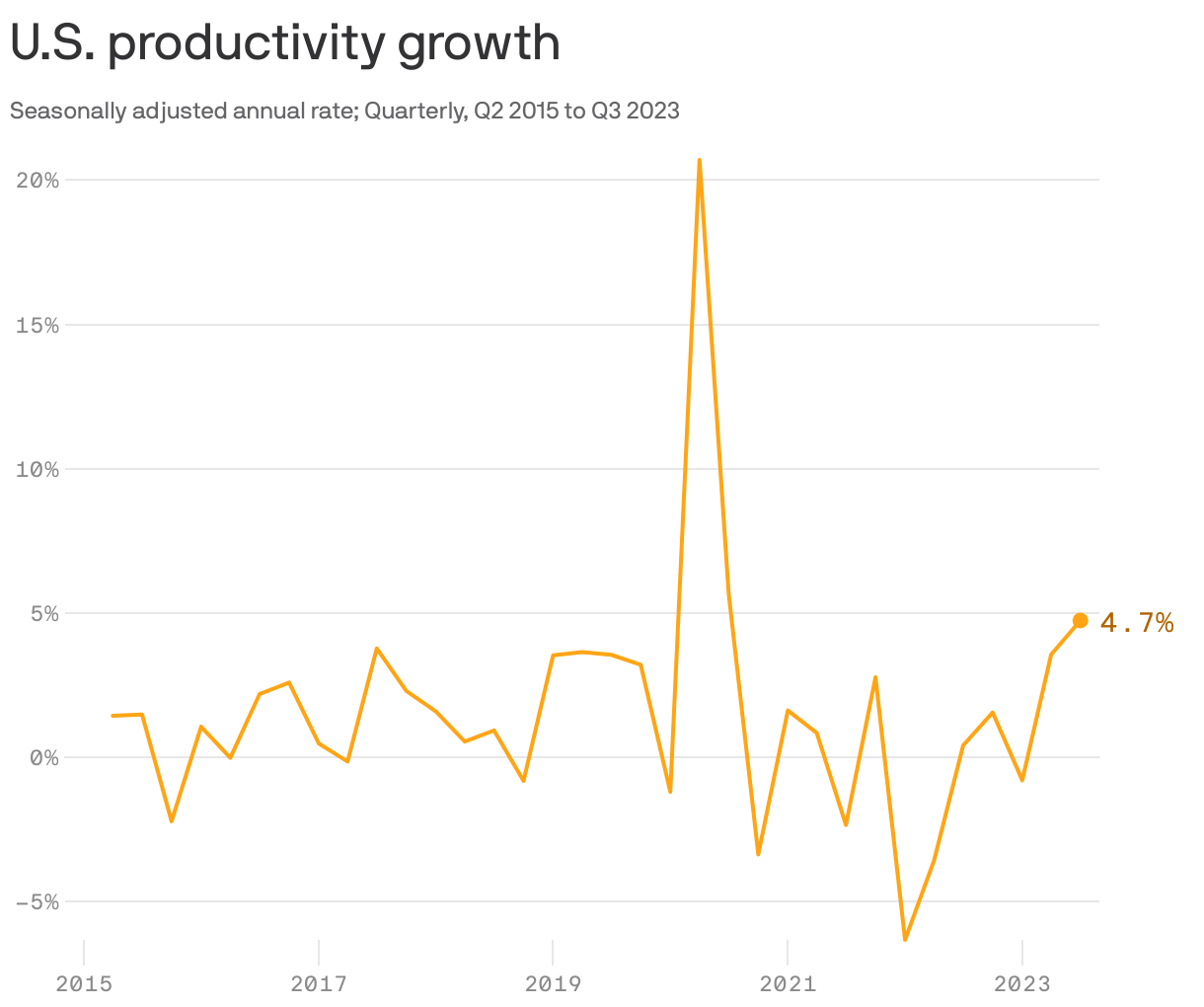
There are hopeful signs that the U.S. is adjusting to the high-wage, high-interest rate economy that's become a post-pandemic reality, Matt writes.
Driving the news: Fresh data yesterday showed U.S. labor productivity growth jumped by a 4.7% annualized rate in the third quarter. That's the fastest — outside a recessionary period when productivity typically spikes — since 2003.
- It was the second-straight hefty increase in productivity growth, following a 3.6% rise in the second quarter.
Why it matters: Increasing productivity is the key to establishing a virtuous cycle of growth in the face of tight labor markets, inflation, and high-interest rates, that is, the higher-for-longer world.
Be smart: Productivity is measured in output — that is, GDP — per hour worked. So, this big productivity number is kind of another way of saying the third quarter GDP surge we just saw came without a parallel surge in hours worked.
Yes, but: Some economists seem skeptical that the recent uptick in productivity will last.
- If it does, it's hard to overstate what an important shift this would be for the U.S. economy, where productivity has languished for decades.
The big picture: Productivity growth is the secret sauce that keeps an economy from becoming a never-ending tug of war between workers, business owners and consumers over who benefits from growth.
- That's because when productivity goes up, the economic pie gets larger, so workers and owners both get bigger slices at the same time.
- Consumers benefit as well because productivity gains help hold down price increases, improving standards of living.
What they're saying: It makes sense that the rapid growth in wages seen in recent years would lead to the productivity increases we are now seeing.
- "When labor markets are tight with strong wage growth, it is more difficult to find and thus more expensive to hire workers," wrote economists with Deutsche Bank in a note yesterday.
- "In that environment, firms are incentivized to substitute more capital for labor in the production process, as well as to use existing inputs in a more efficient way, leading to productivity gains over time," the bank adds.
The bottom line: Nobody knows if this productivity boom will stick, but if you listen to what, say, Starbucks is saying — see below — it sounds like it could.
4. ☕️ Starbucks is part of the productivity puzzle


A burst of productivity helped drive Starbucks profits sharply higher last quarter, the company said yesterday.
Why it matters: Starbucks provides a case study in how the high-wage, tight labor market could be fueling productivity-enhancing investments, leading to bigger profits and higher wages, Matt writes.
Driving the news: The coffee giant crushed expectations. With sales and profits beating Wall Street's forecast, its stock jumped more than 9%, posting its best gain in over a year.
Flashback: Last fall the company announced a plan to invest $450 million to overhaul operations, including new workstations aimed at speeding the time it takes to make iced drinks, the AP reported.
- This quarter executives spotlighted increased deliveries of new "portable cold foamers" to all U.S. company-operated stores, which "enhanced productivity in the fourth quarter and lessened the strain on our partners," according to CEO Laxman Narasimhan.
- Starbucks delivered over 550 new nugget ice machines to shops.
- The company also says that take-home income for its workers is up on average 20% over last year.
What they're saying: "The investments we've made are fueling growth: investments in our partners, in wages, in training, in our new store and equipment," Starbucks CFO Rachel Ruggeri told analysts on the post-earnings conference call.
- "It's allowing us to be more efficient in how we serve the customer. So, that's the biggest driver in the quarter."
Go deeper: Starbucks unveils new stores in "triple shot reinvention" plan
5. Chinese women pressured to go home
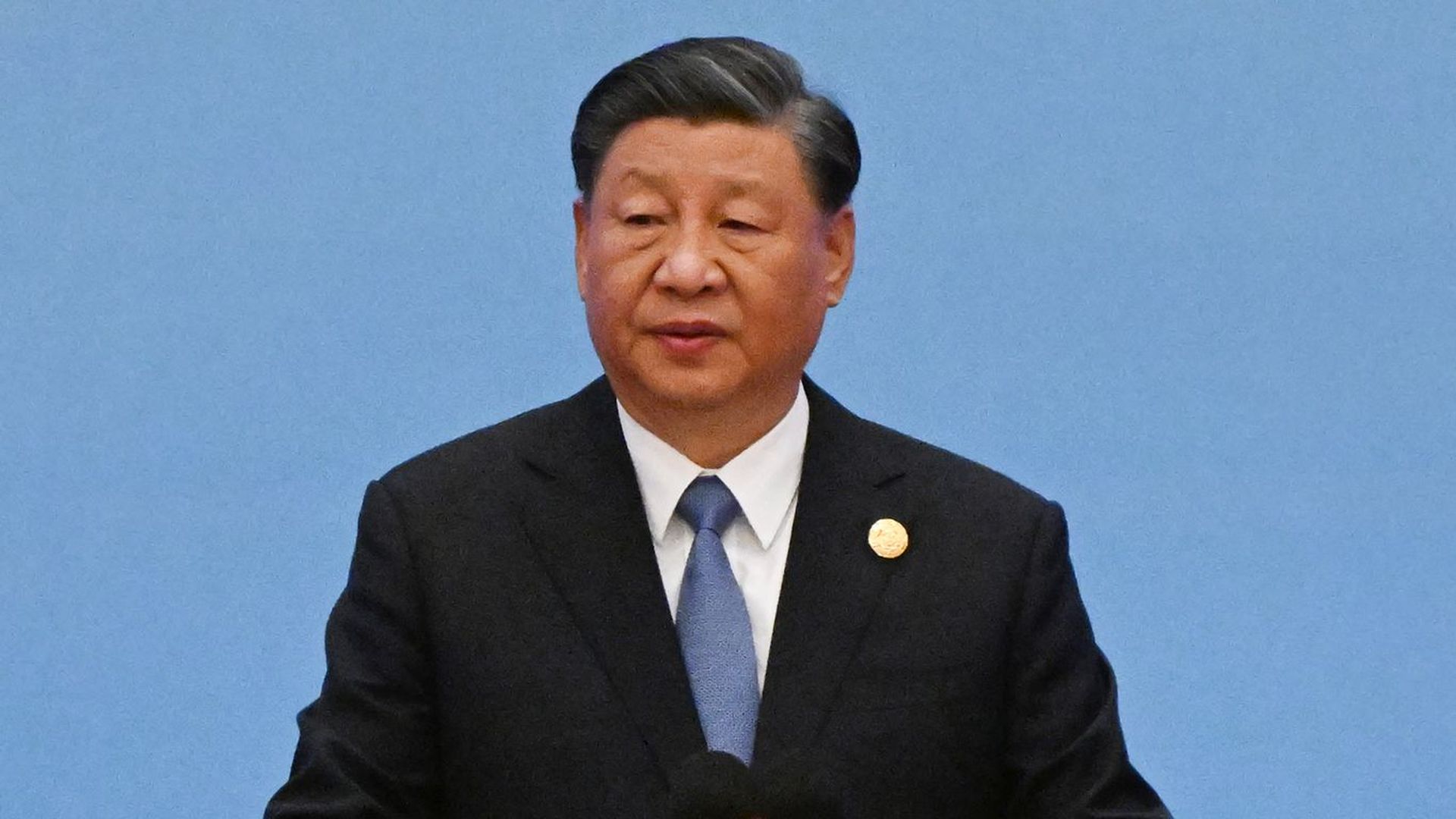
Chinese President Xi Jinping at an event in Beijing. Photo: Pedro Pardo/AFP via Getty Images
Axios Markets

Stay on top of the latest market trends and economic insights