
Axios Markets

May 08, 2026

🥳 Friday! We love to see it. Stock futures are up slightly after the S&P 500 and Nasdaq retreated yesterday from record highs. The U.S. and Iran exchanged fire last night, setting markets on edge.
đź‘€ The April employment report is out at 8:30am ET.
🗓️ Today, a look at how the new Trump accounts — and the big push to drive more Americans into the stock market — could help revive Social Security reform efforts last seen during the Bush administration.
- And an intriguing theory about Treasury bond yields.
We've got it all, folks. Let's do this.
In 1,316 words, a 5-minute read.
1 big thing: Trump accounts' "dirty little secret"
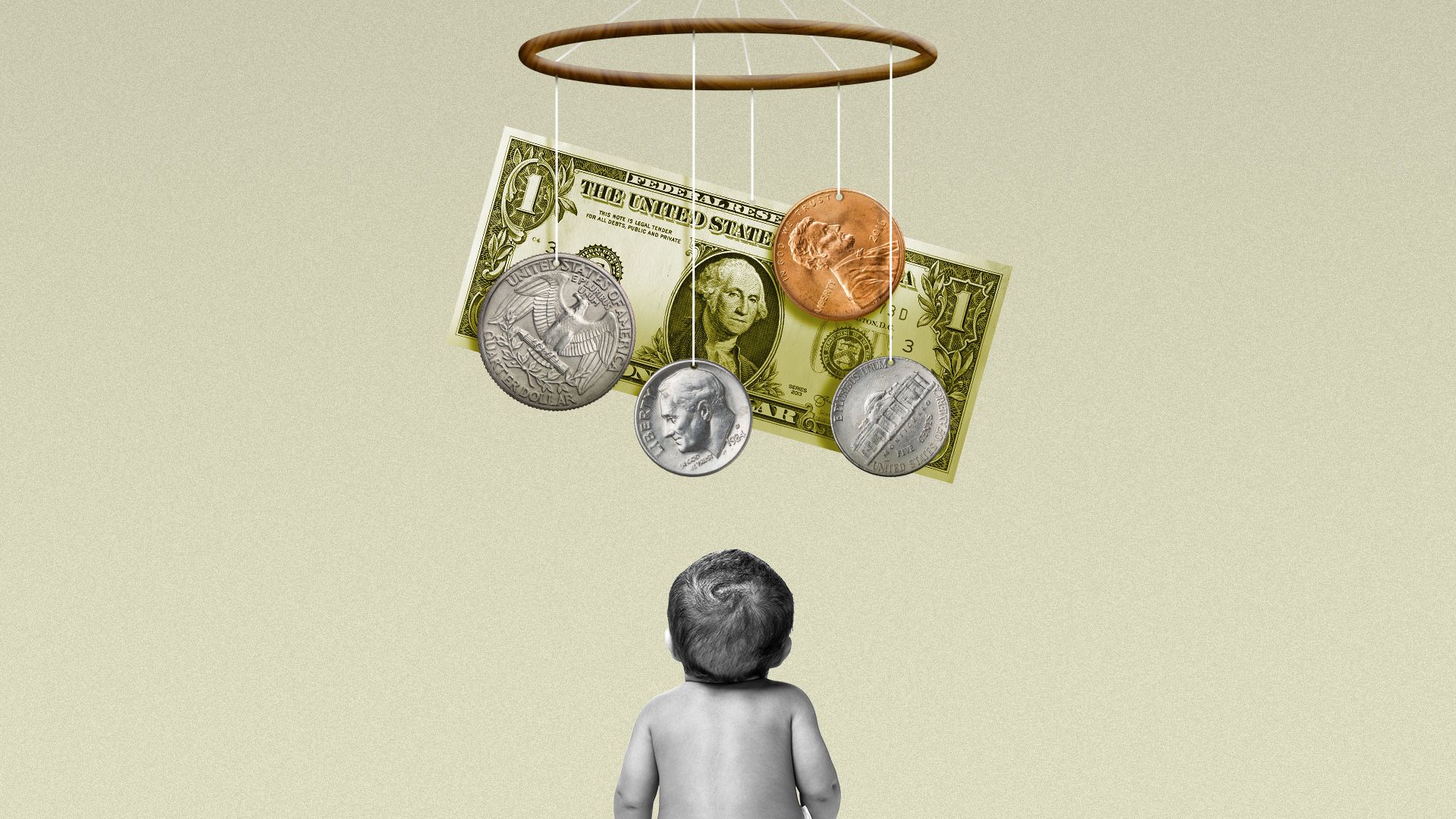
At a conference earlier this week, Sen. Ted Cruz (R-Texas) said that the new Trump accounts, the "401(k)s for babies" that launched this year, could be a way to push forward the Social Security privatization effort that failed during the Bush administration.
Why it matters: Social Security advocates have worried about this, and while Trump accounts were not described that way when the program was announced, Cruz's remarks suggest a long-term roadmap.
The big picture: The Trump accounts and a new retirement account executive order announced last week are part of an effort by lawmakers, investors and philanthropists to get more Americans invested in the stock market.
Zoom in: "Conservatives in America, for 50 years ... have been trying to do Social Security personal accounts," Cruz said at a panel Monday, referring to a policy proposed by former President George W. Bush where instead of paying a payroll tax, people invest that money in stocks.
- "Here's the dirty little secret: Trump accounts are Social Security personal accounts."
- Bush, in his second term, "tried this fight, and sadly, Congress ran for the hills in a display of extraordinary cowardice," said Cruz, who has long advocated for Social Security reform and was the "chief architect" behind the legislation that created Trump accounts.
- "How did we get it done this time? Because we gave the money to babies, and so the old people didn't get pissed. But you know what? Babies grow up."
How it works: Cruz suggested that the kids who get these accounts would wind up amassing so much money that their parents would want their own account — and be amenable to the idea of diverting payroll taxes into one.
- In five or 10 years, "we're going to be able to go to parents and say, 'Hey, you know that Trump account your kid has?'" he said.
- "'Wouldn't you like to be able to keep a portion of your tax payments, that you're paying already, and instead of sending it to Uncle Sam, wouldn't you like to have a Trump account just like your kid does?'" he said, describing the pitch.
Friction point: It's "sort of surprising and refreshing" that Cruz said the quiet part out loud, says Nancy Altman, the co-founder of Social Security Works, an advocacy group.
- The group has been warning that the accounts are part of a strategy to privatize Social Security.
Zoom out: The panel on Monday in Beverly Hills, California, was part of the annual Milken conference, a confab of CEOs and investors who come together to talk about the economy, markets and geopolitics.
- Cruz was joined by White House economic adviser Kevin Hassett and Brad Gerstner, an investor and champion of the accounts, at a panel moderated by conference founder Michael Milken.
- "For a long time, Social Security was a third rail of American politics," Gerstner said.
Flashback: Last year, Treasury Secretary Scott Bessent said the accounts were "in a way, a backdoor for privatizing Social Security," but he later walked that back, clarifying that the accounts were an "additive benefit."
- "Trump Accounts are an additive government program that work in conjunction with Social Security to broaden and increase the savings and wealth of Americans," a Treasury spokesperson said in an email to Axios after Bessent's comments last year.
Yes, but: The White House has repeatedly promised not to touch Social Security.
- "The beauty of Trump Accounts is that they are helping the next generation of Americans build wealth, tax free, for any purpose — for school, a down payment on a new house, seed capital for a new business, or simply to get a head start on saving for retirement," White House spokesperson Kush Desai tells Axios.
Between the lines: The idea that Trump accounts could replace or augment Social Security is something that has been talked about behind closed doors with lawmakers, a person familiar with those conversations tells Axios.
- But no one has wanted to touch that third rail, at least publicly.
The bottom line: The launch of these new accounts could change the political calculus.
2. Does donating stock to Trump accounts make sense?
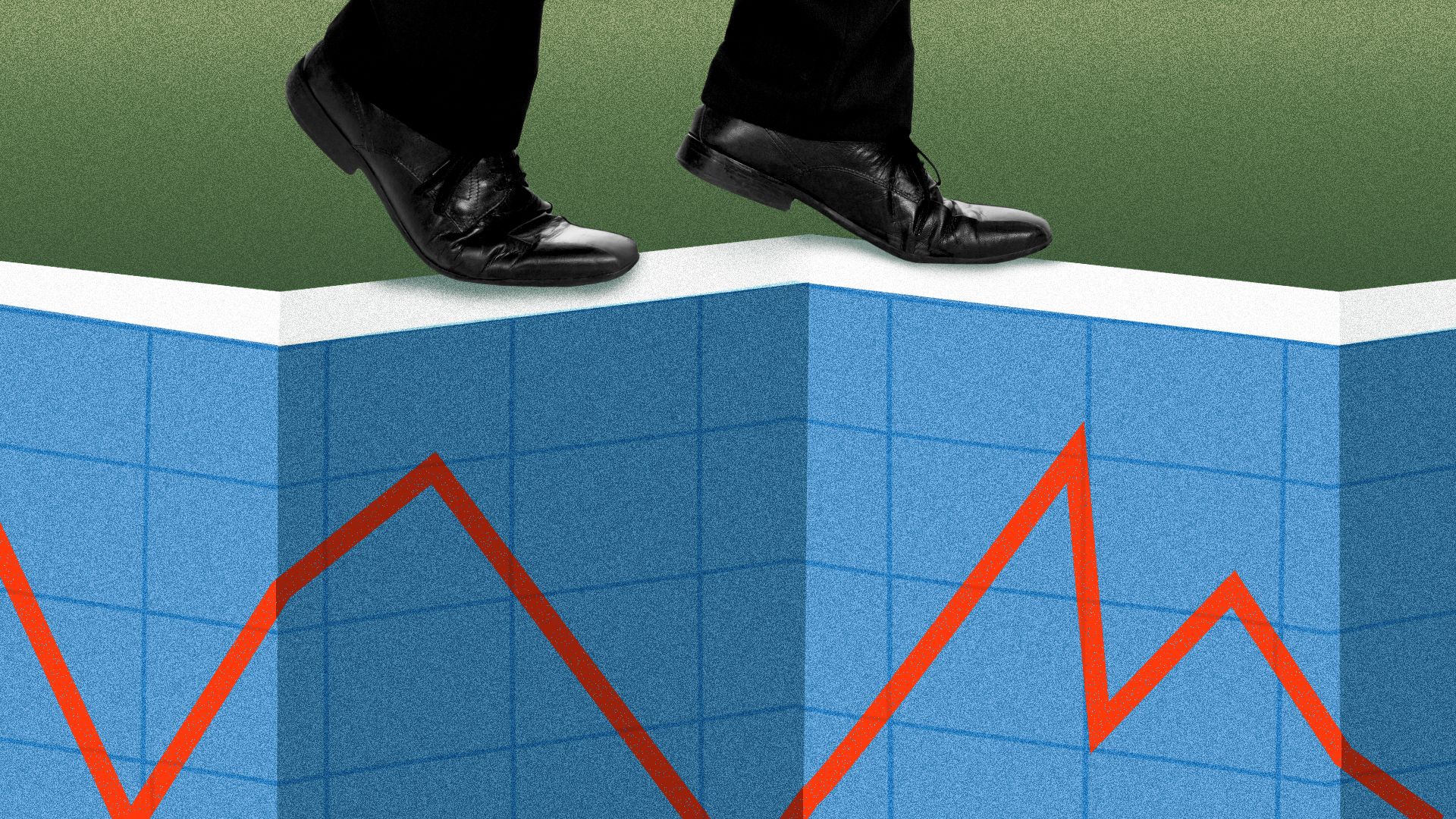
Speaking of Trump accounts, the idea of letting individuals donate stocks into these investment vehicles is under discussion, the New York Times reported earlier this week.
Why it matters: That would add an additional layer of risk to the Trump accounts, which have been set up to invest cash, on behalf of kids, into low-cost index funds.
- The donations would also be a big tax break for wealthy individuals.
Reality check: The Treasury Department declined to comment on the report to Axios.
- Under the law, only cash can be put into Trump accounts.
Yes, but: The idea of putting stocks directly into these investment vehicles has come up in conversations with philanthropists, think tanks and nonprofits, says Jason Ewas, associate director at the Aspen Institute Financial Security Program, who works on Trump accounts.
- "People have asked this question, and the answer is: It's not in the statute," he says.
Zoom out: Even though the stock market broadly goes up over the long term, investing your retirement money in individual stocks can be risky.
- "Direct stock donations may fundamentally change the calculus of the program by exposing children to market volatility and risk," Stephen Roll, a professor at the Brown School at Washington University in St. Louis who studies social benefits programs, tells Axios.
Zoom in: Imagine that someone had donated $1,000 in shares of American International Group to children in early 2008. In 2026, as those children entered adulthood, they would be left with just a couple hundred dollars' worth of stock.
- But a child who received $1,000 in Nvidia stock in early 2008 would enter adulthood with hundreds of thousands of dollars in wealth.
- "That raises real questions about whether we want a public wealth-building policy that creates winners and losers based on which stock a child happens to receive," Roll says.
3. The competition for long-term Treasurys


Yields on long-term government bonds are rising: Earlier this week the 30-year Treasury touched 5%.
Why it matters: Higher borrowing costs put pressure on government spending and send up interest rates for regular folks, too.
- Analysts generally believe that yields are rising on inflation worries tied to rising energy costs from the Iran war.
- Others suggest bond vigilantes are starting to worry over rising government debt.
The intrigue: In a note out yesterday, Mark Malek, chief investment officer at Siebert, offered another intriguing explanation:
- Some of this is because of the hyperscalers, the big AI companies that are now borrowing a lot of money, via corporate bonds, to fund their data center needs.
- These companies — Alphabet, Meta, Microsoft and the like — didn't used to issue a ton of investment-grade bonds.
Zoom in: But now, "total investment-grade supply hitting the market in 2026 is estimated at roughly $14 trillion when you aggregate across all issuers," he writes.
- "That capital has to come from somewhere, and it is competing for the same pool of buyers as the Treasury market."
Flashback: At one point last year, Microsoft had lower borrowing costs than the U.S.
What to watch: Yields.
Send me tips and story ideas: [email protected] or reply to this email.
Thanks to Jeffrey Cane for editing and Carlin Becker for copy editing this edition.
Tell your friends to sign up here. You can also hit me up on X.com or Bluesky at EmilyRPeck.
Sign up for Axios Markets