Axios Markets

January 18, 2022

Today's newsletter is 1,193 words, 4.5 minutes.
🚨Situational awareness: It's our first day at the helm of this newsletter. And, it's also the start of a four-day week. Our big question to you: Should four-day workweeks be the new normal? Reply and tell us.
1 big thing: Let's go

Illustration: Shoshana Gordon/Axios
Hello 👋 👋 ... Emily Peck and Matt Phillips here. As of today, we're your Chewbacca and Han Solo, co-piloting this newsletter.
Our mission: To deliver clear, de-wonkified, delightful markets news and analysis every weekday morning. There’s a lot of ground to cover.
- We won't: waste your time telling you if stocks went up or down yesterday. (If you care, you already know.)
- We will: go deeper, scouring global markets and unearthing the good stuff that makes you smarter, fast.
Markets are a way to quantify, distill and quickly learn about a massive universe of interconnected human activity.
- This universe includes everything from individual workers and small businesses to homebuyers, massive commodities-mining conglomerates, central bankers, Chinese Communist Party officials and cheeky Reddit-driven retail traders.
Some of what we’ll be watching (aside from “Yellowjackets” on Showtime, Emily’s current favorite):
- The end of value: SPACs? NFTs? Bitcoin? Impossible to understand? Difficult to value? Largely worthless? Over the last year, it seems like the rules of investment have gone out the window, perhaps forever.
- The political football that is inflation: This isn’t just a debate about prices. It’s an argument over the balance of power in the American economy.
- Economic policy: Looks like we’re exiting the ZIRP world this year, bringing changes for businesses and individuals. Best of all, Axios' chief Fed whisperer, Neil Irwin, will contribute regular updates.
- The weird labor market: All the buzzy stuff, from the rise of remote work to the worker shortage and the Great Resignation.
- Real estate: We covered the last housing boom, and are following the current one closely.
Your turn: Since it launched in 2019, Axios Markets has experienced explosive subscriber growth. We want to know you better. What’s on your radar this year?
- Tell us what you’re interested in. Ask us questions. Point out what we're missing! We may include your comments in an upcoming newsletter.
- @EmilyRPeck or [email protected]
- @MatthewPhillips or [email protected]
2. Catch up quick
A big study of the Payroll Protection Program, the pandemic small biz rescue package, reveals that most of its $800 billion went to business owners, creditors and suppliers. Only about 23% flowed to workers. (NBER)
U.S. companies expect supply chain issues to worsen as China — home to a third of the world’s manufacturing activity — imposes lockdowns ahead of the Winter Olympics. (NYT)
The Fed may start withdrawing some of the trillions of dollars it pumped into markets during the pandemic. That could bring prices for everything back to earth, professional investors say. (Barron's)
The U.S. sports-gambling boom may be in its first inning, but the helplines run by National Council on Problem Gambling "have never been busier." (WaPo)
3. Larry Fink to CEOs: Treat your workers well
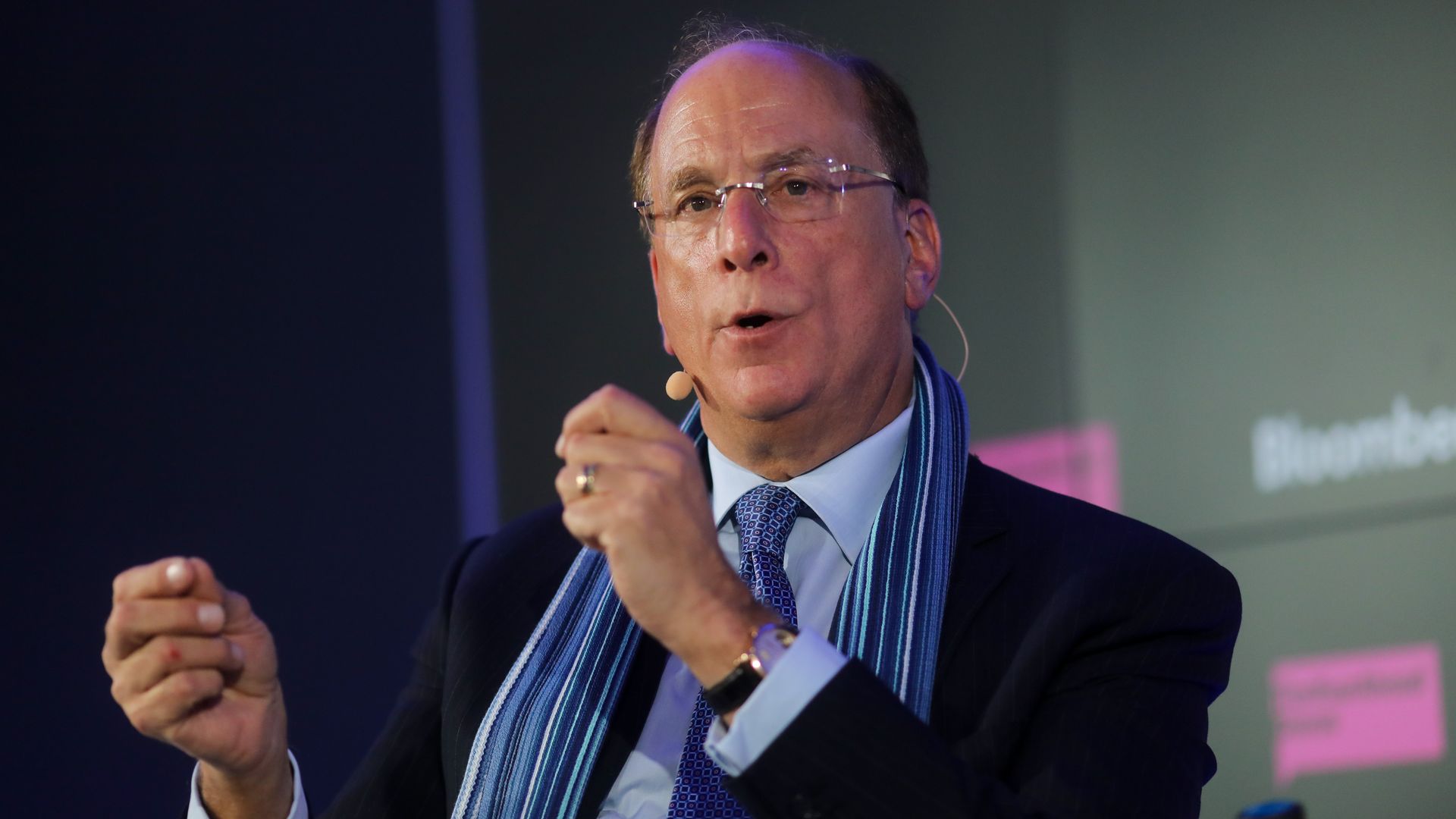
Larry Fink at the World Economic Forum in Davos, Switzerland, Jan. 21, 2020. Photo: Simon Dawson/ Getty Images
The old work world is gone, says Larry Fink, the biggest investor on the planet, in his closely read letter to CEOs, released Monday night, Emily writes.
- Used to be that companies could expect employees to come to the office five days a week, neglect workers' mental health and keep wages low for those at the lower end of the income scale, writes Fink, who is the chief executive of BlackRock.
- Not any longer.
Why it matters: Fink's annual letter — addressed to the CEOs of the businesses BlackRock invests in, e.g., most big companies — wields enormous influence.
- BlackRock manages an astonishing $10 trillion for individuals and institutional investors like pension funds and university endowments — that's more than 10% of the world's gross domestic product, the WSJ recently pointed out.
- Fink is among the most influential executives to acknowledge that workers are wielding more power; he points to rising wages and rising quit rates in the letter.
What he's saying: "No relationship has been changed more by the pandemic than the one between employers and employees. CEOs face a profoundly different paradigm than we are used to."
The big picture: Since 2018, Fink's letters to CEOs have highlighted the buzzy term "stakeholder capitalism," the notion that public firms shouldn't simply be looking to maximize profits but should do more for their workers and society, too.
- The term is not "woke," he writes in this year's letter, perhaps as a rebuke to Republican senators like Pat Toomey, who have decried efforts by CEOs to address racial discrimination and climate change.
- "It is capitalism, driven by mutually beneficial relationships between you and the employees, customers, suppliers, and communities your company relies on to prosper." (emphasis Fink's).
4. Biden's Fed
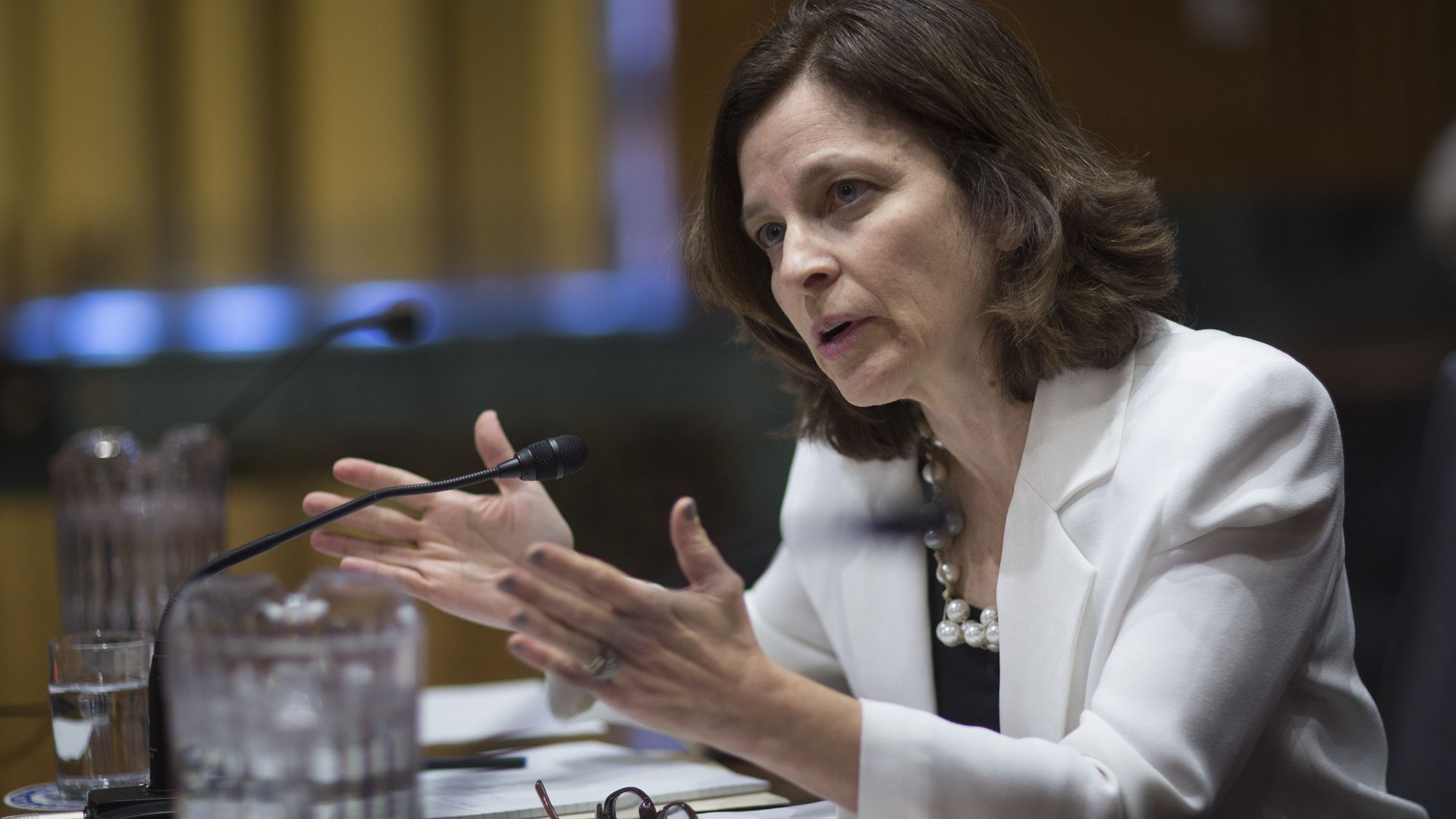
Sarah Bloom Raskin at a 2013 hearing. Photo: Andrew Harrer/Getty Images
Don't expect any big changes to the central bank's monetary policy direction overnight, now that President Biden's long-awaited nominations for vacant seats on the Federal Reserve Board of Governors have dropped, Axios’ Neil Irwin writes.
- Yes, but: If confirmed, expect the new governors — Sarah Bloom Raskin, Lisa Cook and Philip Jefferson — to put a higher priority on a healthy labor market than the Fed has in the past.
Why it matters: The Fed's actions shape the economy in ways that outlast the presidents who appoint them — and the Biden-appointed Fed looks to be a more explicitly pro-worker central bank than we've seen in modern times.
The big picture: With inflation running hot, the Fed is in the midst of a pivot to more hawkish monetary policy — possibly including raising interest rates in March.
- Raskin, Cook and Jefferson are unlikely to stand in the way of that pivot, and not just because the slow-moving Senate confirmation process means it will likely be well underway before they are confirmed for their new jobs.
But over time, the new additions to the Fed board — who have a permanent vote on monetary policy, unlike regional Fed presidents who rotate — have emphasized the importance of running a hot labor market in order to achieve gains for workers and greater racial equality.
- That implies the three new governors would resist continuing to push interest rates higher once inflation moderates.
Regulatory policy is a different matter.
- If confirmed as vice chair for supervision — and Republican Senators will try to stop that from happening — Raskin would have more explicit power over a wide range of regulatory policy, and look to rein in the deregulatory impulses of her predecessor, Trump appointee Randal Quarles.
5. What we're watching this week

Illustration: Eniola Odetunde/Axios
A few key housing indicators drop this week, as the real estate market continues to face some big supply constraints, Emily writes.
First up: The NAHB's housing market index today measures how homebuilders are feeling about the market.
- Then tomorrow, we see how much the builders are getting done when the Census releases housing starts data.
By the numbers: Economists expect new building permits for homes to edge down to 1.7 million (seasonally adjusted annual rate), from 1.71 million last month — and for annual housing starts to decline to 1.66 million from 1.68 million.
Context: The pandemic significantly increased demand for homes and homebuilders ramped up.
- The problem is right now there aren't enough houses out there for all who want them.
- Supply chain issues and the ongoing labor shortage are holding back construction.
"A whole lot of people want to build houses and even if everyone was back in the labor market to pre-pandemic levels, there wouldn’t be enough workers to meet that demand," said Daryl Fairweather, chief economist at Redfin.
Sign up for Axios Markets

Stay on top of the latest market trends and economic insights