Axios Login

December 01, 2021

Aloha, again. (At least I spared you a picture.)
Today's newsletter is 1,093 words, a 4-minute read.
1 big thing: CEO Cristiano Amon on a changing Qualcomm
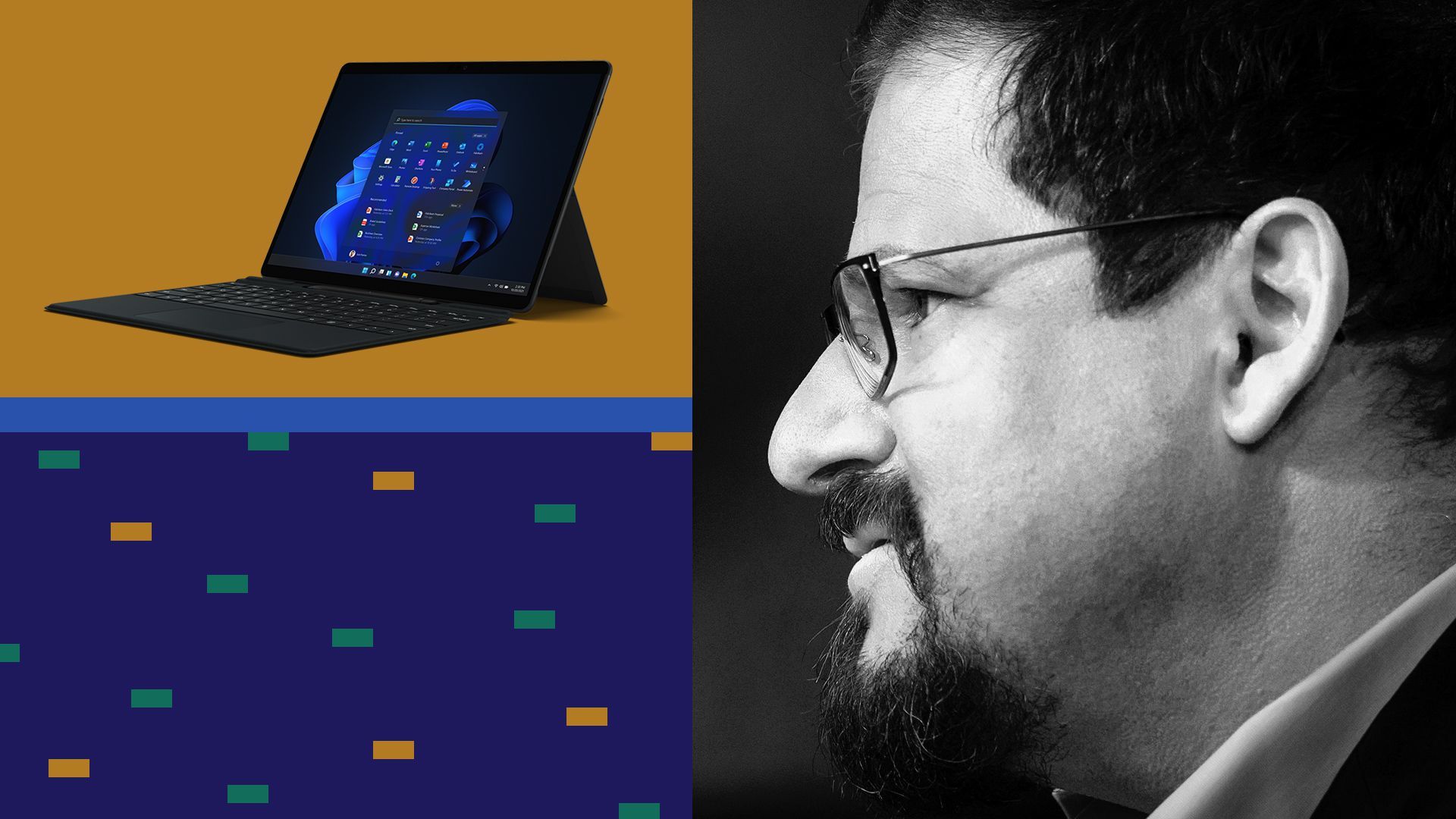
Photo illustration: Axios Visuals. Photos: Microsoft, David Paul Morris/Bloomberg via Getty Images
Cristiano Amon, who took over as Qualcomm CEO earlier this year, says the company will look much different in three years' time, with PC chips finally making up a more meaningful part of its revenue and Apple's business little more than a blip.
Why it matters: Qualcomm helped create the modern cellphone industry and is the largest remaining U.S.-based force in setting cellular standards, in addition to being the largest maker of mobile chips.
- While most of the company's revenue and profits come from smartphone chips, that market is mature, and Qualcomm is looking toward cars, computers and mixed reality headsets to provide its next wave of growth.
- "Mobile technology is going everywhere," Amon said in an interview ahead of Qualcomm's Snapdragon Tech Summit in Hawaii, which kicked off yesterday with the introduction of the company's latest 5G processor and modem.
The big picture: Qualcomm's bigger challenge remains extending its smartphone prowess to areas like automotive and PCs where other chipmakers, such as Intel and Nvidia, offer formidable competition.
- Qualcomm has predicted it will make headway in PCs for a long time, but nearly all PCs sold still use chips from Intel or AMD.
Yes, but: Amon insists it's different now, with the PCs and phone ready to converge as more data is stored in the cloud and accessed via speedy WiFi or 5G connections, areas where its chips excel and offer superior battery life.
- Qualcomm's $1.4 billion acquisition of Nuvia should give it the performance it needs to compete with Intel head on, Amon says. However, PC chips using Nuvia's technology won't debut until 2023, Amon acknowledged.
- When it comes to cars, Amon acknowledged Qualcomm is the newcomer to the market, but notes the company now has business with 25 of the top automakers from around the world.
In VR and AR, Qualcomm has a more significant presence, but it remains unclear when the market will really take off and how big it could get.
- Amon said he is more optimistic than some, noting Meta's success with Oculus Quest and predicting the Chinese market will be the next to see significant adoption of VR.
As for Apple, Qualcomm told analysts that it is modeling its business on the assumption that its modem chips are used in less than 20% of next year's iPhones and that, exiting fiscal 2024, Apple will make up a low single-digit percentage of Qualcomm's chip unit revenue.
- If Apple stumbles in its quest to make its own modems, Amon said Qualcomm will be ready to take on the added business. "We're always ready," Amon said.
Disclosure: Reporting for this article took place at Qualcomm's Snapdragon Tech Summit in Hawaii, where I am moderating a conversation on Thursday. Qualcomm paid for my travel-related costs.
2. Congress brings Haugen back for encore
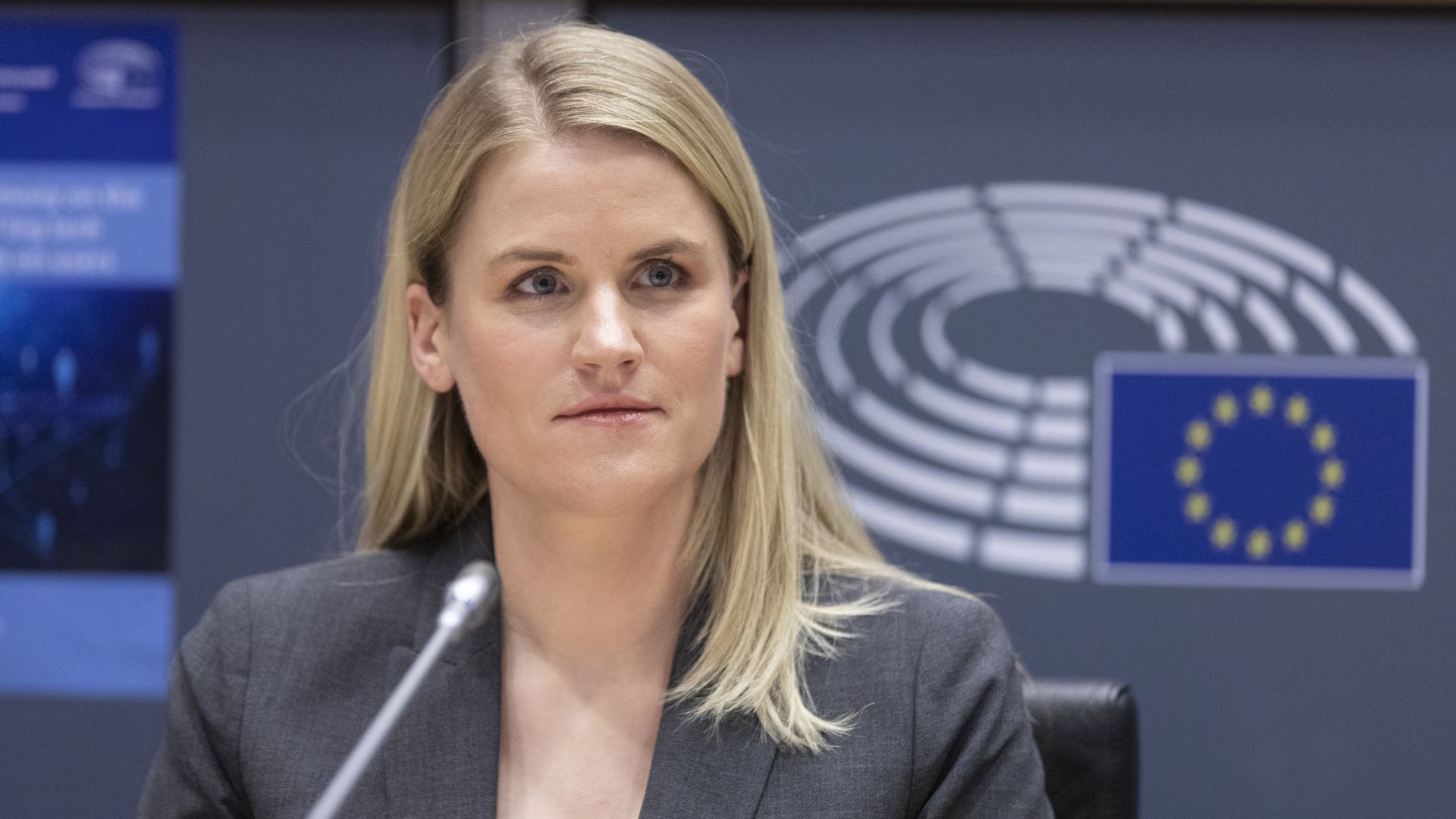
Facebook whistleblower Frances Haugen speaks in front of European Parliament committee on Nov. 8, 2021 in Belgium. Photo: Thierry Monasse/Getty Images
Facebook whistleblower Frances Haugen returns to Capitol Hill today to testify before the House Energy and Commerce Committee on proposals to revamp online platforms' liability immunity, Axios' Ashley Gold reports.
Why it matters: Haugen, a former Facebook engineer, has shared troves of internal research documents that lawmakers believe could open a path for legislation overhauling Section 230 of the Communications Decency Act, tech's liability shield.
Context: In earlier testimony to the Senate Commerce Committee, Haugen expressed support for changes to Section 230, which lets platforms moderate user-contributed content without opening themselves to lawsuits.
- "Facebook wants you to get caught up in a long, drawn-out debate over the minutiae of different legislative approaches," Haugen said in her prepared remarks. "Please don't fall into that trap. Time is of the essence. There is a lot at stake here. You have a once-in-a-generation opportunity to create new rules for our online world."
- One bill currently under consideration, from Rep. Frank Pallone (D-N.J.), chairman of the House Commerce committee and fellow Democrats Mike Doyle (D-Pa.), Jan Schakowsky (D-Ill.) and Anna Eshoo (D-Calif.), would make tech companies liable when they "knowingly or recklessly" use an algorithm to recommend content "that materially contributes to physical or severe emotional injury."
3. Quantum computing companies are merging

The hardware chamber of a Quantinuum quantum computer. Photo: Quantinuum
Two major quantum computing companies — one in hardware and one in software — are merging to create a new firm called Quantinuum, as Axios Future's Bryan Walsh reports.
Why it matters: The merger is a sign of the growing maturity of the quantum computing industry, as it begins to shift from the lab to actually solving difficult-to-compute problems in the real world.
Driving the news: Honeywell Quantum Solutions, which makes quantum computers that use trapped-ion technologies, will merge with the U.K. quantum software company Cambridge Quantum, the firms announced Tuesday.
By the numbers: Honeywell, which announced it would spin off its quantum division six months ago, will be the largest initial shareholder in Quantinuum with 54% ownership in the new company.
- The new company will have approximately 400 workers globally.
- Honeywell will also invest nearly $300 million in Quantinuum, and will act as both a supplier of its ion-trap hardware and an initial customer.
Background: Quantum is considered the next stage in computing evolution, making use of the often weird physics of quantum mechanics to produce computers and accompanying algorithms capable of solving problems beyond the ability of classical computers.
What's next: Quantinuum's first new offering, a quantum-focused cybersecurity product, will launch in December, to be followed next year by a quantum chemistry product.
4. Take note
On Tap
- FCC nominee Gigi Sohn and NTIA nominee Alan Davidson face the Senate Commerce Committee for their confirmation hearing.
- Qualcomm's Snapdragon Tech Summit continues in Hawaii, AWS re:Invent continues in Las Vegas and Slush kicks off in Helsinki, while Fortune's Brainstorm Tech wraps up in Half Moon Bay, California.
Trading Places
- David Marcus, who has been leading Meta's cryptocurrency efforts and previously ran Facebook Messenger, tweeted that he plans to leave the company at year's end.
- Salseforce promoted Bret Taylor to co-CEO, a day after he was named chairman of Twitter's board.
ICYMI
- Twitter announced it is expanding its ban on sharing private information to include private photos and video, with exceptions for newsworthiness. (Twitter)
- Amazon announced a variety of new products, customers and services, including an updated ARM processor and a private 5G service. (TechCrunch)
- Three former software engineers are suing Google, alleging its "Don't be Evil" motto was tantamount to a contractual obligation. (Gizmodo)
- A key organizer of last month’s employee walkout at Activision Blizzard is resigning from the game company. (Axios)
5. After you Login
Pet sitting service Rover is out with a list on some of the most popular pet names of 2021. Elon Musk-inspired monikers made the list of top dog names for the first time, as did Bezos, with cats named Elon rising 343%.
Sign up for Axios Login

Taking you inside the AI revolution, and delivering scoops and insights on the technologies reshaping our lives.