Axios Login

June 13, 2023

Hi, it's Ryan.
If I'm not replying to emails, I'm probably bingeing the final season of "Never Have I Ever."
Today's Login is 1,105 words — a 4-minute read.
1 big thing: Twitter's tricky triangle — CEO, owner, advertisers

Illustration: Aïda Amer/Axios
Twitter's new CEO Linda Yaccarino wrote up some inspirational comments for her new staff in an email on Monday, exhorting them to "reach across aisles, create new partnerships, celebrate new voices, and build something together that can change the world."
Yes, but: The man who hired her, the company's billionaire owner Elon Musk, spent the weekend posting sophomoric messages that reeked at times of misogyny and transphobia.
Why it matters: Yaccarino's job is to rescue Twitter's business, but Musk shows no interest in moderating behavior and positions that have helped drive many of the platform's advertisers away.
Details: In addition to several anti-trans tweets and replies, Musk also took pot shots at Apple, one of the site's biggest advertisers.
- One tweet suggested that mushrooms could produce a much cheaper augmented reality than Apple's $3,500 headset, while another praised augmented reality as amazing by showing a photo illustration of what looks like a weapon targeting screen replacing the head of a stereotypically buxom female sitting in front of a plate of waffles.
Between the lines: Yaccarino, a former NBCUniversal advertising executive, has built her reputation creating environments that advertisers pay a premium for, while Musk is equally known for being unable to stop himself from tweeting, even when ordered to by federal regulators.
- "I'll say what I want, and if the consequence of that is losing money, so be it." He told CNBC’s David Faber last month.
- Musk has also spread conspiracy theories and tweeted comments about George Soros that many saw as antisemitic. He also repeatedly questioned reports that the suspect in last month's Allen, Texas, was a white supremacist — discounting as "psy-ops" credible reports (New York Times, Bellingcat) that the suspect had Nazi tattoos and wore a "right wing death squad" patch.
The big picture: It's not just Musk's tweets that are making it tough for Twitter to pitch itself as a platform to large mainstream advertisers. It's not uncommon now on Twitter for large brands to have their promoted posts appear alongside far-right content posted by personalities once banned from the site, per Media Matters For America.
- The report showed, for example, Amazon and Samsung ads being shown alongside posts from conspiracy theorist Laura Loomer, who had previously been banned from Twitter for her attacks on Rep. Ilhan Omar (D-Minn.). Musk reinstated her.
- Twitter has also changed some of its policies around hate speech, particularly as it relates to transgender people, and seen an increase in hate speech overall, according to some outside researchers.
Meanwhile, Intuit, which has hosted a transgender summit for the past several years, was called out by LGBTQ rights advocate Alejandra Caraballo, who noted that the company's ad is being shown in close proximity to one of Musk's transphobic tweets.
The other side: While Twitter's advertising remains down substantially from a year ago, a number of large brands remain as advertisers, including several large technology companies.
- Twitter has also remained a popular spot for media companies looking for direct response, such as newsletter sign-ups and subscriptions.
What to watch: Whether these advertisers will face increasing scrutiny from both customers and employees for continuing to support a platform and CEO whose values seem to contradict the companies'. (Advertisers that take stands perceived as more progressive can also face blowback from conservatives.)
What they're saying: Intuit told Axios that their advertising should not have appeared alongside Musk's tweet.
- "Diversity, equity, and inclusion are foundational to our company and explicit in our values," the company told Axios. "We are strong allies and supporters of those who identify as transgender or nonbinary. We have advertising principles in support of company values and this ad should not have appeared where it did."
- Twitter did not respond to a request for comment, nor did representatives of Apple, Amazon and Samsung.
Go deeper: Big Tech still advertising on Twitter despite rise in hate speech
2. Salesforce's AI pitch

Illustration: Sarah Grillo/Axios
Salesforce Monday pitched its new AI Cloud product as a one-stop shop for nervous CEOs looking to take advantage of large language models "without their data ever leaving Salesforce," per CEO Marc Benioff.
Why it matters: Salesforce has upped the ante on AI privacy and security — with Benioff zeroing in on demand for AI in regulated industries, and delivering thinly-veiled snark aimed at market leader OpenAI wrapped in the message that "data is not our product."
- Calling out an "AI trust gap," Benioff pinpointed lack of privacy, lack of data control, hallucinations, bias, and toxicity as the five biggest problems with leading large language models.
How it works: Salesforce's vision is that customers will use different language models for different purposes, mediated through a "trust layer" component of Einstein, the company's seven-year-old AI-powered CRM tool.
- AI Cloud will work with any large language model.
- Salesforce executives said the Einstein trust layer offers cell-level security and data masking to guard commercially sensitive and personal data sent to large language models, with a promise of zero data retention by Salesforce once answers are received.
- One eye-catching feature is a "toxicity detector" that will generate warnings about any content generated by a given language model falling below an unspecified threshold.
Yes, but: Salesforce isn't against using ChatGPT — the company is working with OpenAI to add the chatbot to Slack.
- Amazon Bedrock works on a similar model, offering access to a mix of models built in-house and by partners.
What they're saying: "Every company needs to become AI-first," Benioff said.
- "We have been testing how to Guccify the AI," said Vasilis Dimitropoulos, vice president for global client services at Gucci.
- "I don't want someone who has the greatest thing, but leaves my back door open," said Shohreh Abedi, AAA executive vice president, explaining why data protection drives her tech purchasing decisions.
3. Take note
On Tap
- Frances Haugen's memoir recalling her Facebook whistleblowing, "The Power of One," is out today.
- A Senate Judiciary subcommittee hearing will examine AI and human rights issues at 2:30pm ET.
Trading Places
- Fivetran has appointed former AWS chief marketing officer Rachel Thornton as its CMO.
ICYMI
- The FTC is seeking a restraining order to prevent Microsoft from completing its planned acquisition of Activision Blizzard. (Axios)
- Lina Khan's two years running the FTC have been marked by historic, aggressive efforts to expand the scope of anti-monopoly enforcement. (Axios Pro)
- Amazon is using generative AI to summarize product reviews. (CNBC)
- Schmidt Futures launched Tekalo, a matchmaking service for technologists who want to join the nonprofit sector.
- Catch up on my interviews with Rep. Andrew Garbarino (R-N.Y.) and Cyber Threat Alliance CEO Michael Daniel. (Axios)
4. After you Login
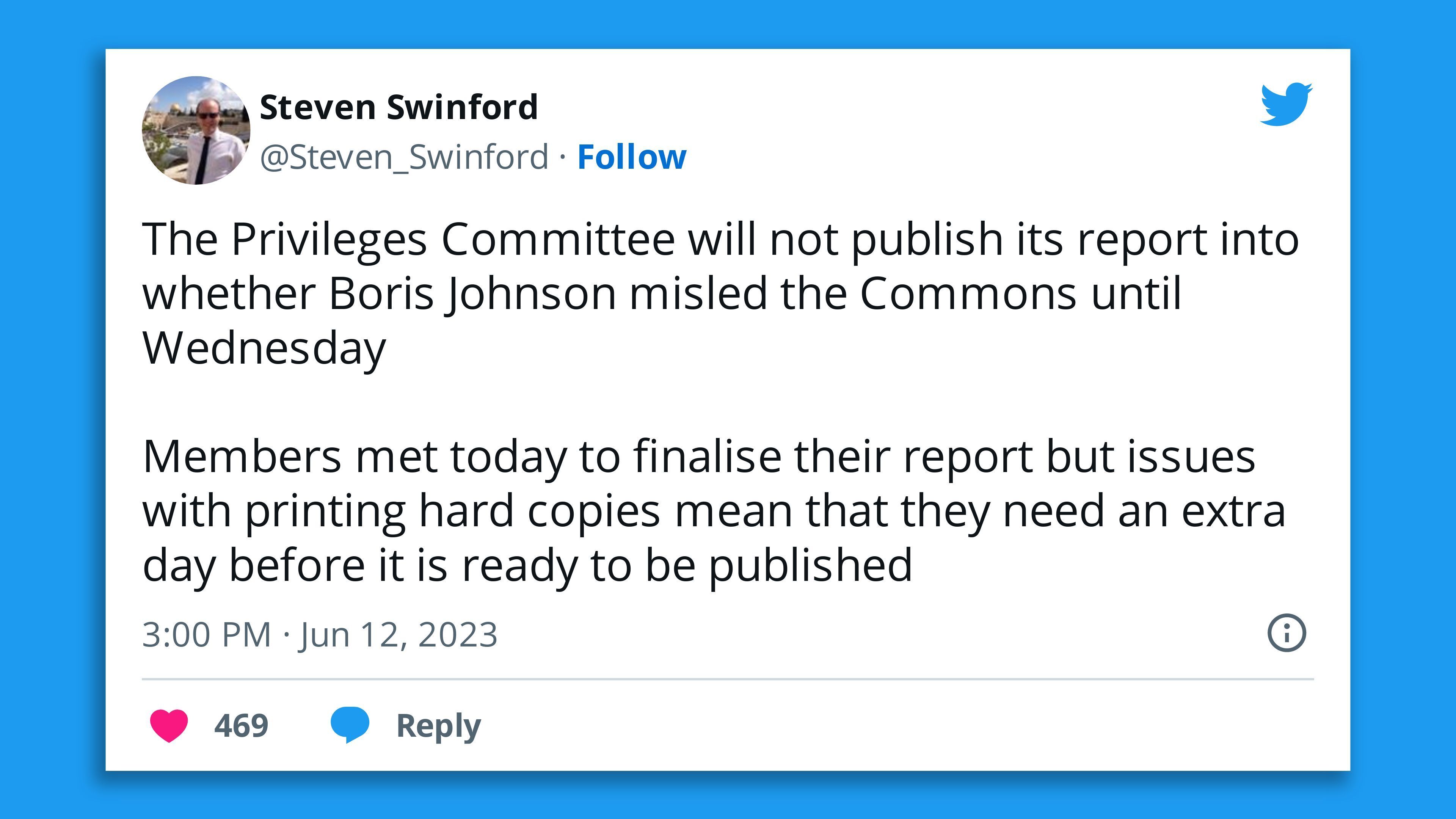
Having trouble remembering how the office printer works? You're not alone. The British Parliament can't figure it out, either.
Thanks to Scott Rosenberg for editing and Bryan McBournie for copy editing this newsletter.